

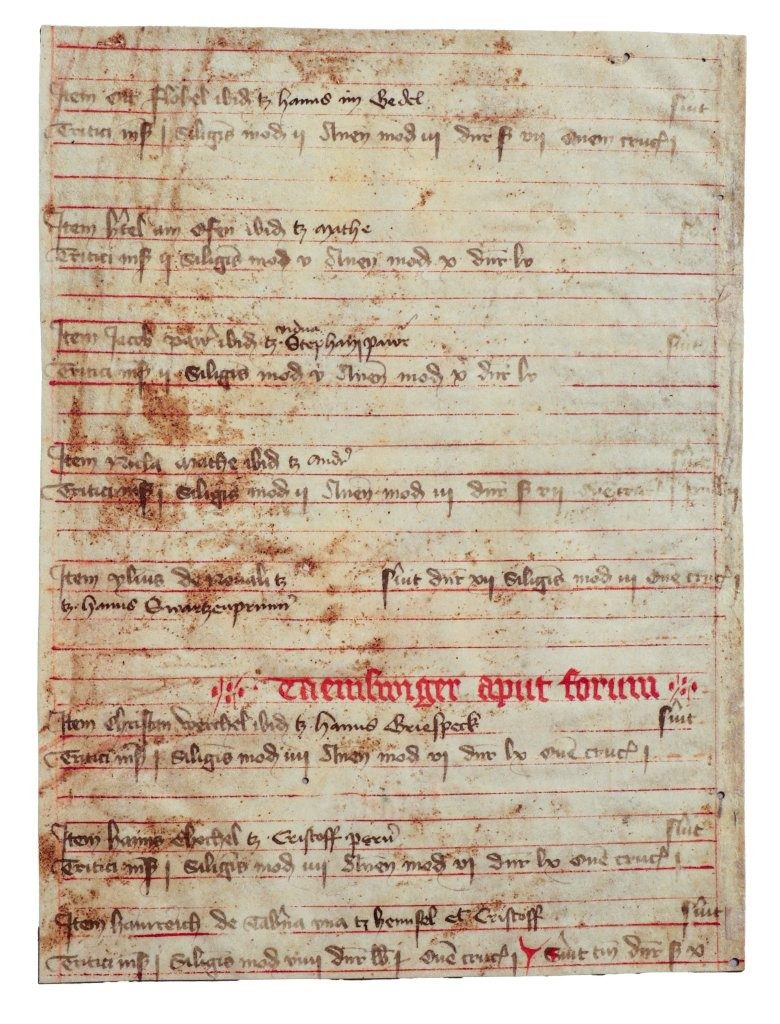
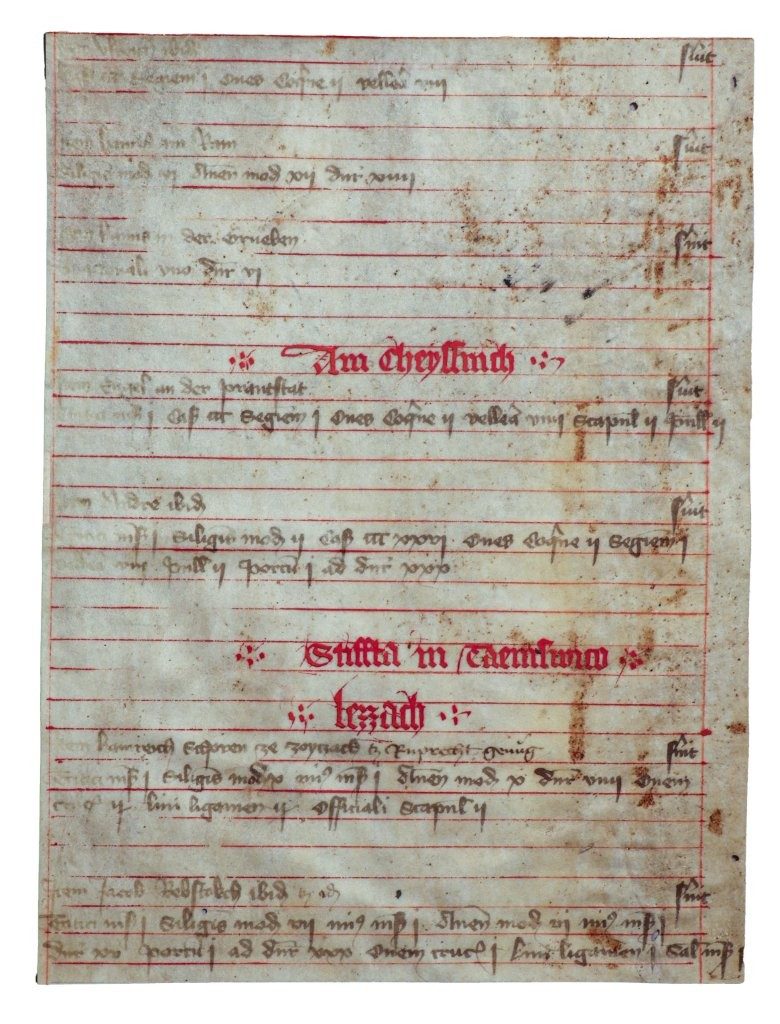
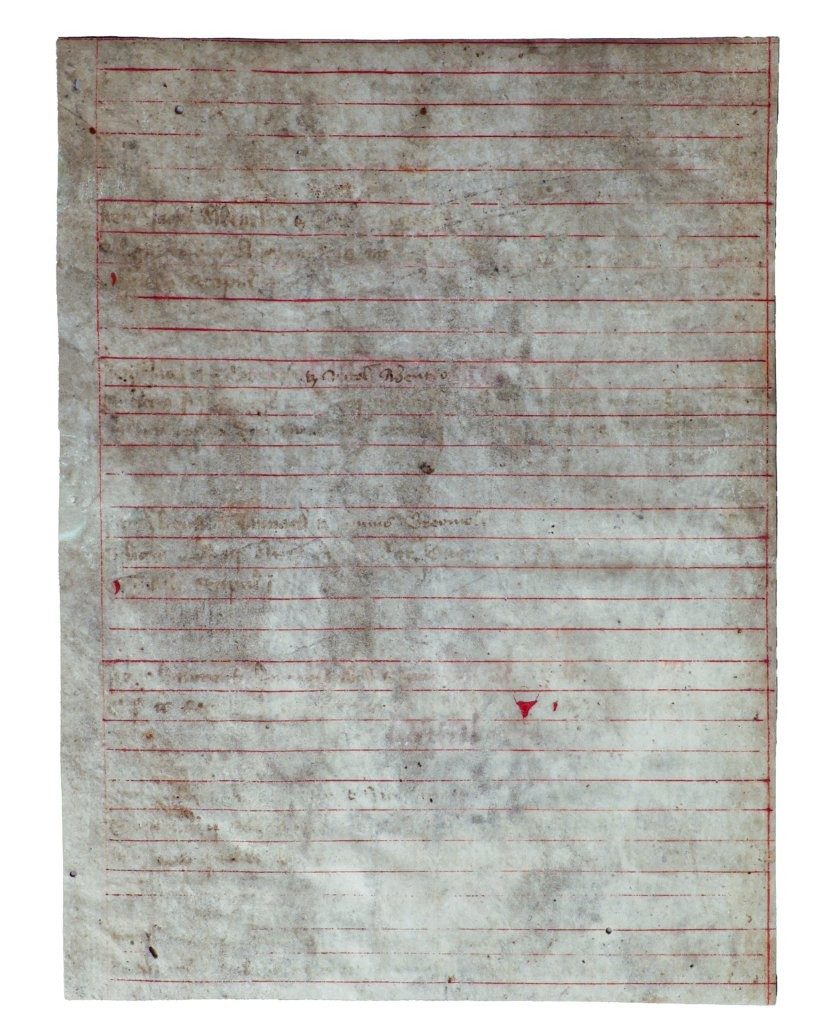
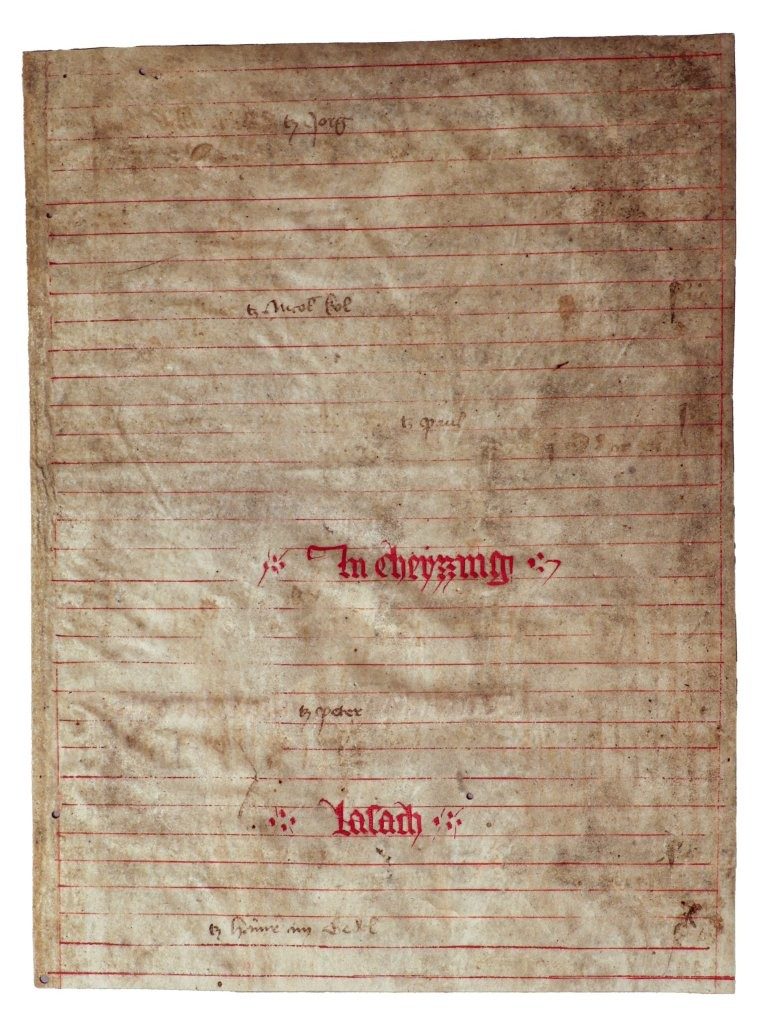
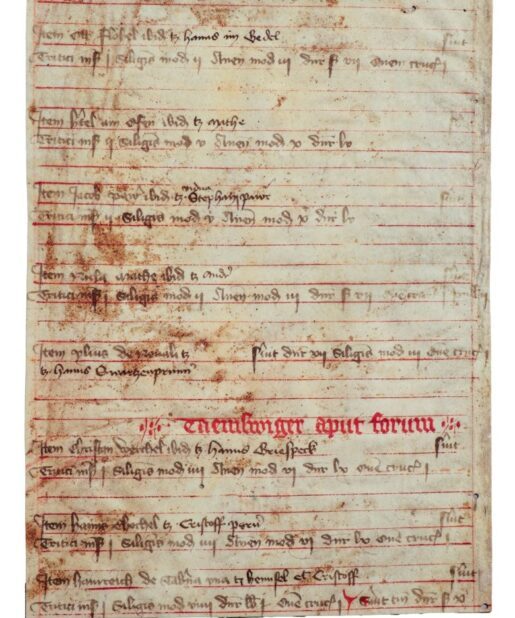
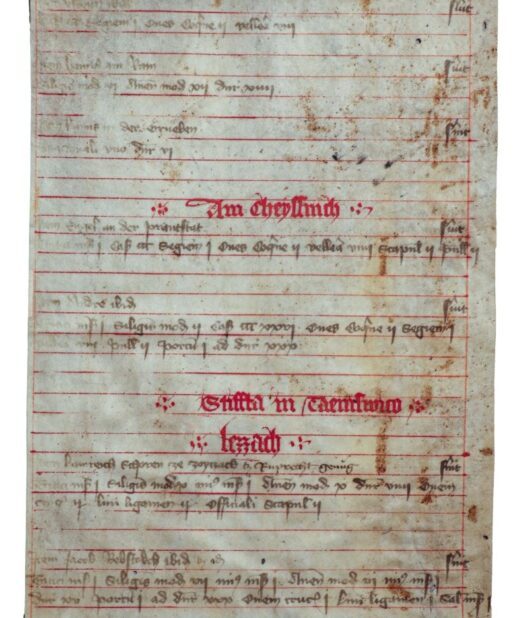
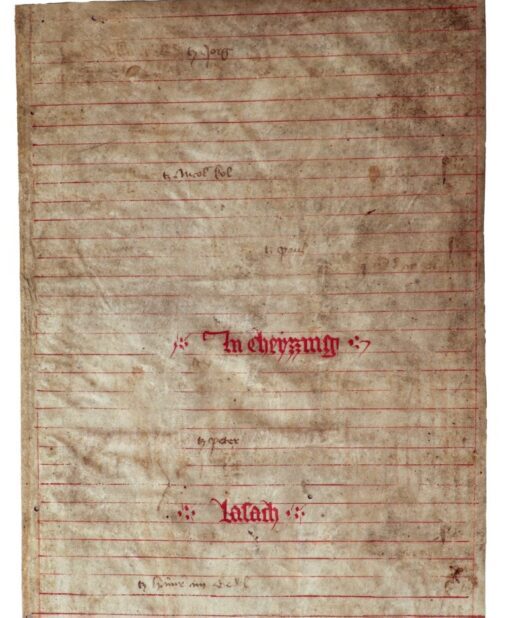
Two Leaves from a Rental Book (Gültbuch) for a Monastery or Collegiate Church, perhaps the Benedictine abbey in Sankt Lambrecht, Austria In Latin, manuscript on vellum
[Austria (probably vicinity of Sankt Lambrecht), first quarter of the 14th century]
Each 210 x 158 mm
Description
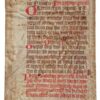
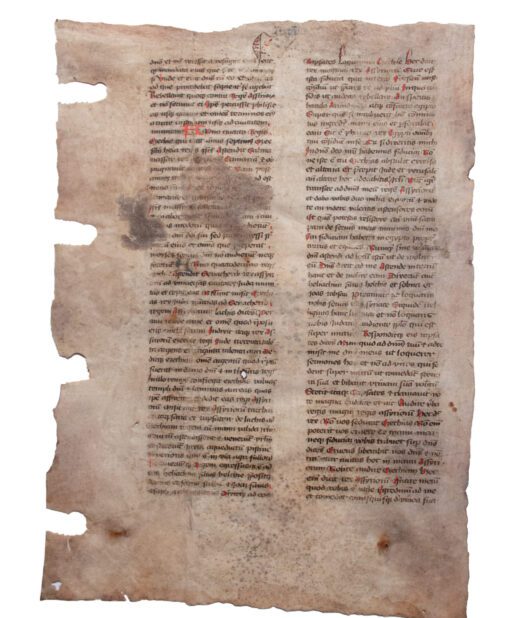
Two leaves, recovered from reuse in a later and hence with blank margins trimmed away, each ruled in red for 28 lines of entries, headings of the estates concerned in ornamental red textualis penwork between devices formed from dots and lines, with two smaller black bastarda hands for the entries recording the rental amounts owed by individuals in either money or agricultural produce.
Condition
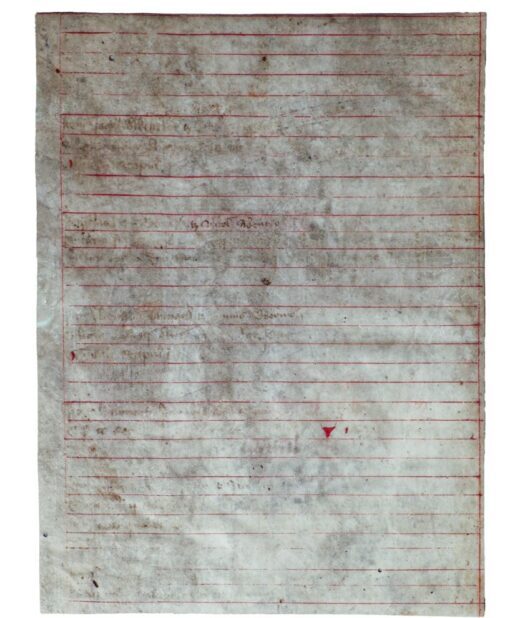
Some scuffs and small spots from reuse, reverses much abraded to remove text there and illegible in parts.
Text
Gültbuch were entirely a southern German, Swiss and Austrian type of record, a type of rental record or private tax cadastre, recording what was owed annually to a community or individual for their upkeep from their attendant estates. The word comes from Old High German geltan meaning ‘to pay back’, and existed until the French Revolution in the regions that bordered with France and until the Prussian Revolution of the early 1800s in Germany proper. They are rare to survive, with those from the Middle Ages greatly so, with only a tiny handful of the same antiquity as the present example (for an example, see Bayerische Hauptstaatsarchiv, KL Ebersberg 8, a gültbuch for Ebersberg Abbey finished in 1328).
The names here, and their relationship to the community they owed rent to, perhaps survive nowhere else. This record is thus deserving of future study.
Provenance
1. Produced for a monastic community or collegiate church in the region of Tamsweg, near Salzburg: Lessach is a small village in the mount ainous valley to the north of Tamsweg, and identifiable as the placename behind the “Lasach” and “Stiffta in Eaeniswico Lezzach” in the rubrics, with the latter rubric also indicating that the rents here were amongst the landed endowments (stift) of a monastery or collegiate church. The nearest such community was the Benedictine foundation in Sankt Lambrecht (founded 1076, abolished by imperial decree in 1786, with its goods dispersed and most of its library transferred to the University Library in Graz; then its dissolution was reversed in 1802 by Emperor Franz II and the printed books, presumably including these leaves in a binding, were returned to the abbey, while the manuscript
codices remined in Graz; however, the community had dwindled and ceased to exist within a year, with its books then entering private hands).
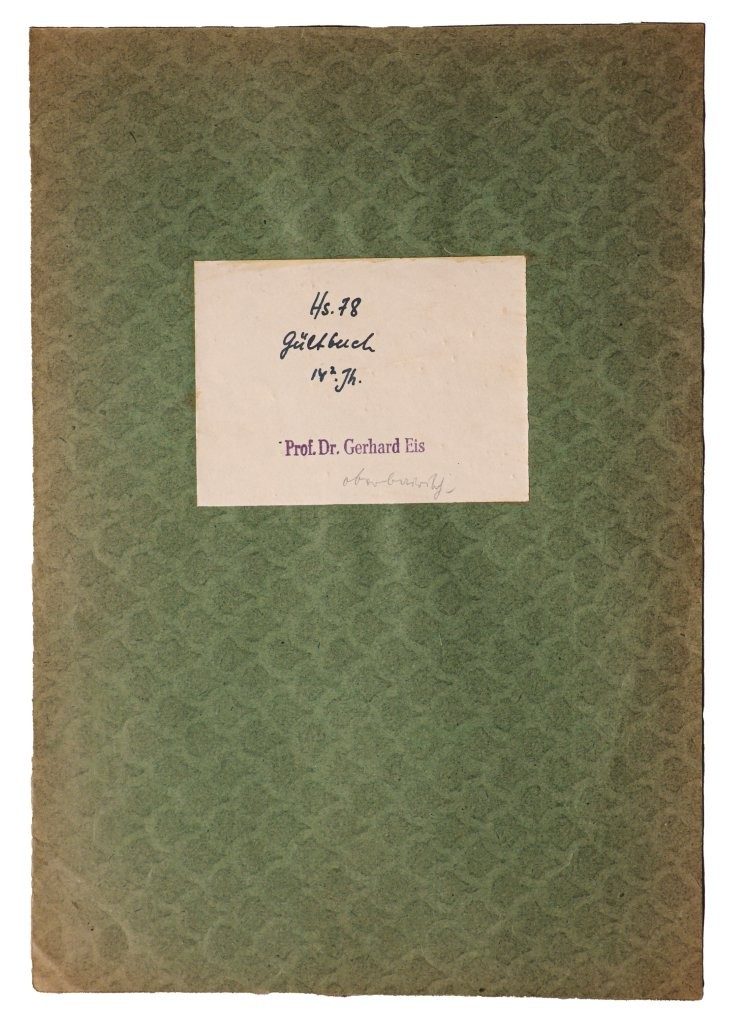
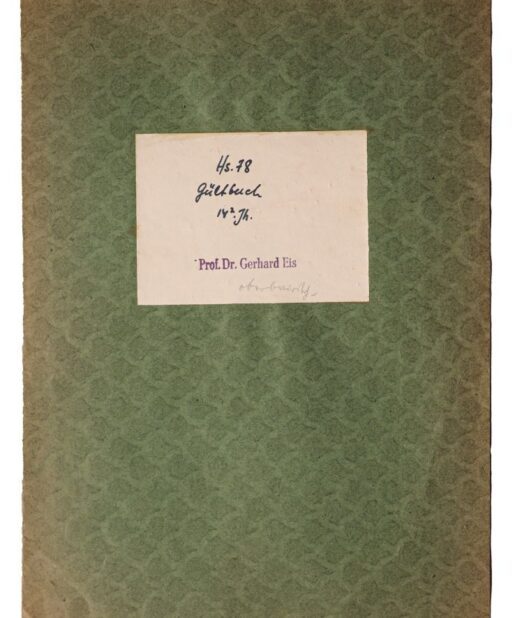
2. Professor Gerhard Eis (1908-1982), prominent German medievalist and professor of German Studies at Heidelberg University: his MS. 78, and in his green paper folder with his brief notes.
Product Enquiry
Related products
![Leaf from an English Illuminated Psalter In Latin, manuscript on vellum [England (probably East Anglia), mid-14th century]](https://stephenbutler.com/wp-content/uploads/2026/05/IMG_7534-515x618.jpg "Leaf from an English Illuminated Psalter In Latin, manuscript on vellum [England (probably East Anglia), mid-14th century]")
![Leaf from an English Illuminated Psalter In Latin, manuscript on vellum [England (probably East Anglia), mid-14th century]](https://stephenbutler.com/wp-content/uploads/2026/05/C57A7557-515x618.jpg "Leaf from an English Illuminated Psalter In Latin, manuscript on vellum [England (probably East Anglia), mid-14th century]")
C14th -C16th manuscripts
£2,750.00


C14th -C16th manuscripts
Illuminated inital 1500 huge leaf on vellum, from Siena or Florence.
£750.00

C14th -C16th manuscripts
£1,500.00


C14th -C16th manuscripts
A substantial fragment of Jean Buridan on late C14th watermarked paper on 47 leaves

C14th -C16th manuscripts
Finely produced illuminated leaf from a French Psalter, c.1480
£550.00


C14th -C16th manuscripts
Leaf from a Bible, II Kings 17, C15th manuscript in Latin on parchment
£750.00
C14th -C16th manuscripts
Finely produced illuminated leaf from a French Psalter c.1480
£550.00