

EXPLORE CATEGORIES
Our Latest Arrivals
Stephen’s Highlight
An exceptional illuminated copy of Koberger’s 1493 Lyra Bible, with a painted portrait of the commentator himself.
BIBLE, with the Postilla of Nicholas of Lyra. Biblia cum Postilla fratris Nicolai de Lyra … Nuremberg: Anton Koberger, 1493.
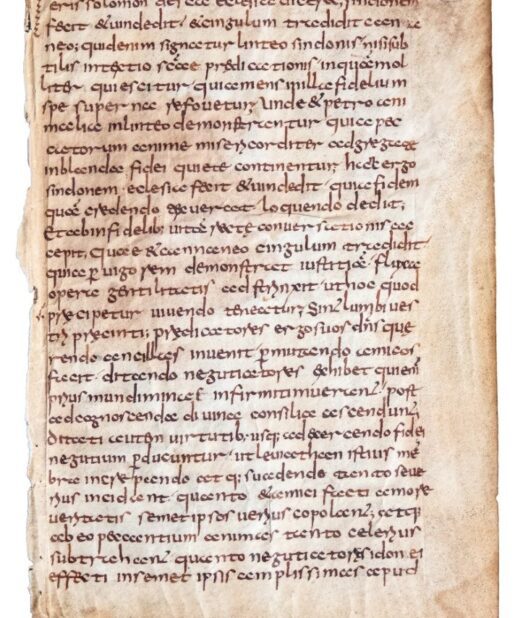
Median folio (349 × 232 mm). The first volume only, comprising the Pentateuch and the historical books through Chronicles; [424] leaves. Latin biblical text with the commentary of Nicholas of Lyra, additions by Paul of Burgos, and replies by Matthias Döring. Printed in Gothic type, with 28 woodcuts, some full-page. Rubricated throughout in red and blue. Contemporary blind-stamped pigskin over wooden boards, retaining both brass clasps; medieval manuscript vellum used as a front flyleaf. Bosses and cornerpieces wanting. The outer margins of the first leaves discreetly reinforced; occasional light waterstaining and signs of use.
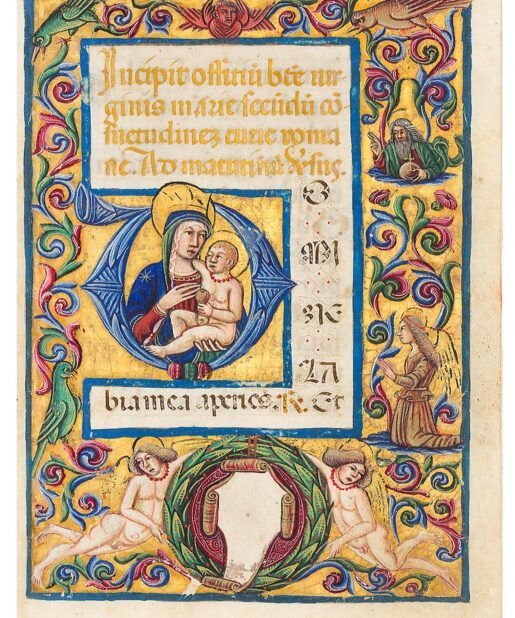
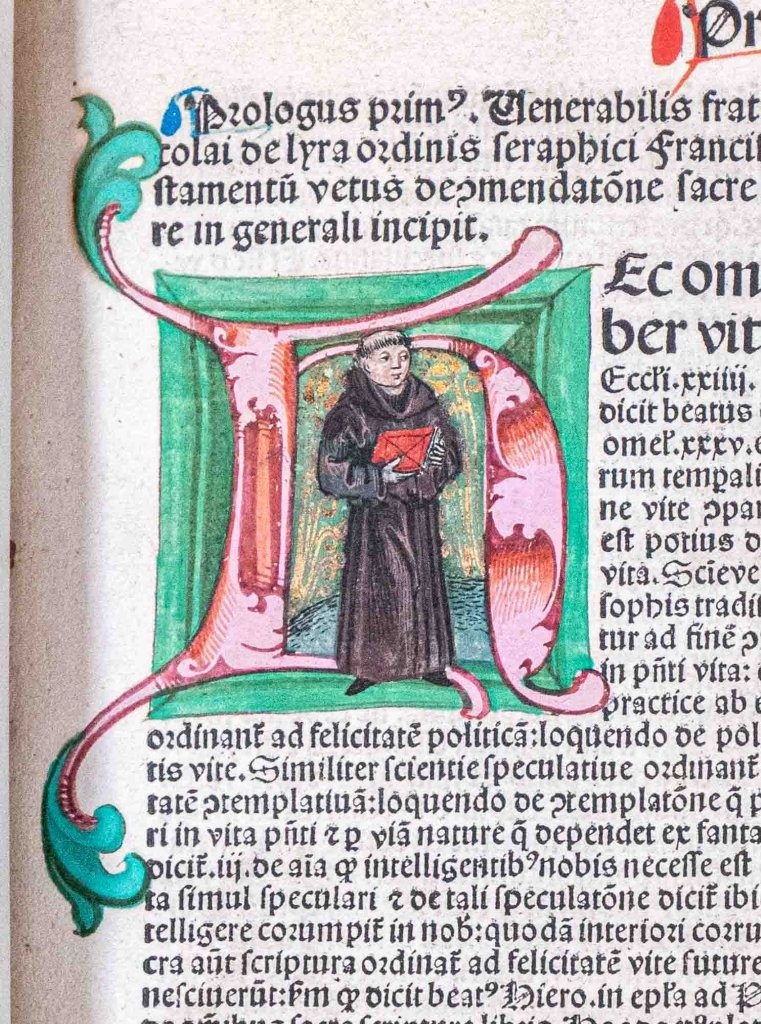
An exceptional illuminated copy of Koberger’s 1493 Lyra Bible, with a painted portrait of the commentator himself. At the opening of Nicholas of Lyra’s prologue, a large historiated initial encloses a Franciscan friar holding a red book. Set directly beneath the heading naming Lyra, the figure is a compelling contemporary representation of the scholar whose commentary accompanies the biblical text. A second historiated initial, introducing Jerome’s letter to Paulinus, depicts the Virgin and Child. Both are enriched with delicate metallic ornament and accompanied by painted foliate borders in vivid pink, green, blue and gold.
The illumination gives this copy a character quite apart from that of an ordinary printed Bible. Koberger supplied a complex page in which Scripture and successive layers of interpretation could be read together; an artist then transformed its opening leaves into a richly coloured devotional object. The portrait is especially arresting. Nicholas of Lyra appears within the very text through which generations of readers encountered his work, his Franciscan habit and book making the author of the commentary visibly present on the page.
Significant Placements and Provenance Highlights
Notable Past Placements

Curated works of rarity,
beauty, and cultural importance
We help collectors and institutions uncover and acquire rare books, manuscripts, and culturally significant works that offer real insight into the past. Led by specialist Stephen Butler, our team curate and place items of rarity and beauty — medieval and Renaissance manuscripts, illuminations and miniatures, early printed books, and exceptional bindings — so you can own something that truly endures.
Clients include private collectors, institutions, and libraries across the UK, US, and beyond — valuing Stephen’s trusted eye, straightforward approach, and focus on cultural value.
Discover more about Stephen Butler

The stories and insights from the Team
Journal
Journal News & Updates
The beauty of Books of Hours; arriving soon.
We are pleased to announce the recent arrival of a number of Books of Hours, exquisite manuscripts that served as both devotional tools and extraordinary works of art in the Middle Ages and Renaissance. These books [...]
Features Journal
The Pioneering Impact of Sweynheym and Pannartz
Sweynheym and Pannartz were groundbreaking figures in the history of printing, credited with establishing one of the first printing presses in Italy. Active in the 1460s, these two German printers, Johann Sweynheym and Wolfgang Pannartz, [...]
Features Journal
A recent discovery: Czech recipe for kidney stones from C15th
A recipe from the C15th was recently discovered in an incunable edition of Simon de Cassia. The recipe, written in early Czech references a fascinating recipe for treating kidney stones that includes ingredients like burnet-saxifrage, rose [...]
Get In Touch
Subscribe To Our Newsletter
Sign up to receive emails about new additions, catalogues and general updates.