


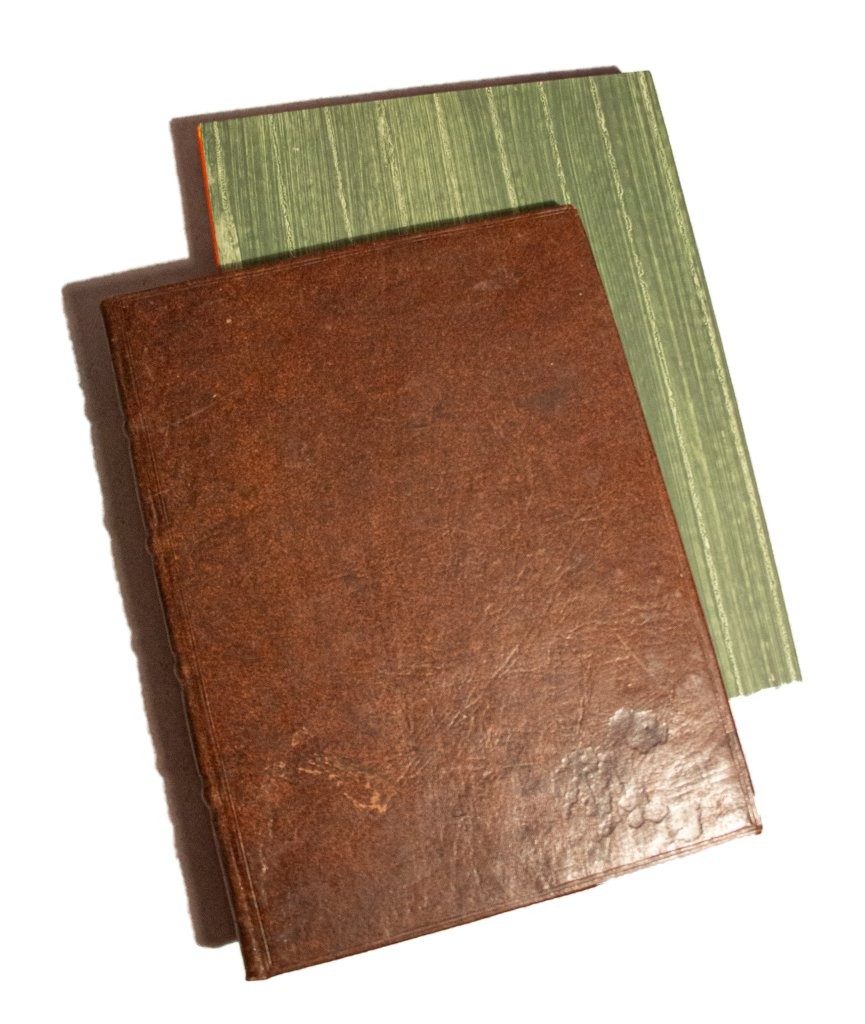
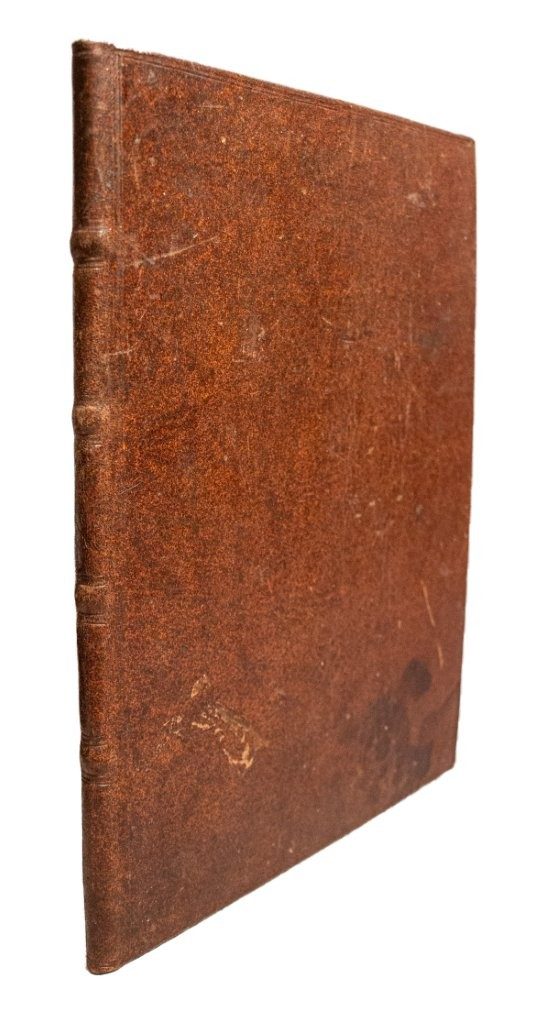
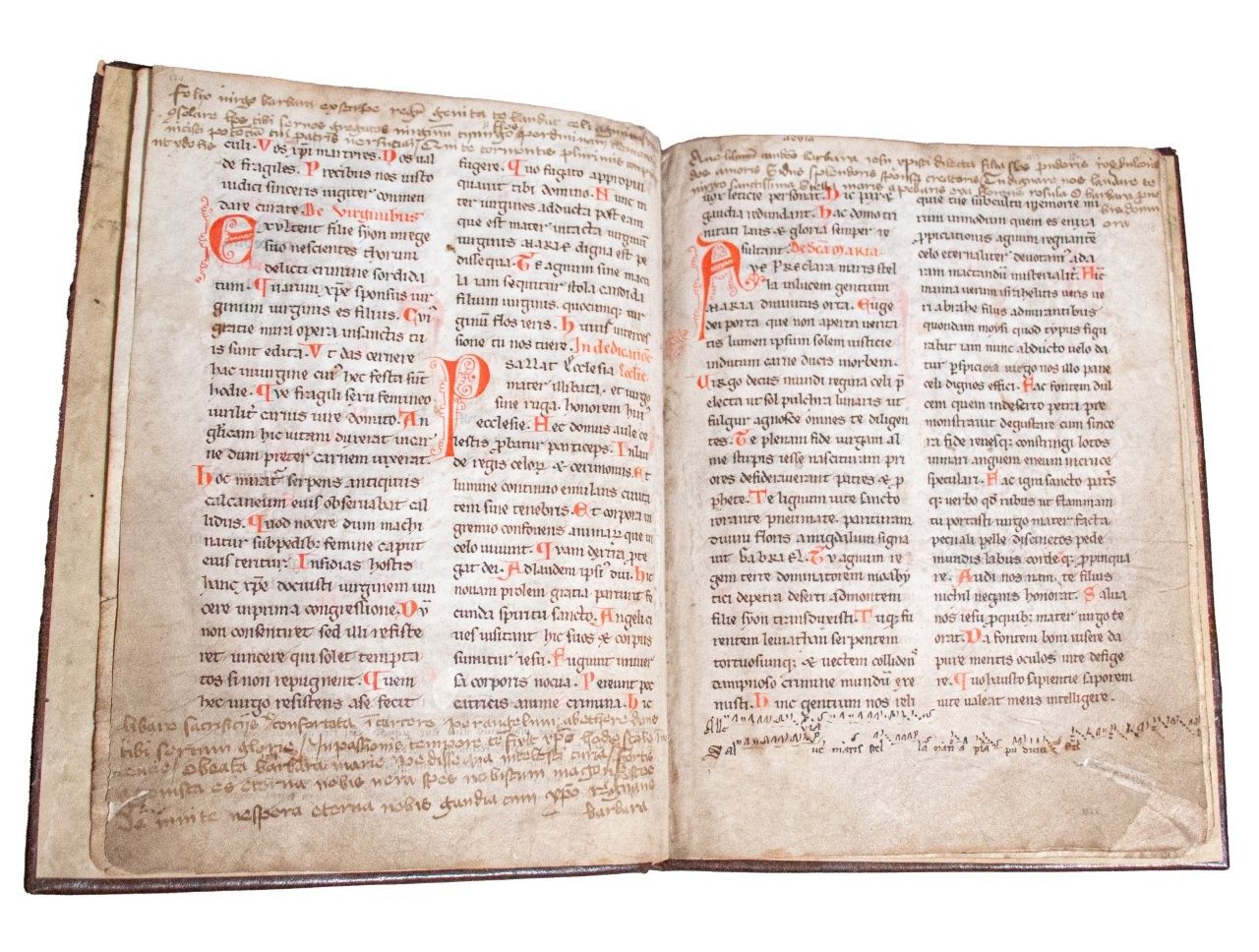
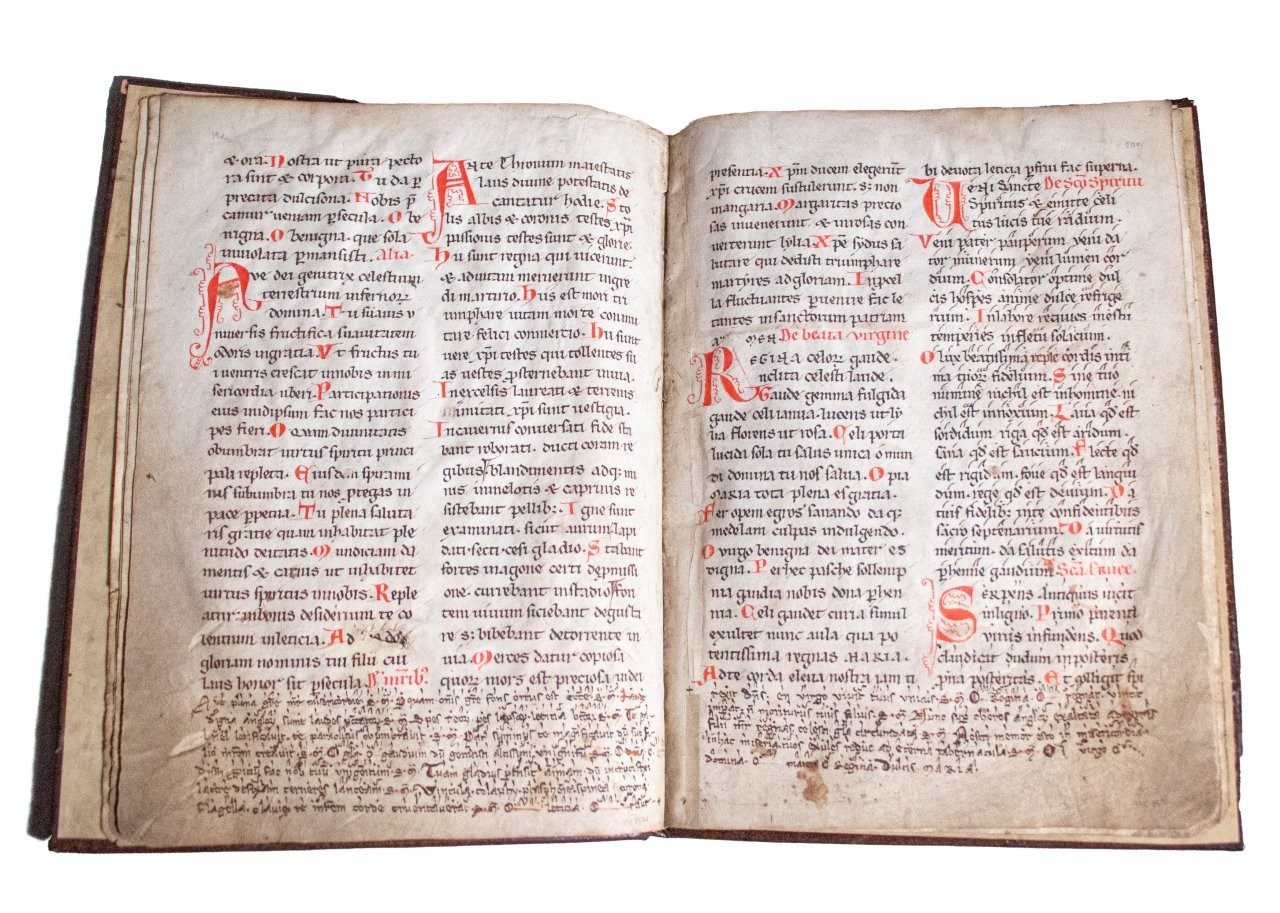

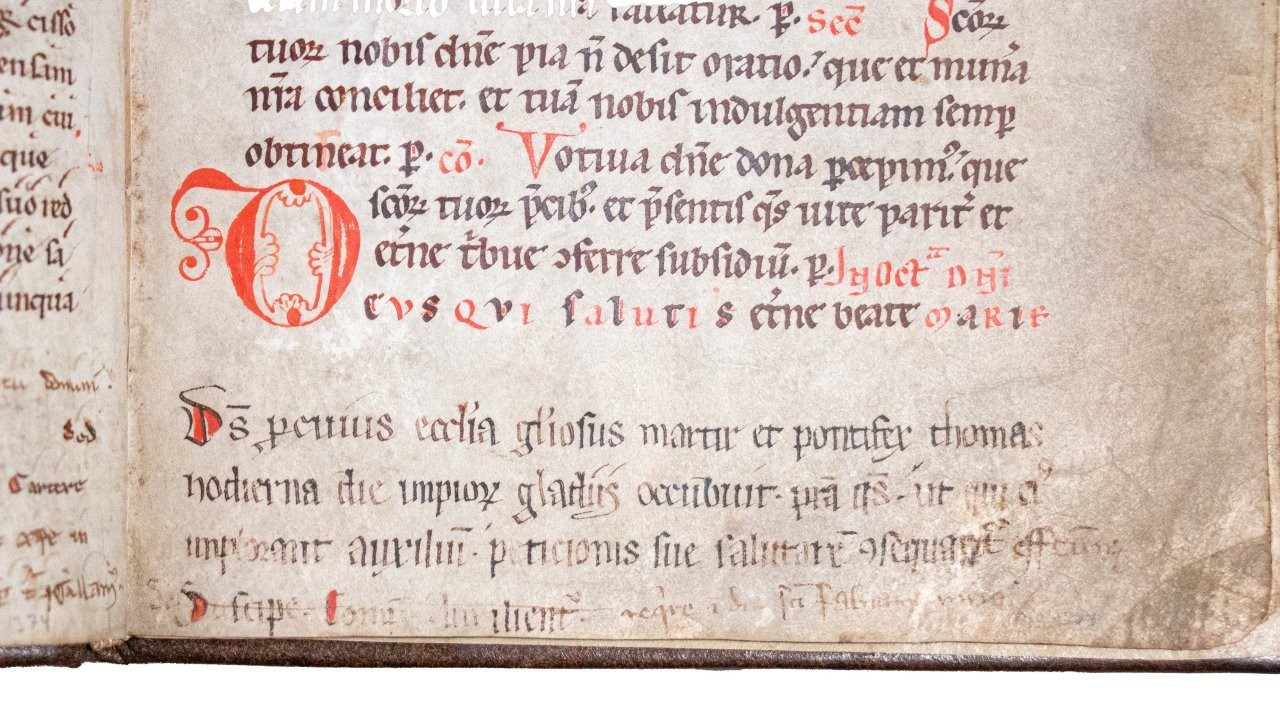
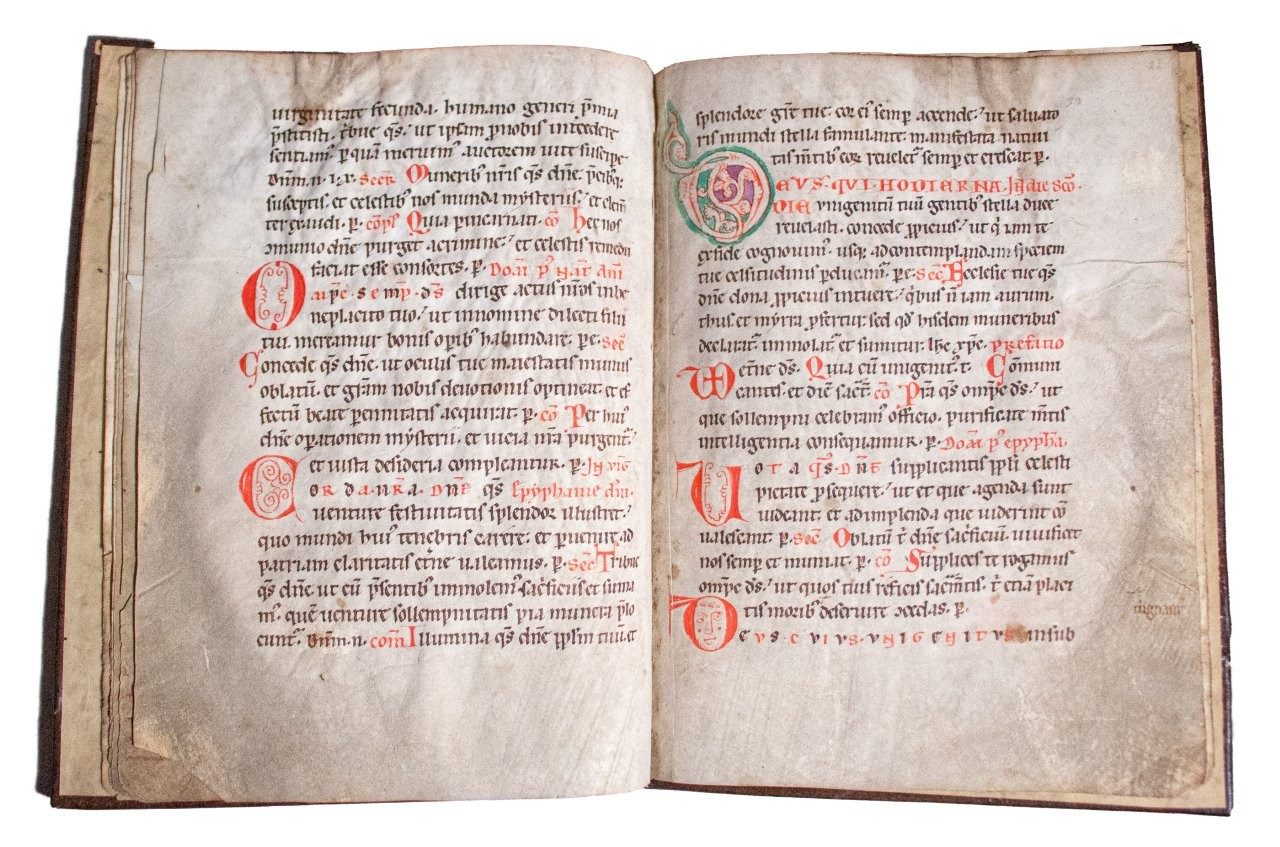
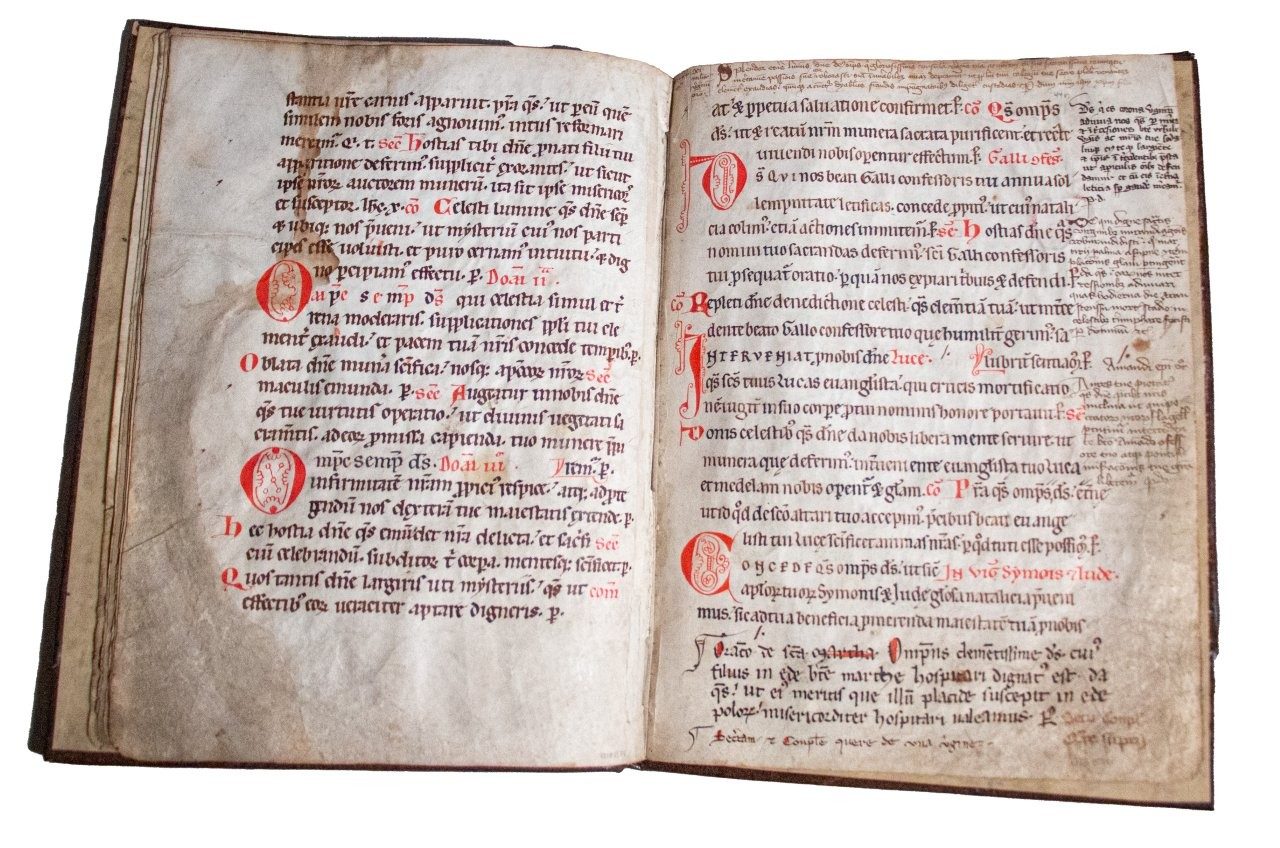

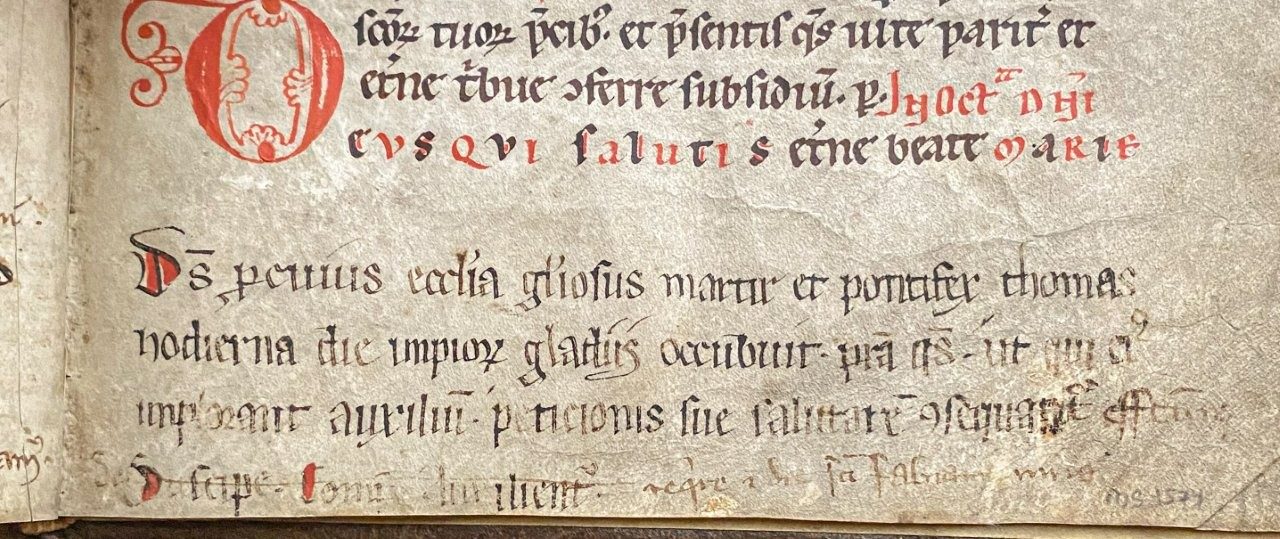
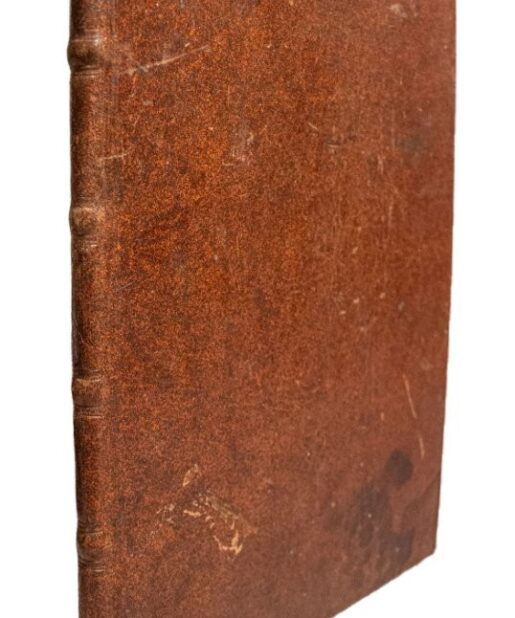
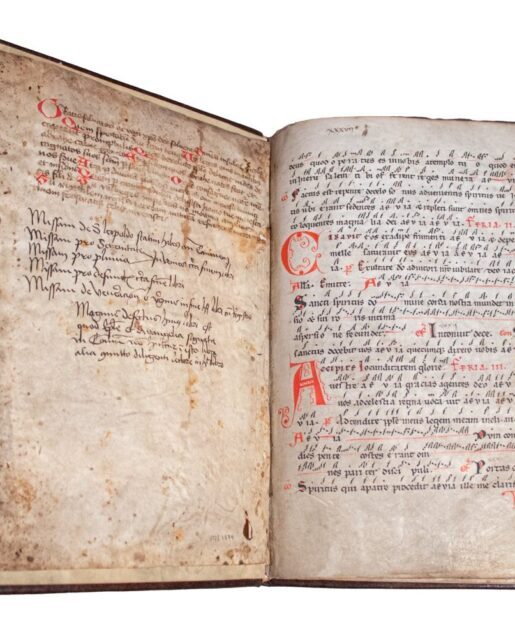
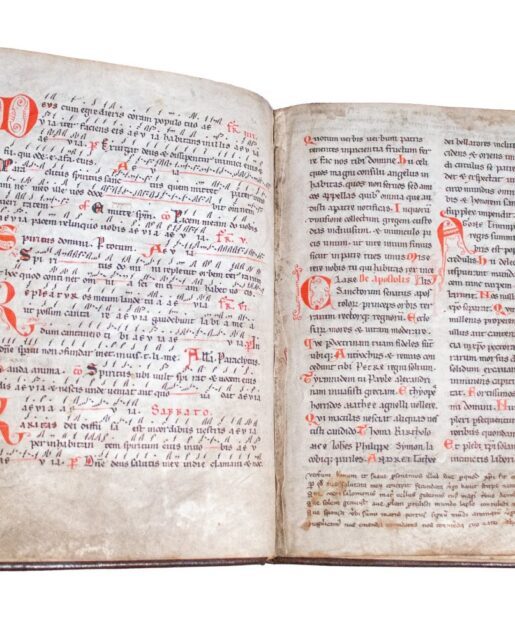
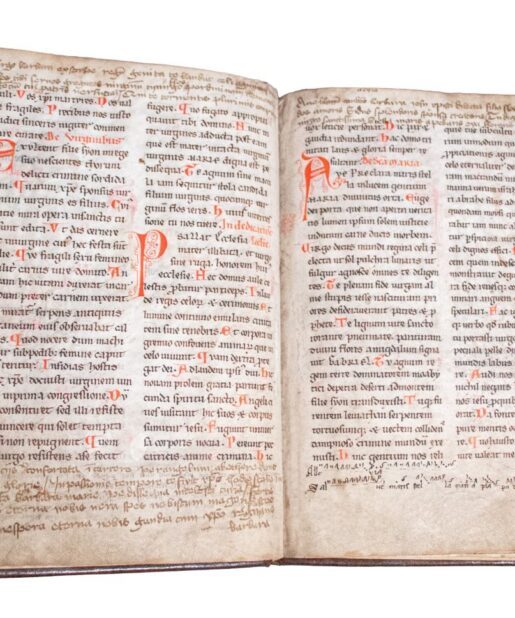
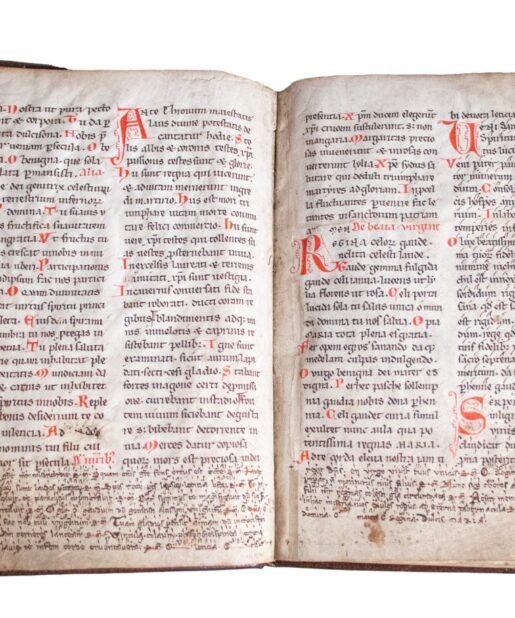
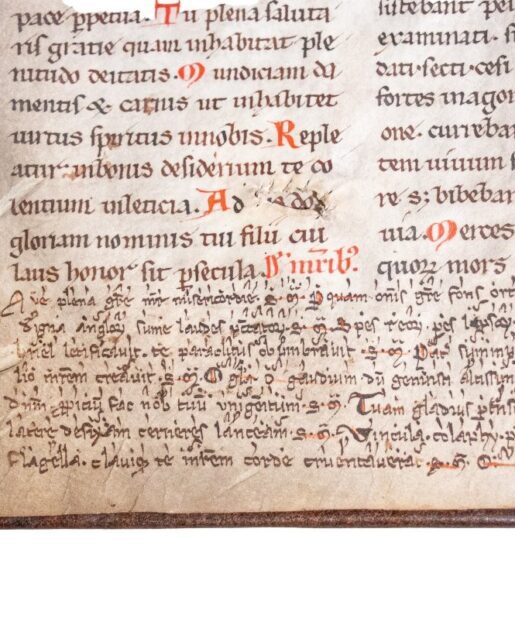
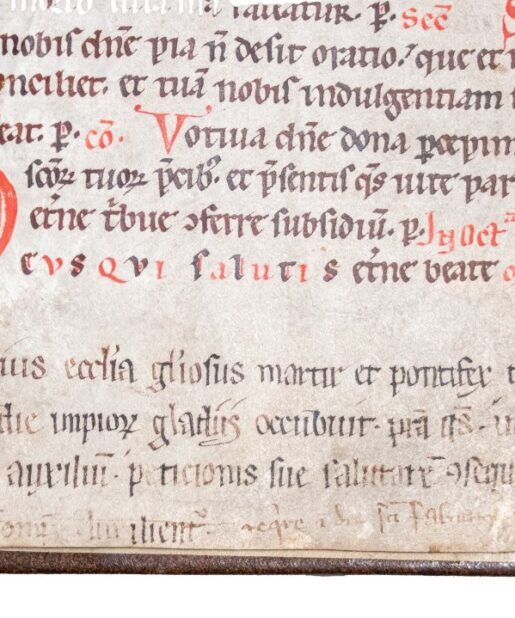
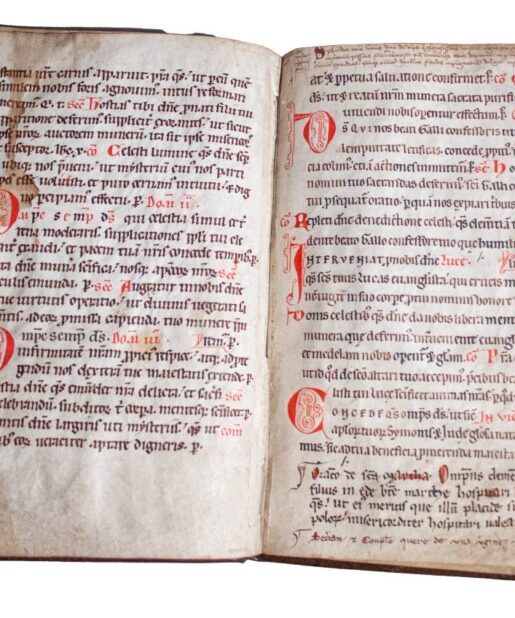


C12th Missal with coloured initial and annotation on the Anniversary of the Martyrdom of Tomas Beckett. Before 1173
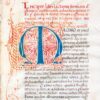
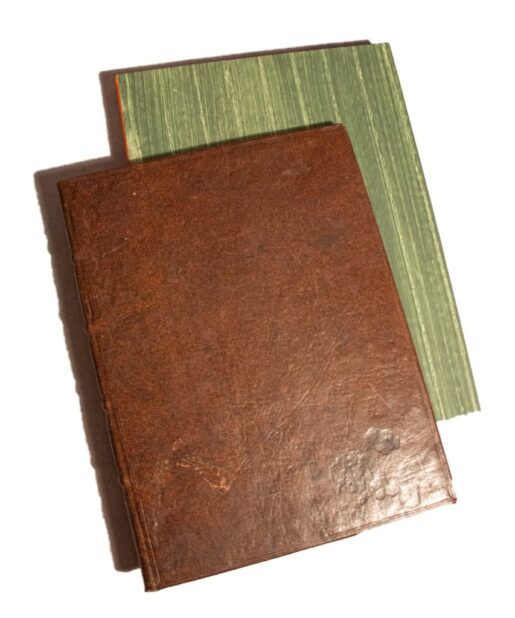
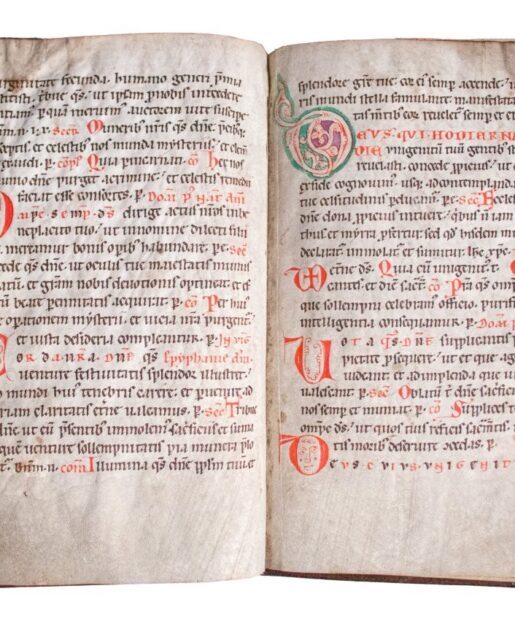
LEAVES FROM A SACRAMENTARY. In Latin, decorated manuscript on vellum. [Austria or southern Germany, second half 12th century] c.290 x 220 mm.
Description
8 leaves and one flyleaf.
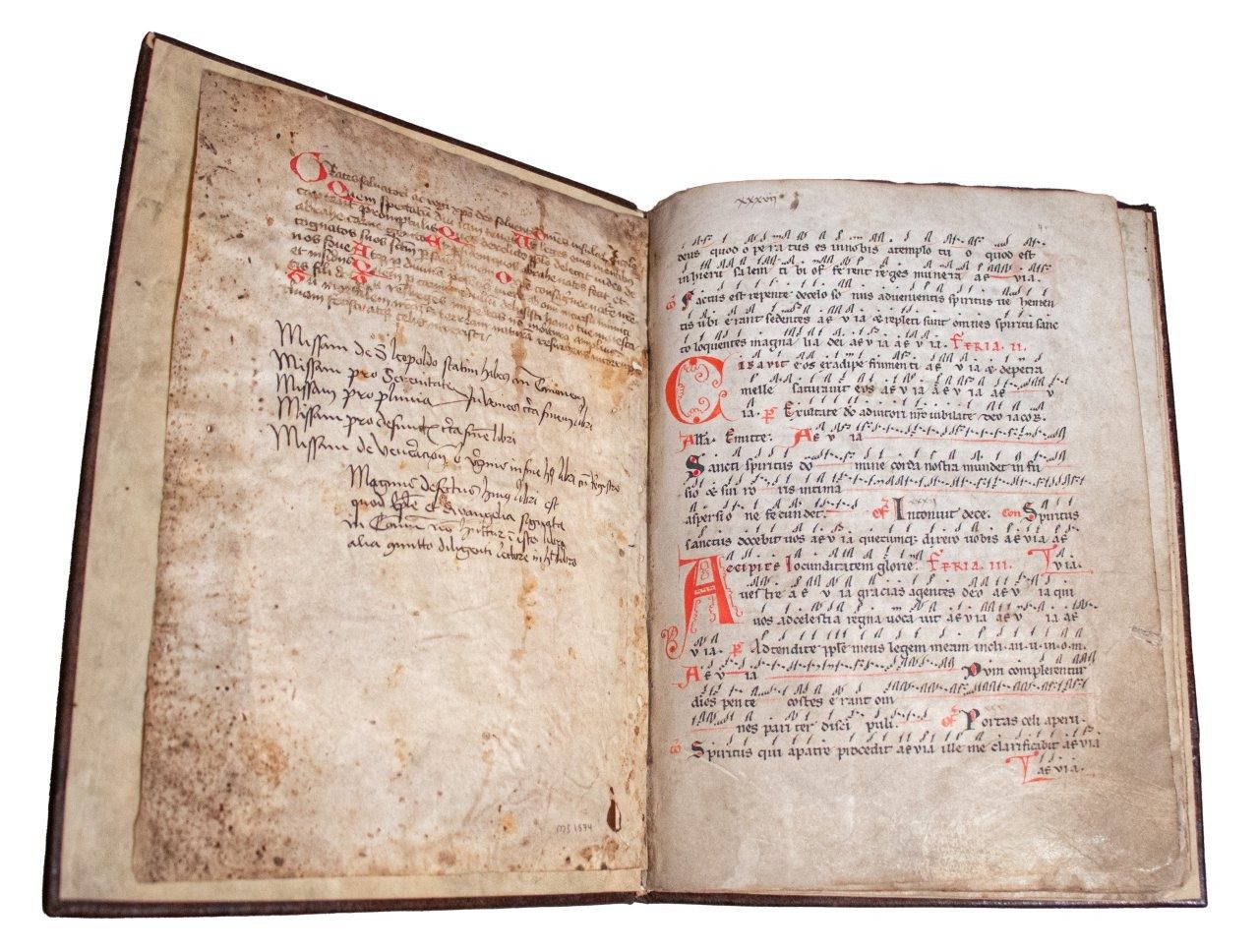
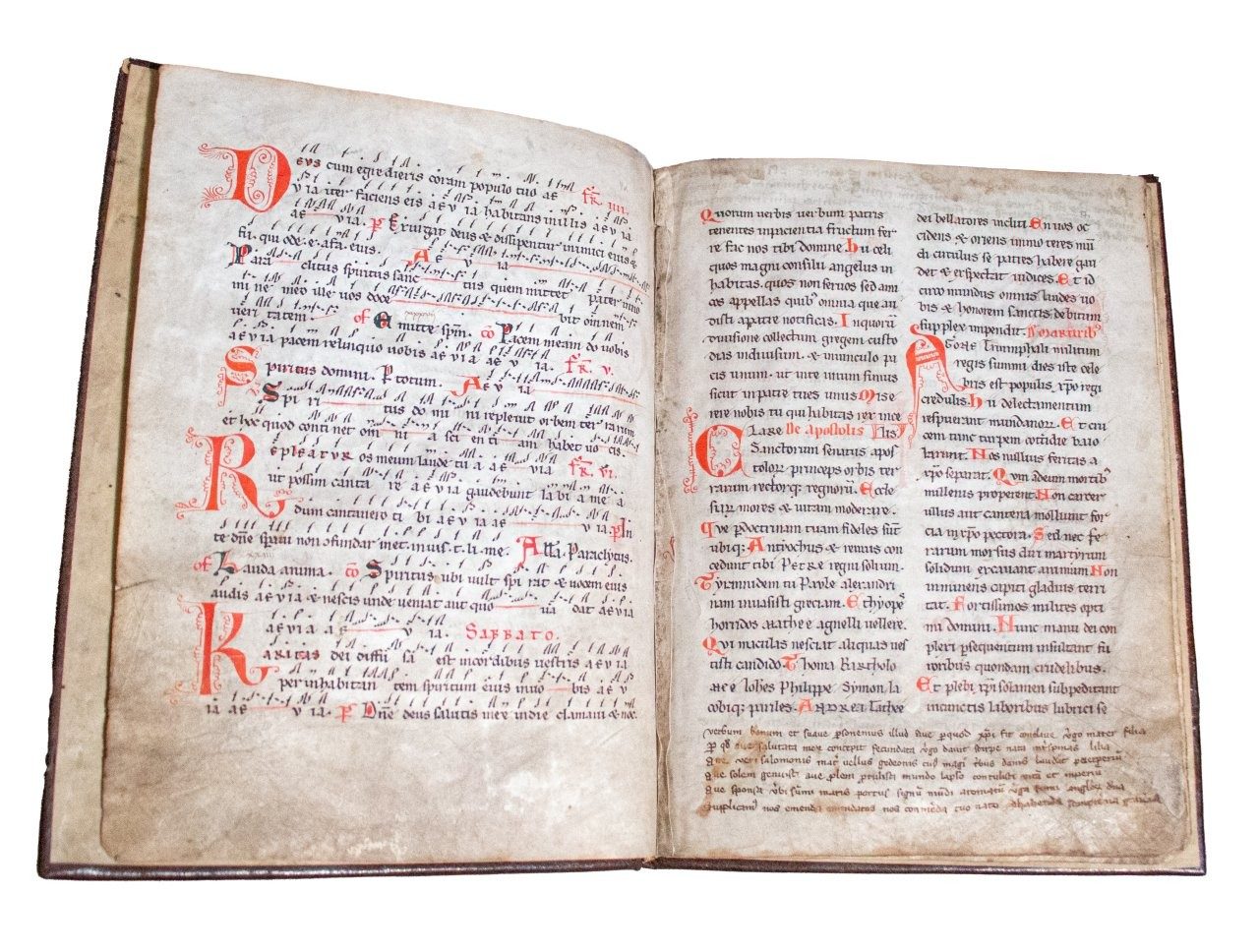
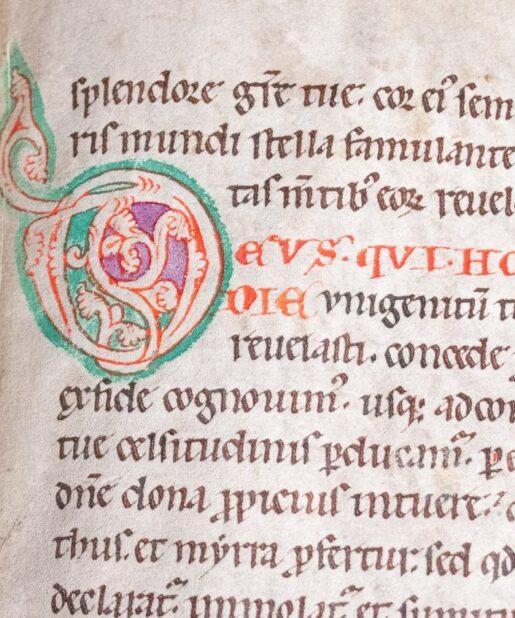
4 leaves with 27 lines in two columns and 4 with a single column of 21 lines written in Romanesque script, incipit words in majuscules, rubrics and 33 ornamented initials in red, one decorated 6-line initial with leafy infill in red and mauve with green contouring, one 2-line historiated initial with penwork infill depicting a human face, early German diastematic (heightened) neumes, original gathering threads survive, the leaves foliated twice in modern pencil, f.4 with an earlier roman numeration ‘xxxvii’, several medieval textual and musical additions in margins
Some marginal staining, clean vertical incisions to some inner margins,
A handsome example of Romanesque script with early German neumes: a significant fragment of an important 12th-century Sacramentary – that part of the Roman Missal which contains the prayers and directives for Mass, and a number of sacramental formulas, but does not include the readings of the Mass.
Script and Music
This example of well-developed and conscious Romanesque reveals great regularity in line and spacing and there was evidently no pressure on the scribe as to space. The form, angularity and spacing of the letters is reminiscent of a leaf from another Sacramentary now at the J. Paul Getty Museum in Los Angeles, Ms. Ludwig V 3 – also southern German or Austrian and dating from the third quarter of the 12th century. The diastematic neumes represent a first step away from primitive linear musical notation. They give an indication of the relative height among the neumes, but not the exact pitch, as a stave or clef will do.
Provenance
1 The present leaves are from the same manuscript as ten leaves described in The McCarthy Collection, II (2019), no 35, most of which were sold by London dealers in the 1990s. The surviving modern double-pencil foliation suggests that at least 47 leaves from the parent manuscript survived together in the 20th century. The parent manuscript was evidently updated and enhanced with liturgical additions in subsequent centuries. The later medieval inscriptions on the surviving flyleaf mention a Mass of St Leopold, which lends greater weight to a localisation in Austria.
2 The present leaves were owned by Dr Fritz Zeileis, Linz, Austria (1898- 1978).
3 Jörn Günther, Hamburg, April 1992.
4 Schøyen Collection, MS 1574.
Exhibited
Oslo Katedralskole 850 år, Jubileumsutstilling 10-14 March 2003.
Literature
H. Goodall, The Story of Music, 2013. R. Malikènienè, Muzikos Labirintai, Vilnius, 2010, p.68
Product Enquiry
Related products


C14th -C16th manuscripts
Illuminated inital 1500 huge leaf on vellum, from Siena or Florence.
£750.00


C12th - C13th manuscripts
£4,850.00
![Leaf of Passionale in Latin [Italy, 12th century, first half] Lives of St Felicity and St Clement](https://stephenbutler.com/wp-content/uploads/2021/01/IMG_0696-515x618.jpg "Leaf of Passionale in Latin [Italy, 12th century, first half] Lives of St Felicity and St Clement")
C12th - C13th manuscripts
Leaf of Passionale in Latin [Italy, 12th century, first half] Lives of St Felicity and St Clement
£1,200.00
![Pontifical, service book for use by a bishop, in Latin [France, mid- to third quarter of the twelfth century]](https://stephenbutler.com/wp-content/uploads/2024/09/IMG_0290-515x618.jpg "Pontifical, service book for use by a bishop, in Latin [France, mid- to third quarter of the twelfth century]")
C12th - C13th manuscripts
£2,000.00

C12th - C13th manuscripts
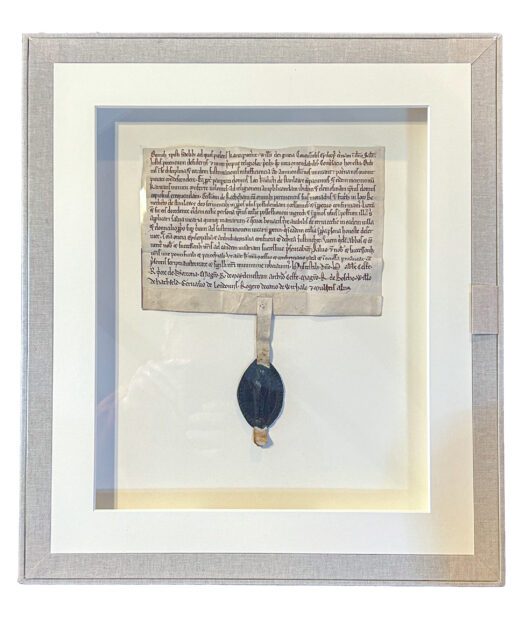
Latin charter granting the church of Rochdale to the Cistercian Abbey of Stanlaw, 1222 AD
£9,500.00

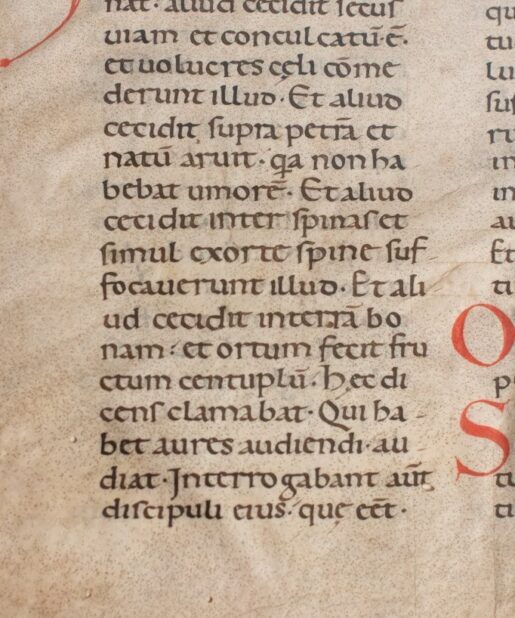
C12th - C13th manuscripts
A Monumental Romanesque Lectionary from Twelfth-Century Italy
£3,000.00
![Two leaves from a Ferial Psalter, in Latin, decorated manuscript on vellum [Germany, mid-12th century]](https://stephenbutler.com/wp-content/uploads/2025/10/IMG_1173-515x618.jpg "Two leaves from a Ferial Psalter, in Latin, decorated manuscript on vellum [Germany, mid-12th century]")
![Two leaves from a Ferial Psalter, in Latin, decorated manuscript on vellum [Germany, mid-12th century]](https://stephenbutler.com/wp-content/uploads/2025/10/IMG_1172-515x618.jpg "Two leaves from a Ferial Psalter, in Latin, decorated manuscript on vellum [Germany, mid-12th century]")
C12th - C13th manuscripts
£2,500.00


C12th - C13th manuscripts
£5,000.00