






This piece has been placed.
Many works of comparable significance pass through our hands each year.
If you’re seeking something similar, please send us an enquiry or browse recent acquisitions.
Lactantius; a precisely dated manuscript copy almost certainly derived from the 1465 editio princeps, preserving rare evidence for the transition from manuscript to print
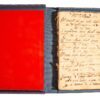
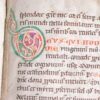
£30,000.00
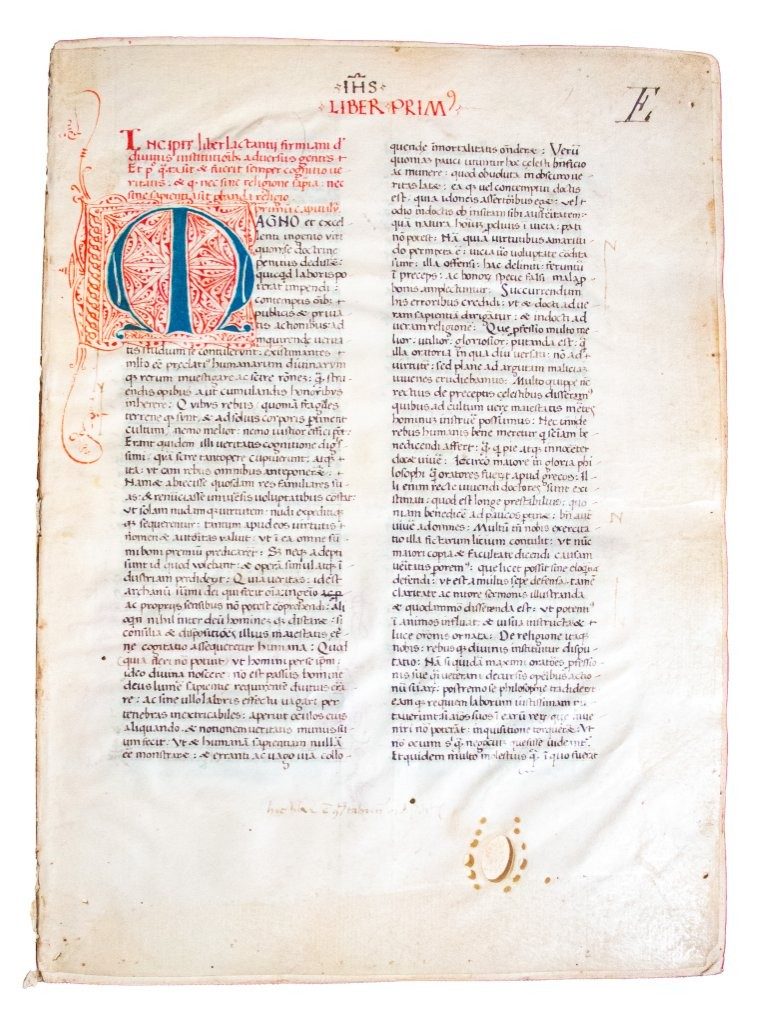
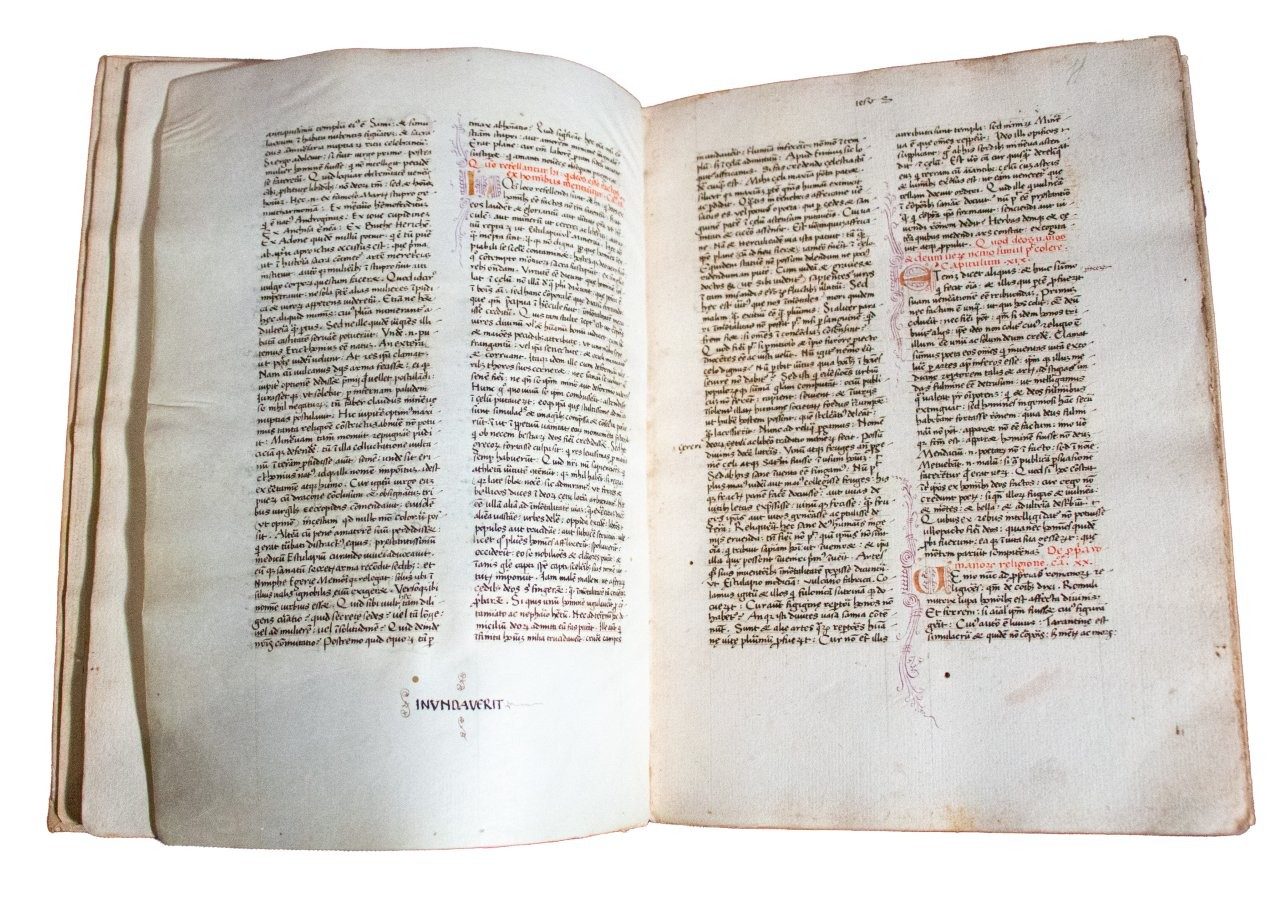
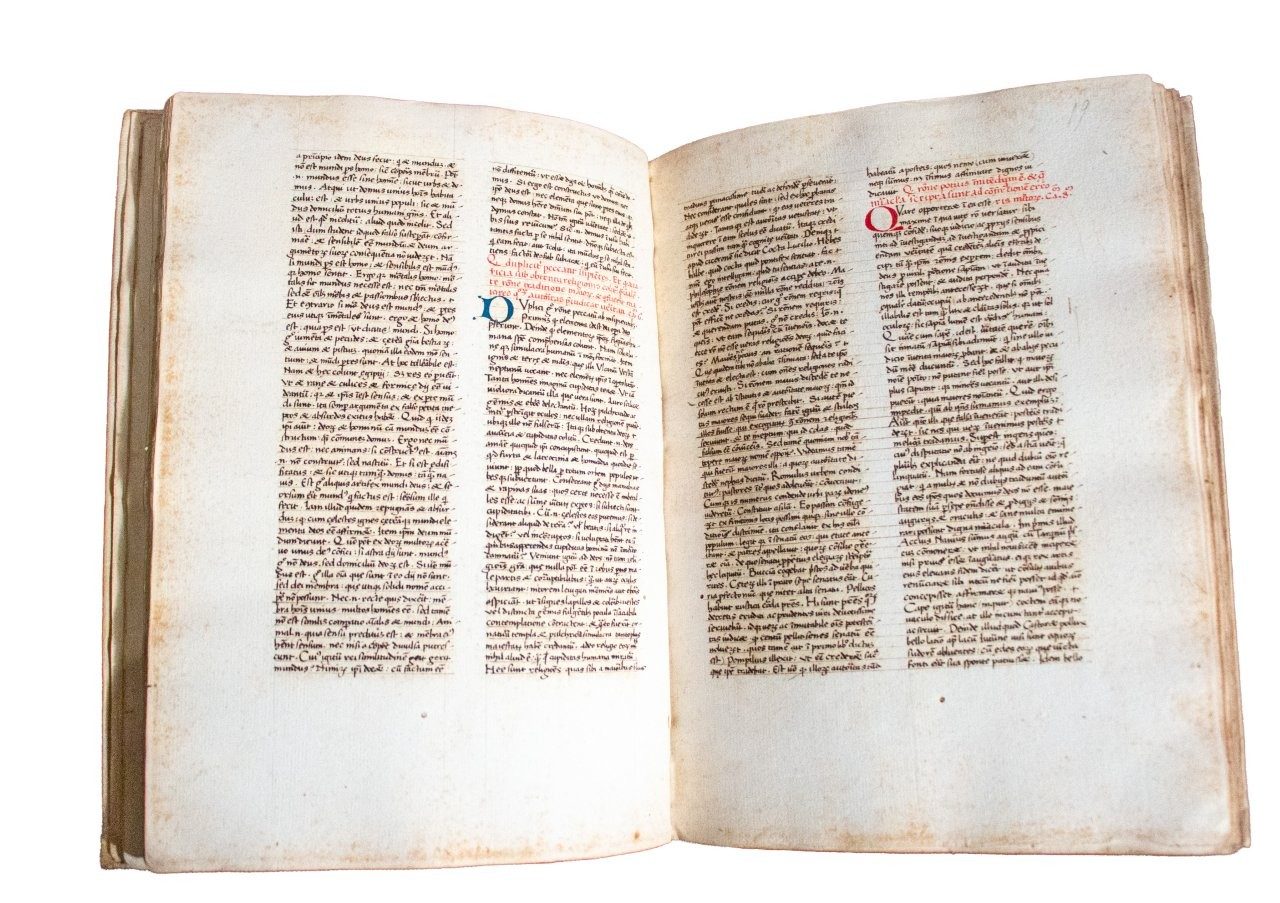
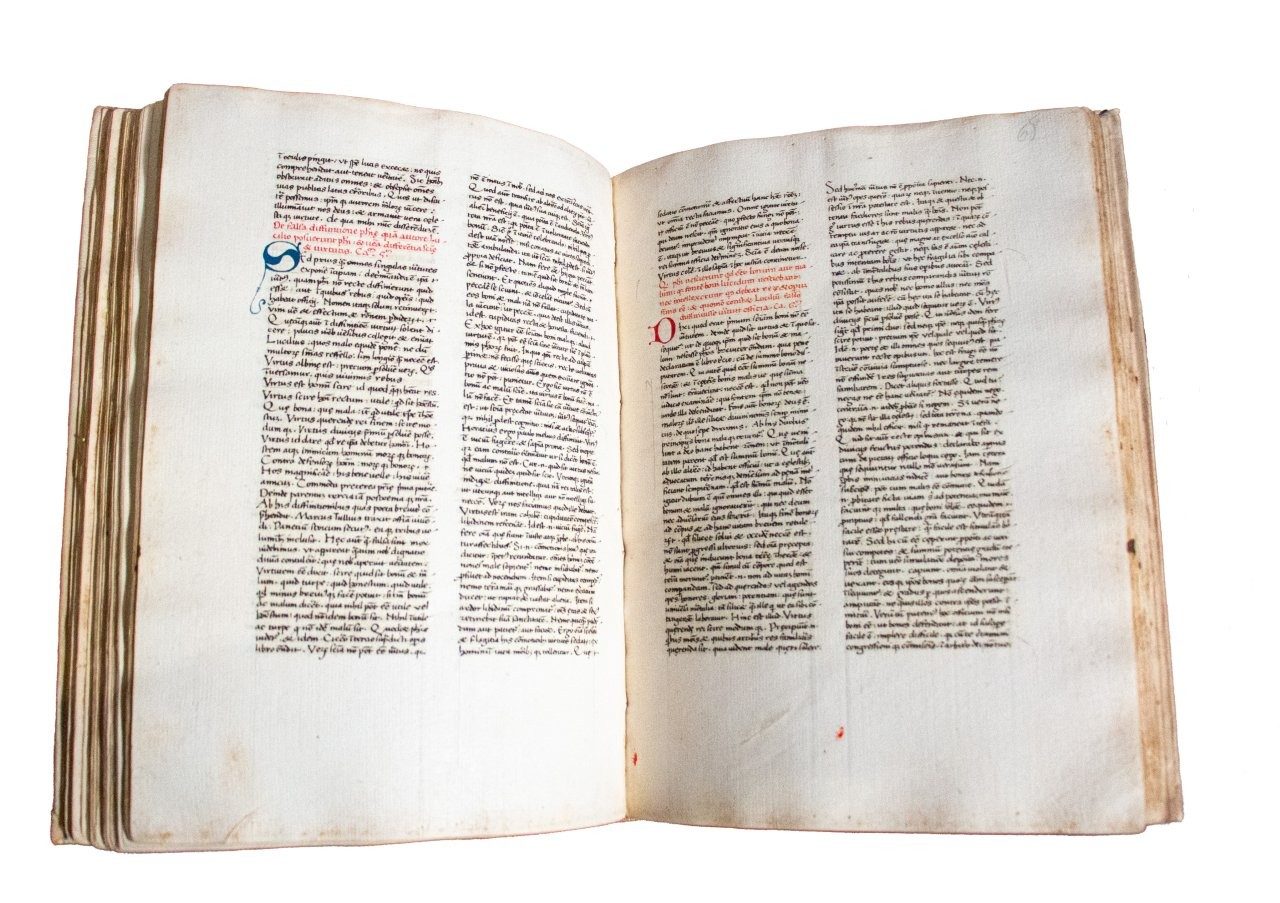
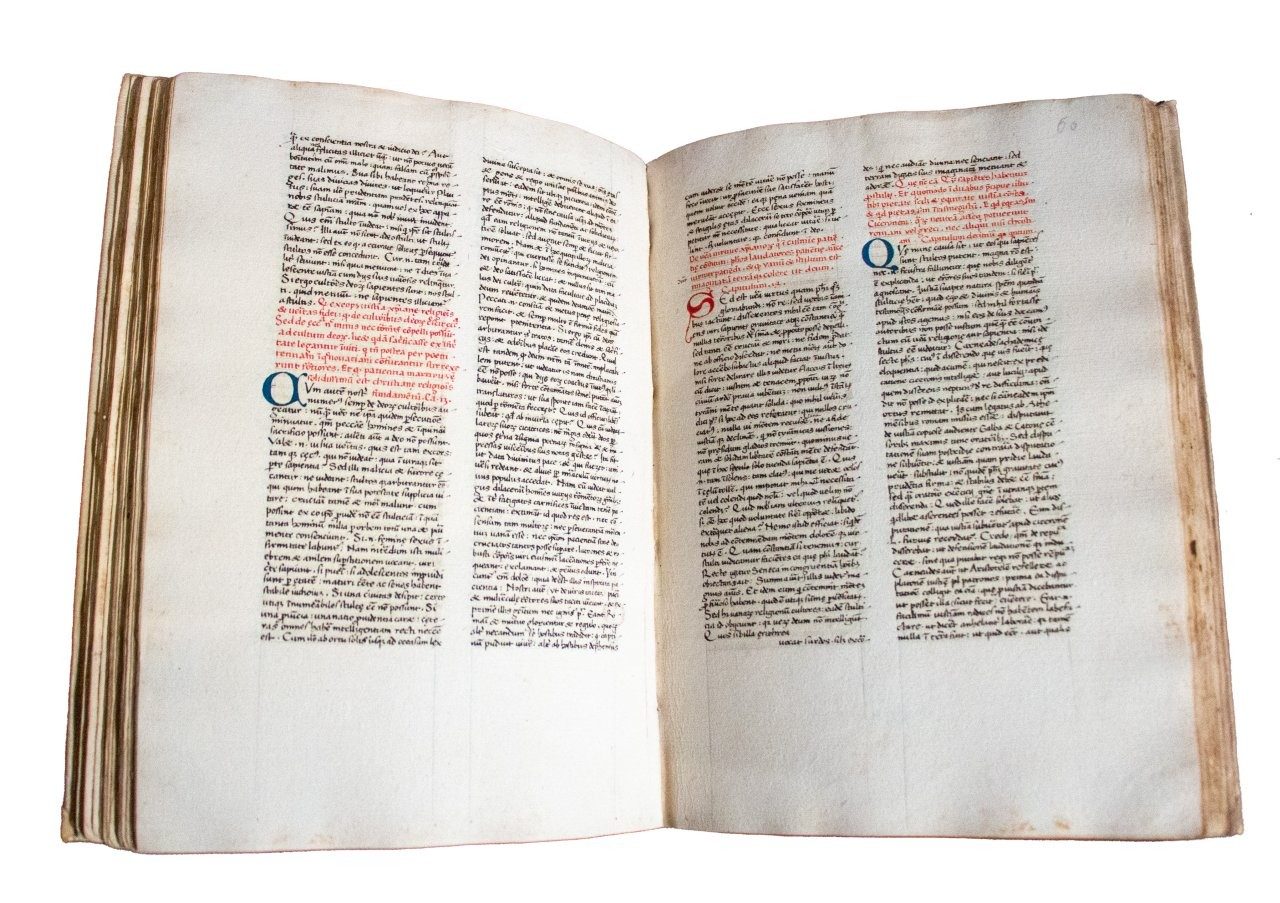
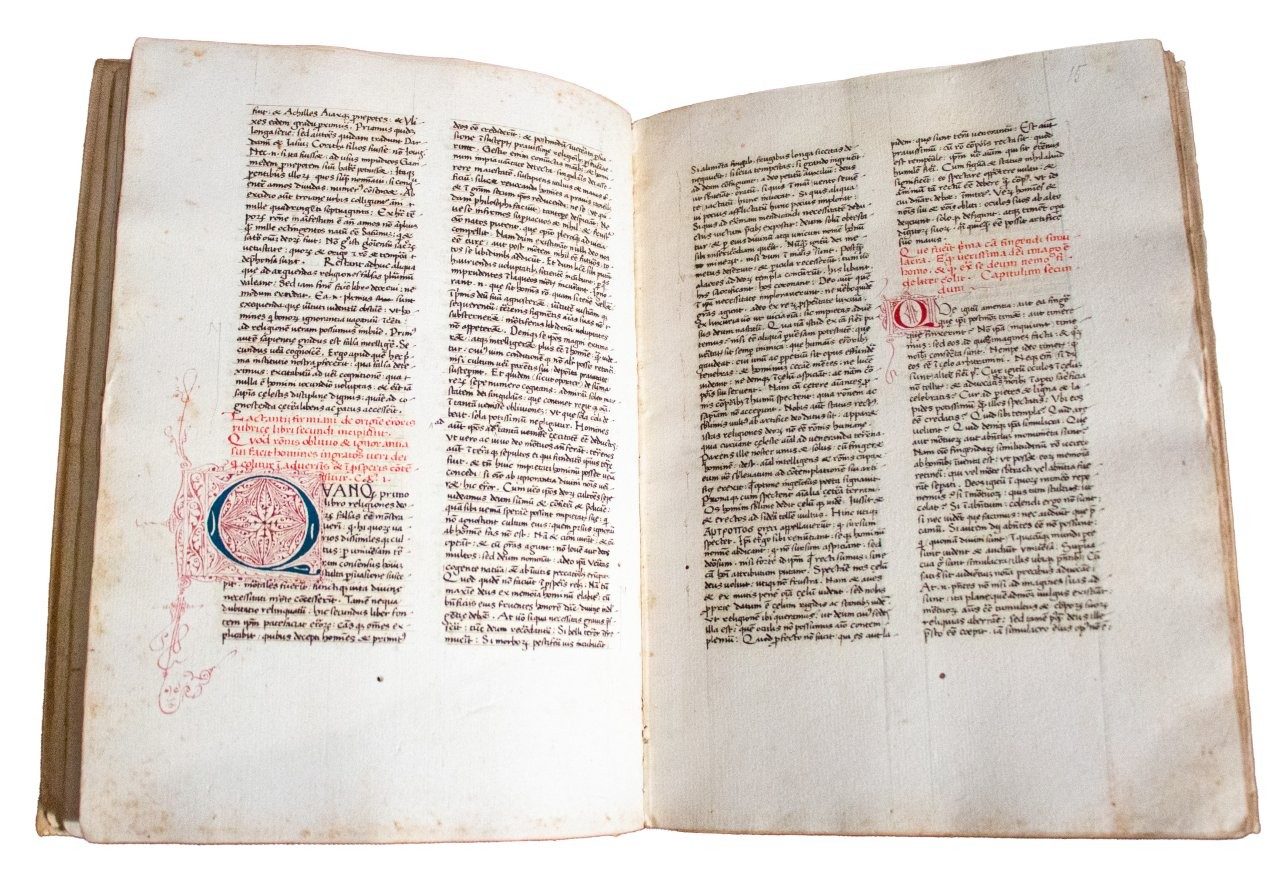
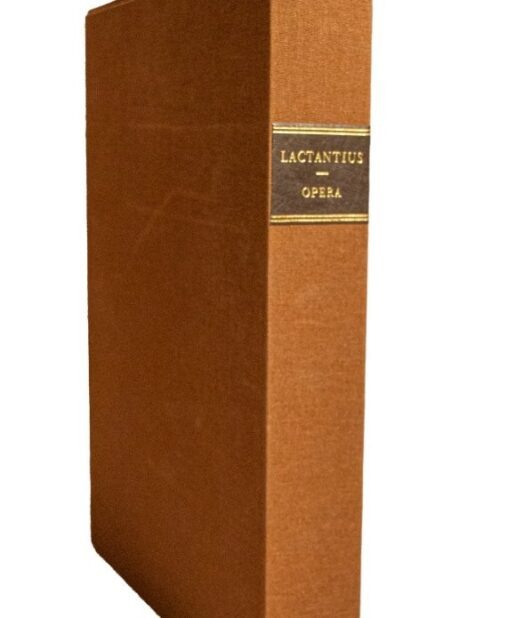
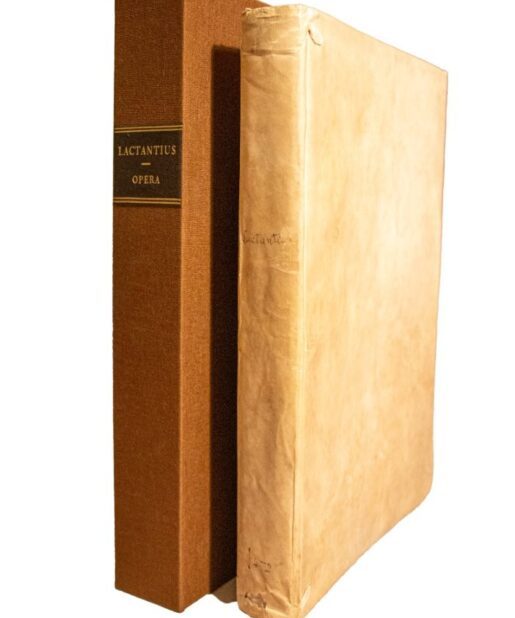
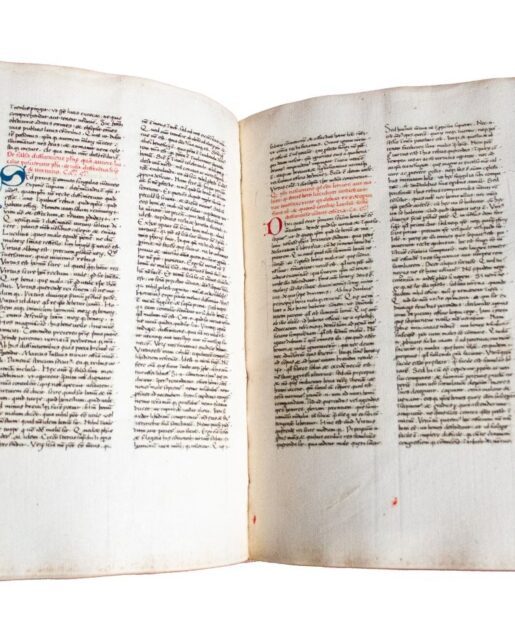
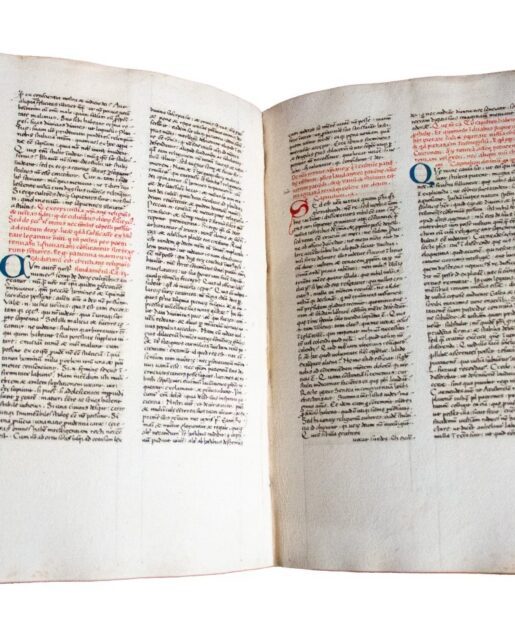
LACTANTIUS. Divinarum Institutionum Libri VII + De Ira Dei + De Opificio Dei. Decorated manuscript in Latin and Greek. [Northern Italy (likely Genoa) 1472] 285 x 205 mm.
A precisely dated manuscript copy almost certainly derived from the 1465 editio princeps, preserving rare evidence for the transition from manuscript to print
Italy (probably Genoa), 31 August 1472
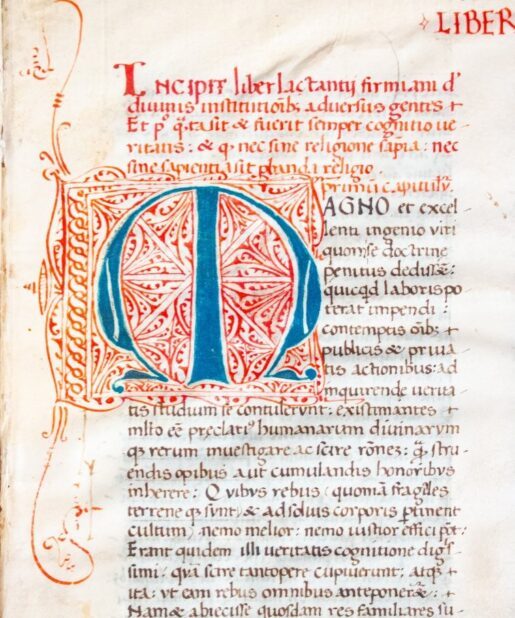
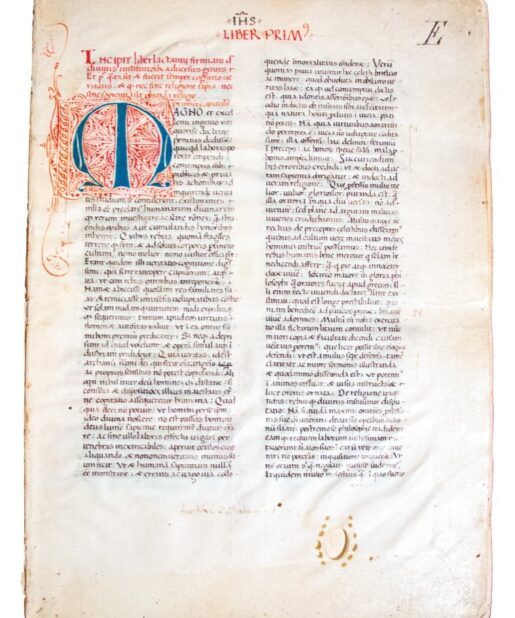
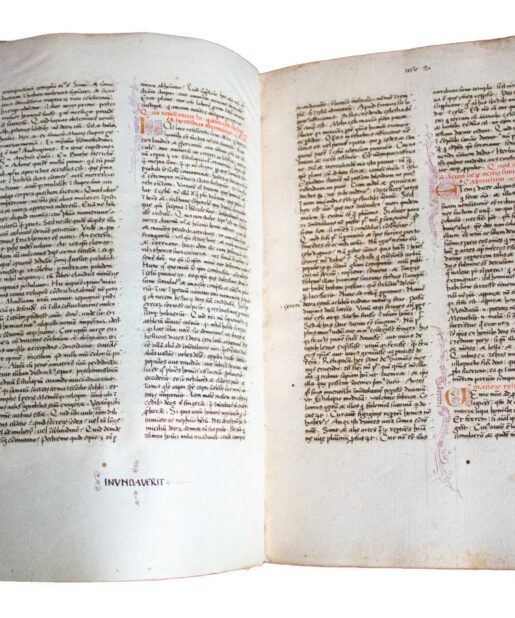
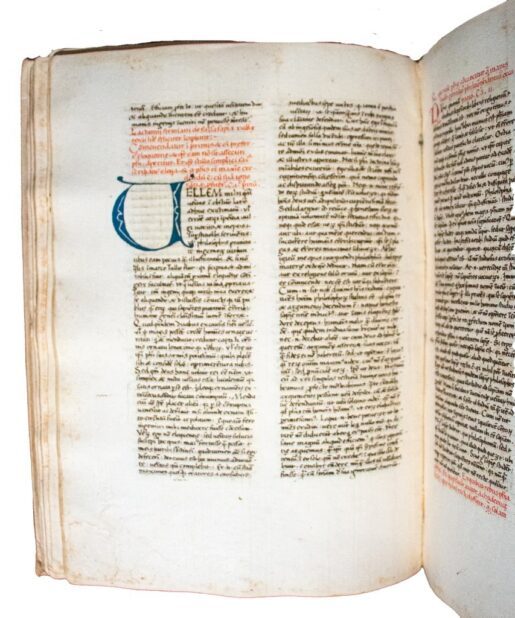
Manuscript on paper, with vellum in binding, 285 × 205 mm, 112 leaves, complete, written in two columns of 47 lines in a fine humanistic hand with influence of secretarial script, ruled in black ink within single bounding lines. Rubrics in red, two-line initials in red, purple, or blue with contrasting penwork; larger initials in red and blue; and several very large initials, 8 to 10 lines high, with elaborate scrolling geometric penwork infill and floral terminations extending into the margins. Spaces left for a number of Greek quotations. Bound in 18th- or early 19th-century vellum over thin paper boards.
Contents
ff. 1r–92v: Divinae institutiones adversus gentes, opening:
Incipit liber Lactantii Firmiani de divinis institutionibus adversus gentes… Magno et…
ff. 92v–102r: De ira Dei ad Donatum, opening:
Animadverti saepe…
ff. 102r–111r: De opificio Dei vel formatione hominis, opening:
Quam minime…
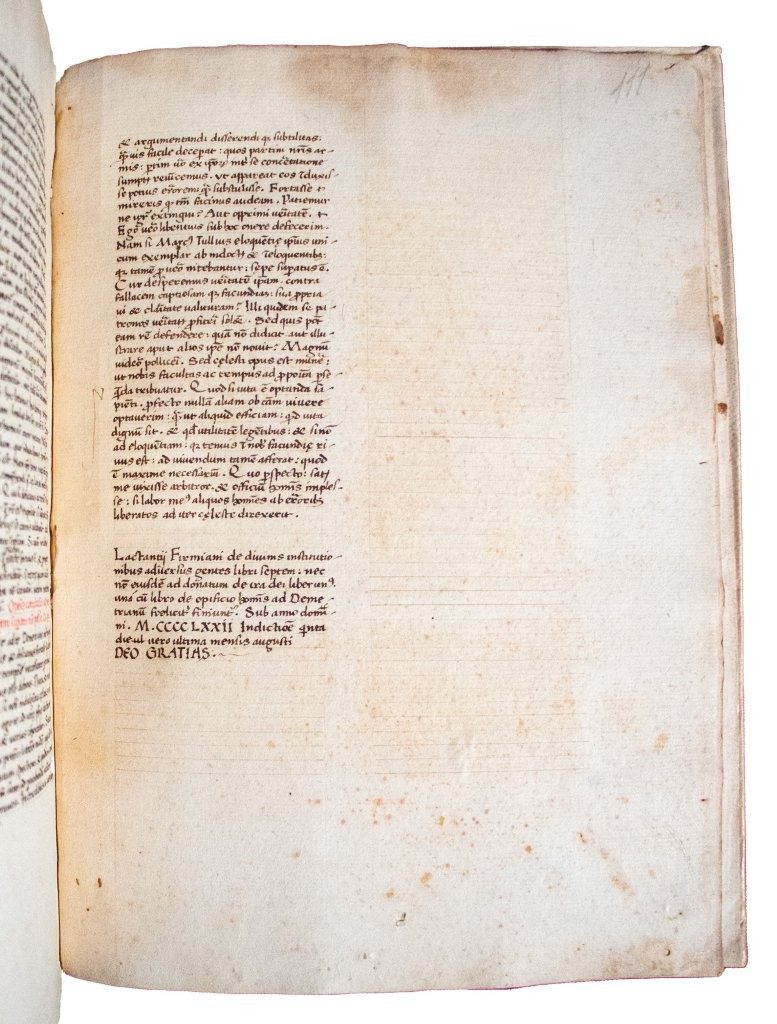
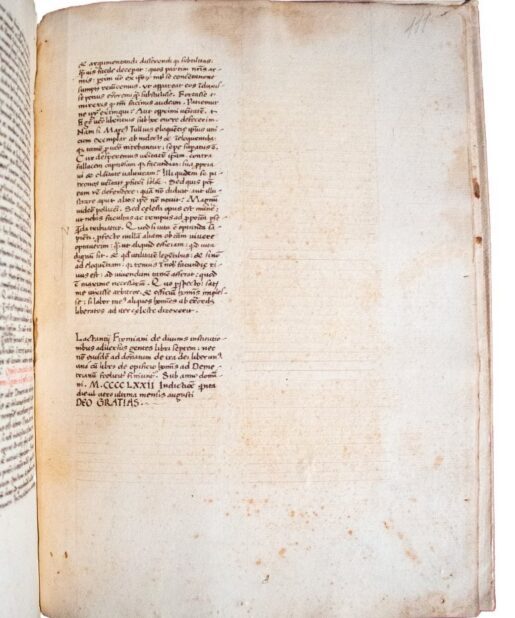
f. 111r: Colophon:
Lactantii Firmiani de divinis institutionibus adversus gentes libri septem: necnon eiusdem ad Donatum de ira dei liber unus, uni cum libro de opificio hominis ad Demeterianum foeliciter finiuntur. Sub anno domini M.CCCCLXXII Indictione quinta die ul vero ultima mensis Augusti. Deo Gratias.
Provenance
- At the foot of f. 1r a near-contemporary Dominican ownership inscription:
- .“Hic liber est conventus rabiensis ordinis predicatorum.”
- . Later shelfmark “E” in brown ink on f. 1r, probably 19th century.
A manuscript at the hinge-point between scribal and printed culture
This is an unusually revealing and intellectually attractive late humanist manuscript of Lactantius, copied at a moment when the authority of the manuscript book had not yet yielded fully to print. Although written in 1472, seven years after the appearance of the 1465 Sweynheym and Pannartz edition at Subiaco — the first dated book printed in Italy and the editio princeps of Lactantius — the present codex is not merely a late manuscript witness to a classical text, but rather a rare and early document of how printed texts were themselves re-transmitted in manuscript form.
The evidence for dependence on the 1465 edition is especially striking. Most notably, the colophon appears to be consciously adapted from that of the Sweynheym and Pannartz printing, with the date altered to 1472, suggesting that the manuscript was copied directly or indirectly from that printed exemplar or from a closely related descendant. This feature alone gives the manuscript unusual bibliographical interest, for it preserves the moment at which the language and authority of print are absorbed back into the conventions of scribal production.
That relationship becomes even more compelling in the treatment of the Greek quotations. As in the earliest printed Lactantius tradition, the Greek text is here not fully resolved: spaces are left for a number of Greek passages, but these remain unfilled. This is highly significant. The handling of Greek in Lactantius — both in manuscript and in print — remains an understudied aspect of the text’s transmission, and this codex belongs to a small and revealing group of late medieval and early Renaissance witnesses that expose the uncertainty surrounding the copying, availability, and authority of Greek passages in a primarily Latin scholarly environment.
The point is of real historical interest. The 1465 Subiaco edition famously handled the Greek inconsistently, leaving blank spaces where suitable type or exemplar readings were lacking, while later editions, such as the 1468 Roman printing, offered a fuller Greek text. The present manuscript appears to stand precisely within that transitional zone: a scribal book produced in the first decade after the editio princeps, yet still bearing the textual scars of the earliest printed state. It is, in effect, a witness not simply to Lactantius, but to the material and intellectual instability of classical transmission in the age of incunables.
Author
Idolised by the Renaissance humanists following his rediscovery in the 15th century, Lactantius was the one of the principal routes through which Renaissance readers came into contact with the Latin Classics. The manuscript is almost certainly a contemporary copy of one of the most important printed books of the incunable period, the 1465 Subiaco Lactantius, the first dated book printed in Italy, only the second extant book printed outside of Germany, and the first printed work to use a full Greek type. As such it is an intriguing example of the interplay between the printed book and manuscripts at a critical moment when printing was at its inception in Italy.
Text
Very unusually this manuscript includes all three of the best-known works of Lactantius: The first work in the present manuscript, the Divinarum Institutionum Libri VII, is his magnum opus, written during his period of court exile. It contains seven treatises which set out a comprehensive survey of Christian theology, and build an argument intended to show the truth of Christianity and futility of pagan beliefs. More importantly for the Renaissance and modern readers, Lactantius frequently quotes Classical sources in his work – such as Cicero, Hortensius and Consolatio – and in fact this was the principal vehicle through which Renaissance readers came into contact with the Latin Classics.
The following shorter works, De Ira Dei and De Opificio Dei address the problems of how to under- stand the anger attributed to God in the text of the Old Testament and set out more briefly the Christian principles which would later grow into the Divinarum Institutionum.
Provenance
1 Most probably written in Genoa in 1472. The colophon is adapted from that of the Sweynheym and Pannartz edition of 1465 to give the variant date “M.CCC LXXII”.
2 Within a few decades it was in the library of a Dominican convent and has their near-contemporary ex-libris at the foot of fol. 1r: “hic liber est conventus rabiensis ordinis predicatorum”.
3 A shelfmark “E” in brown ink in a 19th-century hand.
Literature
Ogilvie, R. The Library of Lactantius. Oxford, 1978.
Product Enquiry
Related products
C14th -C16th manuscripts
£7,500.00
Arabic and Ottoman
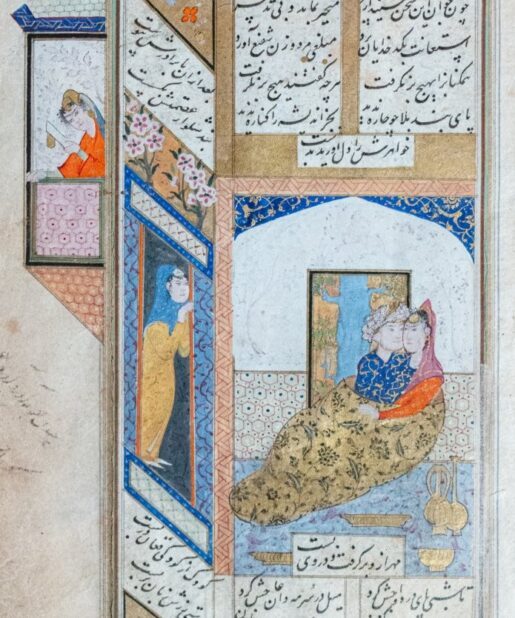
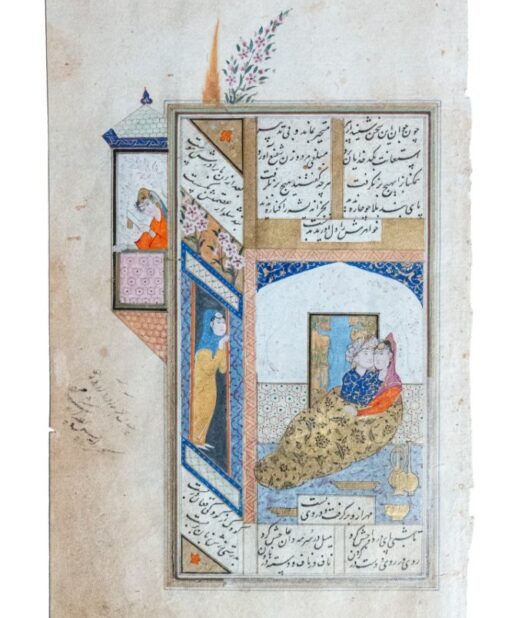
Shīrīn reads Khusraw’s letter. A fine C16th Persian miniature of ‘Two Lovers’ from Nizami’s, Khamsa.
£5,000.00
![Leaf from Baldo degli Ubaldi (1327–1400), Sextum codicis librum commentaria [Italy, late 15th century]](https://stephenbutler.com/wp-content/uploads/2023/07/IMG_0101-515x618.jpg "Leaf from Baldo degli Ubaldi (1327–1400), Sextum codicis librum commentaria [Italy, late 15th century]")
C14th -C16th manuscripts
£800.00

C14th -C16th manuscripts
£1,500.00
![A possibly unique and unknown manuscript from the library of Sir Thomas Phillipps. Anonymous Dominican compiler, Liber de fructibus penitentiae (alias Flores de penitentia or Summa aurea) [Southern France (Provence?), 14th century (1st half)]](https://stephenbutler.com/wp-content/uploads/2025/04/IMG_1518-515x618.jpg "A possibly unique and unknown manuscript from the library of Sir Thomas Phillipps. Anonymous Dominican compiler, Liber de fructibus penitentiae (alias Flores de penitentia or Summa aurea) [Southern France (Provence?), 14th century (1st half)]")
![A possibly unique and unknown manuscript from the library of Sir Thomas Phillipps. Anonymous Dominican compiler, Liber de fructibus penitentiae (alias Flores de penitentia or Summa aurea) [Southern France (Provence?), 14th century (1st half)]](https://stephenbutler.com/wp-content/uploads/2025/04/IMG_1510-515x618.jpg "A possibly unique and unknown manuscript from the library of Sir Thomas Phillipps. Anonymous Dominican compiler, Liber de fructibus penitentiae (alias Flores de penitentia or Summa aurea) [Southern France (Provence?), 14th century (1st half)]")

C14th -C16th manuscripts
£400.00


C14th -C16th manuscripts
Complete gathering of 8 leaves from a Book of Hours, Flanders or northern France c.1450-1475
£1,800.00


C14th -C16th manuscripts
A substantial fragment of Jean Buridan on late C14th watermarked paper on 47 leaves
£12,000.00