




A Medieval English Voice in the Margin: Two Leaves from the ‘Cambridge Bible’, with Latin and Middle English Glosses
[ENGLAND, probably Cambridge or East Anglia, c. 1220s]
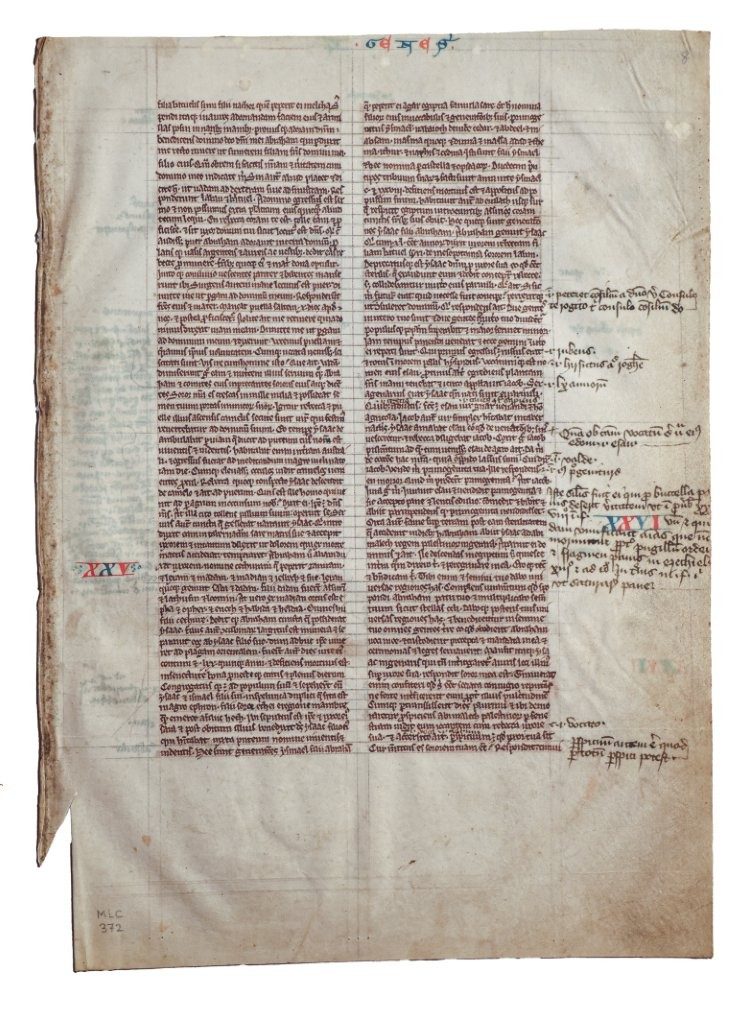
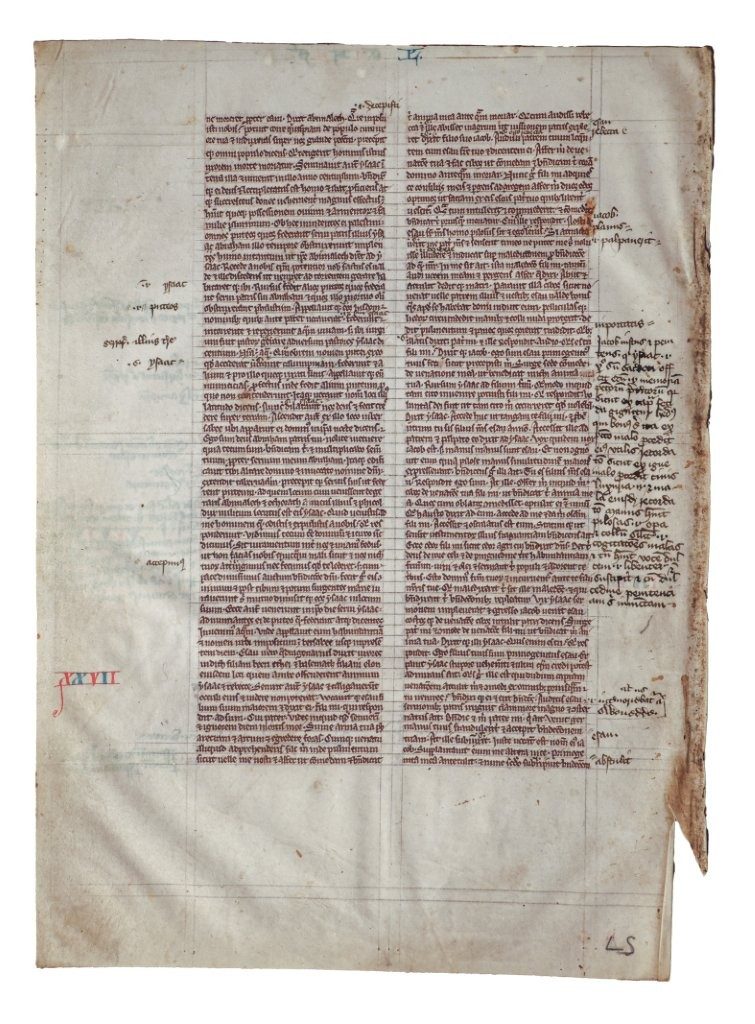
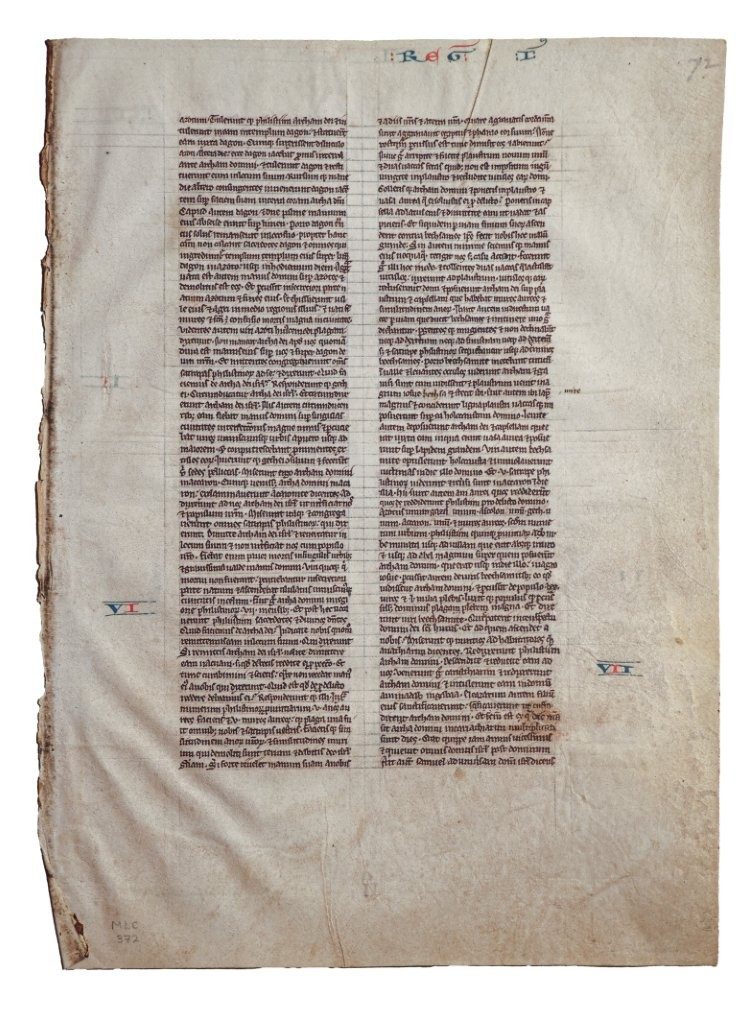
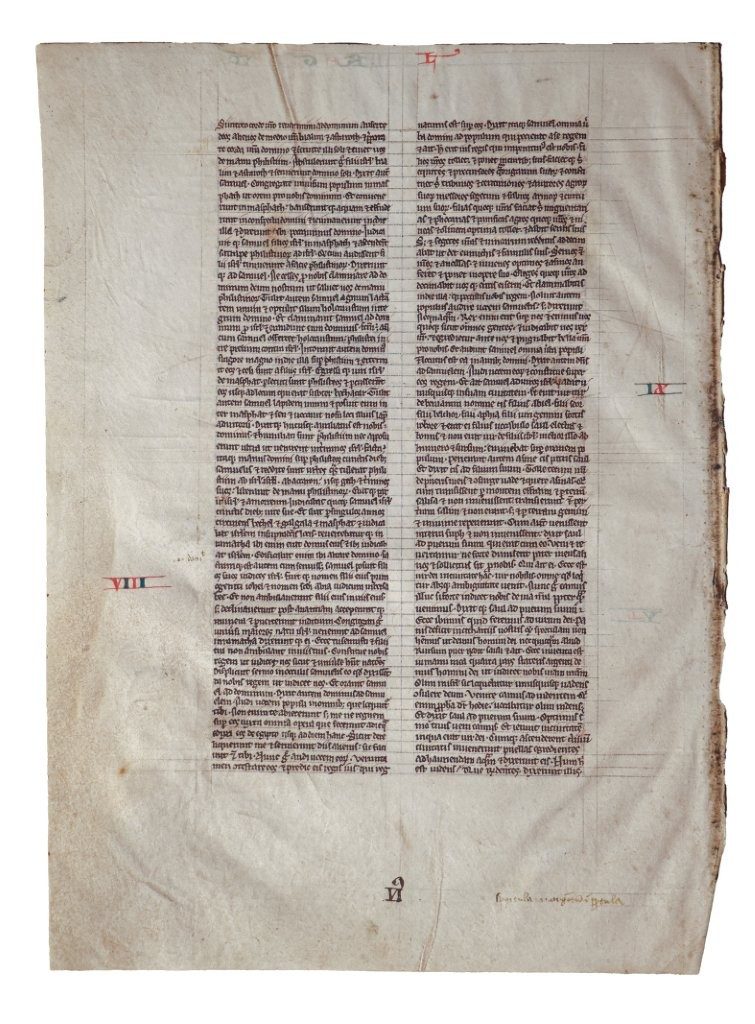
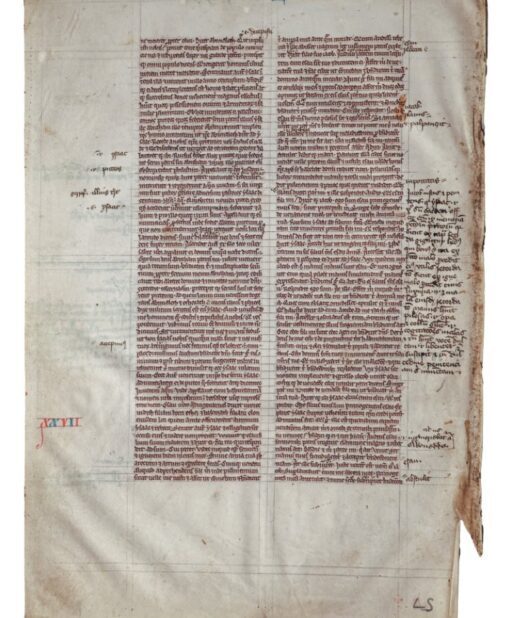
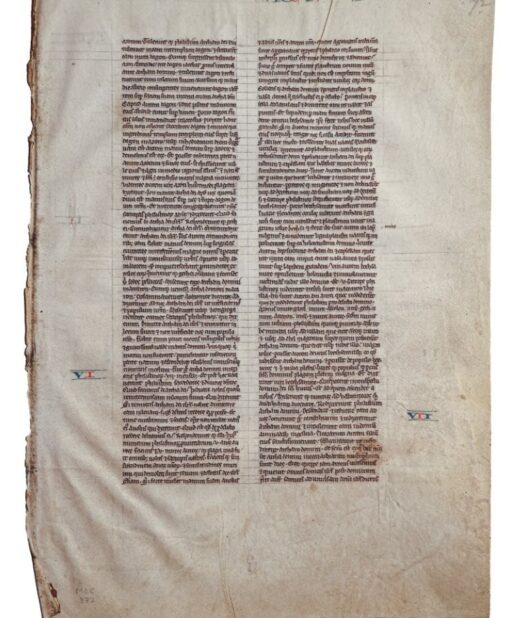
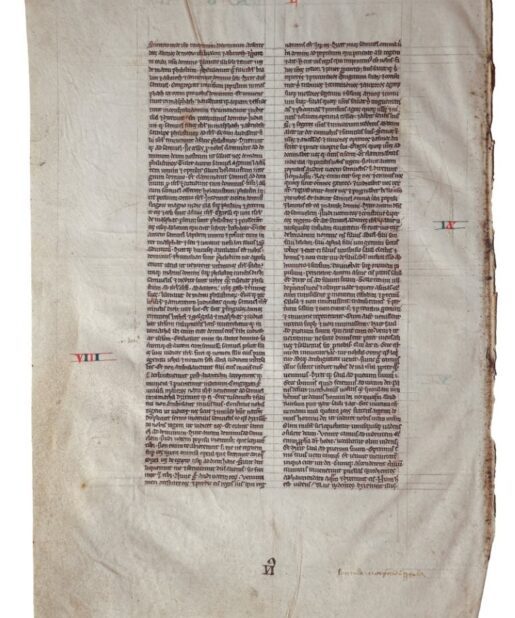
Two leaves from the large-format English Bible manuscript later dispersed by Otto F. Ege as the ‘Cambridge Bible’, on vellum, each approximately 277 × 203 mm, written in two columns of 60 lines in a fine and regular early Gothic bookhand, ruled in plummet, with chapter numerals and running headings in alternating red and blue; modern pencil foliation f.8 and f.72.
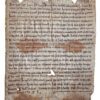
The first leaf contains text from Genesis 24:47–27:36; the second from I Kings 5–9, the latter preserving the quire signature “VI”. Both leaves survive with broad margins and visible ruling, and preserve evidence of later medieval scholarly use in the form of interlinear and marginal annotation.
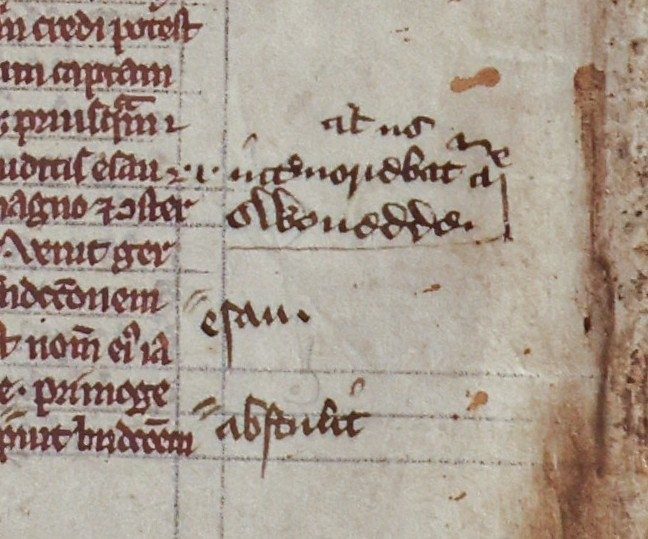
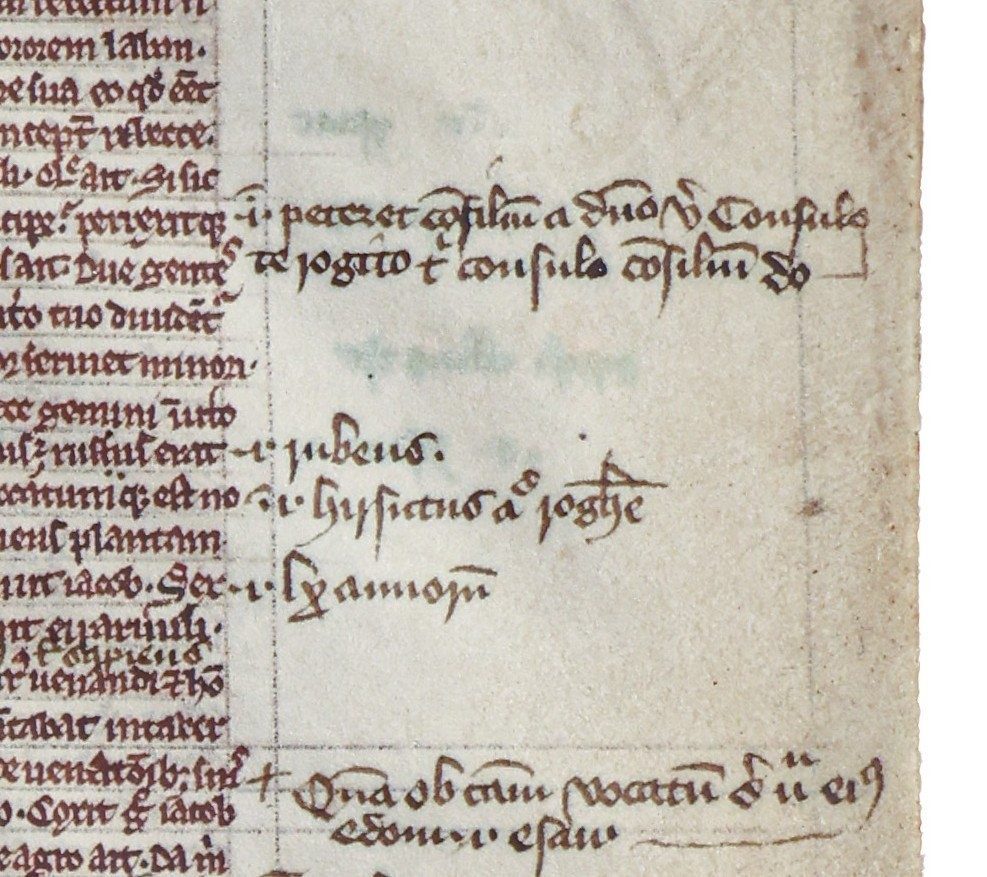
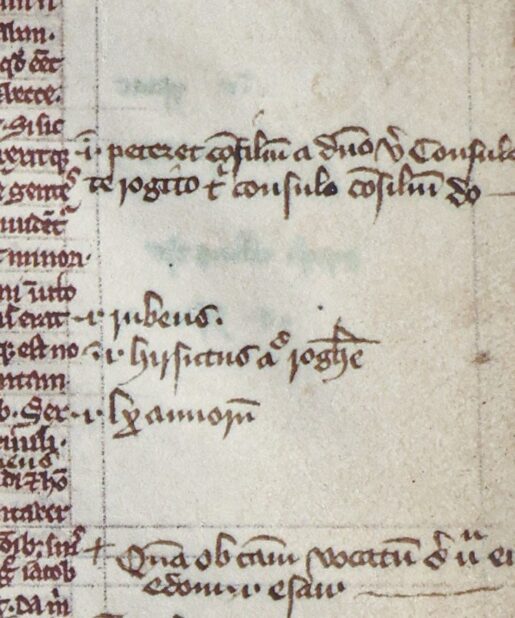
What gives the present leaves particular interest is the survival of a small but highly suggestive layer of vernacular engagement in the margins. The Genesis leaf carries Latin marginal glosses in a later cursive hand, and on the verso a further hand appears to gloss the manuscript’s reading “irriguit” (for irrugiit) with the word “swouedde”, apparently the perfect of Middle English swouen, “to roar, sigh, or sound aloud.” If so, the note preserves not merely scholarly correction but an instance of medieval English reading practice, in which a difficult or unusual biblical word was rendered into the living vernacular of its reader.
This is precisely the sort of evidence that transforms a handsome Bible leaf into something far more intimate and human: a witness not only to the production of the great thirteenth-century English Bibles, but to their continued use, interpretation, and linguistic afterlife. The glosses suggest a manuscript that remained in active consultation, perhaps in a scholarly, monastic, or pedagogical context, where Latin scripture was being mediated through explanatory annotation and, at least occasionally, through English.
The parent manuscript belongs to the distinguished group of early thirteenth-century English Bibles associated with the manuscript long known in the trade as the ‘Cambridge Bible’, one of the most attractive and recognisable of the manuscripts later broken up by Ege. Leaves from this codex are valued not merely for their visual beauty — the broad page, disciplined textura, and handsome red-and-blue apparatus typical of the period — but because they stand at the beginning of the great age of the portable and textually standardised university Bible in England.
The present pair is especially desirable for combining all three of the qualities most sought after in leaves of this class: strong script, good page design, and evidence of medieval readership. The apparent Middle English gloss gives them a further dimension of rarity and charm, preserving in the margin what is, in effect, a small surviving medieval English voice.
Product Enquiry
Related products
C12th - C13th manuscripts
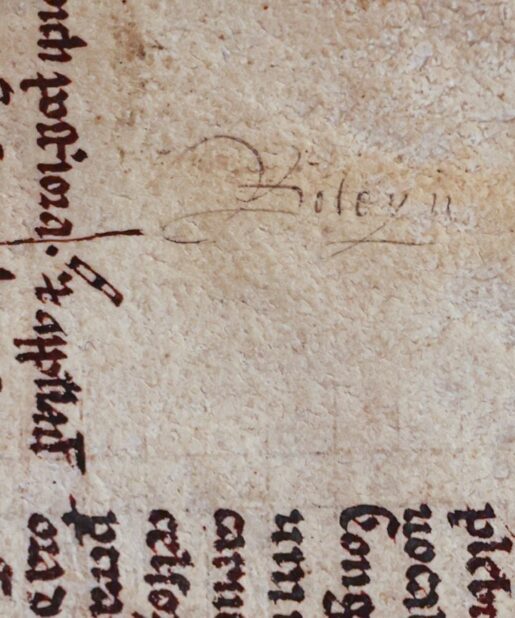
A Tudor “Boleyn” Ownership Inscription in a 13th-Century English Scholastic Manuscript
£3,500.00

C12th - C13th manuscripts
Latin charter granting the church of Rochdale to the Cistercian Abbey of Stanlaw, 1222 AD
£9,500.00
![Pontifical, service book for use by a bishop, in Latin [France, mid- to third quarter of the twelfth century]](https://stephenbutler.com/wp-content/uploads/2024/09/IMG_0290-515x618.jpg "Pontifical, service book for use by a bishop, in Latin [France, mid- to third quarter of the twelfth century]")
C12th - C13th manuscripts
£2,000.00
![A single leaf; Augustine’s Enarrationes in Psalmos, for Psalm 41:6-8 [manuscript]](https://stephenbutler.com/wp-content/uploads/2021/06/IMG_2115-scaled-515x618.jpg "A single leaf; Augustine’s Enarrationes in Psalmos, for Psalm 41:6-8 [manuscript]")
![A single leaf; Augustine’s Enarrationes in Psalmos, for Psalm 41:6-8 [manuscript]](https://stephenbutler.com/wp-content/uploads/2021/06/IMG_2112-scaled-515x618.jpg "A single leaf; Augustine’s Enarrationes in Psalmos, for Psalm 41:6-8 [manuscript]")
£3,750.00
C12th - C13th manuscripts
£1,900.00
£3,800.00
![Leaf of Passionale in Latin [Italy, 12th century, first half] Lives of St Felicity and St Clement](https://stephenbutler.com/wp-content/uploads/2021/01/IMG_0696-515x618.jpg "Leaf of Passionale in Latin [Italy, 12th century, first half] Lives of St Felicity and St Clement")
C12th - C13th manuscripts
Leaf of Passionale in Latin [Italy, 12th century, first half] Lives of St Felicity and St Clement
£1,200.00