

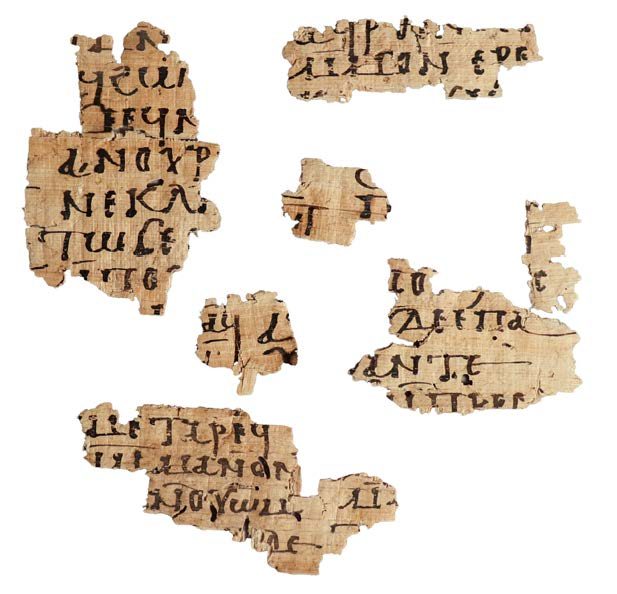

Six Fragments from a Coptic Papyrus Lectionary in Bohairic Dialect
Egypt, 7th–8th century
[largest fragment 76mm x 57mmSix manuscript fragments from a Coptic lectionary codex, written on papyrus in the Bohairic dialect, in brown ink in a clear and disciplined biblical majuscule hand. The fragments preserve portions of liturgical readings arranged in continuous script, reflecting their origin within a formal ecclesiastical manuscript used in the public reading of scripture. The largest fragment measures 7.6 × 5.7 cm. The papyrus fibres are clearly visible, and the ink remains well preserved and legible, with characteristic letterforms consistent with Coptic biblical and liturgical manuscripts of the early medieval period.
The Bohairic dialect, originating in the Nile Delta, emerged as the principal liturgical dialect of the Coptic Church and remains in use to the present day. Manuscripts of this type formed part of lectionaries—liturgical books containing selections from scripture arranged according to the ecclesiastical calendar—used during church services. The present fragments likely derive from a papyrus codex produced during a formative period in Egyptian Christian manuscript culture, following the transition from late antique to early medieval book production under early Islamic rule.
Coptic papyrus manuscripts of this period are of particular importance in the history of the Christian book, representing a direct continuation of late antique scribal traditions and preserving biblical and liturgical texts in one of the earliest Christian vernacular languages. The Bohairic dialect would later become the dominant liturgical language of Egyptian Christianity, and early papyrus witnesses such as the present fragments provide valuable insight into the transmission and use of Christian texts in Egypt during this period.
Fragments of Coptic biblical and liturgical papyri are increasingly scarce on the market, particularly examples with secure provenance and clear institutional sale history. The present group is especially desirable for its early date, legibility, and documented provenance through Bonhams and Westminster Rare Books.
An important and attractive group of early Christian manuscript fragments, representing the enduring manuscript culture of early medieval Egypt.
Product Enquiry
Related products
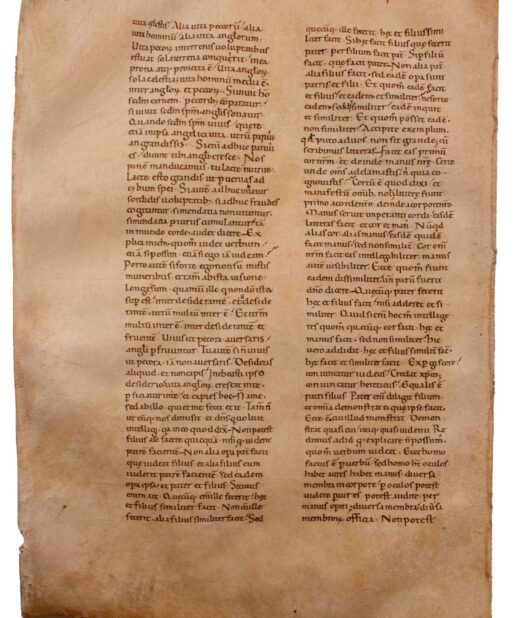
C12th - C13th manuscripts
£1,900.00
£3,800.00
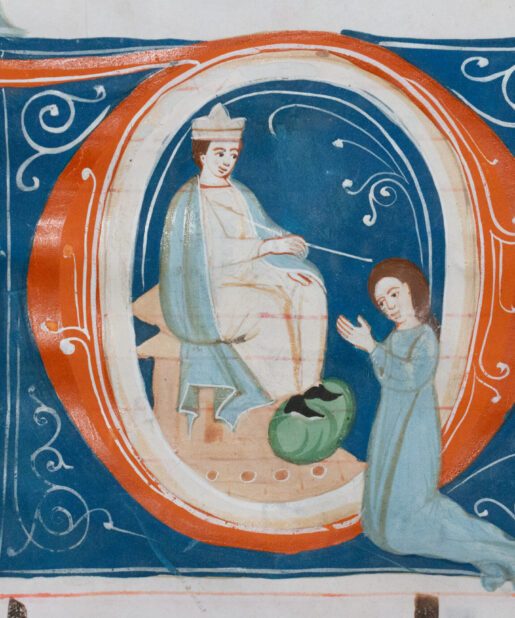
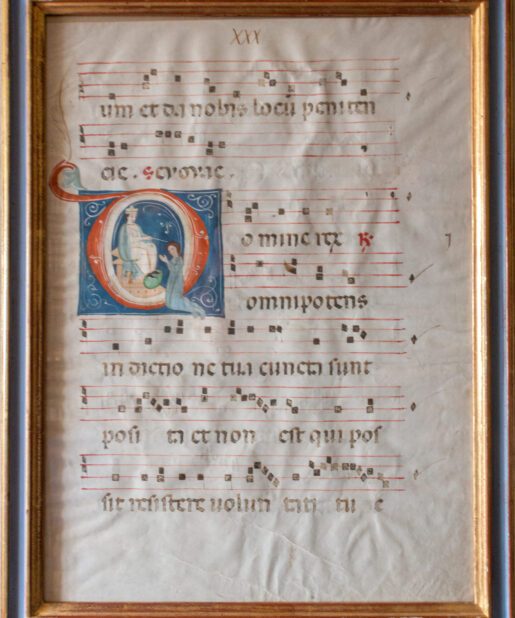
![Saints Peter and Paul, in an illuminated historiated initial ‘N’, cut from a Gradual in Latin on parchment [Italy (Florence); 15th century (c.1470s)]](https://stephenbutler.com/wp-content/uploads/2022/02/IMG_6782-515x618.jpg "Saints Peter and Paul, in an illuminated historiated initial ‘N’, cut from a Gradual in Latin on parchment [Italy (Florence); 15th century (c.1470s)]")
![Saints Peter and Paul, in an illuminated historiated initial ‘N’, cut from a Gradual in Latin on parchment [Italy (Florence); 15th century (c.1470s)]](https://stephenbutler.com/wp-content/uploads/2022/02/IMG_6781-515x618.jpg "Saints Peter and Paul, in an illuminated historiated initial ‘N’, cut from a Gradual in Latin on parchment [Italy (Florence); 15th century (c.1470s)]")
![A leaf from a Psalter, in Latin, manuscript on vellum [Germany, 11th century]](https://stephenbutler.com/wp-content/uploads/2024/09/IMG_1171-515x618.jpg "A leaf from a Psalter, in Latin, manuscript on vellum [Germany, 11th century]")
![A leaf from a Psalter, in Latin, manuscript on vellum [Germany, 11th century]](https://stephenbutler.com/wp-content/uploads/2024/09/IMG_1170-515x618.jpg "A leaf from a Psalter, in Latin, manuscript on vellum [Germany, 11th century]")
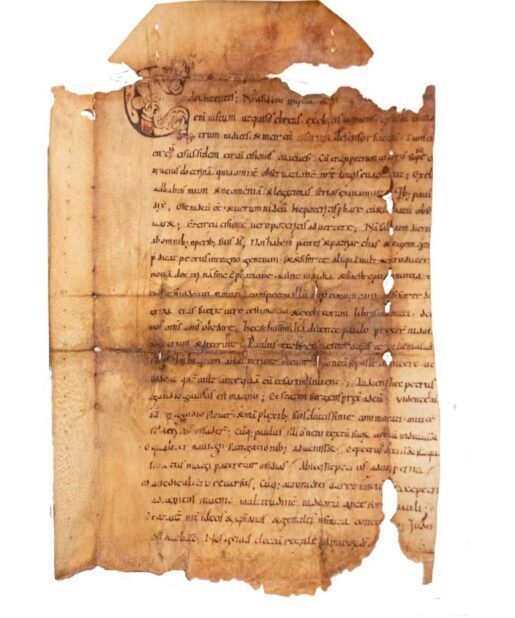
![A single leaf; Augustine’s Enarrationes in Psalmos, for Psalm 41:6-8 [manuscript]](https://stephenbutler.com/wp-content/uploads/2021/06/IMG_2115-scaled-515x618.jpg "A single leaf; Augustine’s Enarrationes in Psalmos, for Psalm 41:6-8 [manuscript]")
![A single leaf; Augustine’s Enarrationes in Psalmos, for Psalm 41:6-8 [manuscript]](https://stephenbutler.com/wp-content/uploads/2021/06/IMG_2112-scaled-515x618.jpg "A single leaf; Augustine’s Enarrationes in Psalmos, for Psalm 41:6-8 [manuscript]")
£3,750.00
![Leaf from a Romanesque Portable Lectionary In Latin, manuscript on vellum [Italy, first half of the 11th century]](https://stephenbutler.com/wp-content/uploads/2026/05/C57A7942-515x618.jpg "Leaf from a Romanesque Portable Lectionary In Latin, manuscript on vellum [Italy, first half of the 11th century]")
![Leaf from a Romanesque Portable Lectionary In Latin, manuscript on vellum [Italy, first half of the 11th century]](https://stephenbutler.com/wp-content/uploads/2026/05/C57A7586-515x618.jpg "Leaf from a Romanesque Portable Lectionary In Latin, manuscript on vellum [Italy, first half of the 11th century]")
Arabic and Ottoman
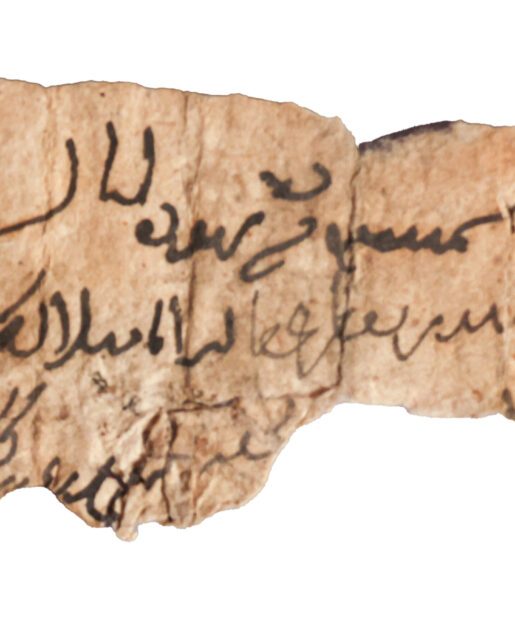
Early Arabic Business Letter Fragment on Vellum with Greek Insertion Egypt or Syria, 7th–8th century
£3,500.00