


This piece has been placed.
Many works of comparable significance pass through our hands each year.
If you’re seeking something similar, please send us an enquiry or browse recent acquisitions.
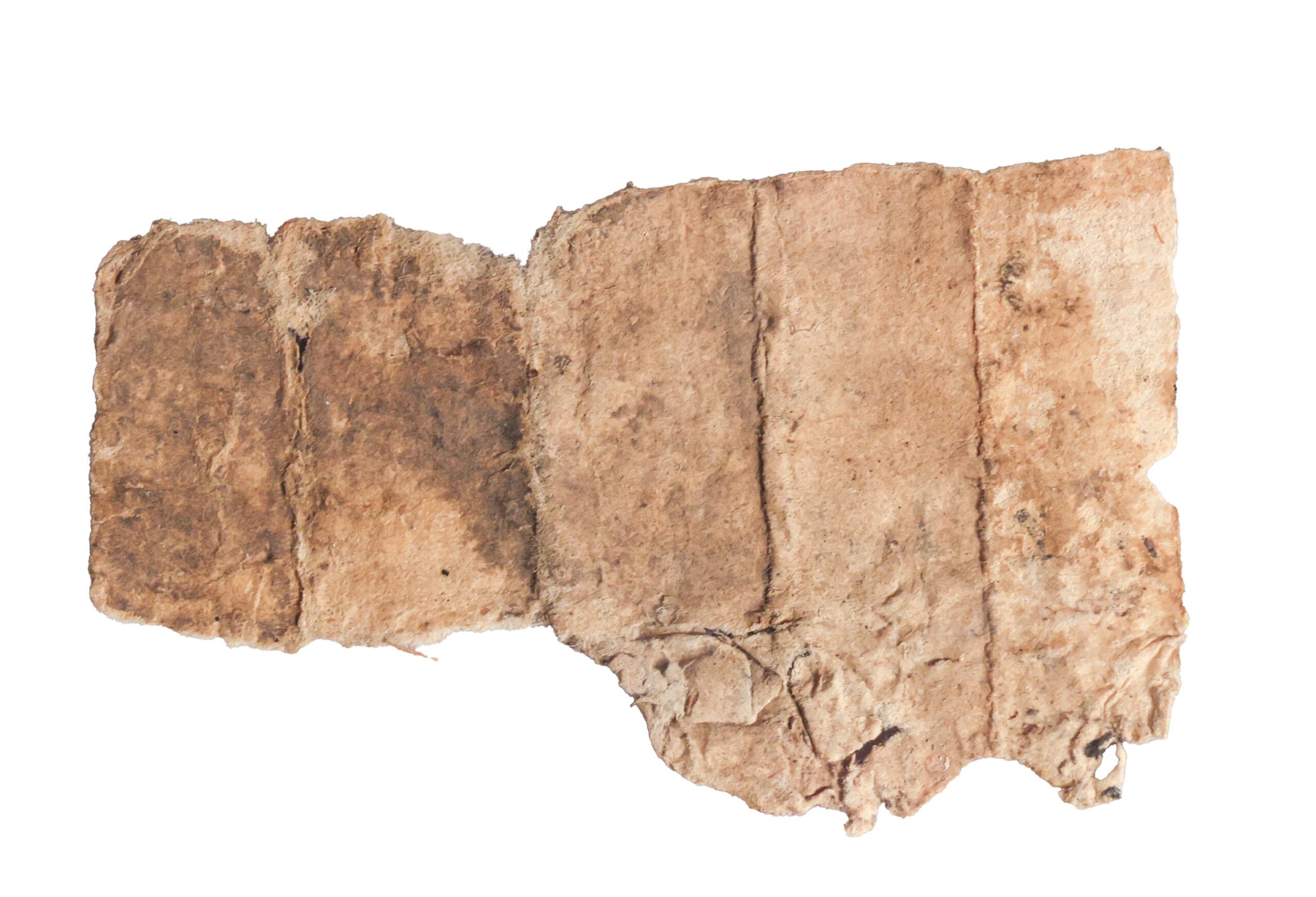
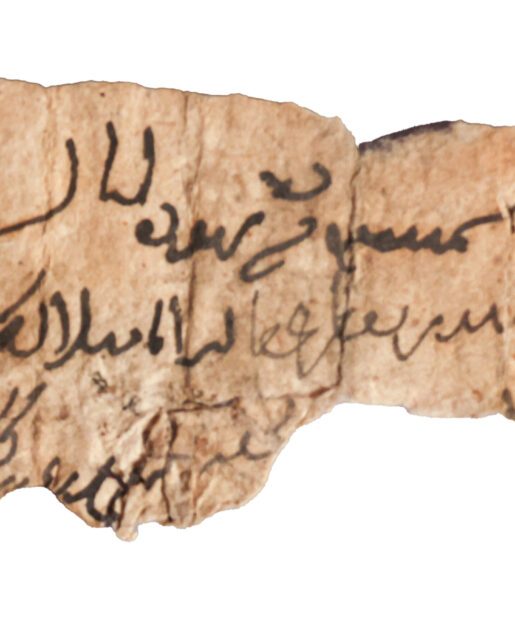
Early Arabic Business Letter Fragment on Vellum with Greek Insertion Egypt or Syria, 7th–8th century

£3,500.00
Early Arabic Business Letter Fragment on Vellum with Greek Insertion
Egypt or Syria, 7th–8th century
70mm x 50mm
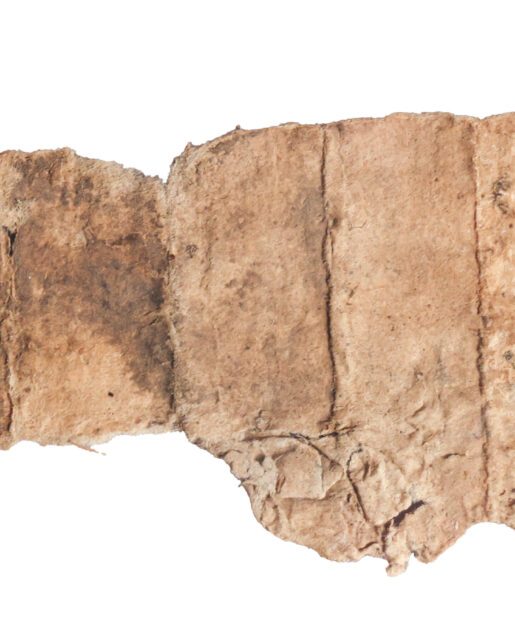
Rare fragment from an early Arabic documentary manuscript, written on fine vellum in brown ink in a clear early Arabic cursive hand. The fragment preserves portions of a commercial or administrative letter, and is notable for containing a Greek word inserted within the Arabic text, written in a distinct hand and ink, reflecting multilingual administrative and commercial practices during the formative period of early Islamic governance. The reverse is blank. Fragment measures approximately 7 × 5 cm.
The script corresponds to an early Arabic documentary hand of the Umayyad or early Abbasid period, prior to the full standardization of later cursive scripts. The presence of Greek alongside Arabic reflects the transitional administrative environment of the eastern Mediterranean and Egypt in the 7th–8th centuries, when Greek remained widely used alongside Arabic in official, commercial, and bureaucratic contexts following the Arab conquests. Greek had served as the principal administrative language of the Byzantine Empire in the region, and its continued presence in early Arabic documentary manuscripts provides important evidence for the gradual linguistic transition that accompanied the development of Islamic administrative systems.
The use of vellum, rather than papyrus, suggests a document of relative importance or durability, and vellum documentary fragments of this early period are significantly scarcer than papyrus examples. Early Arabic documentary vellum fragments are highly prized for their historical importance, representing some of the earliest surviving written evidence of Arabic in practical administrative and commercial use.
Fragments combining Arabic and Greek are particularly rare and provide valuable insight into the cultural and administrative continuity of the eastern Mediterranean during the early Islamic period.
An important and highly desirable early Islamic documentary manuscript fragment, illustrating the linguistic and administrative transition of the early Islamic Near East.
Product Enquiry
Related products
![Saints Peter and Paul, in an illuminated historiated initial ‘N’, cut from a Gradual in Latin on parchment [Italy (Florence); 15th century (c.1470s)]](https://stephenbutler.com/wp-content/uploads/2022/02/IMG_6782-515x618.jpg "Saints Peter and Paul, in an illuminated historiated initial ‘N’, cut from a Gradual in Latin on parchment [Italy (Florence); 15th century (c.1470s)]")
![Saints Peter and Paul, in an illuminated historiated initial ‘N’, cut from a Gradual in Latin on parchment [Italy (Florence); 15th century (c.1470s)]](https://stephenbutler.com/wp-content/uploads/2022/02/IMG_6781-515x618.jpg "Saints Peter and Paul, in an illuminated historiated initial ‘N’, cut from a Gradual in Latin on parchment [Italy (Florence); 15th century (c.1470s)]")
![A leaf from a Psalter, in Latin, manuscript on vellum [Germany, 11th century]](https://stephenbutler.com/wp-content/uploads/2024/09/IMG_1171-515x618.jpg "A leaf from a Psalter, in Latin, manuscript on vellum [Germany, 11th century]")
![A leaf from a Psalter, in Latin, manuscript on vellum [Germany, 11th century]](https://stephenbutler.com/wp-content/uploads/2024/09/IMG_1170-515x618.jpg "A leaf from a Psalter, in Latin, manuscript on vellum [Germany, 11th century]")


C14th -C16th manuscripts
Finely produced illuminated leaf from a French Psalter, c.1480
£550.00
![Leaf from a Romanesque Portable Lectionary In Latin, manuscript on vellum [Italy, first half of the 11th century]](https://stephenbutler.com/wp-content/uploads/2026/05/C57A7942-515x618.jpg "Leaf from a Romanesque Portable Lectionary In Latin, manuscript on vellum [Italy, first half of the 11th century]")
![Leaf from a Romanesque Portable Lectionary In Latin, manuscript on vellum [Italy, first half of the 11th century]](https://stephenbutler.com/wp-content/uploads/2026/05/C57A7586-515x618.jpg "Leaf from a Romanesque Portable Lectionary In Latin, manuscript on vellum [Italy, first half of the 11th century]")
C14th -C16th manuscripts
Leaf from a Bible, II Kings 17, C15th manuscript in Latin on parchment
£750.00

C14th -C16th manuscripts
£950.00