

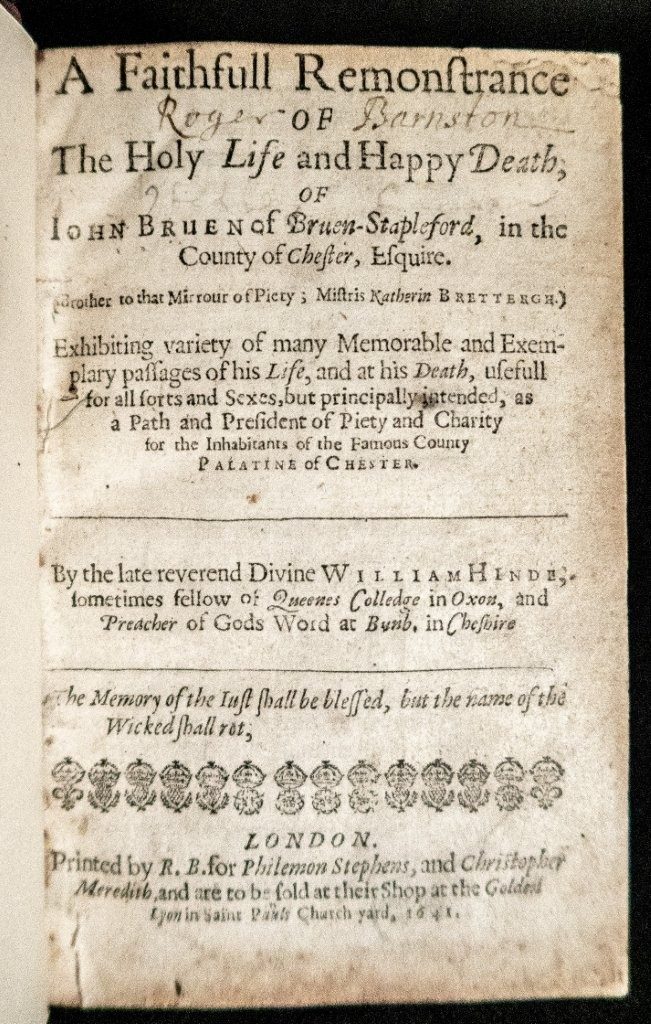
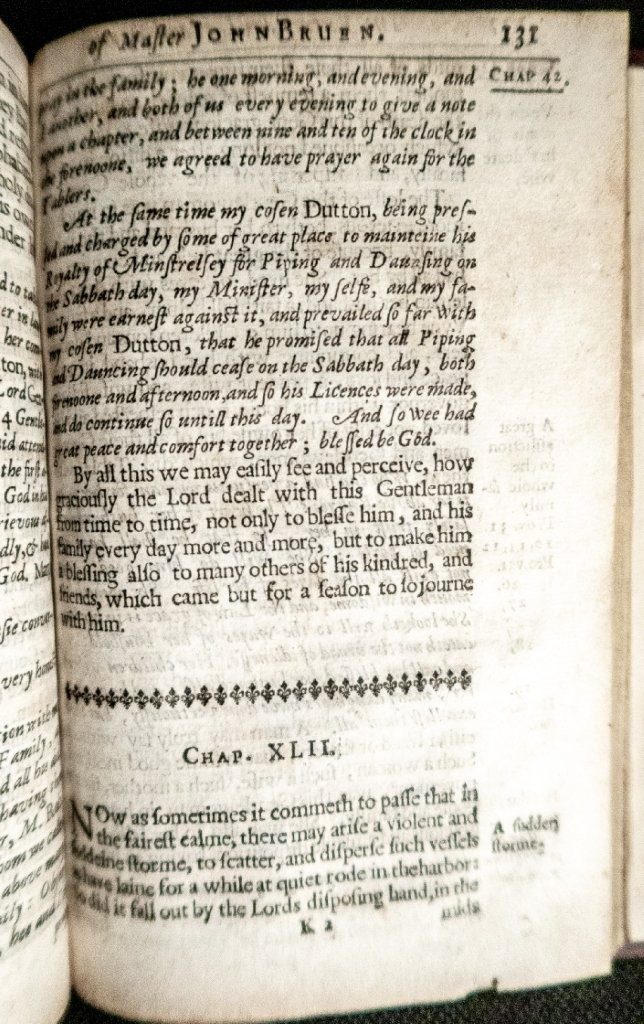


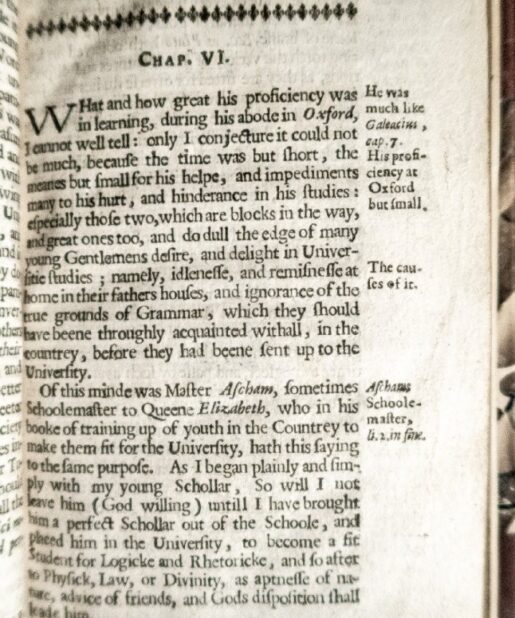
HINDE William 1569-1629 A faithfull remonstrance of the holy life and happy death of Iohn Bruen of Bruen-Stapleford, in the county of Chester, Esquire. (Brother to that mirrour of piety Mistris Katherin Brettergh). Exhibiting variety of many memorable and exemplary passages of his life and his death usefull for all sorts and sexes, but principally intended as a path and president of piety and charity for the inhabitants of the famous county palatine of Chester.
London: printed by R.B. for Philemon Stephens and Christopher Meredith and are to be sold at their shop at the Golden Lyon in Saint Paul’s Church yard, 1641
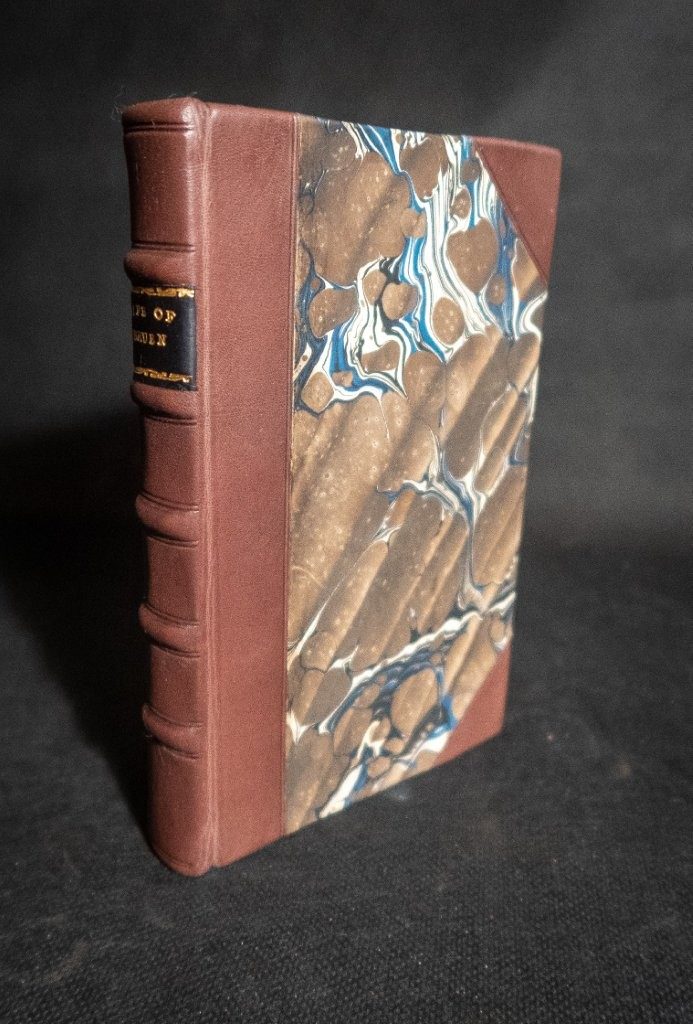
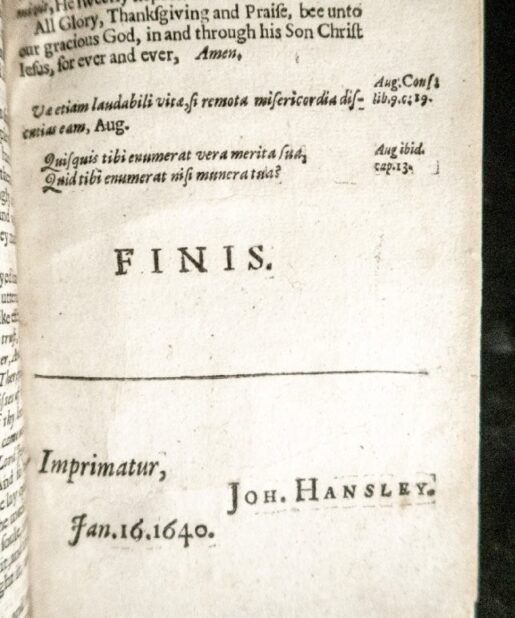
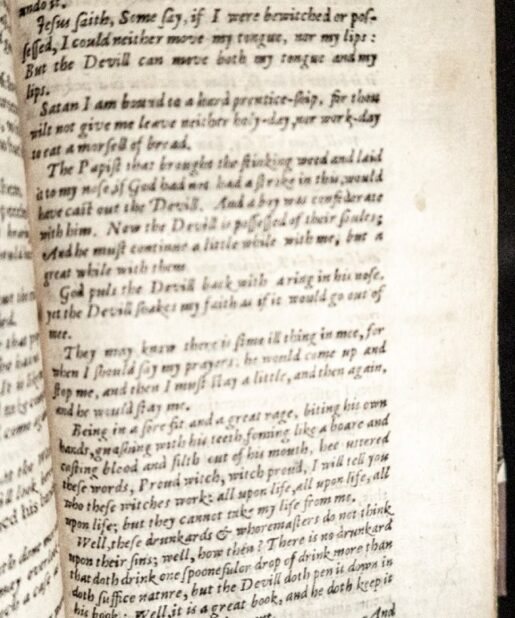
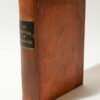
1st and only edition. Octavo. [22] 211, [1], 212, 212-227pp Title page is A2. Lacks initial and final blanks. Text has minor marks, some tears to one or two corners otherwise good margins and the paper is very good. Recently rebound in half calf with marbled boards. Raised bands, label. A fascinating and rare account of John Bruen (1560-1625), an English Puritan. Bruen believed in divine judgements, witchcraft and special providences. Towards the end of his life he had ‘ravishing spirits’. This biography was related to William Hinde, who was probably his brother-in-law; Hinde’s wife, Margaret was the daughter of William Foxe, whose daughter Anne married Bruen as his second wife.
This is the principal biography of John Bruen (1560–1625), a wealthy Cheshire Puritan squire, remembered as one of the most influential godly laymen of early-seventeenth-century England. Bruen used his estate at Bruen-Stapleford as a centre of Puritan hospitality, catechising, almsgiving, and itinerant preaching support.
The author, William Hinde (1569–1629), was a Puritan minister and close associate of the Bruen household. His purpose was not merely biographical but exemplary: to present Bruen as a model Christian magistrate and landowner whose life could serve as a template for godly living, charity, household discipline, and local reform.
The book is also closely linked to the famous devotional literature surrounding Bruen’s sister, Katherine Brettergh (d. 1601), whose deathbed spiritual agonies and triumph were among the most celebrated Protestant narratives of the Elizabethan and early Stuart period.
The Faithfull Remonstrance thus belongs to the same genre as Lewis Bayly’s Practice of Piety and Samuel Clarke’s Lives of Sundry Eminent Persons, and is a key text for historians of English Puritanism, household religion, and provincial godly culture.
Bibliographical references:
• STC 13522
• Wing H2069
• ESTC R21751
Product Enquiry
Related products


£550.00


