




This piece has been placed.
Many works of comparable significance pass through our hands each year.
If you’re seeking something similar, please send us an enquiry or browse recent acquisitions.
A Defiant Catholic Answer to Coke: Robert Persons’ Assault on the Common Law at the Height of the Recusant Crisis 1606
£500.00
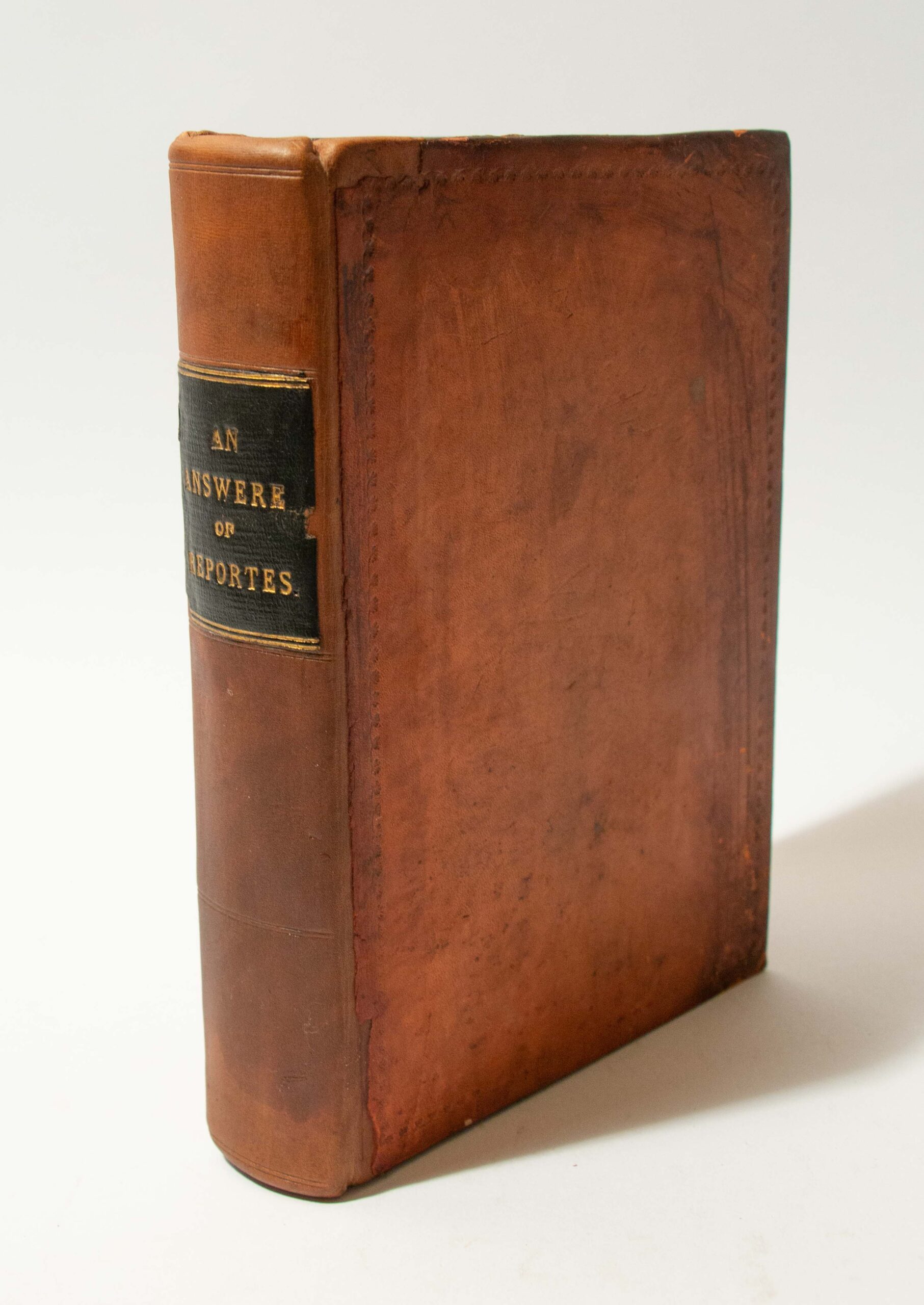
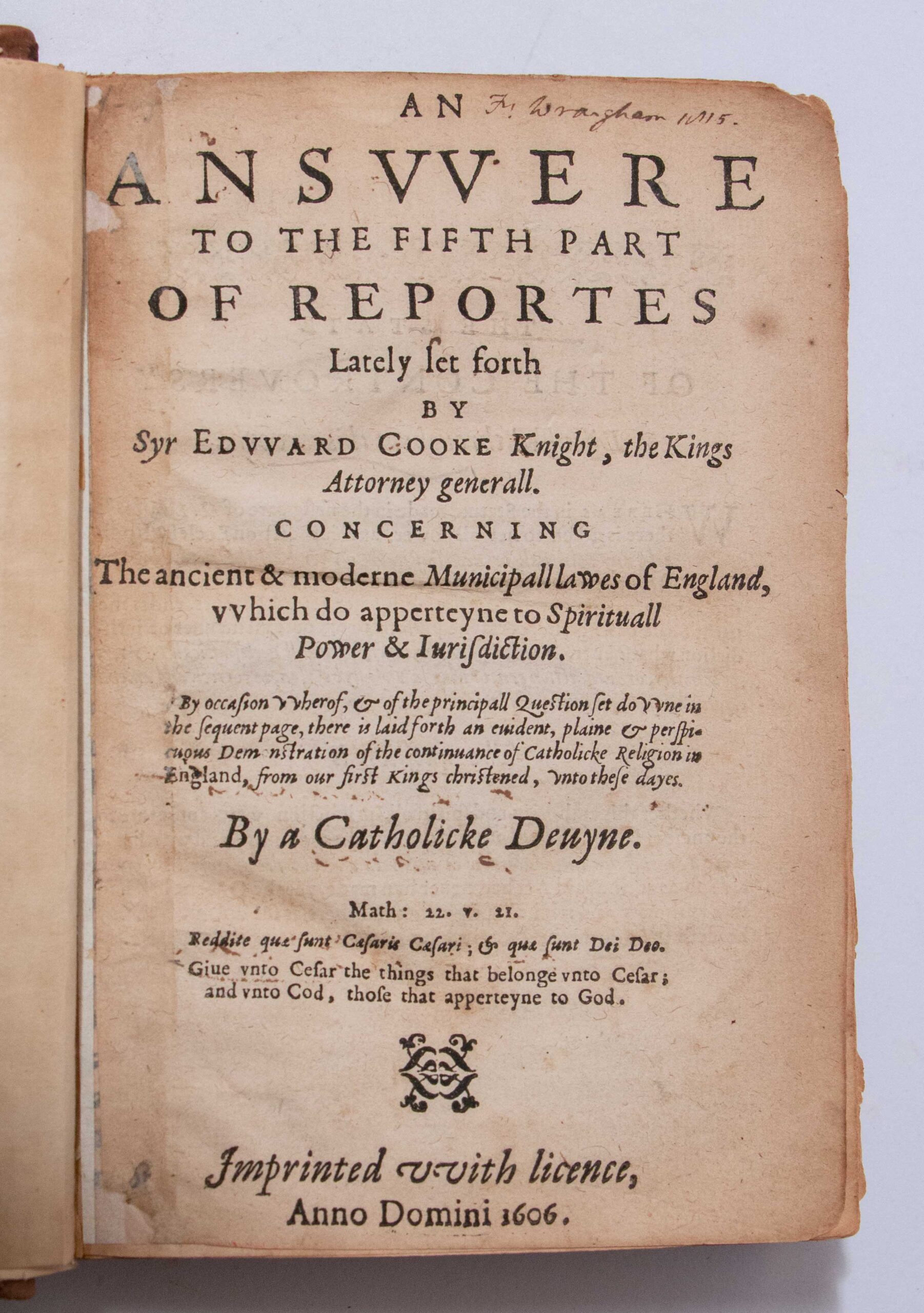
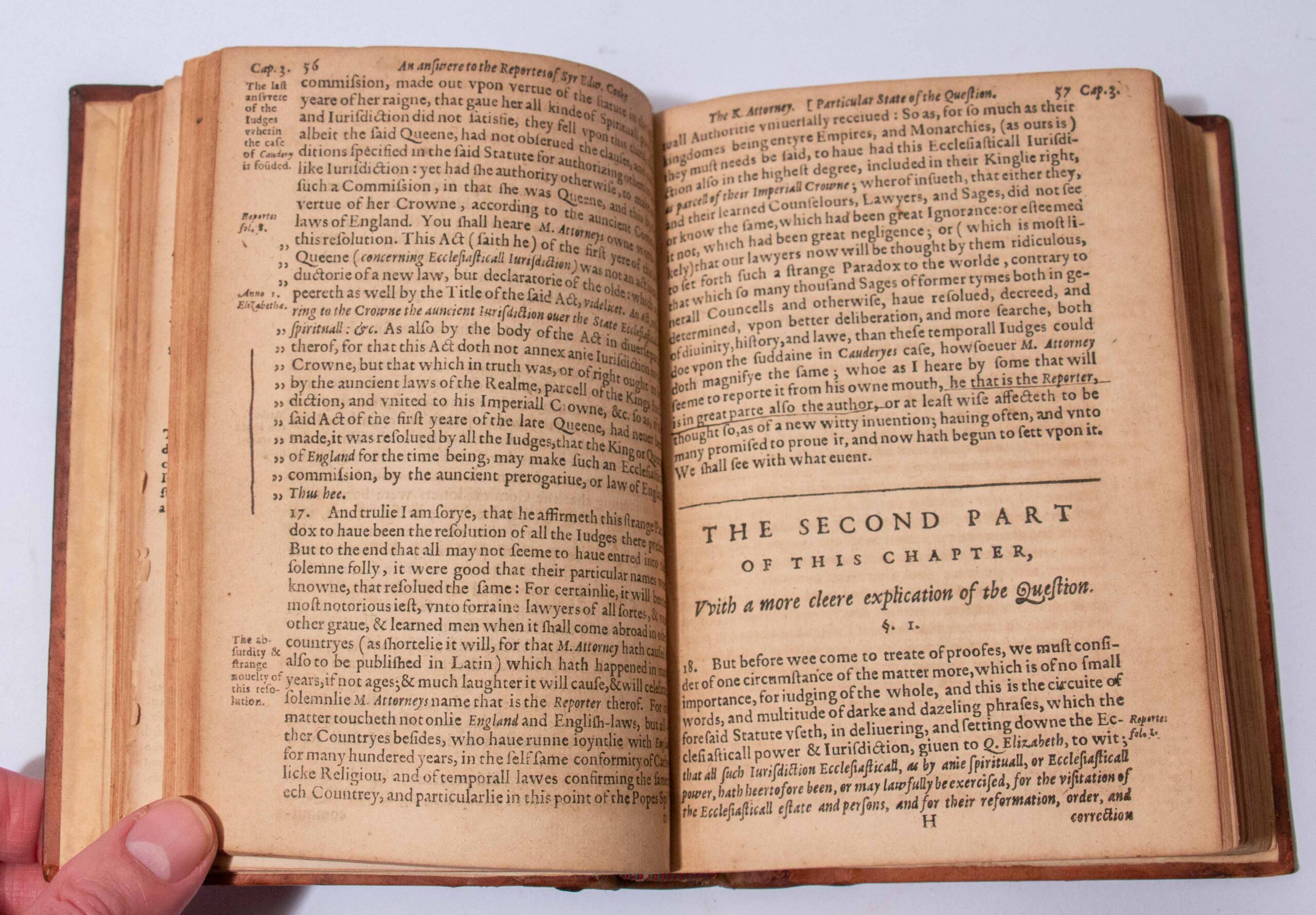
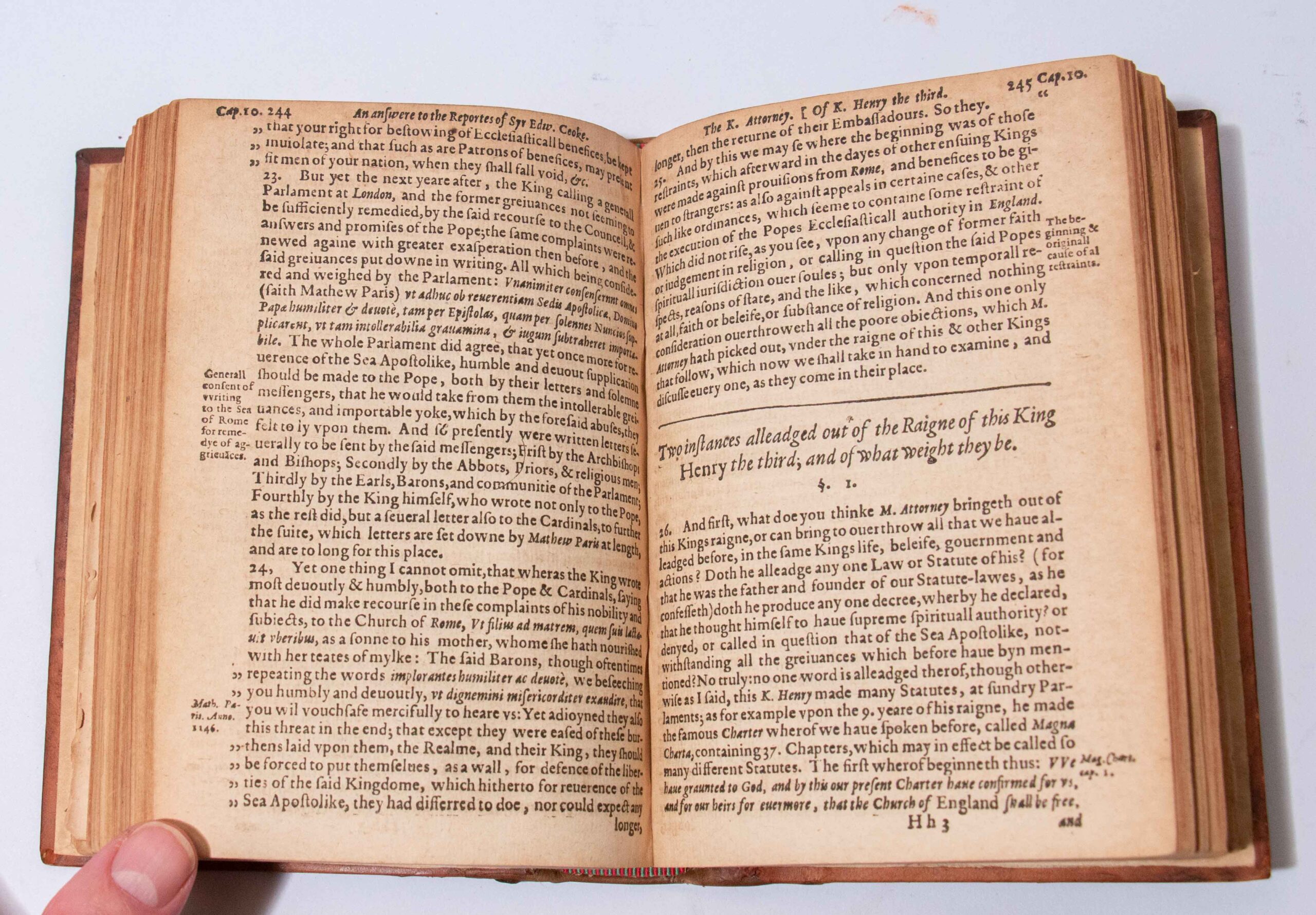
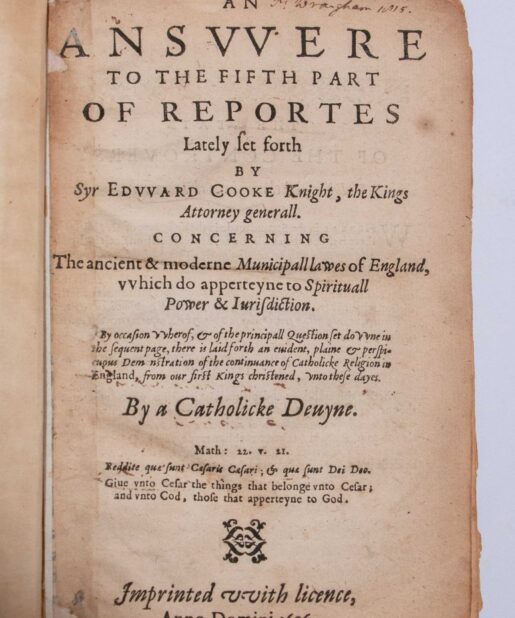
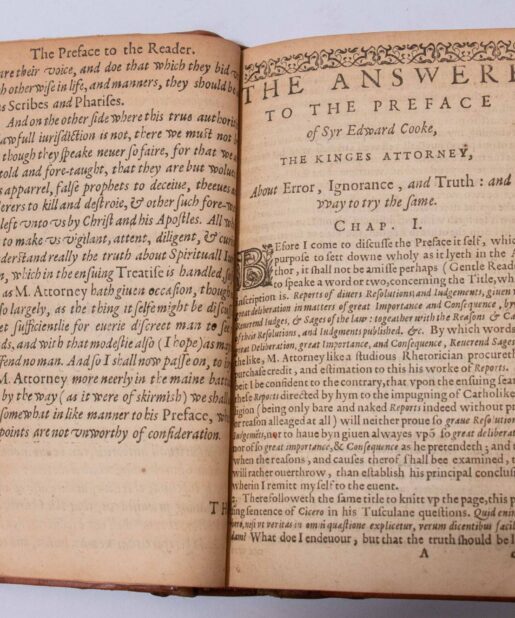
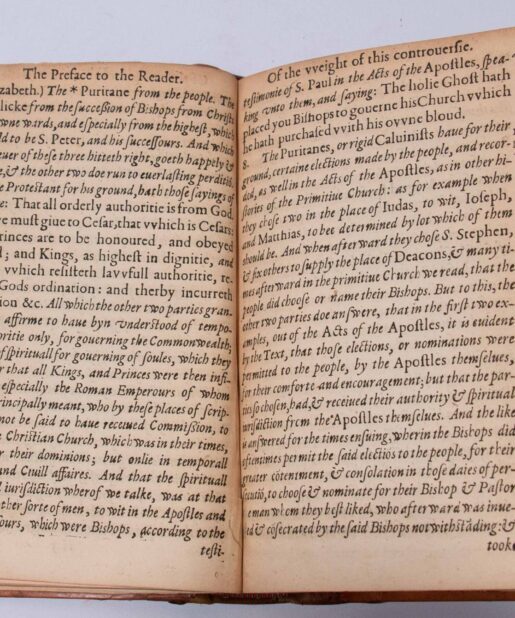
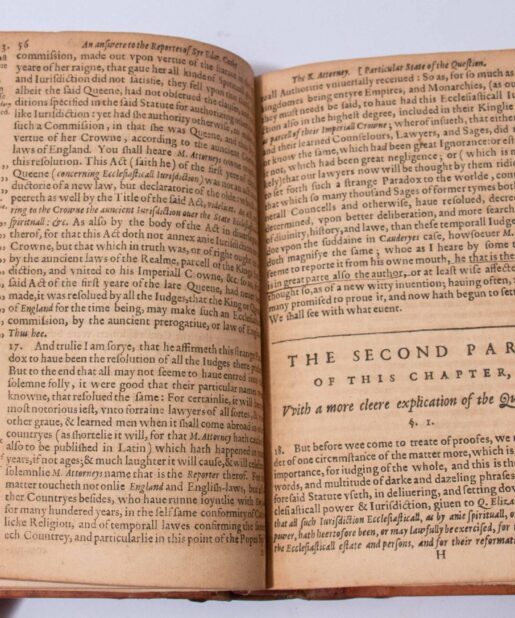
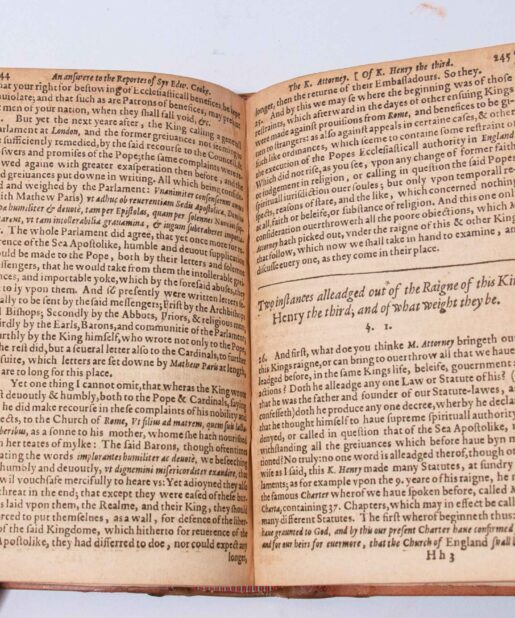
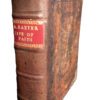
PARSONS, Robert (1546–1610) [or Persons]. An ansvvere to the fifth part of Reportes lately set forth by Syr Edvvard Cooke Knight, the Kinges Attorney generall. Concerning the ancient & moderne municipall lawes of England, vvhich do apperteyne to spirituall power & iurisdiction. By occasion vvherof, & of the principall question set dovvne in the sequent page, there is laid forth an euident, plaine, & perspicuous demonstration of the continuance of Catholicke religion in England, from our first Kings christened, vnto these dayes. By a Catholicke deuyne.
[Saint-Omer]: Imprinted with licence [by F. Bellet], 1606.
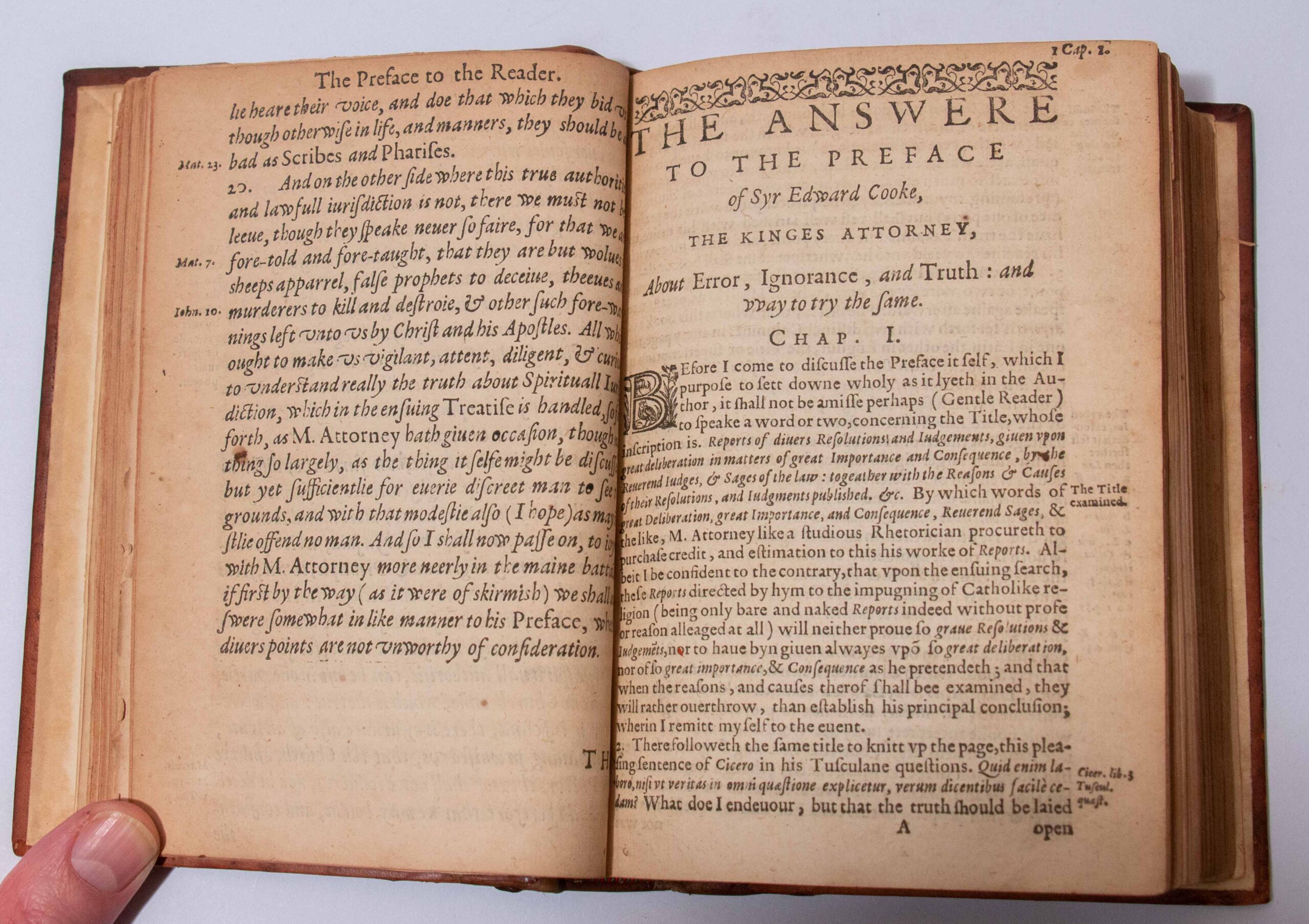
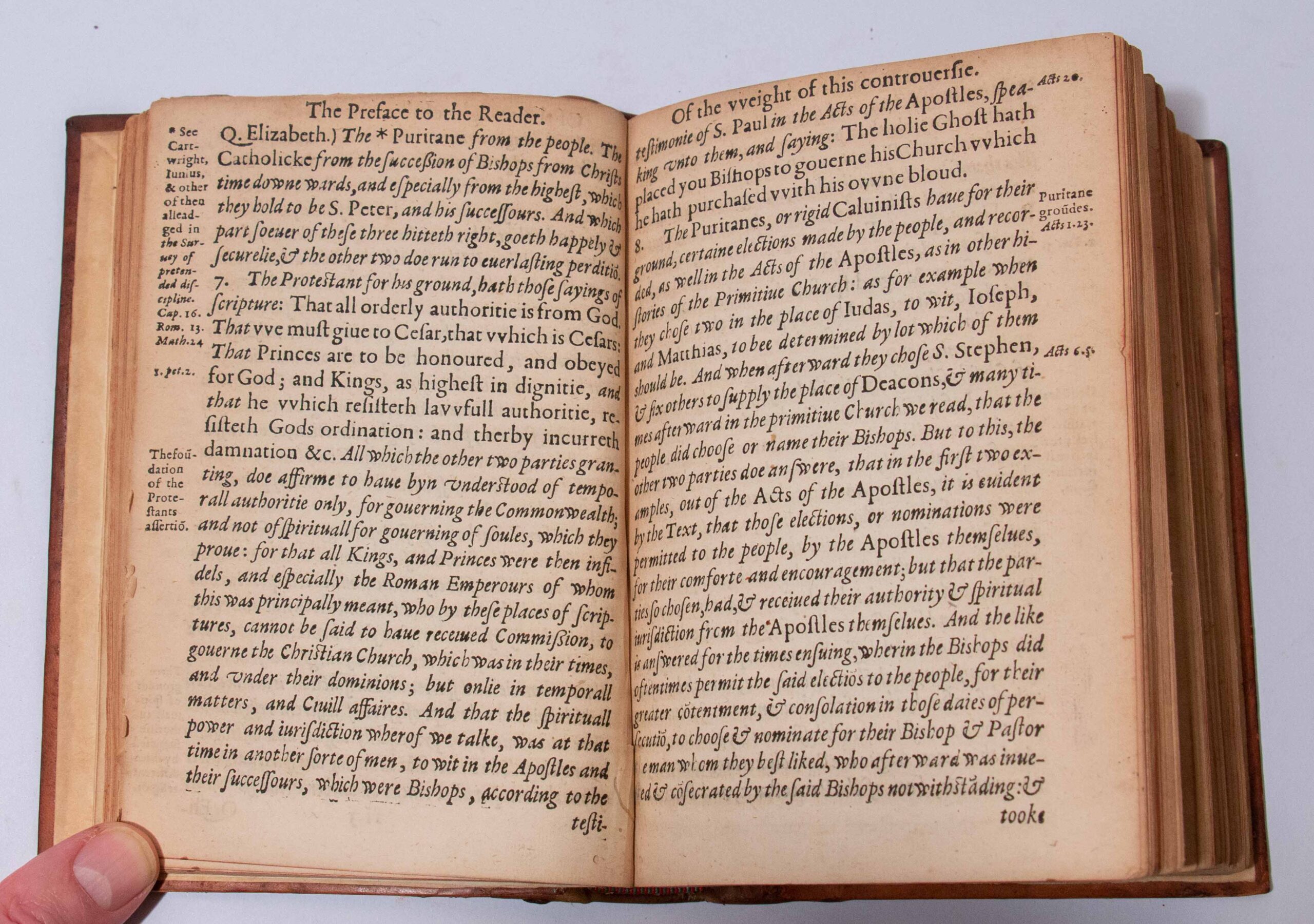
Small 4to. [72], 351, 353–386, [15] pp. (collation as per the British Library copy). Title-page with discreet tissue reinforcement at left edge. Bound in old calf, worn, and sympathetically rebacked over early calf. A very good copy of a scarce and controversial Catholic polemic.
First edition.
This is the first edition of Robert Persons’ powerful and confrontational response to Sir Edward Coke’s Fifth Report (1605), one of the foundational texts of English common law. Coke’s Reports were not merely legal manuals; they were ideological weapons, asserting the supremacy of the common law over ecclesiastical jurisdiction and reinforcing the legal architecture of England’s Protestant state. In particular, Coke’s reading of statute and precedent was deeply hostile to Catholicism and to papal authority.
Persons’ Answere is therefore far more than a technical legal rebuttal. It is a full-scale ideological counter-attack, written from exile in the Spanish Netherlands and aimed squarely at the intellectual foundations of the English Reformation settlement. He challenges Coke’s interpretation of English legal history, arguing that Catholicism is not a foreign intrusion but the ancient and continuous religion of England, from the conversion of the first kings onward. In doing so, he seeks to undermine the legitimacy of the post-Reformation ecclesiastical and legal order.
The book is structured around Coke’s arguments on spiritual jurisdiction, ecclesiastical courts, and the relationship between Church and Crown, and it systematically dismantles them using history, canon law, patristic authority, and medieval precedent. Persons insists that Coke has distorted both law and history to serve a polemical agenda, and he presents Catholic continuity as the true national tradition.
The tone is unapologetically militant. This is recusant literature at its most confident and aggressive, written at a time when English Catholics were under intense pressure following the Gunpowder Plot (1605). Publishing such a work in 1606 was a bold act of intellectual resistance, and its appearance at Saint-Omer—a major centre of English Catholic exile printing—places it firmly within the underground network that sustained Catholic identity and polemic.
For historians, the book is of exceptional interest as a direct Catholic engagement with the development of English common law and as a key text in the jurisdictional struggle between Crown, Church, and Rome
It stands alongside Persons’ other major controversial works as part of the most sophisticated Catholic challenge to the Elizabethan and Jacobean religious settlement.
Robert Persons (1546–1610): Architect of the English Jesuit Mission
Robert Persons (often rendered Parsons) was one of the most formidable, controversial, and influential figures of the English Counter-Reformation. A brilliant scholar, polemicist, organiser, and strategist, he was the chief architect of the Jesuit mission to England and the intellectual driving force behind Catholic resistance to the Protestant state.
Born in Somerset, he was educated at Balliol College, Oxford, where he became a fellow before his conversion to Catholicism forced his departure. He went into exile, was ordained in Rome, and joined the Society of Jesus in 1575. Almost immediately, he was selected to lead the English mission, returning clandestinely in 1580 with Edmund Campion. While Campion became the martyr-hero of the mission, Persons became its organiser, propagandist, and political mind.
After escaping England, Persons operated from the Continent—primarily in France, Spain, and the Low Countries—where he coordinated networks of priests, printing presses, and safe houses. He was instrumental in founding English seminaries and colleges at Rome, Valladolid, and St Omer, ensuring a steady supply of missionary priests for England.
Persons was also one of the most prolific Catholic writers of his age. His works range from devotional manuals and spiritual guides to hard-edged political and historical polemic, including The Christian Directory, A Conference about the Next Succession, and the present Answere to the Fifth Part of Coke’s Reports. He wrote with clarity, force, and strategic purpose, always with an eye to both persuasion and mobilisation.
Politically, Persons was deeply involved in schemes to restore Catholicism to England, including support for Spanish intervention and alternative successions. This made him a figure of intense suspicion and hostility in England, where he was regarded as one of the most dangerous enemies of the state. To his supporters, he was a hero of the faith; to his opponents, a master conspirator.
By the time of his death in Rome in 1610, Persons had shaped the English Catholic mission more profoundly than any other individual. His combination of intellectual brilliance, organisational ability, and ideological commitment makes him one of the central figures in the religious history of early modern England.
Product Enquiry
Related products


£1,600.00


£200.00


£1,500.00