

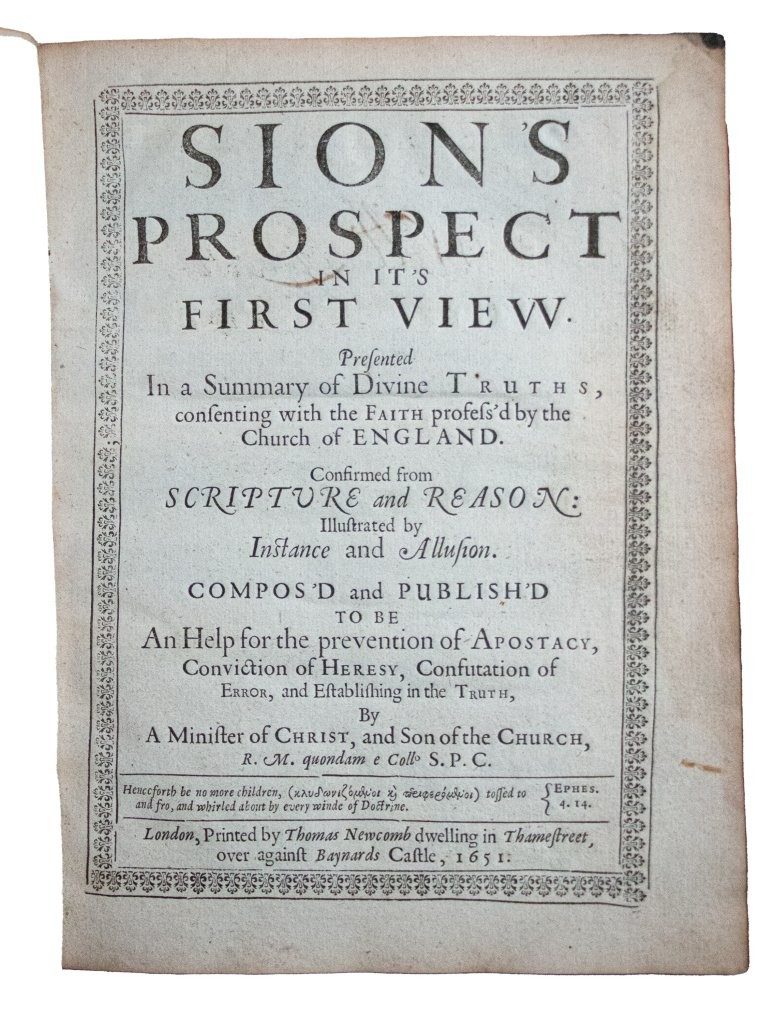
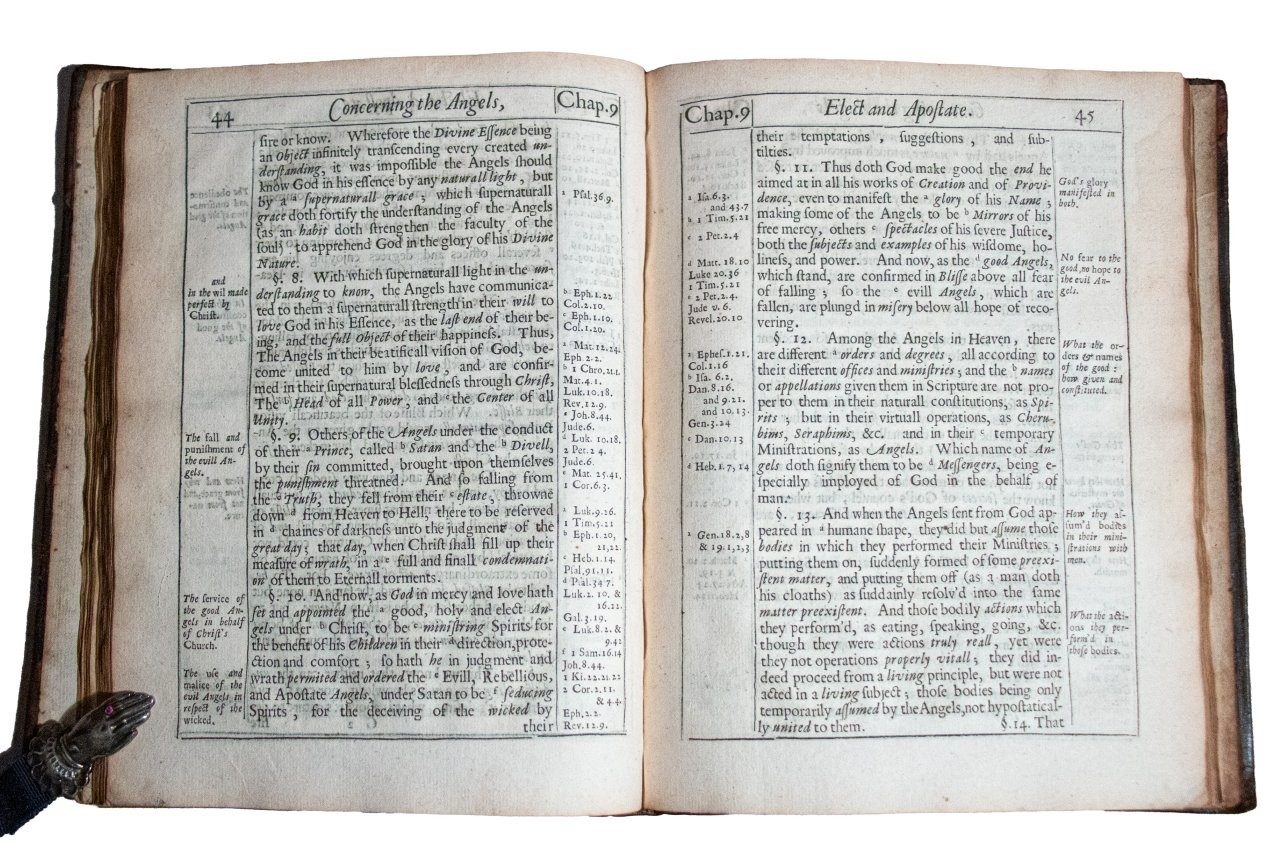


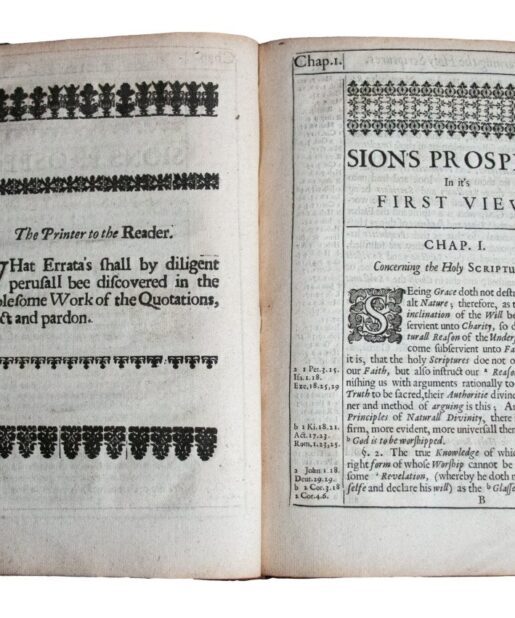
M[OSSOM], R[obert]. Sion’s Prospect in it’s First View. Presented in a Summary of Divine Truths, consenting with the Faith profess’d by the Church of England. Confirmed from Scripture and Reason: Illustrated by Instance and Allusion…
London: Thomas Newcomb, 1651
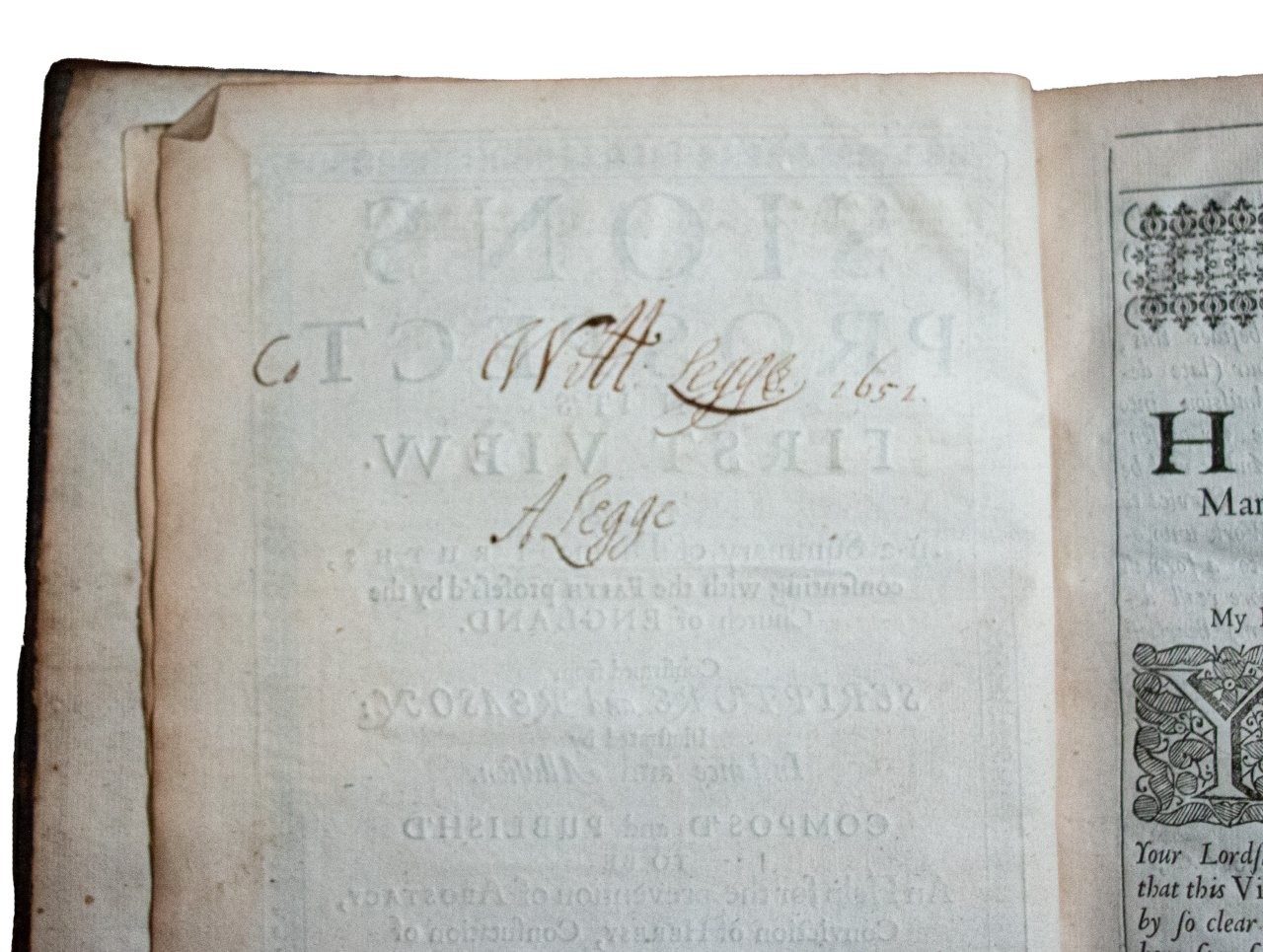
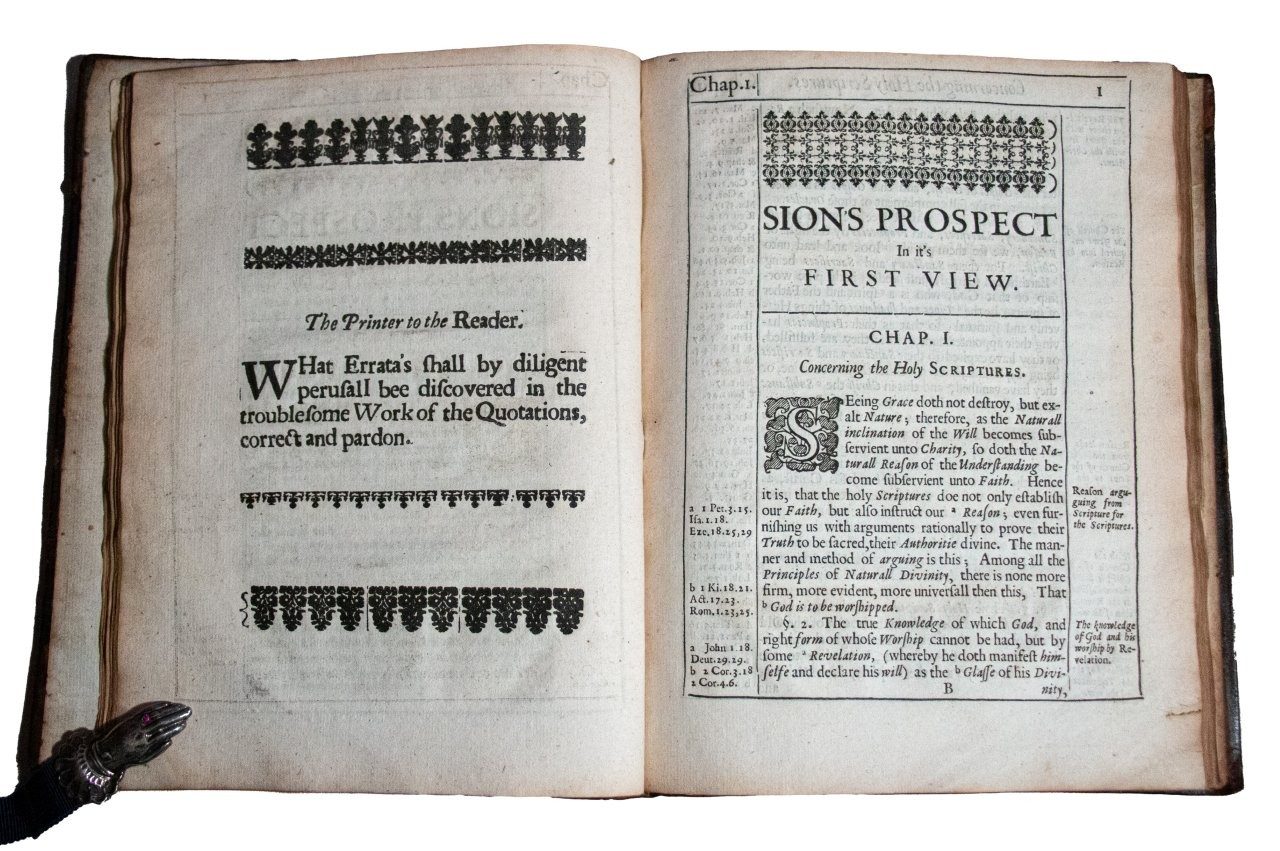
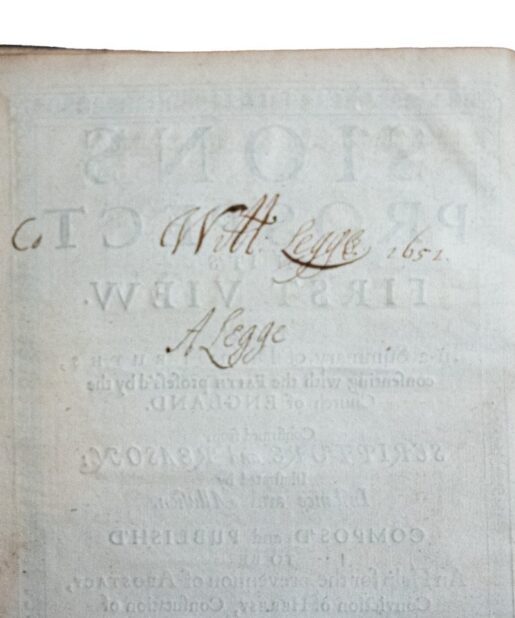
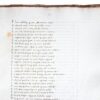
Collation:*4 A4 a4 [1] B-O4 Text within frame, ornamental chapter headers and several initials. Contemporary ink inscription to verso of title ‘Will Legge 1652. A Legge’.
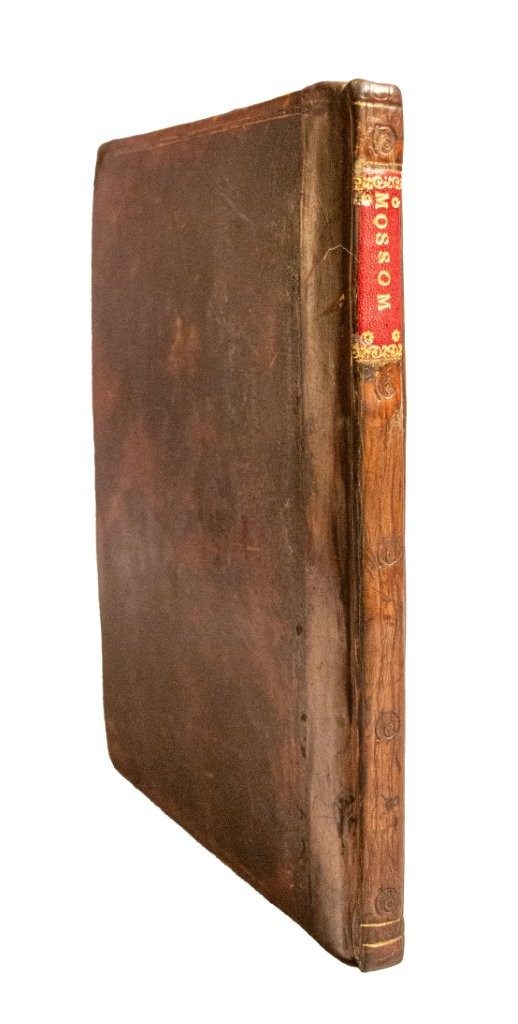
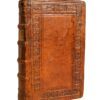
Rebacked in calf, with blindstamped ornaments and red morocco label with gilt lettering and decorations. Corners repaired to same style, with blindstamped decorations, original covers preserved, with double gilt ruling, scuffed and cracked, original gilt corner ornaments maintained on back cover.
The first edition of this popular proto-Anglican loyalist text, which was reprinted extensively until the early eighteenth century. Robert Mossom (1617-1679) studied at Magdalene College and Peterhouse, Cambridge, where he graduated with a BA and MA. He went on to officiate at York and preach to the troops under the command of Sir George Wentworth at the siege of Pontefract in 1644. Later moving to St Peter Paul’s Wharf in London, his congregation included members of the nobility an d gentry, and was regularly targeted for harassment by the military for his continued use of the banned Book of Common Prayer. The publication of this work around that time, led him to fall victim to the wave of repress ion which followed the abortive royalist risings of 1655, suffering ejection and having to keep a school, but continuing to write and publish his doctrine. After the Restoration, he was appointed dean of Christ Church, Dublin and became the Bishop of Derry from 1666 until his death.
Provenance
Book from the library of William Legge (1607/8–1670), the eldest son of Edward Legge (d. 1616), vice-president of Munster. William was a royalist army officer and politician, known for his loyalty to King Charle s I during the English Civil War. He participated in major battles, including the capture of Cirencester and the siege of Gloucester, as well as aiding i n Charles I’s escape. He later held several prestigious positions, including Master of the Armoury, Groom of the Bedchamber and Lieutenant of Ordnance.
Product Enquiry
Related products


£1,750.00


£125.00


£750.00