

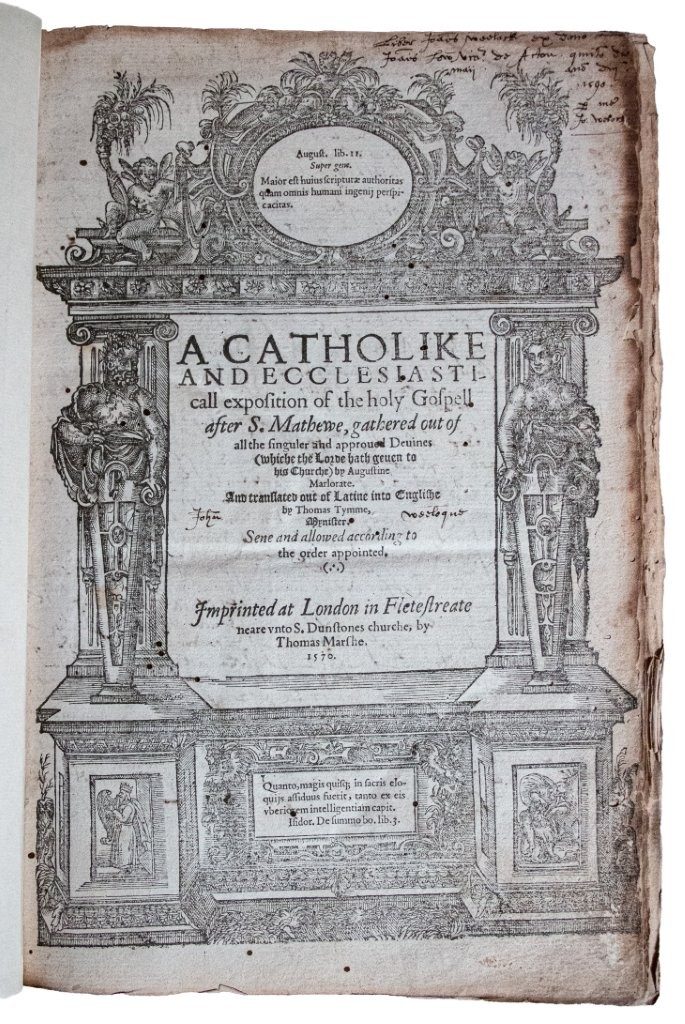
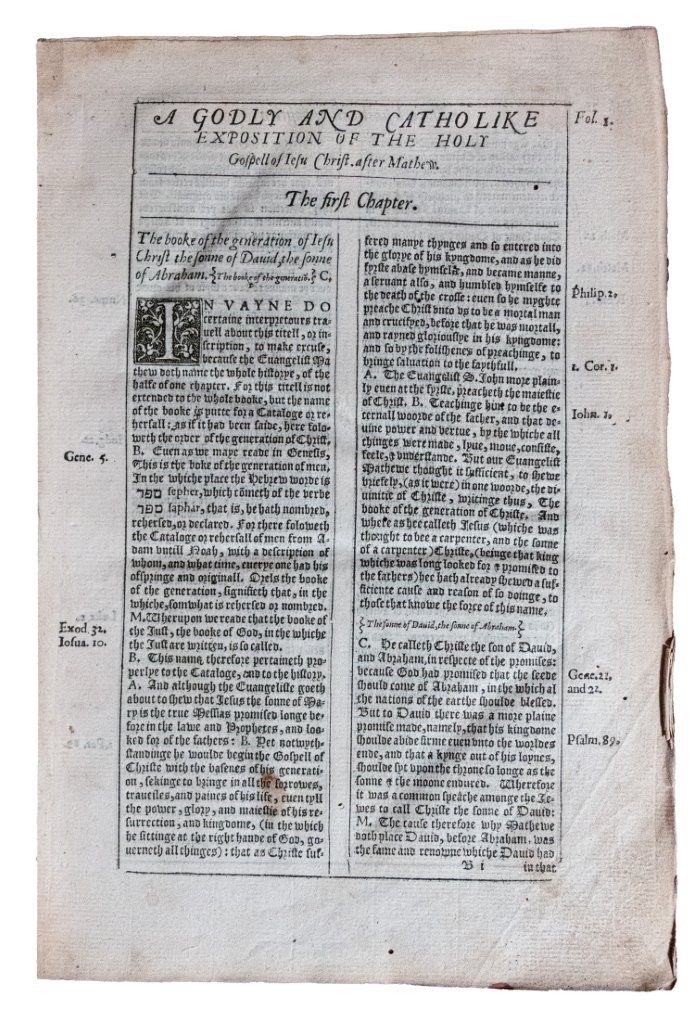
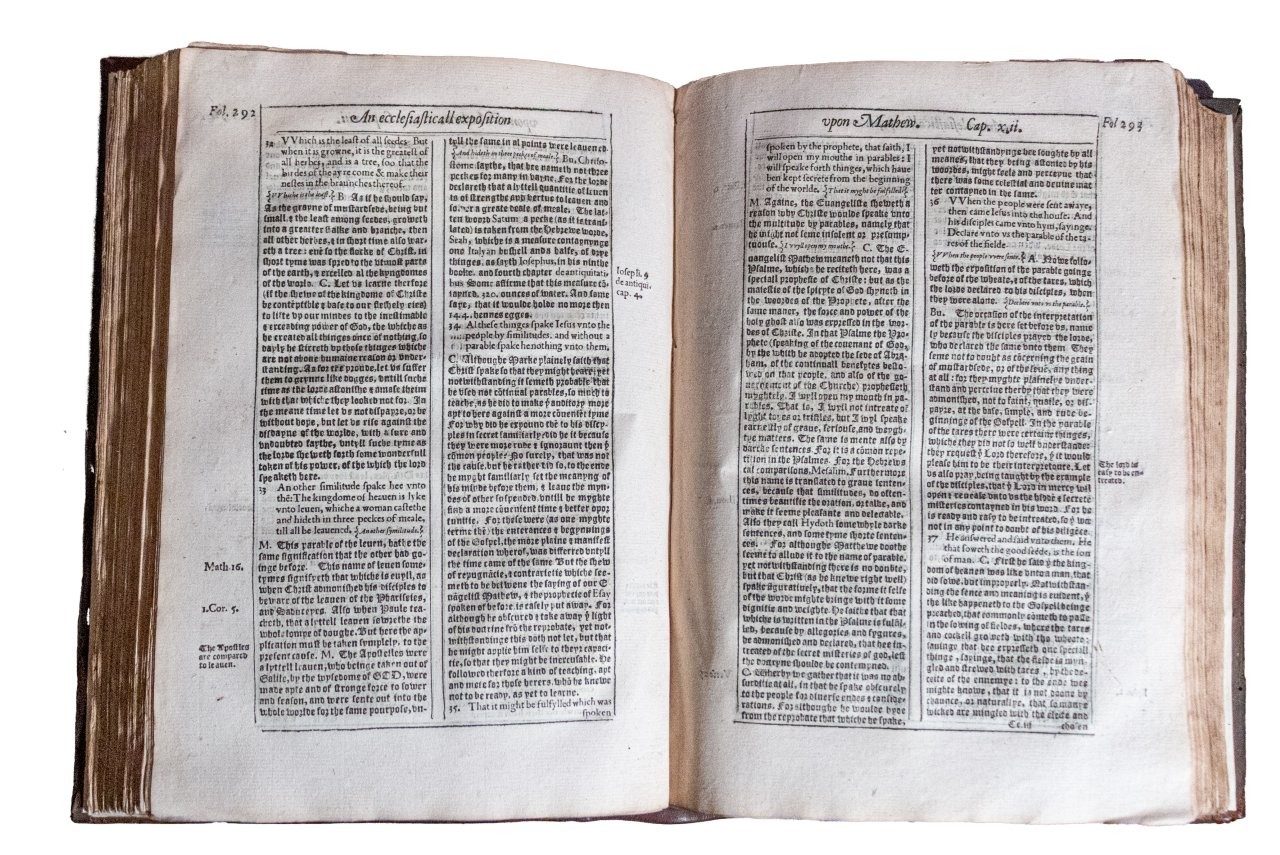
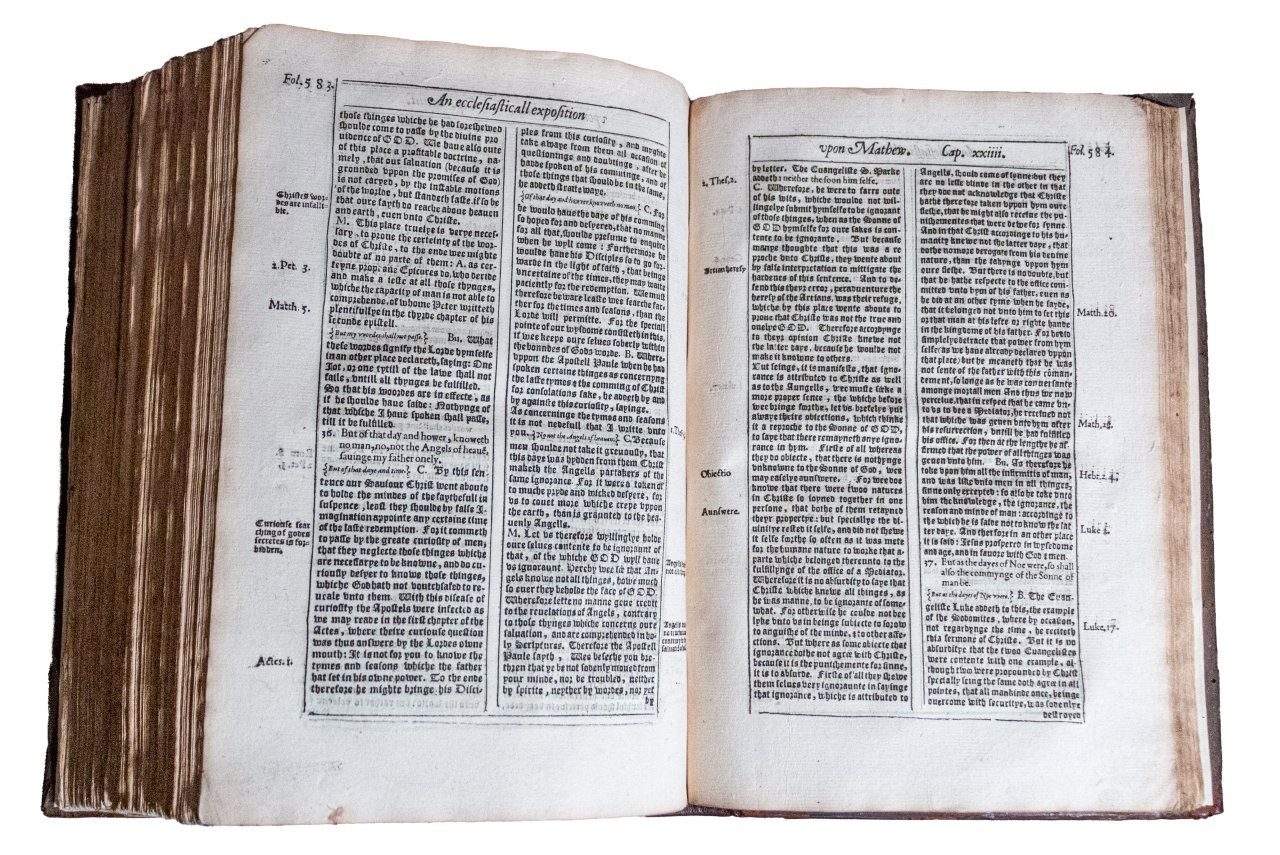




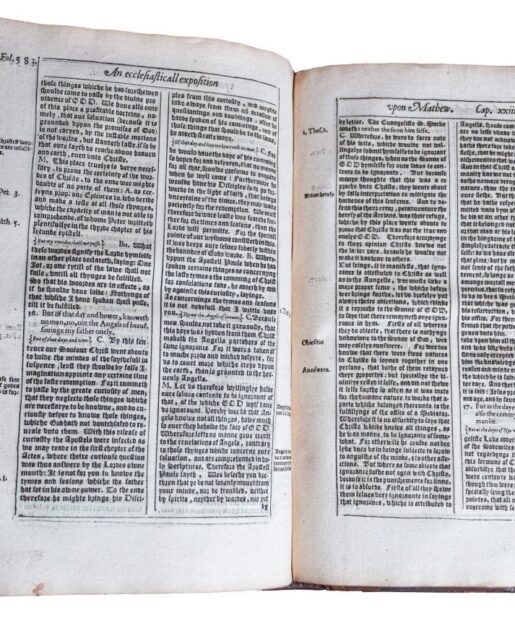

MARLORAT, Augustin. A catholike and ecclesiasticall exposition of the holy Gospell after S. Mathewe gathered out of all the singular and approued deuines (whiche the Lorde hath geuen to his Churche) by
Augustine Marlorate. And translated out of Latine into Englishe by Thomas Tymme, minister. Sene and allowed according to the order appointed.
Imprinted at London: in Fleetstreate neare vnto S. Dunstones churche, Thomas Marshe, 1570
The First English Edition of Augustin Marlorat’s commentary on Matthew, which formed part of his wider project to compile and harmonise Protestant interpretations of Scripture. Rather than composing an entirely original work, Marlorat created catena-style expositions, drawing together and paraphrasing insights from leading Reformers such as Calvin, Bullinger, Musculus, and Peter Martyr. His aim was to produce a clear, continuous explanation of the text that distilled the best of Reformed thought for pastors and lay readers. The commentary on Matthew first appeared in Latin as Commentarius in Evangelium Matthaei, and was later translated into English by Thomas Timme.
Published in London in 1570 under the title A Catholike and Ecclesiastical Exposition of the Holy Gospel after S. Matthew, it became a valuable resource for English Protestants, especially among Puritan circles, offering a concise and accessible synthesis of continental Reformed exegesis on the first Gospel.
Folio (280 x 200mm)
Description
Collates [8], 446, 446-758, [7] pp Lacks a blank, one prelim leaf and the final table leaf only. Textually complete. Engraved title with some marginal wear. Early ink annotations to the top right margin of the title dated
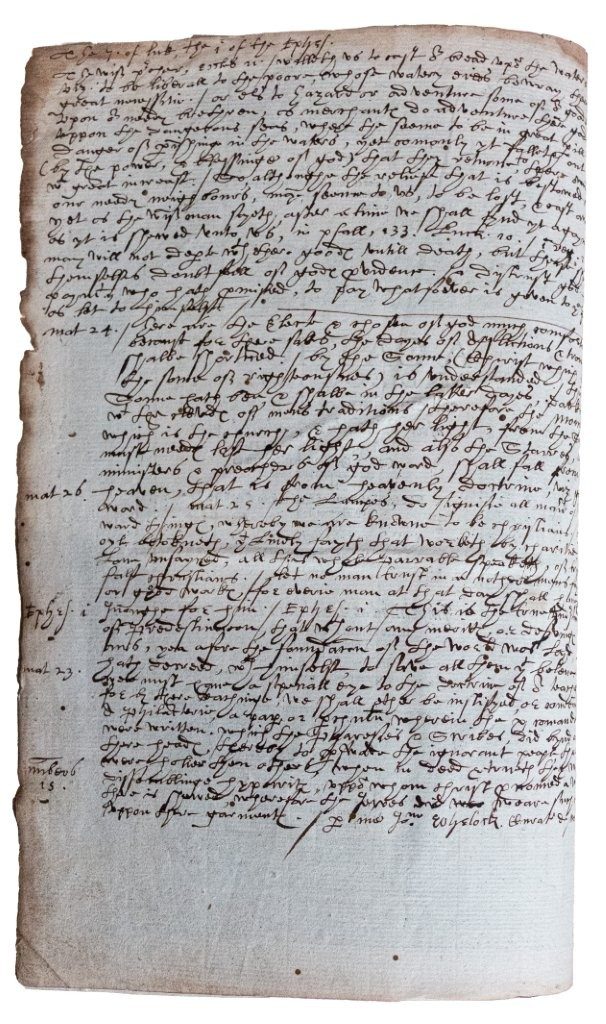
1590. Verso of title with extensive contemporary MS notes. Occasional small contemporary marginal notes in the text. Minor light marks or blemishes. LII3 & LII4 towards close are bound in reverse order. Last
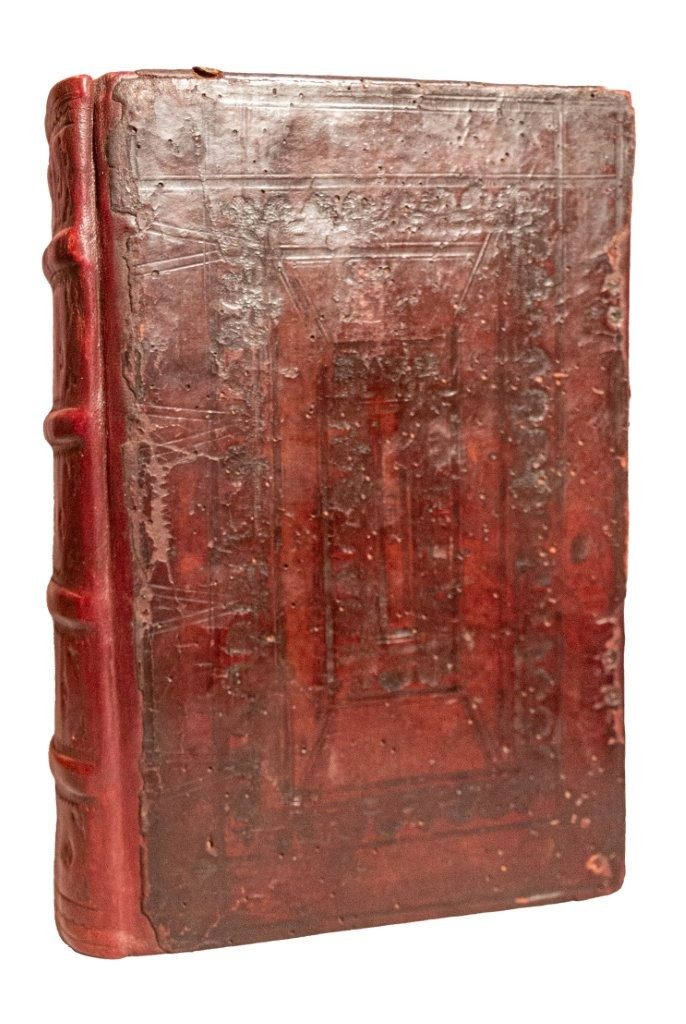
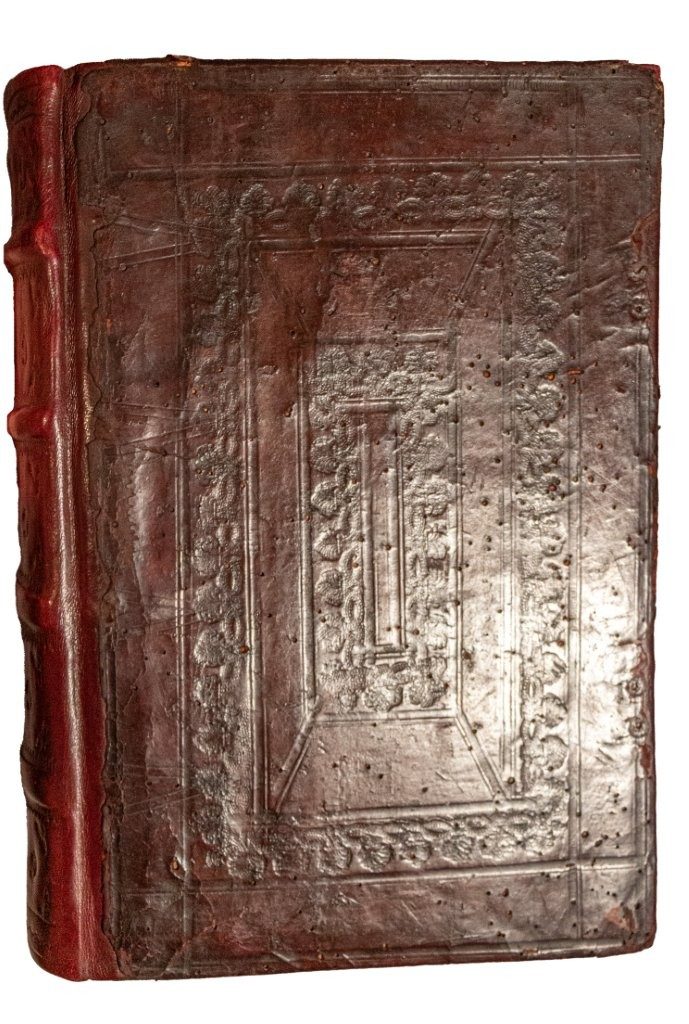
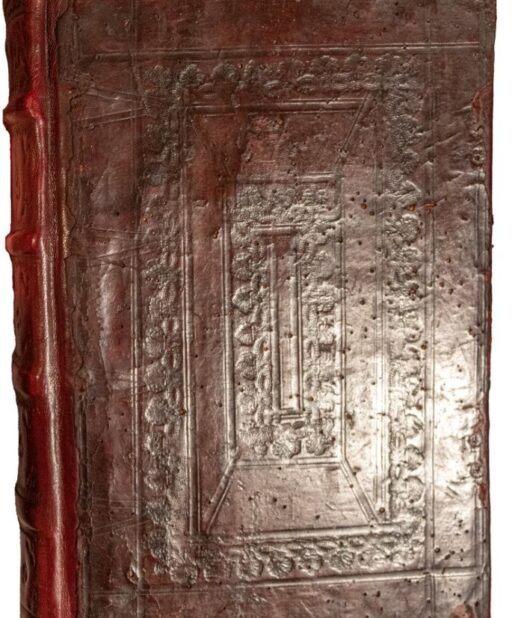
couple of quires with minor wormholes. Contemporary full leather boards.
Author
Augustin Marlorat (1506-1562) was ‘‘orphaned at the age of eight and placed in an Augustinian monastery, where he took his vows in 1524. He acquired a good knowledge of the Fathers and of scholastic theology and was soon famous as preacher. He converted to the Reformation while he was prior at Bourges and was called to preach the new doctrines at Bourges, Poitiers, and Angers. Fleeing persecution, he went first to Geneva, then to Lausanne, where he was put in charge of the parish of Crissier in 1549. Ten years later, when he was pastor at Vevey, he was called back by the Genevan consistory and sent to Paris. In 1560, he presided over the provincial synod of Dieppe while pastor at Rouen and attended the colloquy of Poissy. He died in the same year, a victim of the Roman Catholic authorities, who ordered his hanging in front of the church of Notre-Dame at Rouen on 30 October 1561.’’ (ONDB)
References
ESTC S114262; STC 17404;
USTC 507184


![Ryukyo Retsujo Den [Biographies of Exemplary Women] Liu Xiang, Lienü Zhuan Kyoto 1700](https://stephenbutler.com/wp-content/uploads/2024/08/IMG_0461-515x618.jpg "Ryukyo Retsujo Den [Biographies of Exemplary Women] Liu Xiang, Lienü Zhuan Kyoto 1700")
![Ryukyo Retsujo Den [Biographies of Exemplary Women] Liu Xiang, Lienü Zhuan Kyoto 1700](https://stephenbutler.com/wp-content/uploads/2024/08/IMG_0457-515x618.jpg "Ryukyo Retsujo Den [Biographies of Exemplary Women] Liu Xiang, Lienü Zhuan Kyoto 1700")


![Gu Hutou Hua Lienu Zhuan (Xin Kan Gu Lienu Zhuan) [An Ancient Edition of Biographies of Virtuous Women ] Liu Xiang; images attrib. to Gu Kaizhi](https://stephenbutler.com/wp-content/uploads/2024/08/IMG_0472-515x618.jpg "Gu Hutou Hua Lienu Zhuan (Xin Kan Gu Lienu Zhuan) [An Ancient Edition of Biographies of Virtuous Women ] Liu Xiang; images attrib. to Gu Kaizhi")
![Gu Hutou Hua Lienu Zhuan (Xin Kan Gu Lienu Zhuan) [An Ancient Edition of Biographies of Virtuous Women ] Liu Xiang; images attrib. to Gu Kaizhi](https://stephenbutler.com/wp-content/uploads/2024/08/IMG_0467-515x618.jpg "Gu Hutou Hua Lienu Zhuan (Xin Kan Gu Lienu Zhuan) [An Ancient Edition of Biographies of Virtuous Women ] Liu Xiang; images attrib. to Gu Kaizhi")

