



THREE INDIAN PORTRAIT MINIATURES — THE RANEE OF BANDA, THE BEGUM OF BHOPAL, AND BEGUM SAMRU
India, 19th Century
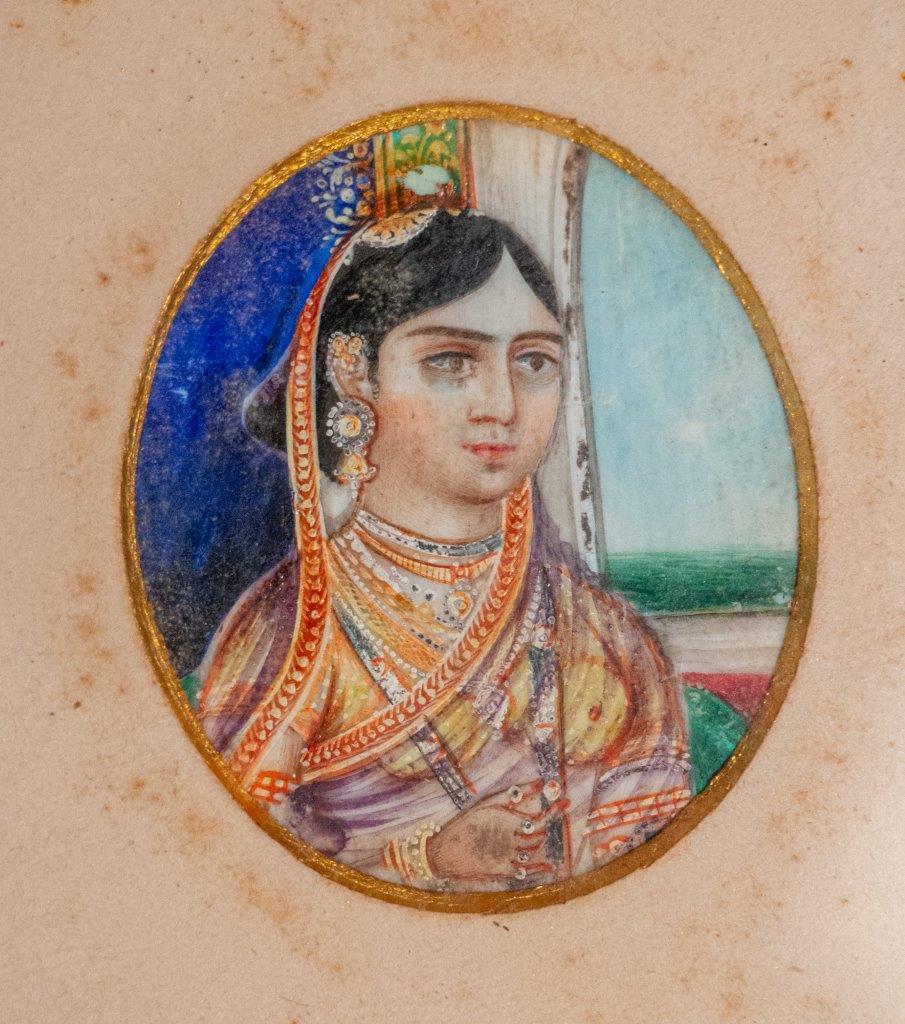
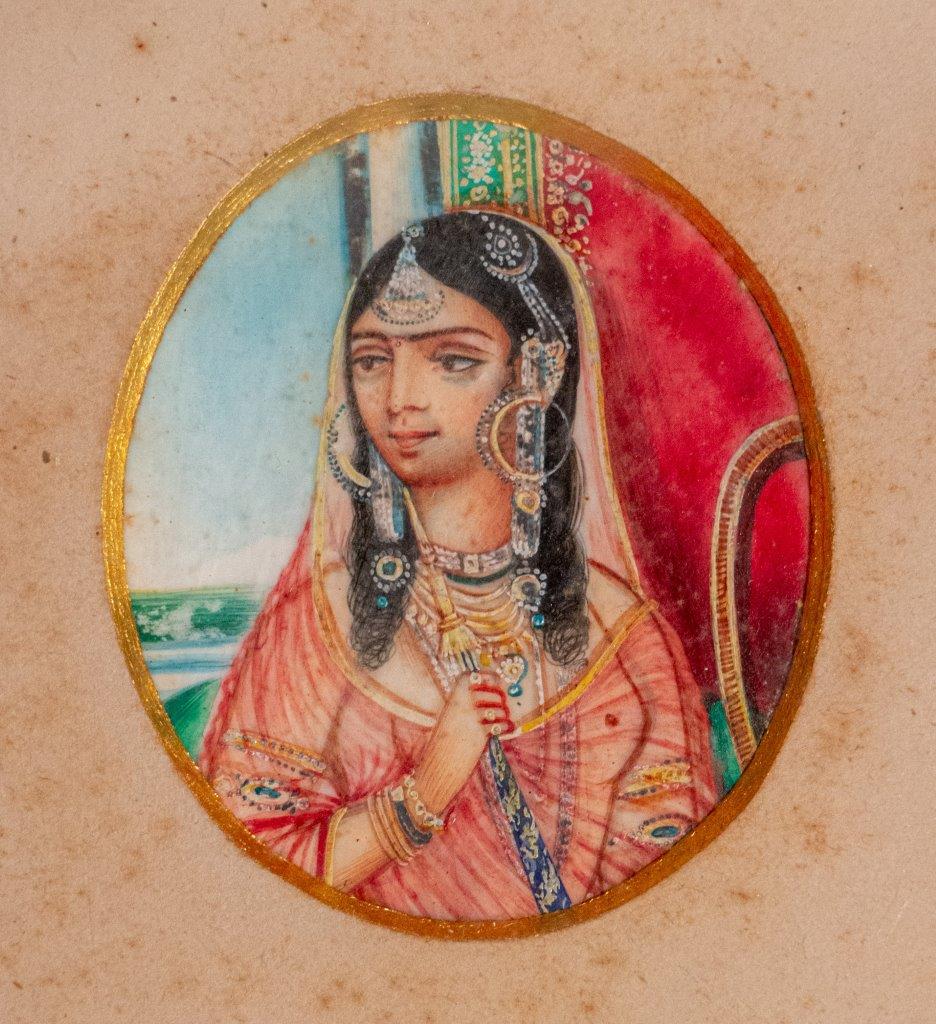
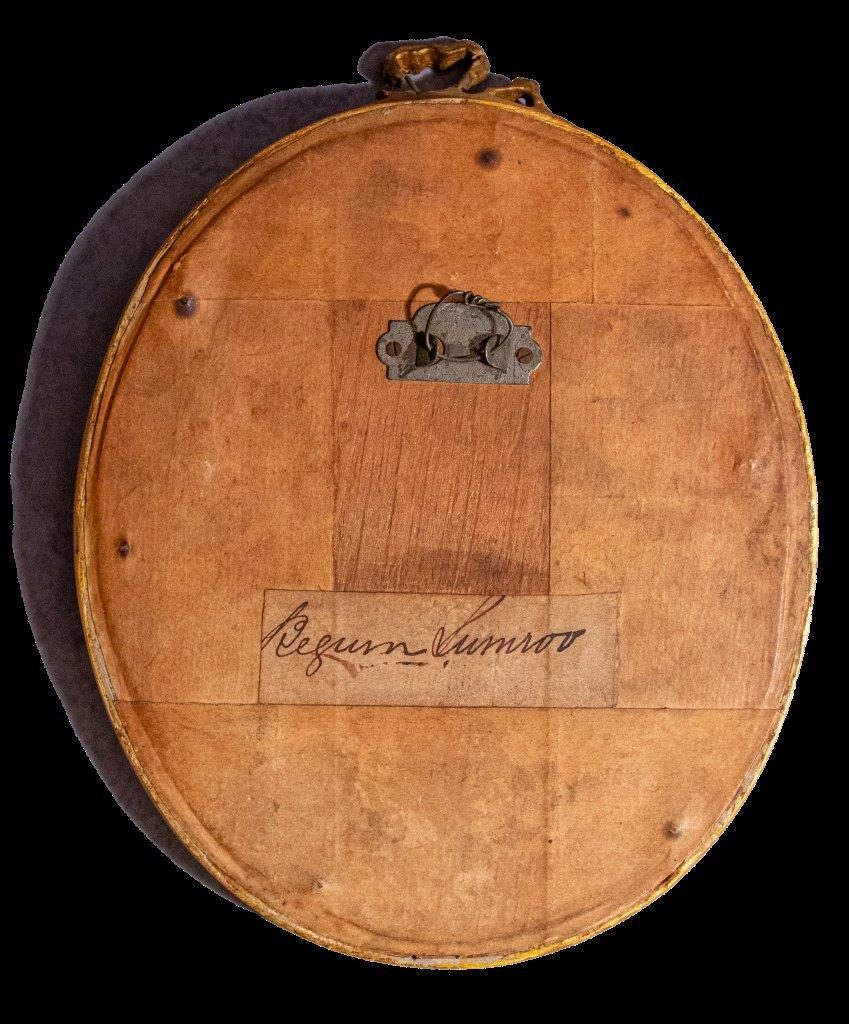
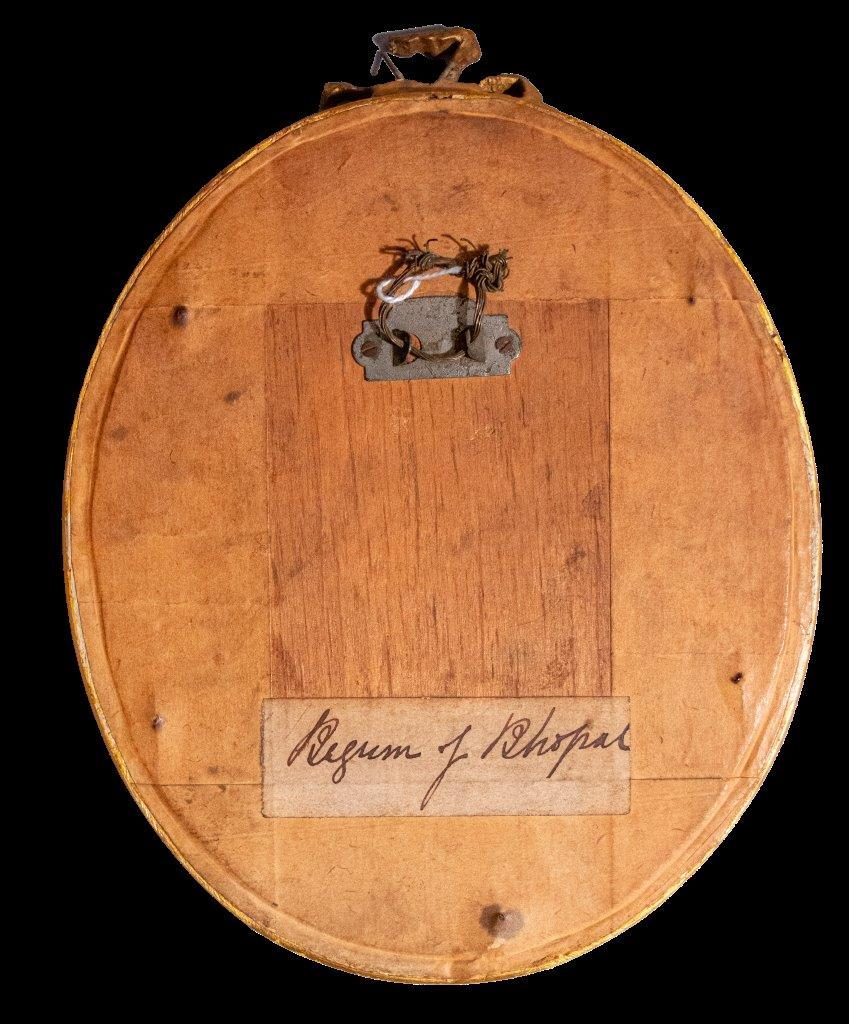
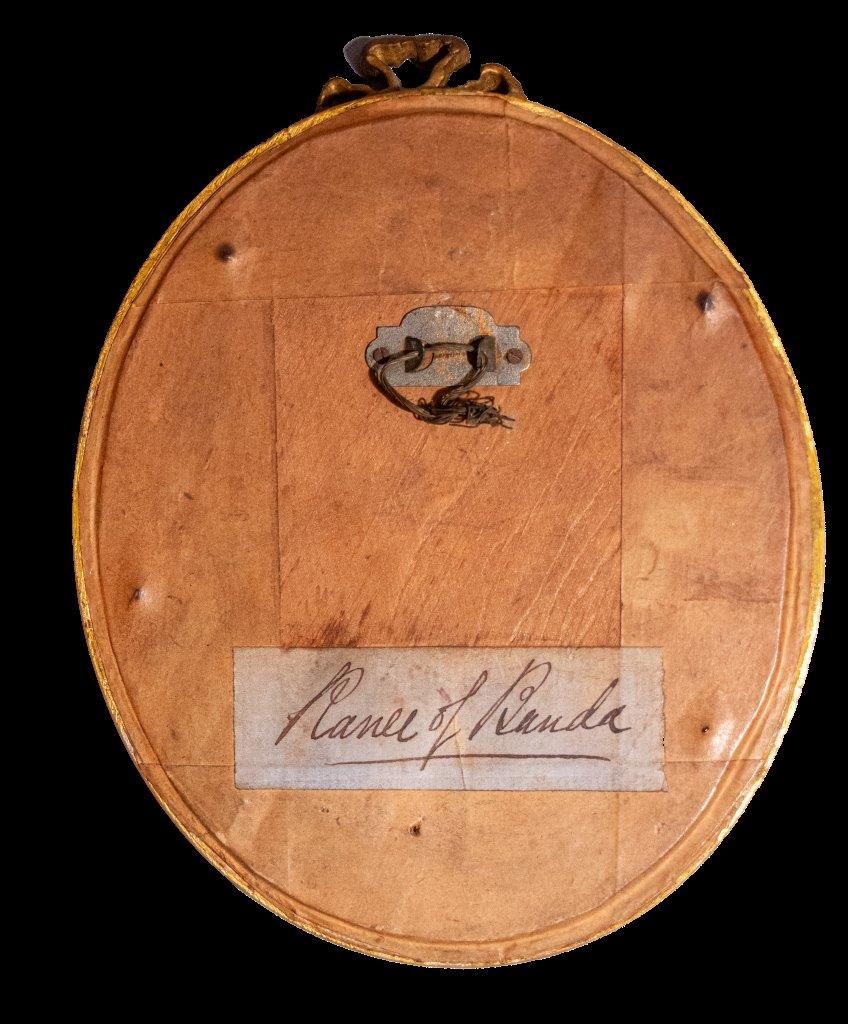
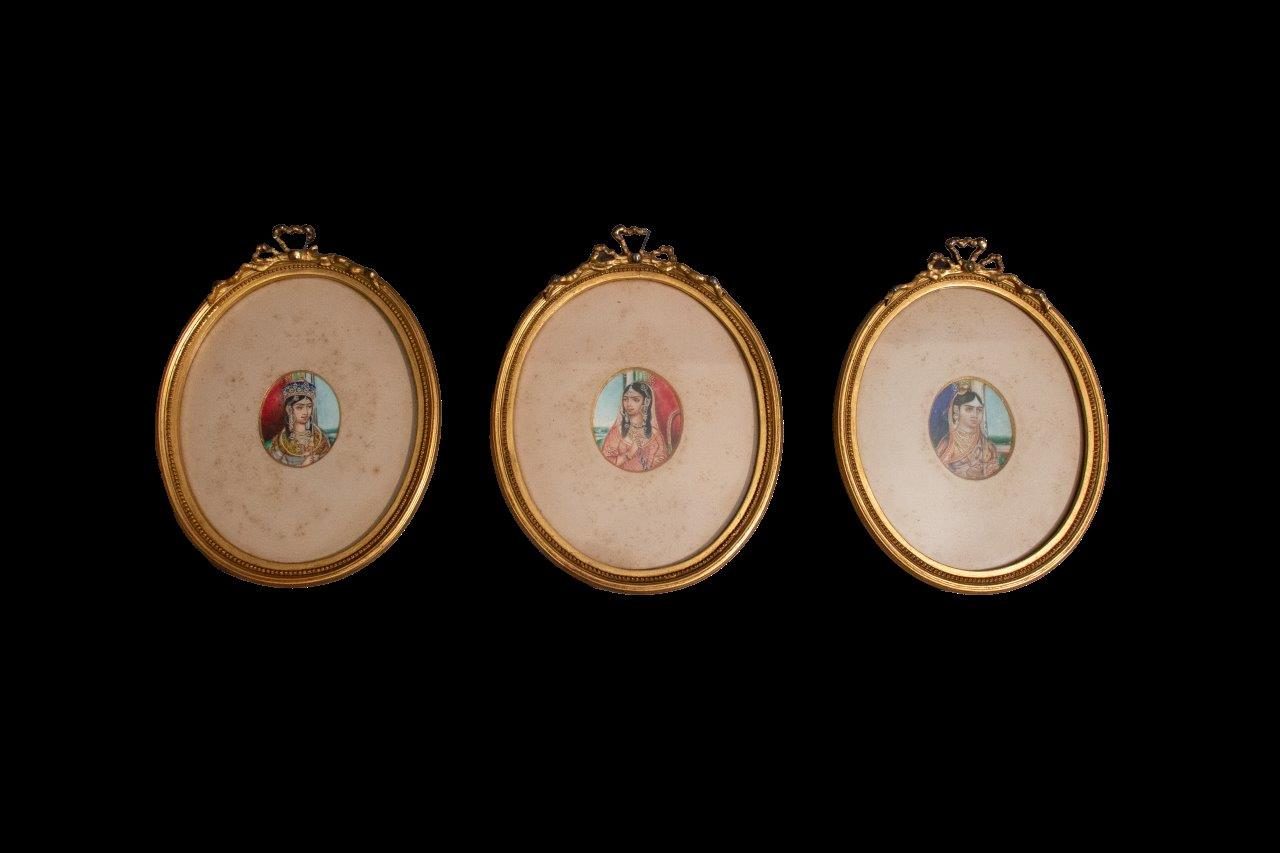
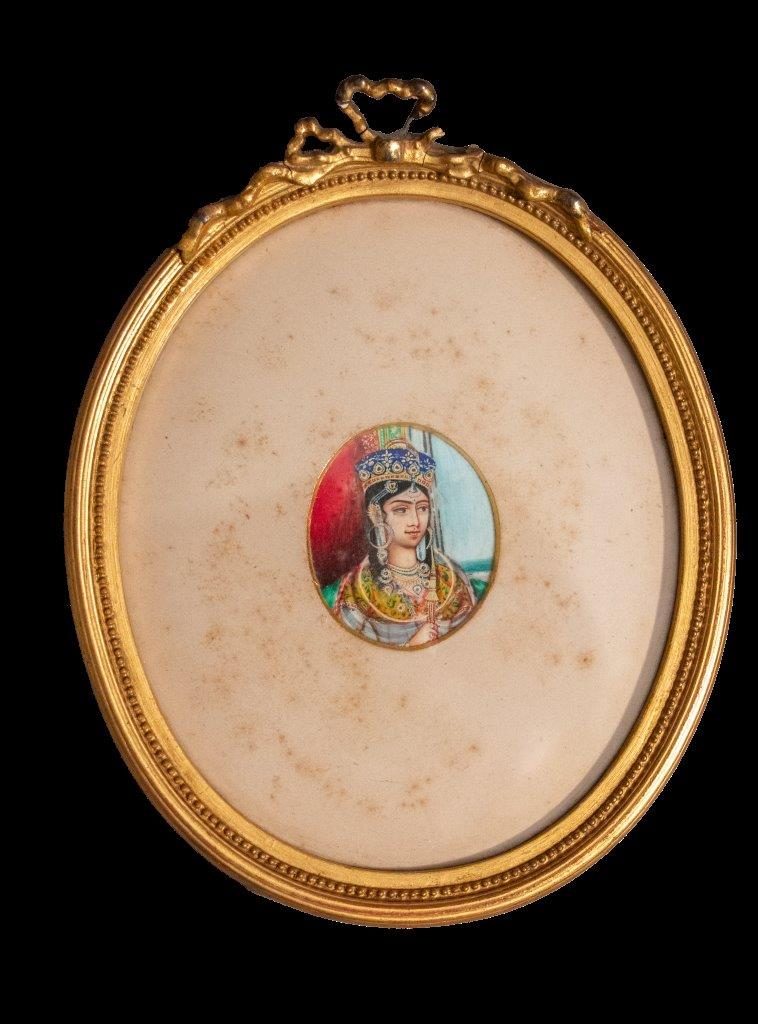
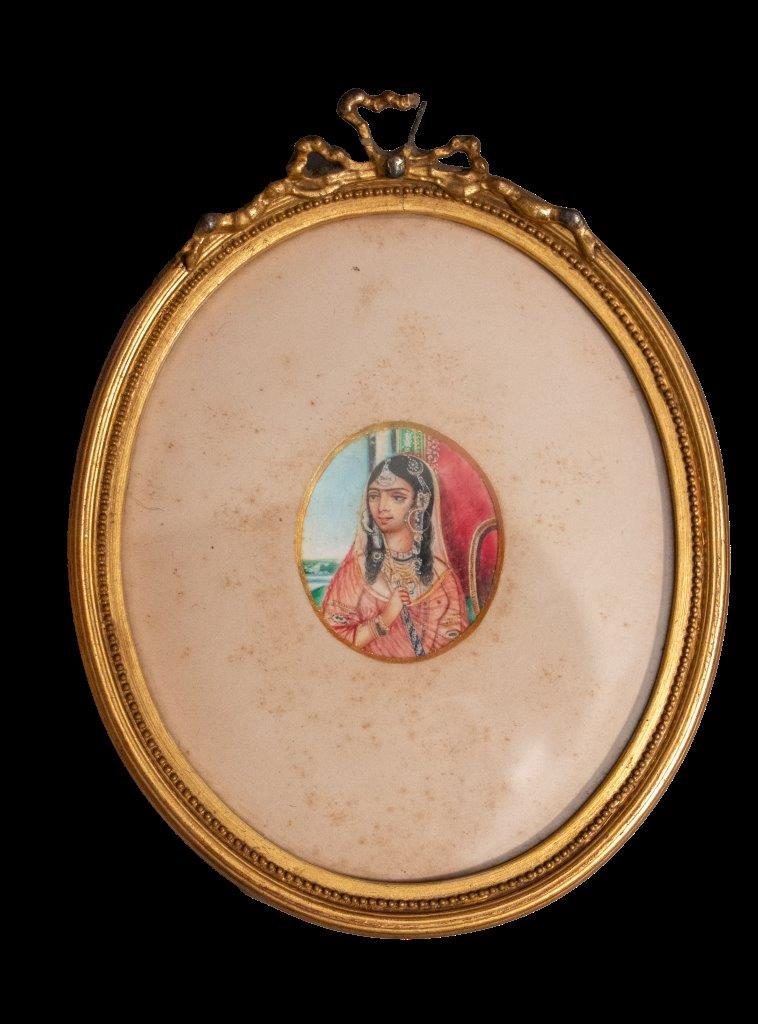
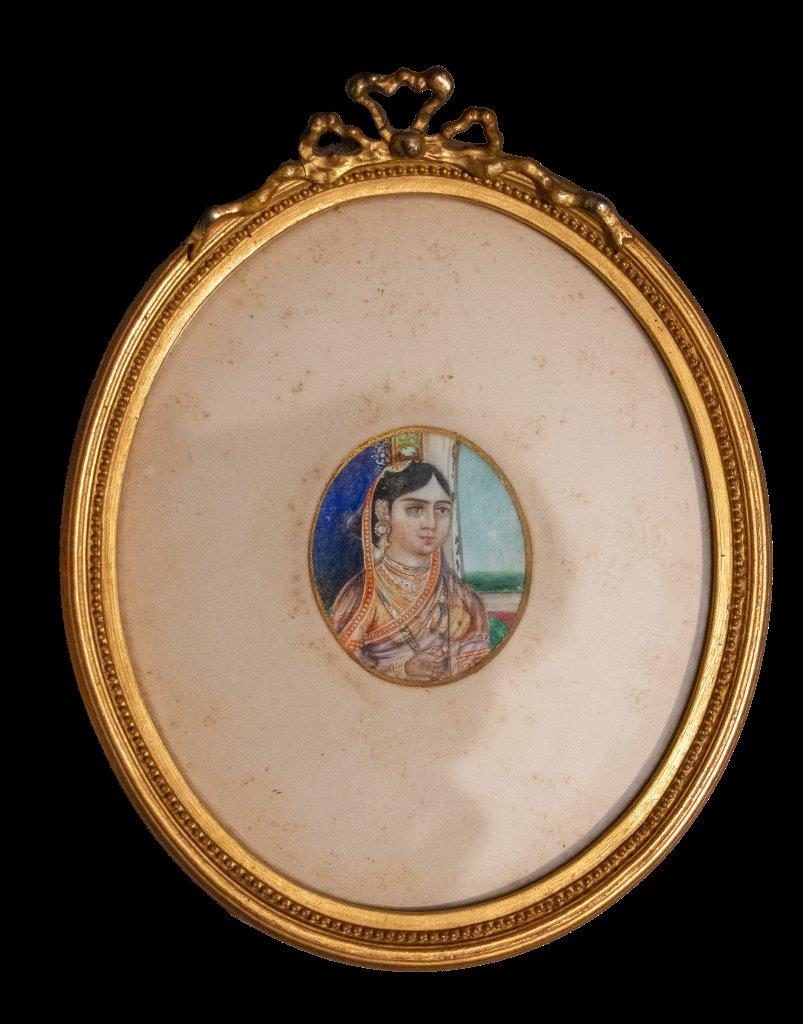
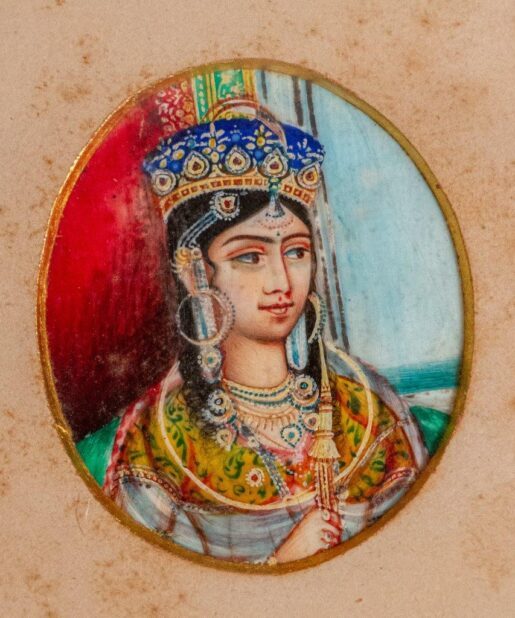
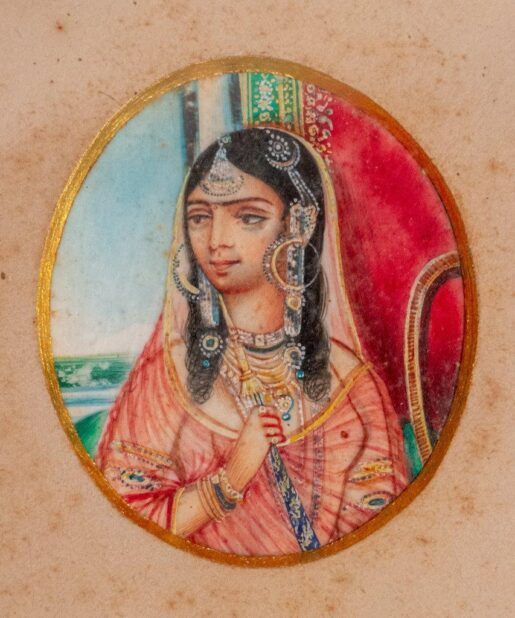
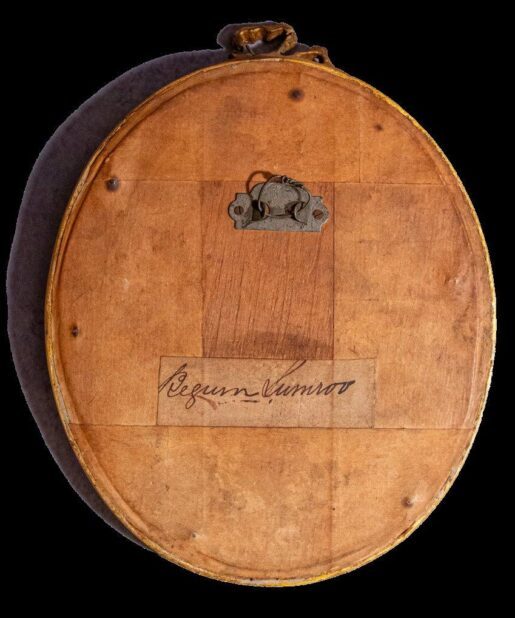
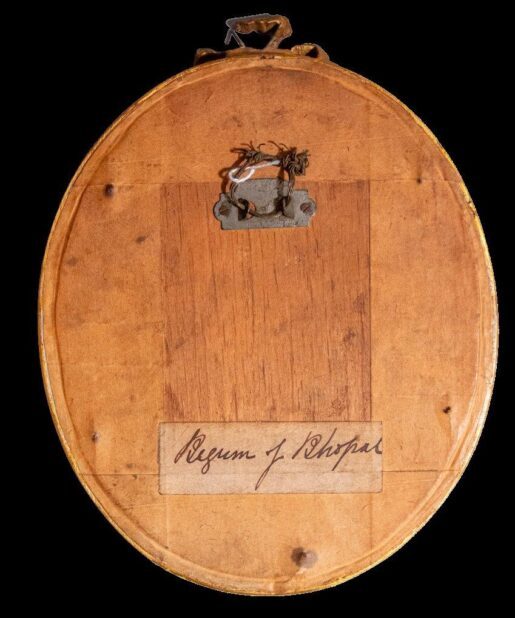
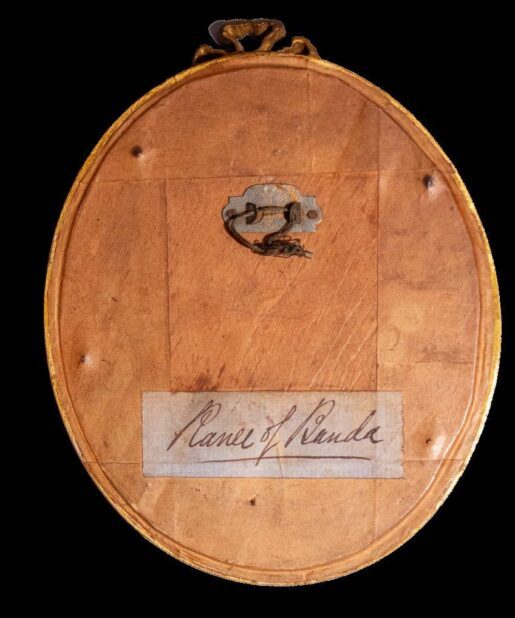
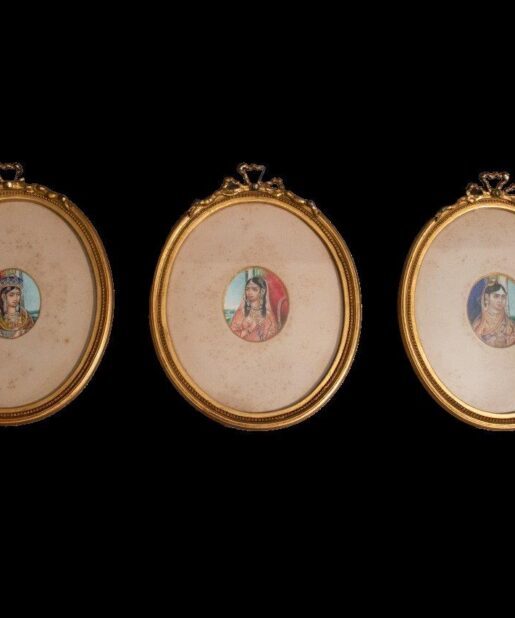
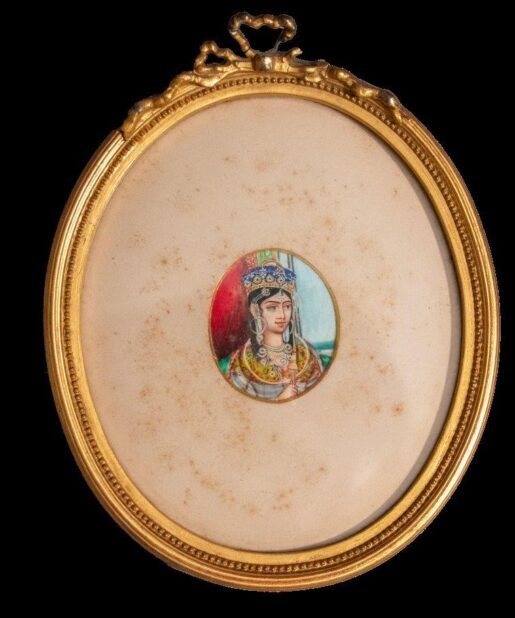
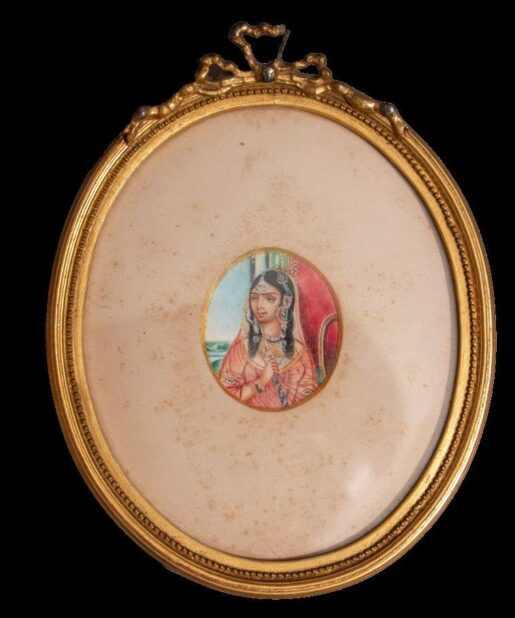
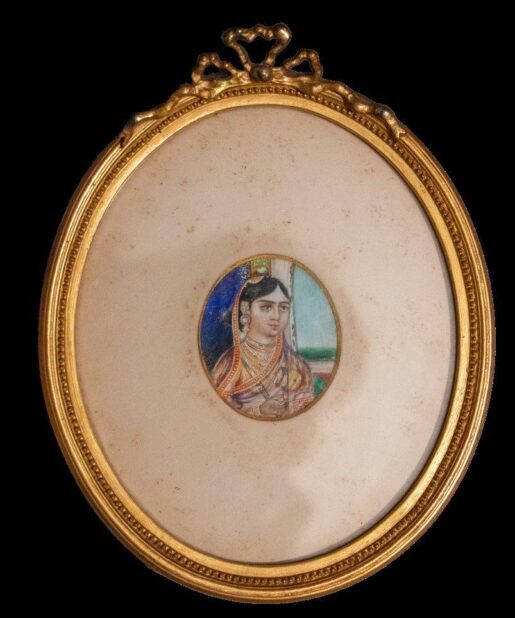
A fine group of three 19th-century Indian portrait miniatures, each delicately rendered with rich colour and exquisite detail, portraying three of the subcontinent’s most remarkable and politically influential women. All are approximately 5 × 5.5 cm and are presented in giltwood frames, each bearing its identifying title to the verso.
The Ranee of Banda is depicted with regal poise, recalling the celebrated royal family of Banda in Bundelkhand. The Ranees were renowned for their resilience and strategic alliance-making during a period of shifting regional power. This miniature captures the elegance and authority traditionally associated with the Banda court, reflecting the aesthetic sensibilities of late Mughal and regional portraiture.
The Begum of Bhopal—identified on verso and possibly representing Qudsia (Gauhar) Begum, the formidable 19th-century ruler who founded Bhopal’s line of female sovereigns—is shown with the calm dignity befitting a woman who governed one of India’s most important princely states. Qudsia Begum (r. 1819–1837) is celebrated for her political acumen, reformist leadership, and for establishing a rare matrilineal tradition in which four successive Begums ruled Bhopal. The miniature reflects the refined court style associated with Bhopal’s cultured and literate elite.
Begum Samru (Begum Sombre), perhaps the most extraordinary of the trio, was a Kashmiri-born woman who rose from humble origins to become the ruler of Sardhana and a respected military leader commanding her own troops. An adept diplomat, patron of the arts, and ally of both Mughal emperors and European powers, she remains a compelling figure in Indian history. Her portrait miniature reflects the cosmopolitan environment of her court—an intriguing blend of Mughal, European, and regional influences.
Together, these three miniatures form a striking ensemble celebrating female authority and political power in 18th–19th century India, a period in which such prominence was exceptional. Each portrait offers not only artistic merit but also a window into the lives of influential women who shaped the political and cultural landscape of their time.
Product Enquiry
Related products
Rare Artefacts
£2,000.00


Rare Artefacts
£850.00
£3,500.00

Rare Artefacts
£7,000.00


£6,500.00