

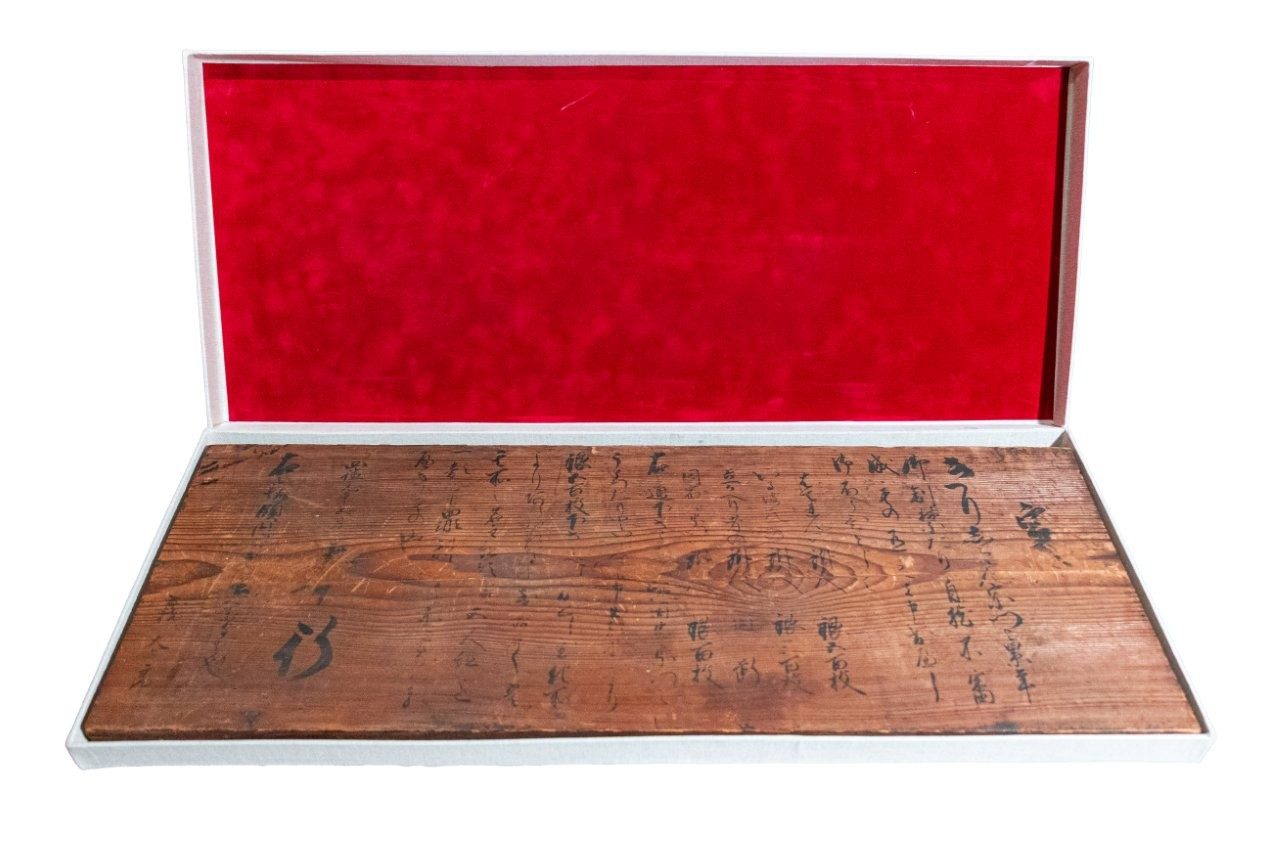
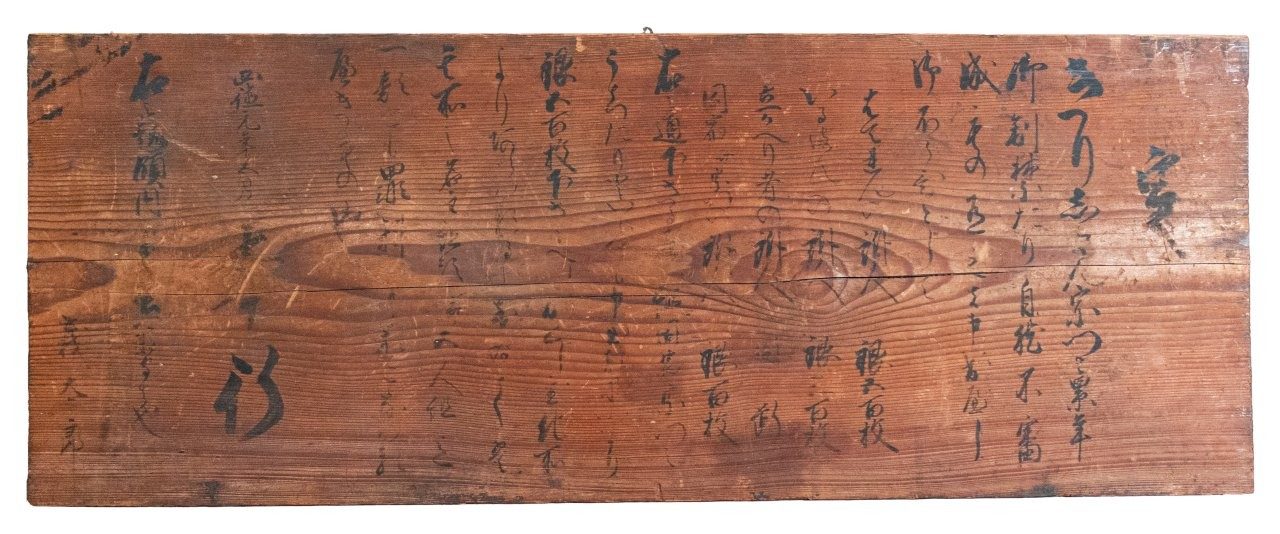
Kirishitan Kosatsu. May 1711.
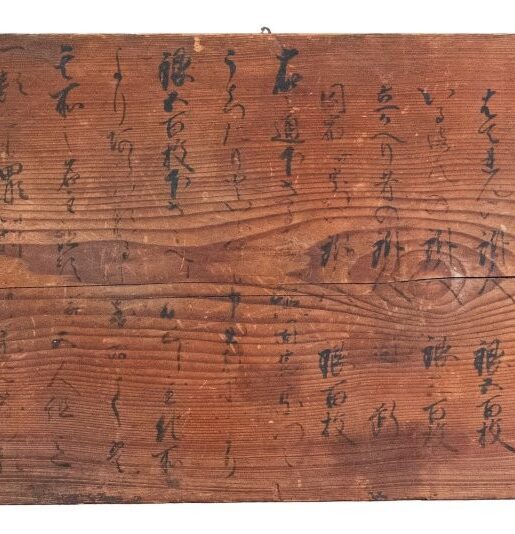
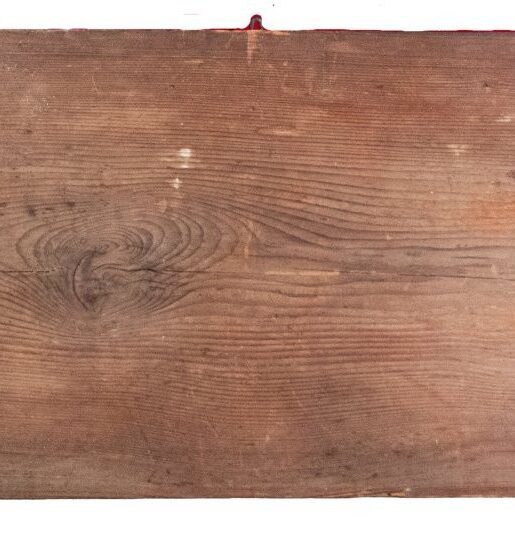
One large & thick wooden board (800 x 370 x 25 mm), issued by a Bugyo (magistrate), with characters written in black ink (some characters faded but still legible).
Stating in an approximate & abbreviated translation: “Regulation. If anyone knows of Christian disciples, already banned, please report to the Government. Rewards are as below: Padre1 (bateren): 500 pieces of
silver coin. Priests2 (iruman): 300 pieces of silver coin. Christian disciples: 300 pieces of silver coin. Anyone knowingly living with a Christian: 100 pieces of silver coin. If a family member identifies a Christian within his family, the reward is 500 pieces of silver coin. Anyone identified as having hidden a Christian will bear responsibility along with his landlord and his five-person unit (goningumi). May 1711.” With the name at end
in brush and ink: “Bugyo [commissioner] Yoshitaro.”
This edict board is an example of a public statement outlining the prohibition on Christianity, the punishments for defying the ban, and the rewards offered to those who reported transgressors. The text of the board is clear and concise, stating the law without entering into much detail about what the Christian religion was. This kosatsu (official bulletin board) provides an important historical reminder of the extraordinary risks to
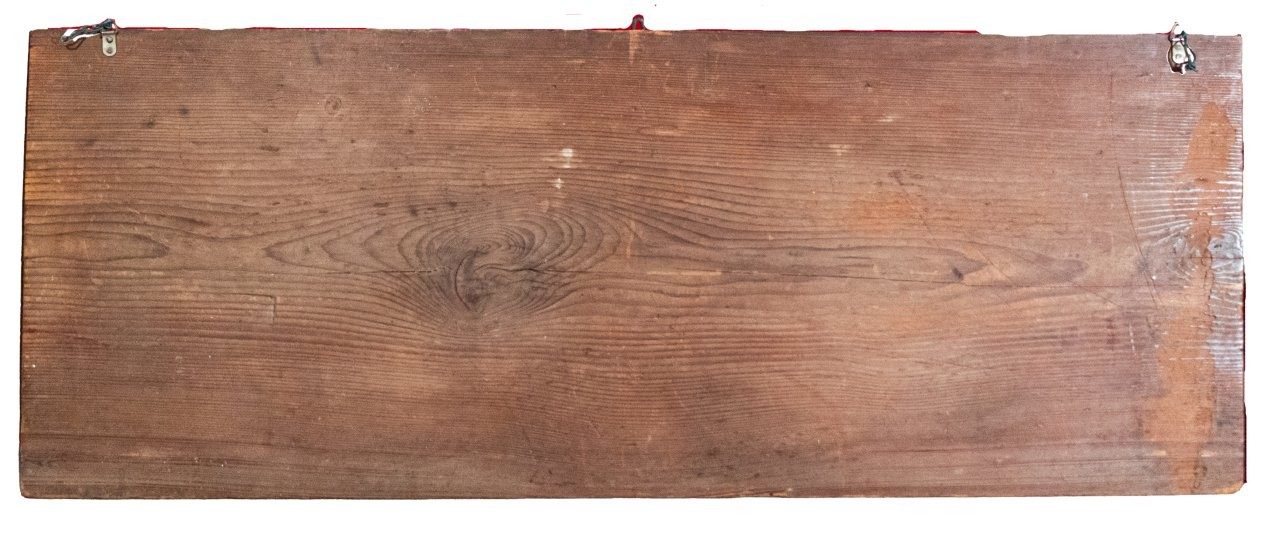
communities suspected of faith in Christ during the long era of the Kakure Kirishitan (Hidden Christians) in Japan. The communal – not just individual – risk was enormous. Authorities in every city displayed kosatsu in public spaces – mounted on a pole, hung at village government sites (of which this one shows evidence), or secured to a bigger structure located in strategic areas (crossroads, vicinity of bridges, harbors, etc.). They were generally inscribed with regulations, edicts, and notices. While the ink is occasionally faded, the characters are absolutely legible. In fine condition. One crack in the wooden board. One can see three holes along the top edge where hooks for hanging were once inserted.
1 Refers to a Christian missionary. From the Portuguese padre.
2 Refers to a non-ordained monk. From the Portuguese irmão.
Product Enquiry
Related products
£3,800.00
![Commentary on Aristotle, Categoriae, and the same authors translation of Perihermenias BOETHIUS [MS] C.13th](https://stephenbutler.com/wp-content/uploads/2013/08/IMG_8383-515x618.jpg "Commentary on Aristotle, Categoriae, and the same authors translation of Perihermenias BOETHIUS [MS] C.13th")
![Commentary on Aristotle, Categoriae, and the same authors translation of Perihermenias BOETHIUS [MS] C.13th](https://stephenbutler.com/wp-content/uploads/2013/08/IMG_8379-515x618.jpg "Commentary on Aristotle, Categoriae, and the same authors translation of Perihermenias BOETHIUS [MS] C.13th")
C12th - C13th manuscripts
£3,800.00

C14th -C16th manuscripts
Single leaf from the so-called ‘Carondelet Breviary’ 1458 from the scribe Jean d’Aussert
£600.00
![The Death of Ptolemy, a miniature on a cutting from Laurent de Premierfait, [France, probably Troyes, c.1470]](https://stephenbutler.com/wp-content/uploads/2021/01/IMG_0782-515x618.jpg "The Death of Ptolemy, a miniature on a cutting from Laurent de Premierfait, [France, probably Troyes, c.1470]")
![Leaf of Passionale in Latin [Italy, 12th century, first half] Lives of St Felicity and St Clement](https://stephenbutler.com/wp-content/uploads/2021/01/IMG_0696-515x618.jpg "Leaf of Passionale in Latin [Italy, 12th century, first half] Lives of St Felicity and St Clement")
C12th - C13th manuscripts
Leaf of Passionale in Latin [Italy, 12th century, first half] Lives of St Felicity and St Clement
£1,200.00
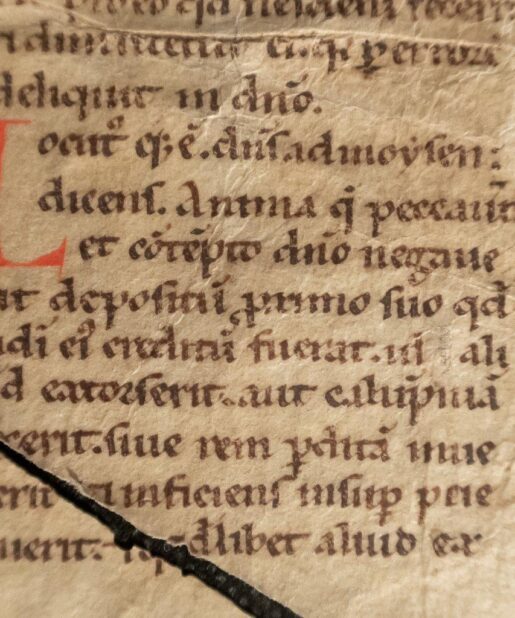
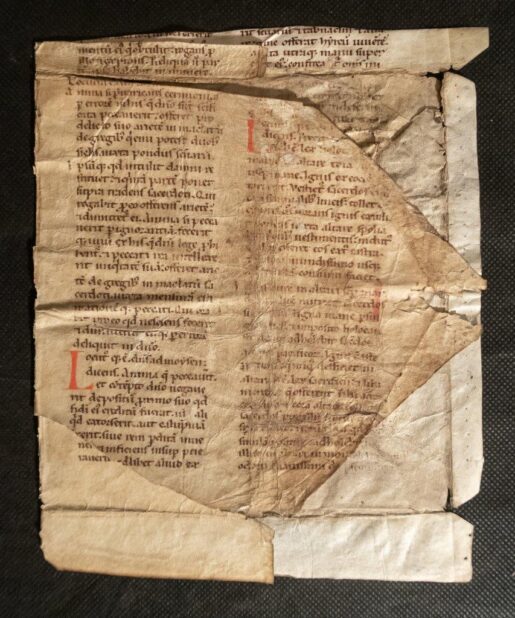
C12th - C13th manuscripts
£1,200.00


C12th - C13th manuscripts
Beautiful painted white vine initial, Augustine’s Commentary on John’s Gospel, Italy C12th
£3,800.00