

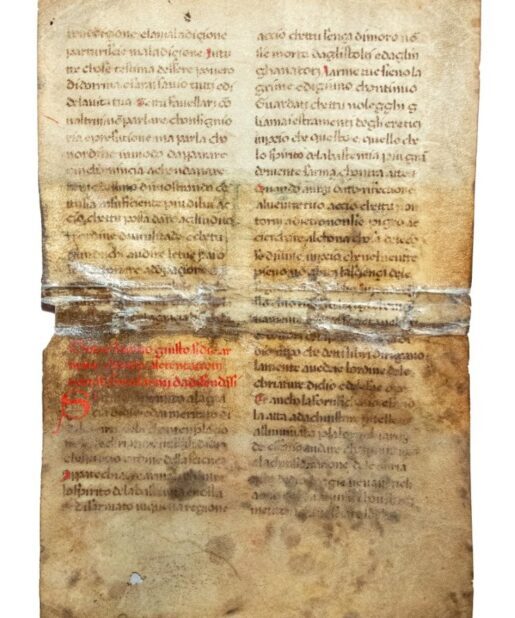
![A leaf from Del dispregio del mondo, translated into Italian by Giovanni dalle Celle (1310–96) from Isaac of Nineveh’s Liber de contemptu mundi, decorated manuscript on parchment. [Italy, 14th century]](https://stephenbutler.com/wp-content/uploads/2025/04/IMG_1576.jpg "A leaf from Del dispregio del mondo, translated into Italian by Giovanni dalle Celle (1310–96) from Isaac of Nineveh’s Liber de contemptu mundi, decorated manuscript on parchment. [Italy, 14th century]")
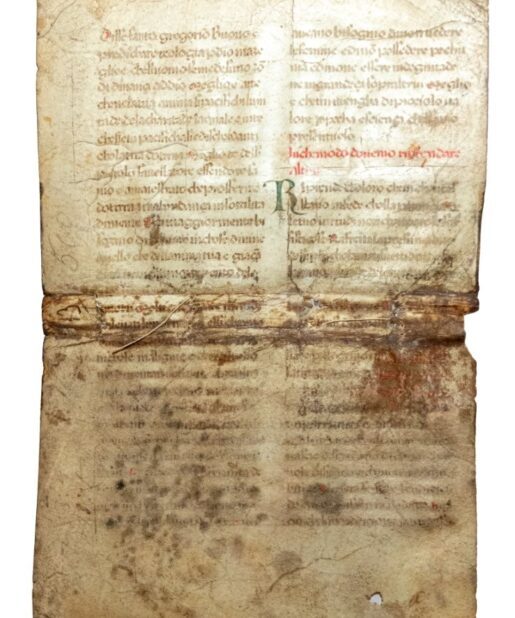
![A leaf from Del dispregio del mondo, translated into Italian by Giovanni dalle Celle (1310–96) from Isaac of Nineveh’s Liber de contemptu mundi, decorated manuscript on parchment. [Italy, 14th century]](https://stephenbutler.com/wp-content/uploads/2025/04/IMG_1577.jpg "A leaf from Del dispregio del mondo, translated into Italian by Giovanni dalle Celle (1310–96) from Isaac of Nineveh’s Liber de contemptu mundi, decorated manuscript on parchment. [Italy, 14th century]")
This piece has been placed.
Many works of comparable significance pass through our hands each year.
If you’re seeking something similar, please send us an enquiry or browse recent acquisitions.
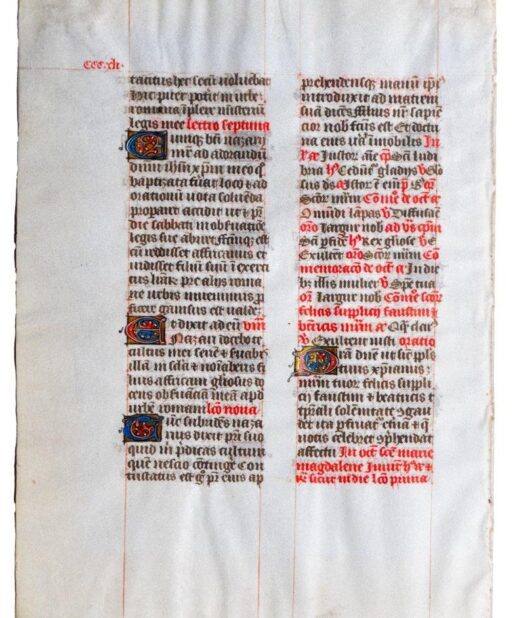
A leaf from Del dispregio del mondo, translated into Italian by Giovanni dalle Celle (1310–96) from Isaac of Nineveh’s Liber de contemptu mundi, decorated manuscript on parchment. [Italy, 14th century]
![A leaf from Del dispregio del mondo, translated into Italian by Giovanni dalle Celle (1310–96) from Isaac of Nineveh’s Liber de contemptu mundi, decorated manuscript on parchment. [Italy, 14th century]](https://stephenbutler.com/wp-content/uploads/2025/04/IMG_1562-100x100.jpg "A leaf from Del dispregio del mondo, translated into Italian by Giovanni dalle Celle (1310–96) from Isaac of Nineveh’s Liber de contemptu mundi, decorated manuscript on parchment. [Italy, 14th century]")
![A leaf from Del dispregio del mondo, translated into Italian by Giovanni dalle Celle (1310–96) from Isaac of Nineveh’s Liber de contemptu mundi, decorated manuscript on parchment. [Italy, 14th century]](https://stephenbutler.com/wp-content/uploads/2025/04/IMG_1518-100x100.jpg "A leaf from Del dispregio del mondo, translated into Italian by Giovanni dalle Celle (1310–96) from Isaac of Nineveh’s Liber de contemptu mundi, decorated manuscript on parchment. [Italy, 14th century]")
£2,000.00
A leaf from Del dispregio del mondo, translated into Italian by Giovanni dalle Celle (1310–96) from Isaac of Nineveh’s Liber de contemptu mundi, decorated manuscript on parchment. [Italy, 14th century]
A nearly complete leaf, c. 216 × 150mm, in two columns of 30 lines, written in a fine, regular, rounded southern textualis gothic script, with rubrics in bright red, and capitals stroked in red, decorated with two-line initials alternately red or blue; recovered from use as a book cover, with consequent wear, stitching, dirt, a hole in a blank margin, etc., but still mostly easily legible
Text
Del dispregio del mondo, chapters 3–5: ‘Disse santo Gregorio Buono e predichare teologia per dio […] che savio presuntuoso. [Chapter 4:] In che modo dovemo riprendere altrui. Riprende coloro che ti chontastano in fede colla […] Chome luomo giusto si die armare chontra aletentationi e quali sono larmi da difendarsi. Si <tu se perve>nuto ala grazia <di dio> […, becoming hard to read at the end after:] alluminato per la loro’. An online edition of the text is Del dispregio del mondo: collazione dell’abate Isaac, e Lettere del beato Gio. dalle Celle e di altri, Biblioteca scelta di opere italiane antiche e moderne, 387 (Giovanni Silvestre, 1839), in which the text of the present leaf is pp. 48–51.
Isaac of Nineveh (c. 613 – c. 700), also known as St Isaac the Syrian, was briefly a bishop but abdicated after only five months to devote himself to the life of an ascetic hermit, and wrote several works on Christian asceticism, originally in Syriac, and later translated into Greek and other languages. His works (in Latin) enjoyed new popularity from the 13th century, especially in Franciscan and other religious circles that espoused poverty.
Substantial fragments of medieval manuscripts in Italian rarely appear on the market, especially as a rare text, well-written and on vellum: the vernacular was more often used for cursively-written texts on paper. The present text appears to be especially rare on the market: no Italian copy is recorded by the Schoenberg database, and only one copy in Latin.
Product Enquiry
Related products


C14th -C16th manuscripts
Illuminated inital 1500 huge leaf on vellum, from Siena or Florence.
£750.00
C14th -C16th manuscripts
Leaf from a Bible, II Kings 17, C15th manuscript in Latin on parchment
£750.00

C14th -C16th manuscripts
Finely produced illuminated leaf from a French Psalter, c.1480
£550.00

C14th -C16th manuscripts
£400.00
C14th -C16th manuscripts
Single leaf from the so-called ‘Carondelet Breviary’ 1458 from the scribe Jean d’Aussert
£600.00
![Leaf from Baldo degli Ubaldi (1327–1400), Sextum codicis librum commentaria [Italy, late 15th century]](https://stephenbutler.com/wp-content/uploads/2023/07/IMG_0101-515x618.jpg "Leaf from Baldo degli Ubaldi (1327–1400), Sextum codicis librum commentaria [Italy, late 15th century]")
C14th -C16th manuscripts
£800.00
![A possibly unique and unknown manuscript from the library of Sir Thomas Phillipps. Anonymous Dominican compiler, Liber de fructibus penitentiae (alias Flores de penitentia or Summa aurea) [Southern France (Provence?), 14th century (1st half)]](https://stephenbutler.com/wp-content/uploads/2025/04/IMG_1518-515x618.jpg "A possibly unique and unknown manuscript from the library of Sir Thomas Phillipps. Anonymous Dominican compiler, Liber de fructibus penitentiae (alias Flores de penitentia or Summa aurea) [Southern France (Provence?), 14th century (1st half)]")
![A possibly unique and unknown manuscript from the library of Sir Thomas Phillipps. Anonymous Dominican compiler, Liber de fructibus penitentiae (alias Flores de penitentia or Summa aurea) [Southern France (Provence?), 14th century (1st half)]](https://stephenbutler.com/wp-content/uploads/2025/04/IMG_1510-515x618.jpg "A possibly unique and unknown manuscript from the library of Sir Thomas Phillipps. Anonymous Dominican compiler, Liber de fructibus penitentiae (alias Flores de penitentia or Summa aurea) [Southern France (Provence?), 14th century (1st half)]")