

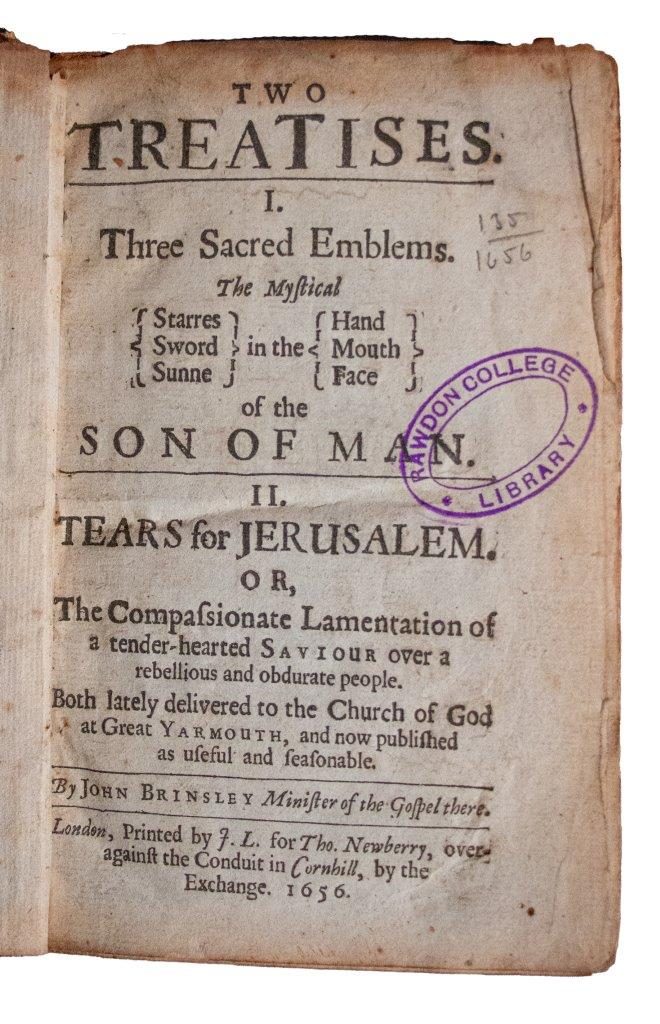
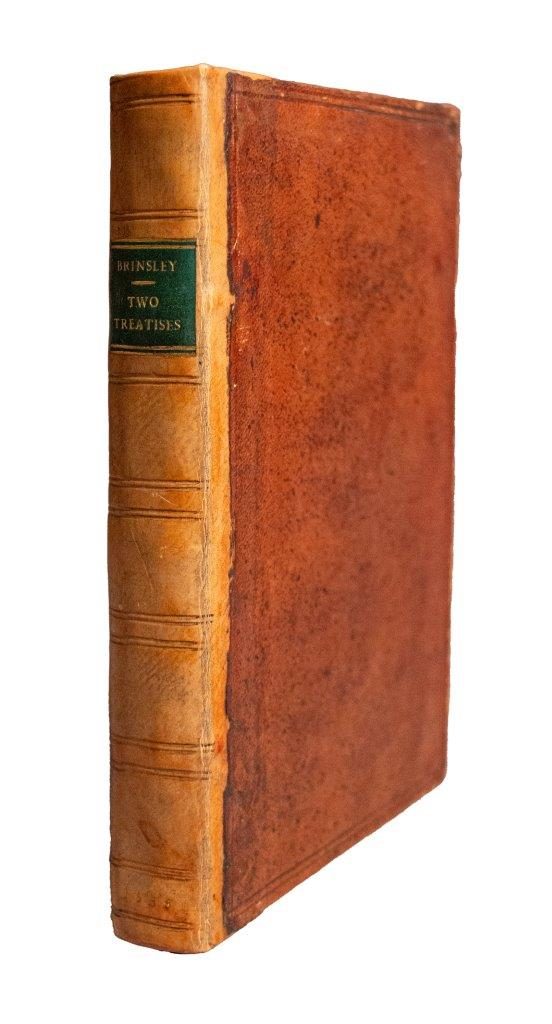
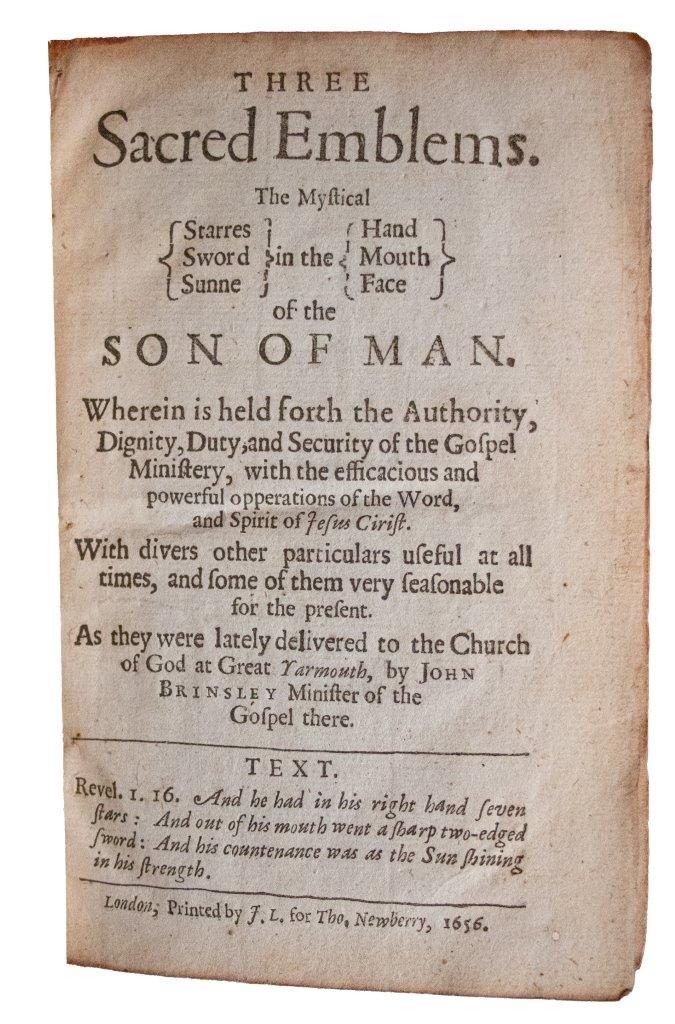
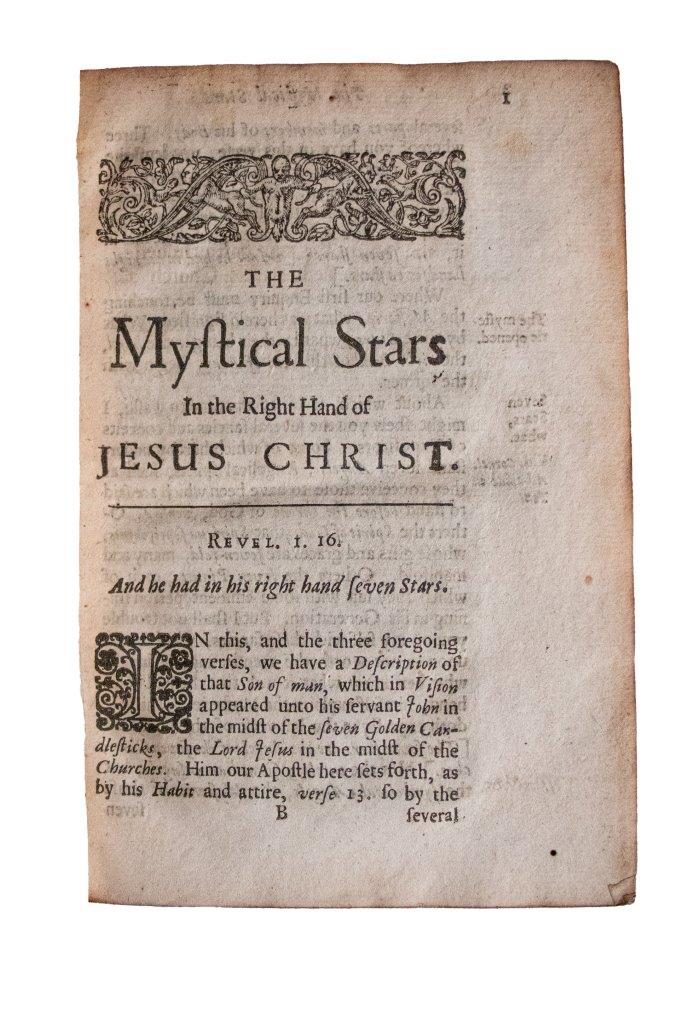
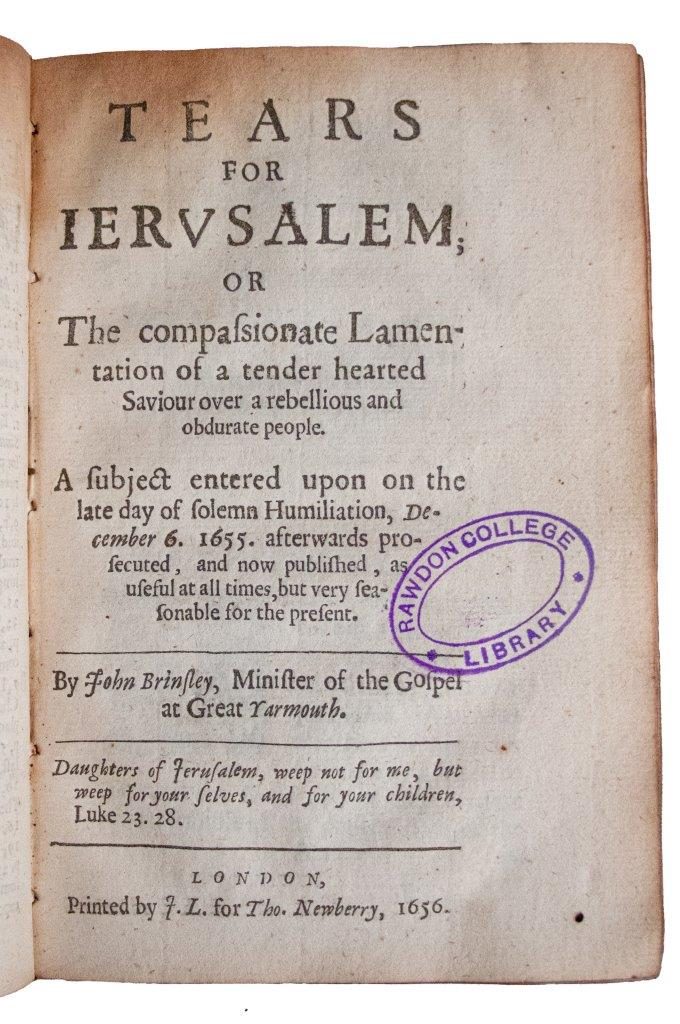



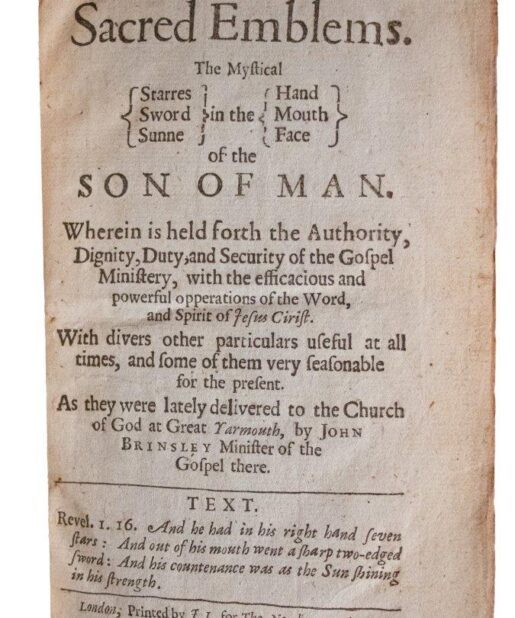
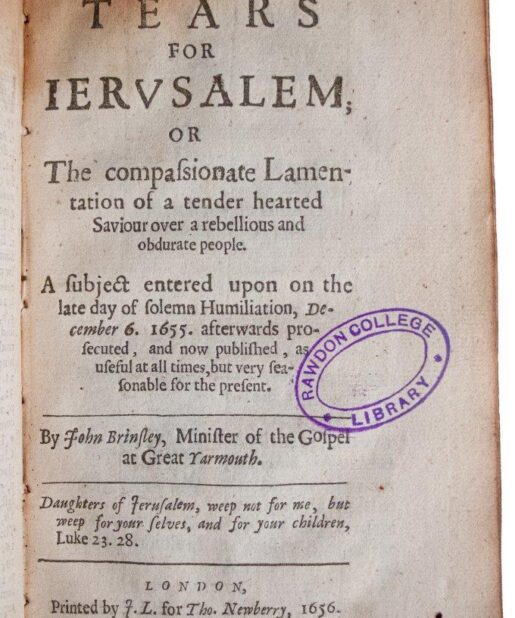

BRINSLEY, John (1600–1665). Two Treatises. I. Three Sacred Emblems. II. Tears for Jerusalem. Printed by J.L. for Tho. Newberry,, 1656
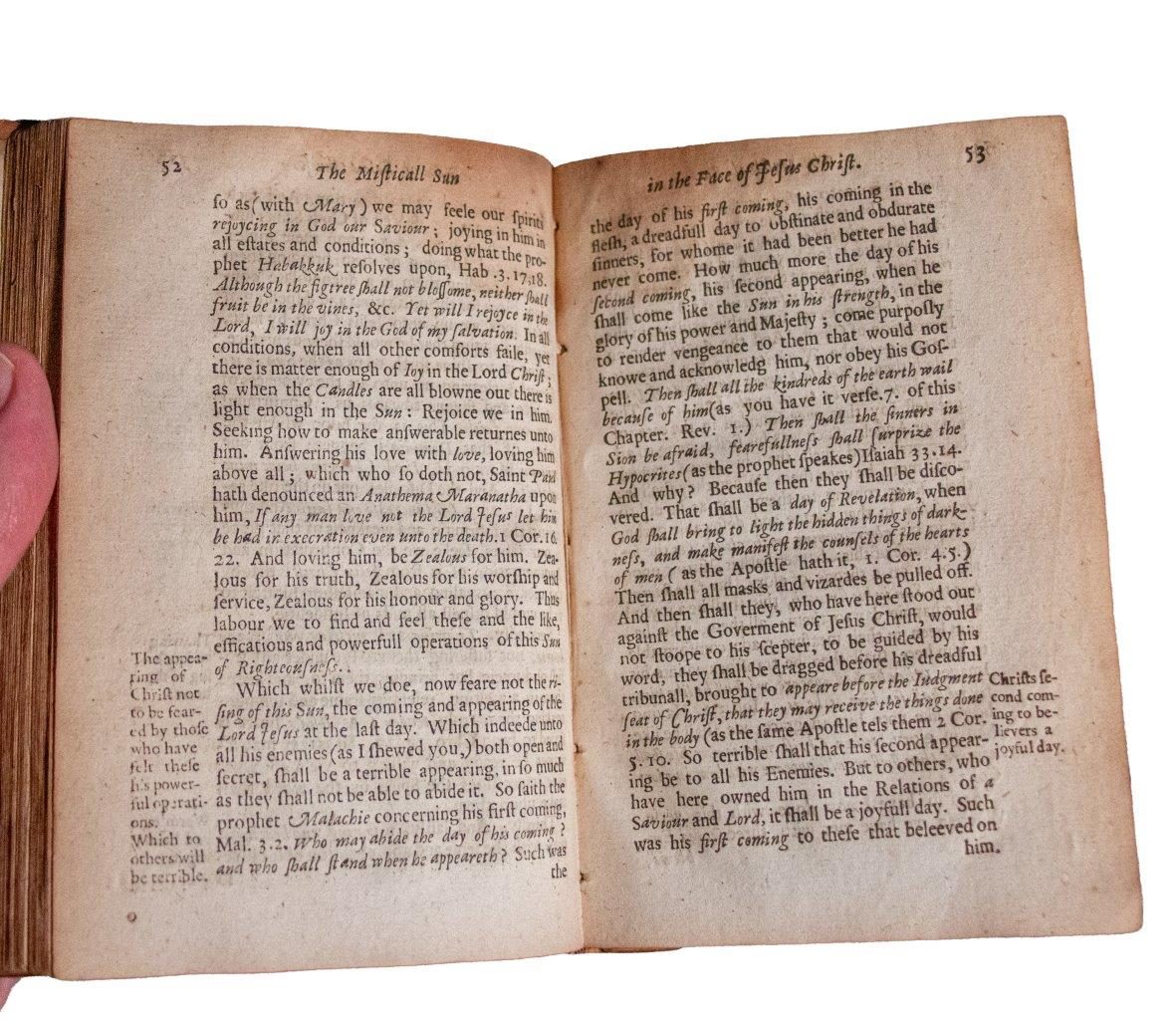
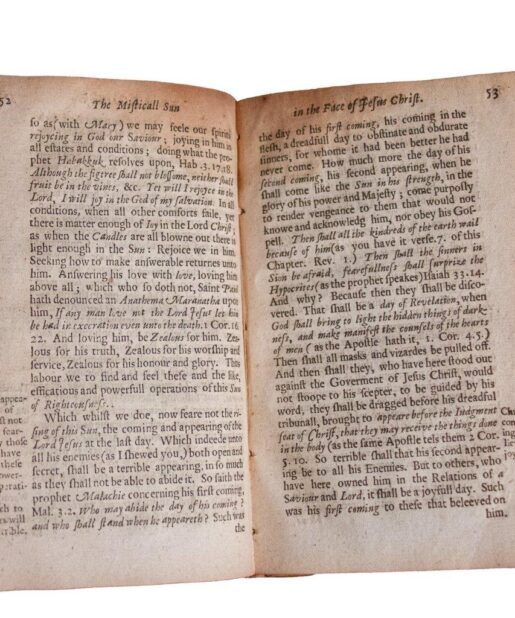
Octavo. Later sprinkled sheep, sympathetically rebacked; a little rubbed. Single worm hole to the lower corner, occasionally developing into a short track and slightly affecting a couple of sidenotes. Ink stamp to each title-page. Some general browning and light staining.
Wing B4736.
Provenance: Fox Pointe Collection.
A scarce and deeply affecting Puritan devotional work, uniting emblematic meditation with prophetic lamentation in a searching call to repentance, spiritual vigilance, and godly sorrow.
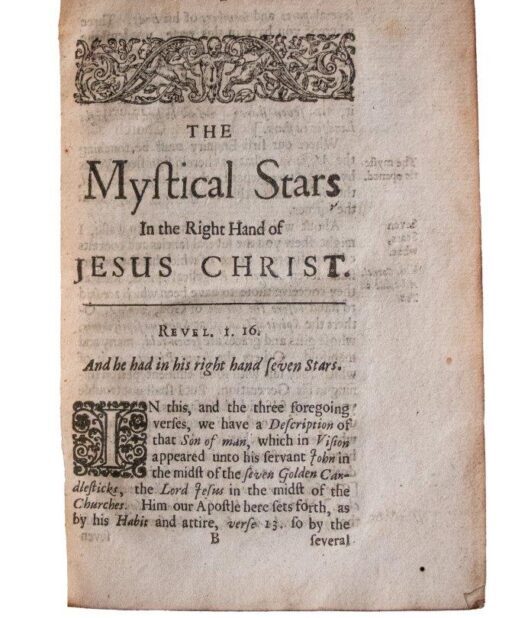
In the first treatise, Three Sacred Emblems, Brinsley adopts the popular early-modern emblem tradition — combining vivid metaphor, moral exposition, and scriptural application — to impress spiritual truths upon the conscience. Each “emblem” serves as a symbolic meditation on sin, divine judgment, and the necessity of inward transformation, reflecting the Puritan gift for turning imagery into instruments of moral and spiritual awakening.
The second and more substantial treatise, Tears for Jerusalem, takes its title and theme from Christ’s lament over the doomed city. Here Brinsley delivers a sustained and passionate meditation on national sin, divine wrath, and the fearful consequences of spiritual hardness. Written against the background of England’s gathering political and religious crisis, the work reads as a prophetic warning to a sinful nation standing on the brink of judgment.
Together, the two treatises form a powerful example of English Puritan practical divinity at its most emotive and urgent: a literature designed not merely to instruct but to pierce the heart, awaken repentance, and reform both private lives and public morals.
This is the first edition of Brinsley’s work, now scarce in commerce. Surviving copies are usually worn from devotional use; clean and structurally sound examples are uncommon.
John Brinsley was a Puritan divine and devotional writer, born at Ashby-de-la-Zouch, Leicestershire, in 1600. He was admitted to Cambridge University at the remarkably early age of thirteen, a testament to his precocious learning.
He later became pastor at Preston and, in 1642, was appointed to the living of Somerleyton. Brinsley’s ministry developed increasingly strong Puritan convictions, and like many godly ministers of his generation he suffered under the Restoration settlement. He was ejected from his living in 1662 under the Act of Uniformity and spent his final years in poverty and obscurity. He died in 1665.
According to the bibliographer Darling, Brinsley was “skilled in sacred criticism,” and his writings reflect a learned, sober, and earnest mind, combining close scriptural exegesis with pastoral urgency. Though never as famous as Baxter or Sibbes, he belongs to the serious second rank of English Puritan divines whose works were widely read, heavily used, and consequently are now scarce in sound condition.
Product Enquiry
Related products
![Gu Hutou Hua Lienu Zhuan (Xin Kan Gu Lienu Zhuan) [An Ancient Edition of Biographies of Virtuous Women ] Liu Xiang; images attrib. to Gu Kaizhi](https://stephenbutler.com/wp-content/uploads/2024/08/IMG_0472-515x618.jpg "Gu Hutou Hua Lienu Zhuan (Xin Kan Gu Lienu Zhuan) [An Ancient Edition of Biographies of Virtuous Women ] Liu Xiang; images attrib. to Gu Kaizhi")
![Gu Hutou Hua Lienu Zhuan (Xin Kan Gu Lienu Zhuan) [An Ancient Edition of Biographies of Virtuous Women ] Liu Xiang; images attrib. to Gu Kaizhi](https://stephenbutler.com/wp-content/uploads/2024/08/IMG_0467-515x618.jpg "Gu Hutou Hua Lienu Zhuan (Xin Kan Gu Lienu Zhuan) [An Ancient Edition of Biographies of Virtuous Women ] Liu Xiang; images attrib. to Gu Kaizhi")


£9,800.00


£200.00


£1,500.00


![[Thomas Forbes Kelsall] Catalogue of Valuable Books and Illuminated and other Manuscripts…The Library of Thos. Forbes Kelsall Esq. 1906](https://stephenbutler.com/wp-content/uploads/2024/09/IMG_1212-515x618.jpg "[Thomas Forbes Kelsall] Catalogue of Valuable Books and Illuminated and other Manuscripts…The Library of Thos. Forbes Kelsall Esq. 1906")
![[Thomas Forbes Kelsall] Catalogue of Valuable Books and Illuminated and other Manuscripts…The Library of Thos. Forbes Kelsall Esq. 1906](https://stephenbutler.com/wp-content/uploads/2024/09/IMG_1209-454x618.jpg "[Thomas Forbes Kelsall] Catalogue of Valuable Books and Illuminated and other Manuscripts…The Library of Thos. Forbes Kelsall Esq. 1906")