

This piece has been placed.
Many works of comparable significance pass through our hands each year.
If you’re seeking something similar, please send us an enquiry or browse recent acquisitions.
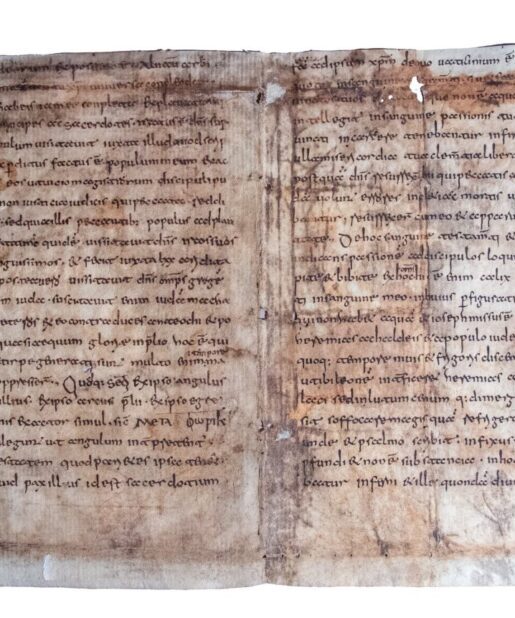
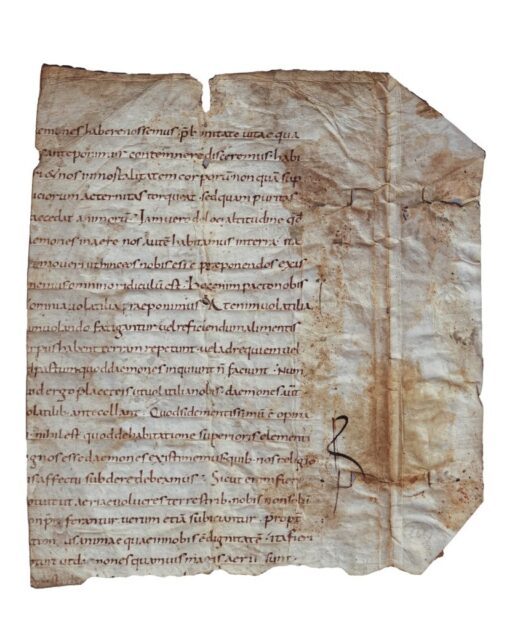
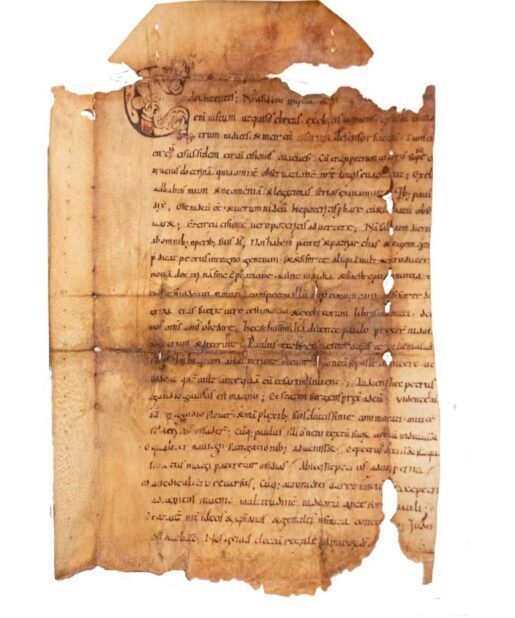
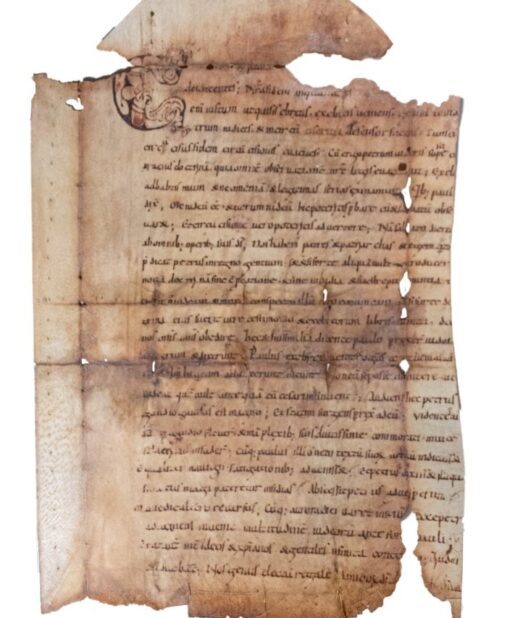
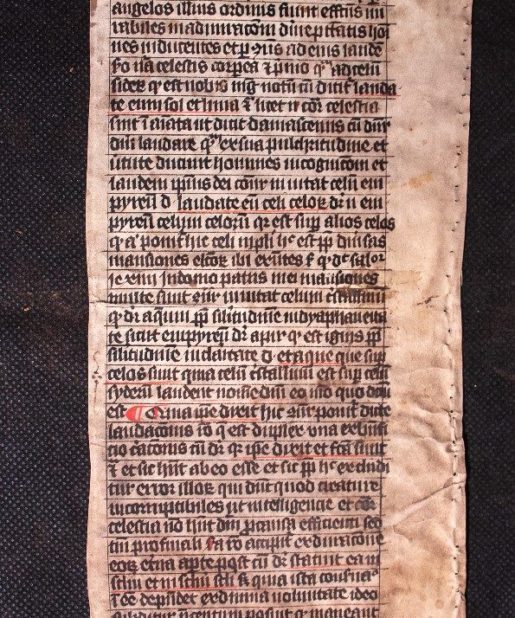
C8th bifolium Jerome on Zechariah, Germany in Latin with a few words in Greek
£42,000.00
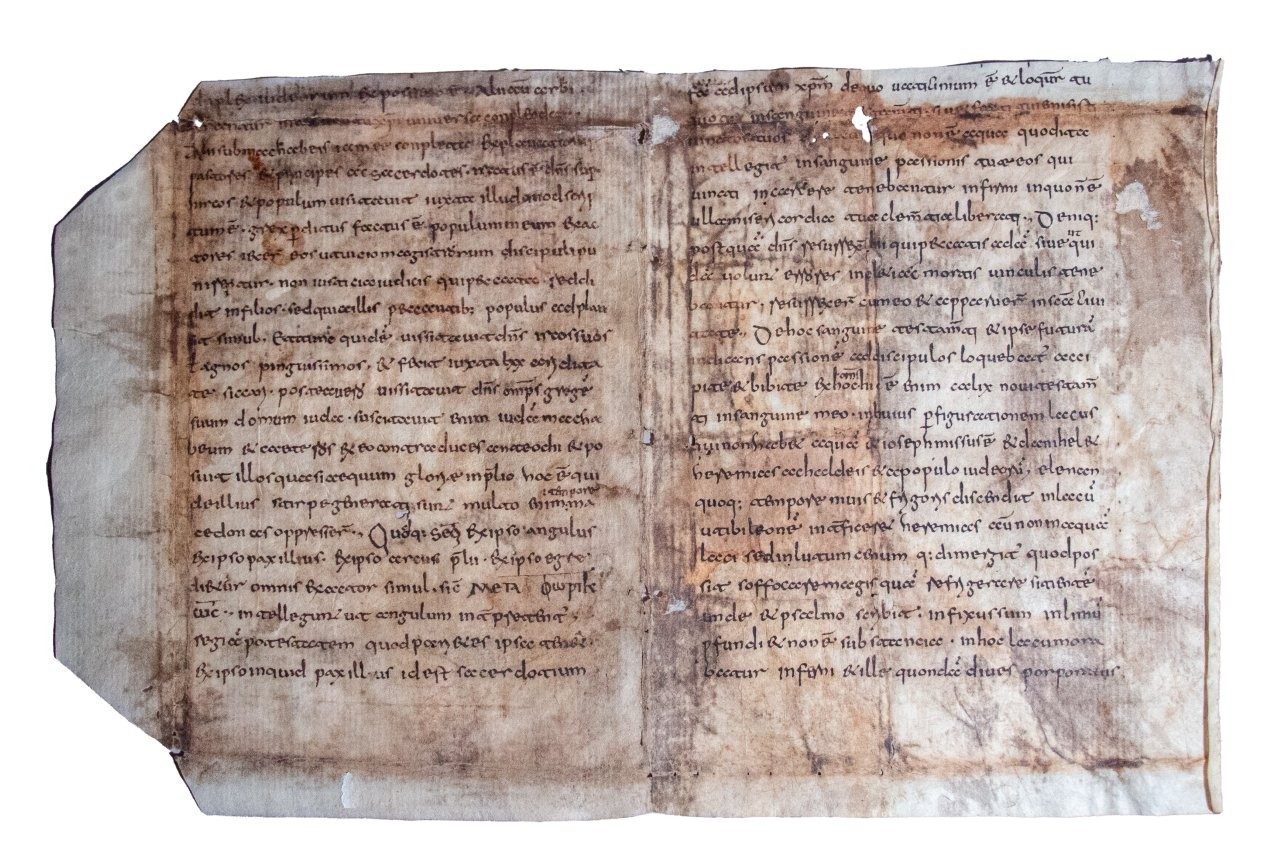
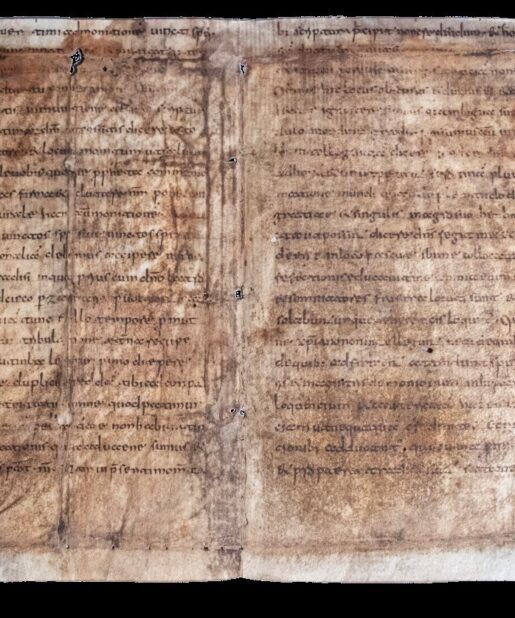
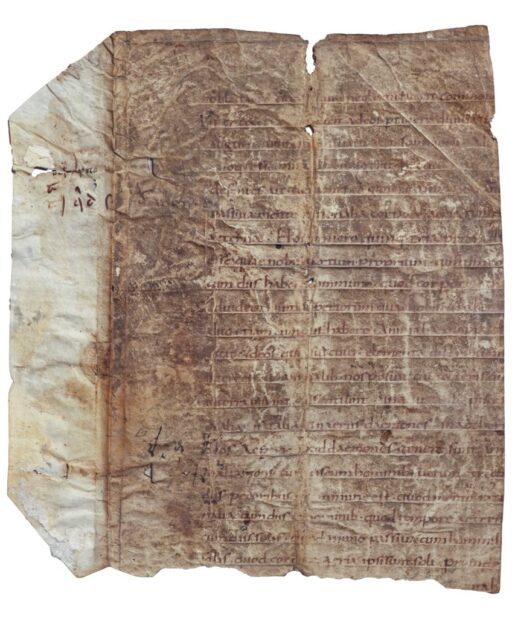
A bifolium from manuscript of Jerome’s commentaries on the book of Zechariah, in Latin with a few words in Greek, manuscript on vellum
[Germany, last decades of the eighth century, or perhaps early ninth century]
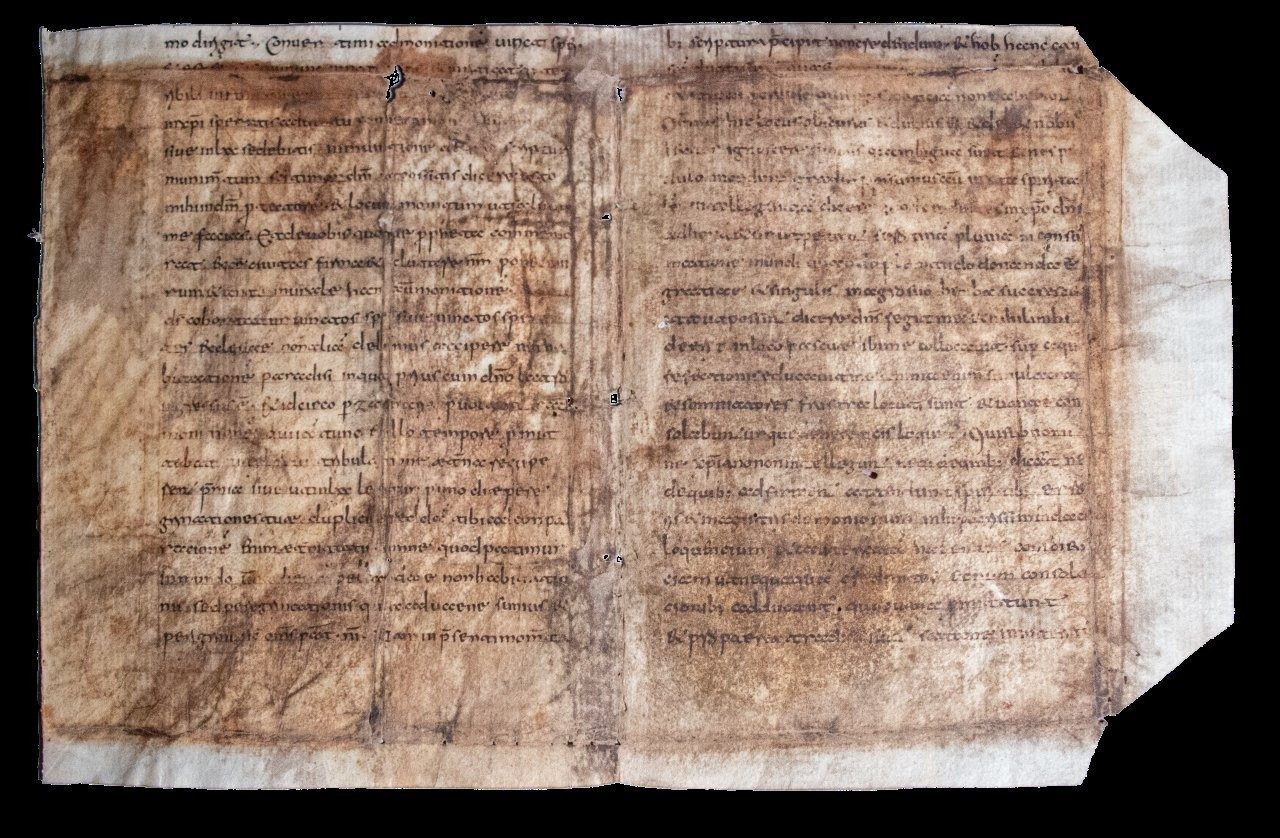
A bifolium from a binding cover for a later book, the bifolium almost complete (wanting perhaps 6 or 7 lines from the top), the remainder with single column of 22 lines of a hand showing some influences of Carolingian minuscule but with numerous, highly idiosyncratic, earlier script features (see below), initials in larger version of same in same ink as main hand, the whole 222 by 350mm; stained and with folds, the reverse (that once on outermost side of later binding) scuffed and only partly legible, overall in fair and presentable condition
Text:
St. Jerome (more properly Eusebius Sophronius Hieronymus; 342×347-420) is perhaps the most important Church writer and thinker of the early Church, translating the Bible into Latin to replace the messy and disorganised Vetus Latina text, and using Hebrew as his base text for the Old Testament (unlike his predecessors who used the Greek Septaguint), producing commentaries on the whole Bible, rewriting and expanding Eusebius’ Chronicon (a historical work tracing time from the birth of Abraham in 2016 BC. to the vicennalia of Constantine in 325 AD.), and producing more written works, page for page, than any other medieval writer, with the single exception of St. Augustine.
The text here comes from his commentary of the Old Testament book Zephaniah, composed alongside his other commentaries in the last fifteen years of his life. It was a fundamentally important guide to the study of the Bible, and was among the first texts championed by Carolingian scholars as Charlemagne spurred the Carolingian renaissance into action.
Script:
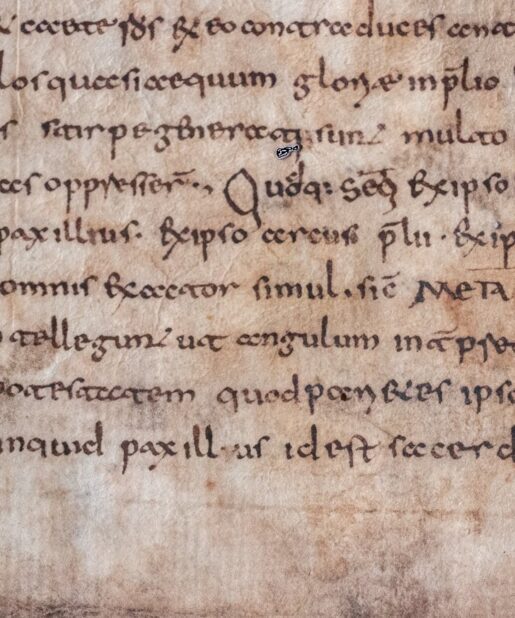
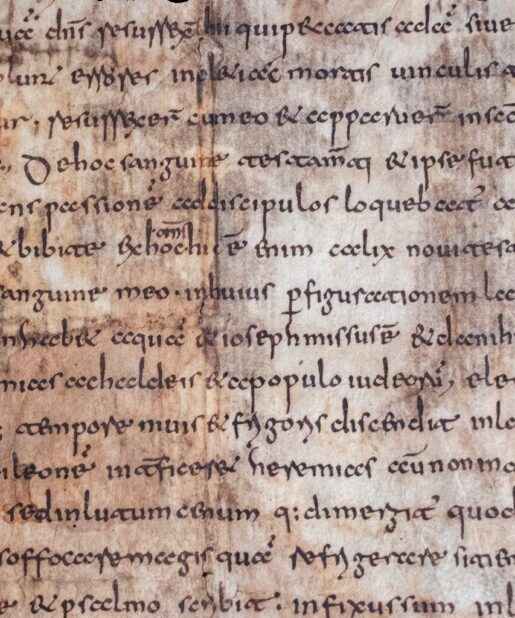
The script here sits squarely in the period of transition between the pre-Carolingian local hands and Carolingian minuscule, fossilising for us the moment when the cacophony of earlier scripts was swept aside by the new script developed at Tours under Charlemagne’s patronage and Alcuin’s direct influence, bringing in and enabling the Carolingian cultural revolution and renovation.
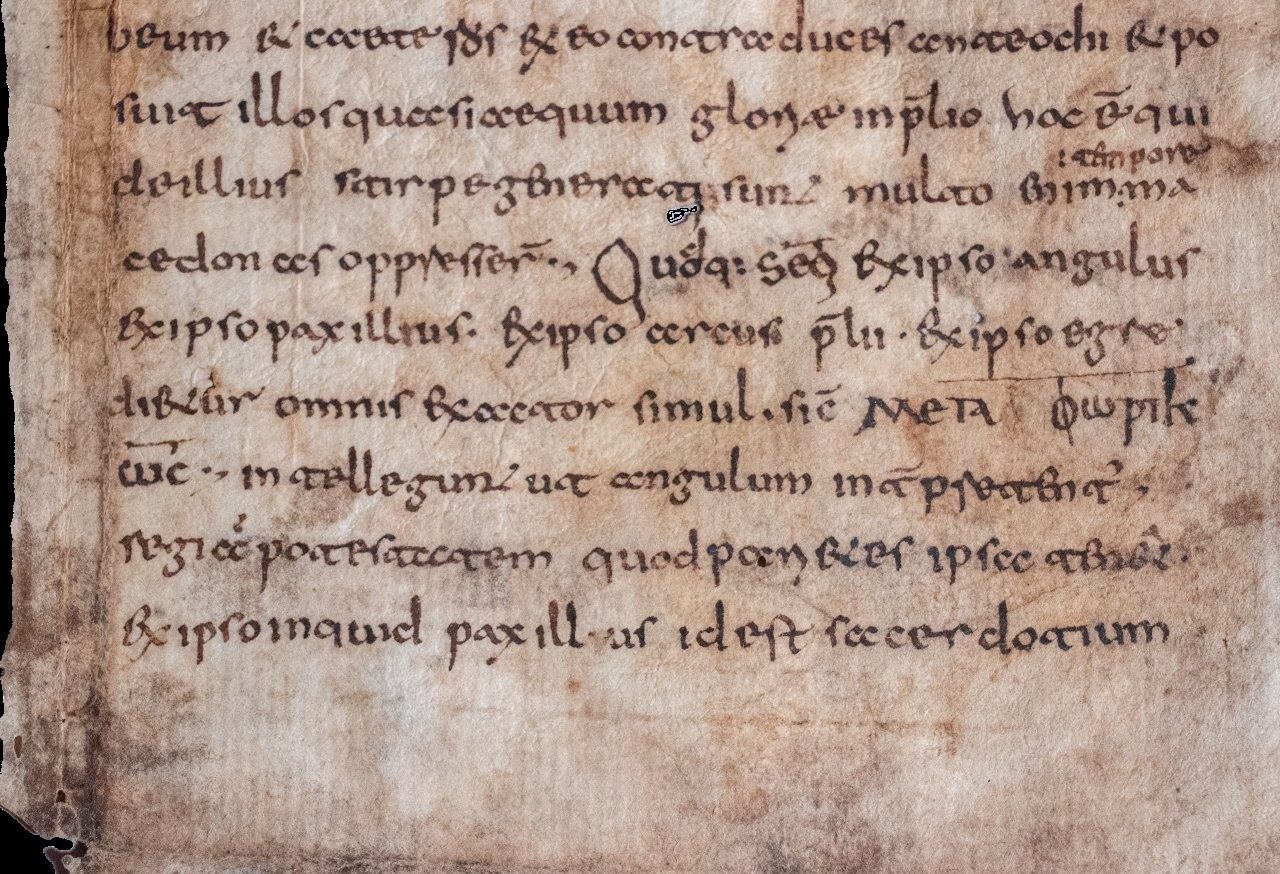
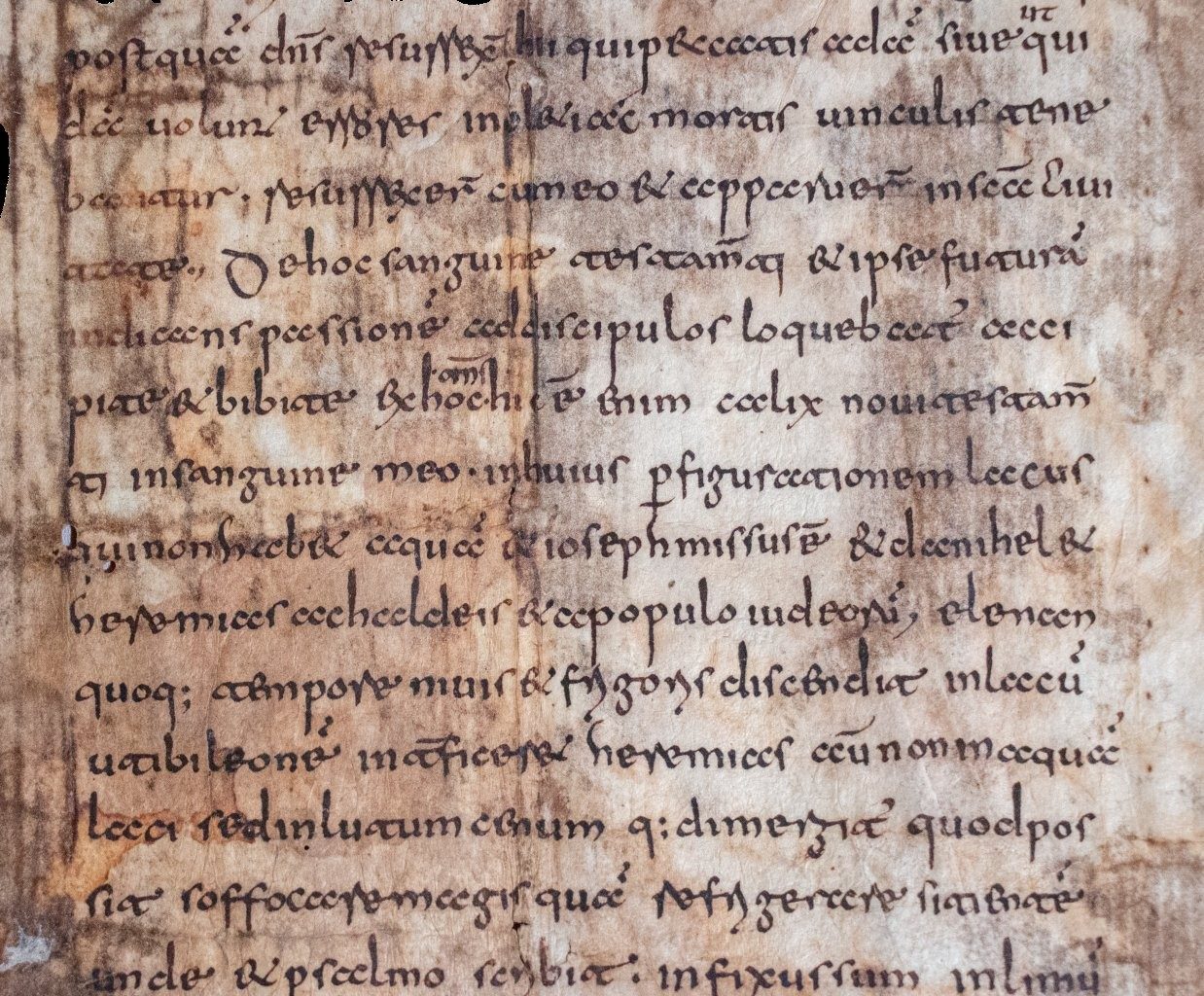
However, many of the letters here strongly suggest an origin in the eighth rather than the ninth century, namely certain common features such as an open ‘a’ that looks like a ‘cc’,[1] a ‘ri’-ligature with a long final stroke that descends far below the preceding ‘r’. there are also rarer ones that might suggest an origin in the Swiss area of influence (including St. Gallen and Reichenau), such as the ‘o’ formed like a ‘u’ with its two upwards strokes crossing,[2] the ‘t’ with its left-hand crossbar curving down and around to close the loop with the main ascender, and the open ‘g’ with a bowed top so it is shaped like a ‘3’. This last letterform may well be distinctive to Rhaetian and Alemannic minuscule, and is sometimes used as a key identifying feature of Swiss hands. Examples of these are found in St. Gallen books, such as Cod. Sang. 6 (Bible, last quarter eighth century), Cod. Sang. 44 (Bible c. 780), Cod. Sang. 125 (Jerome, Gregory, Cassiodorus and others, c. 770-780) and Cod. Sang. 567 (Vitae Patrum, second half of codex from last quarter of eighth century; all these manuscripts reproduced in full on the ecodices website).
Rarity:
While ninth-century codices are now almost unobtainable, and fragments of them have now become notably uncommon, so eighth-century manuscripts are now of the utmost rarity, with no codex offered on the public market since 1994 (and before that evidently no other after the 1933), and fragments of them appearing perhaps only every few years. In recent memory, the specialised Schøyen sale of early fragments at Sotheby’s in July 2012 included three such lots: a leaf of Gregory the Great, Moralia, in Luxeuil minuscule, as lot 16, which sold for £100,000, a heavily damaged bifolium from Theodore of Mopsuestia, commentary on the Pauline Epistles, as lot 17, which sold for £22,500, and another leaf of Gregory the Great, Moralia, in Rhaetian minuscule, and either of eighth or ninth century date, which sold for £22,500. In addition, to these a leaf again of Gregory the Great, Moralia, in Germanic pre-Carolingian minuscule, and from the collection of Roger Martin, was sold by Bloomsbury Auctions, London, 6 July 2021, lot 1, for £24,000, and another leaf from the Luxeuil Gregory the Great, Moralia, from the collection of Ernst Boehlun, was sold in Sotheby’s, 2 July 2024, lot 1 for £60,000.
Product Enquiry
Related products
![Leaf from a Romanesque Portable Lectionary In Latin, manuscript on vellum [Italy, first half of the 11th century]](https://stephenbutler.com/wp-content/uploads/2026/05/C57A7942-515x618.jpg "Leaf from a Romanesque Portable Lectionary In Latin, manuscript on vellum [Italy, first half of the 11th century]")
![Leaf from a Romanesque Portable Lectionary In Latin, manuscript on vellum [Italy, first half of the 11th century]](https://stephenbutler.com/wp-content/uploads/2026/05/C57A7586-515x618.jpg "Leaf from a Romanesque Portable Lectionary In Latin, manuscript on vellum [Italy, first half of the 11th century]")
![Leaf from Baldo degli Ubaldi (1327–1400), Sextum codicis librum commentaria [Italy, late 15th century]](https://stephenbutler.com/wp-content/uploads/2023/07/IMG_0101-515x618.jpg "Leaf from Baldo degli Ubaldi (1327–1400), Sextum codicis librum commentaria [Italy, late 15th century]")
C14th -C16th manuscripts
£800.00


C12th - C13th manuscripts
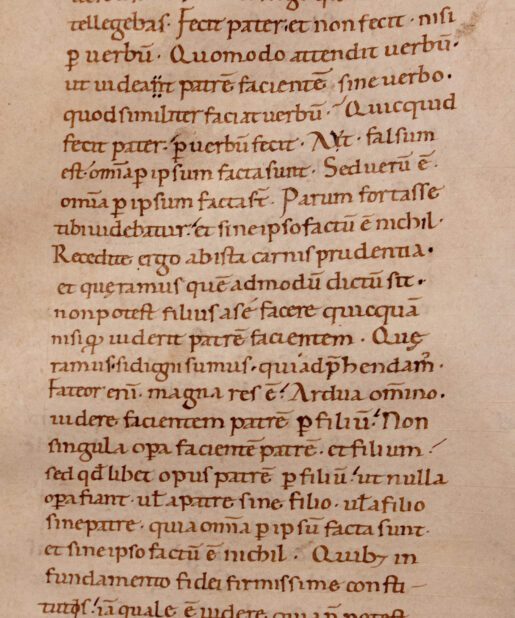
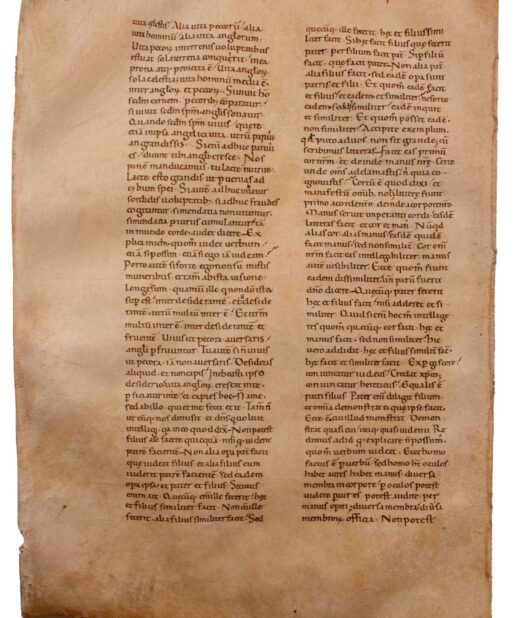
Beautiful painted white vine initial, Augustine’s Commentary on John’s Gospel, Italy C12th
£3,800.00
C12th - C13th manuscripts
£1,900.00
![A leaf from a Psalter, in Latin, manuscript on vellum [Germany, 11th century]](https://stephenbutler.com/wp-content/uploads/2024/09/IMG_1171-515x618.jpg "A leaf from a Psalter, in Latin, manuscript on vellum [Germany, 11th century]")
![A leaf from a Psalter, in Latin, manuscript on vellum [Germany, 11th century]](https://stephenbutler.com/wp-content/uploads/2024/09/IMG_1170-515x618.jpg "A leaf from a Psalter, in Latin, manuscript on vellum [Germany, 11th century]")

C14th -C16th manuscripts
£350.00