

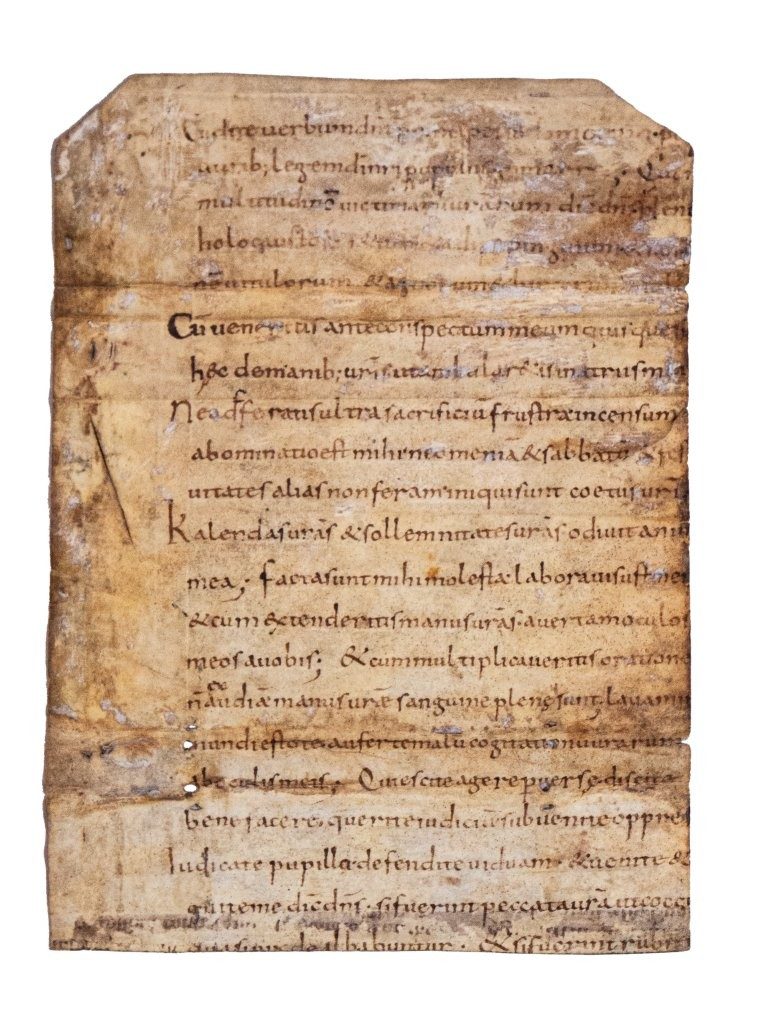
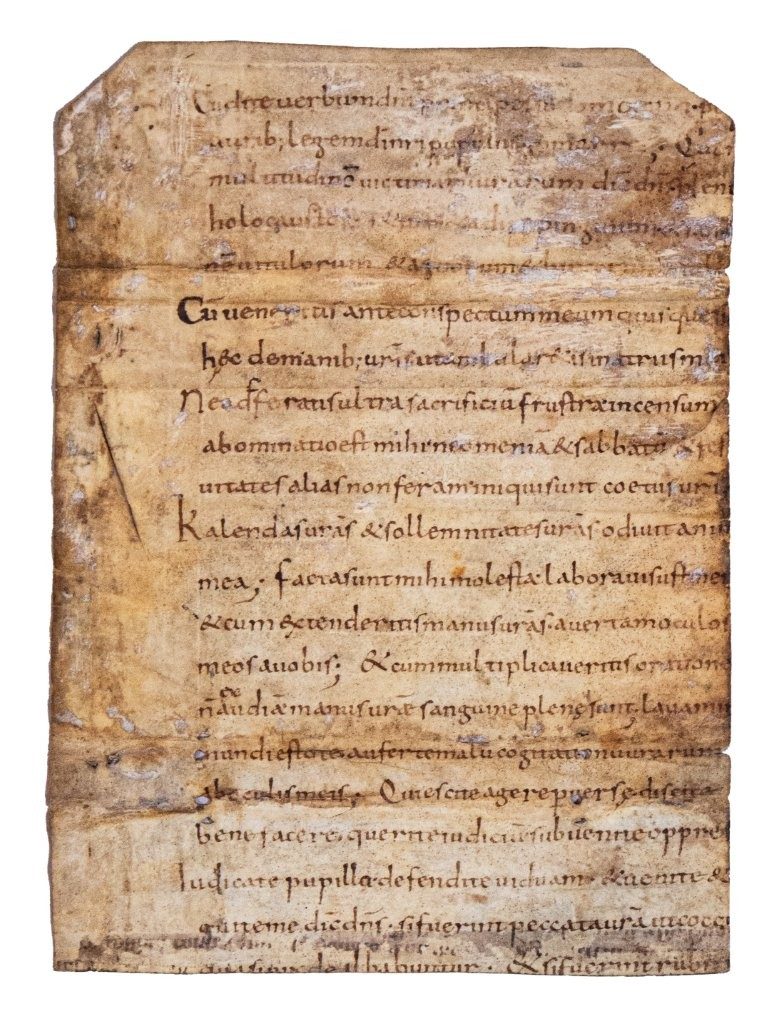
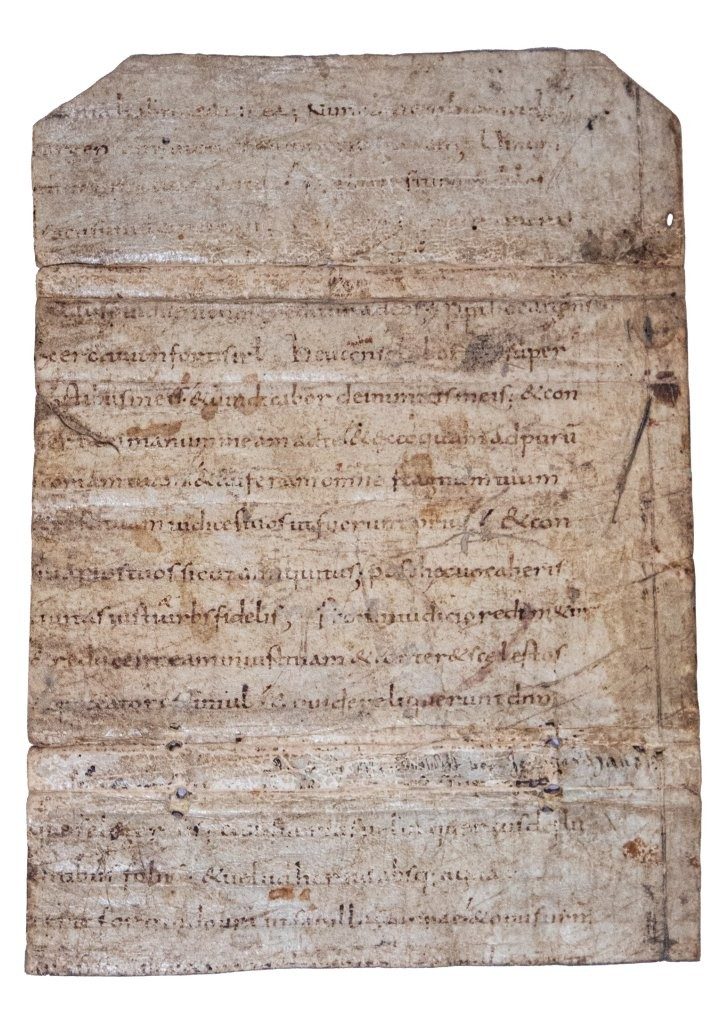
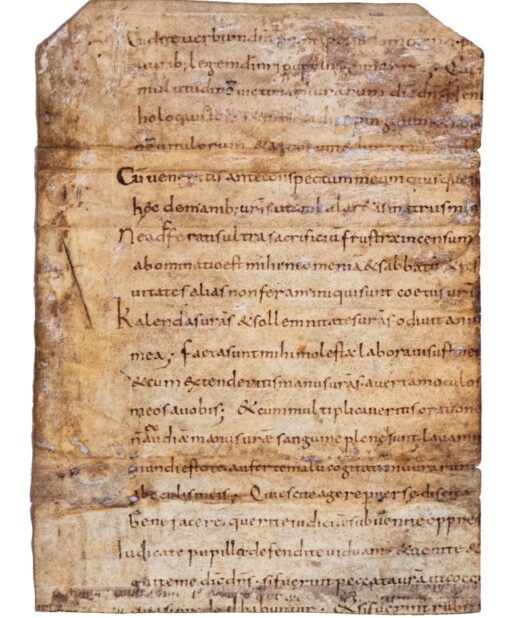
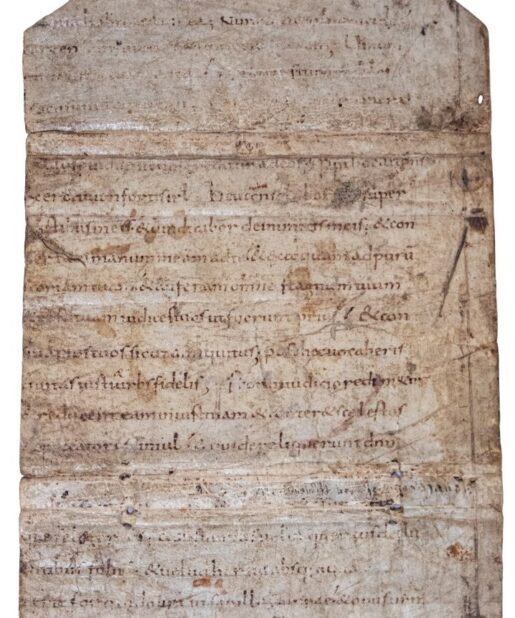

ISAIAH 1:17. A fragment of a Carolingian Bible In Latin, manuscript on vellum
France, possibly Tours, c. 850
202 x 146mm
Description
A vellum fragment from a Latin Bible, written on both sides in a fine Carolingian minuscule in brown ink, with 21 surviving lines on each side and simple enlarged initials.
Condition
The right edge cuts into the written area. Horizontal folds, staining and small holes attest to later reuse, probably in a binding; the writing on one side is substantially abraded, though much remains legible on the other.
Text
The text preserves part of the opening chapter of Isaiah, including the prophet’s rejection of empty sacrifice and his injunction to “seek judgement, relieve the oppressed, judge the fatherless” (Isaiah 1:17). Script Its Carolingian minuscule script belongs to the great period of 9th century biblical production. Specialist analysis of the handwriting dates the fragment to the second third of the 9th century, circa 850, and suggests Tours as a possible place of origin. Under Alcuin and his successors, Tours became a major centre for the copying of biblical manuscripts. The attribution of this fragment to that centre remains tentative, but its date, script and biblical text make it an evocative survival of the Carolingian effort to produce clear and authoritative copies of Scripture.
Product Enquiry
Related products
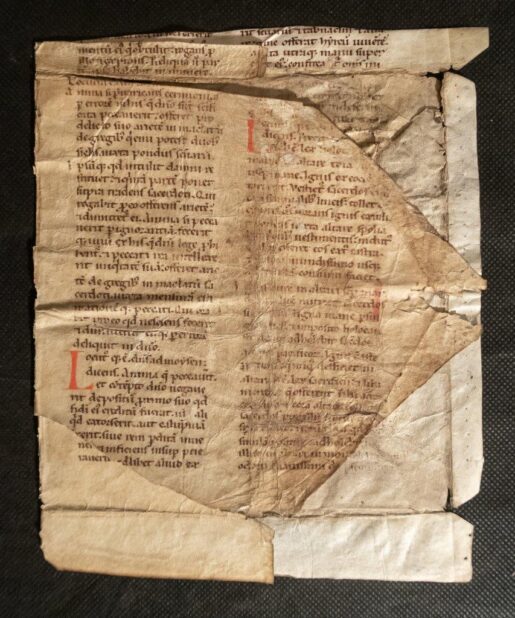
C12th - C13th manuscripts
£1,200.00
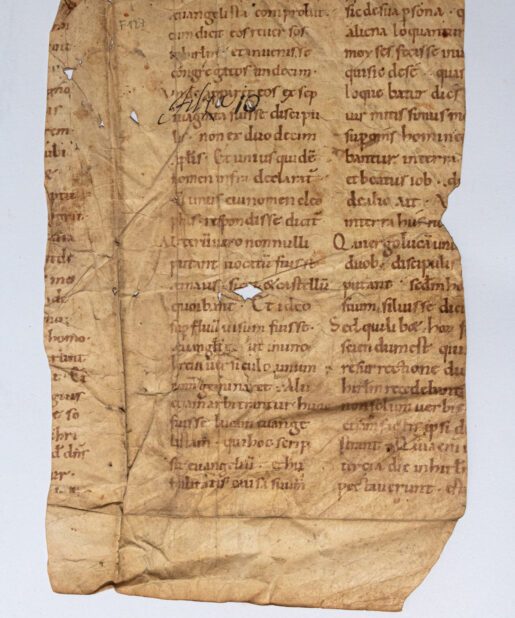
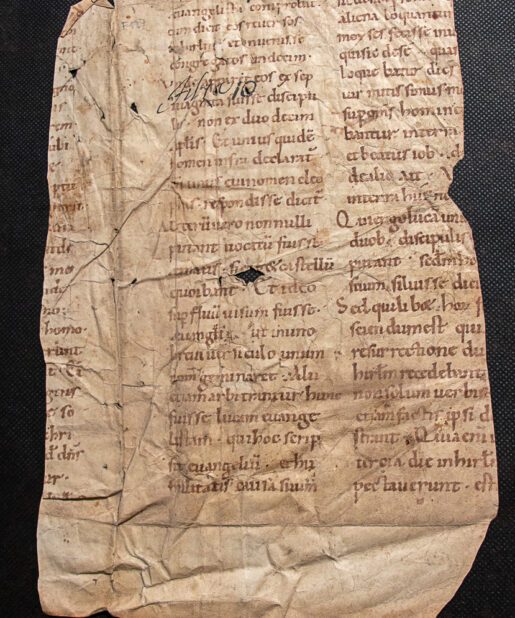


C12th - C13th manuscripts
Elegant English Early Gothic Script from late C12th Passionale – Paulinus of Milan
£1,750.00
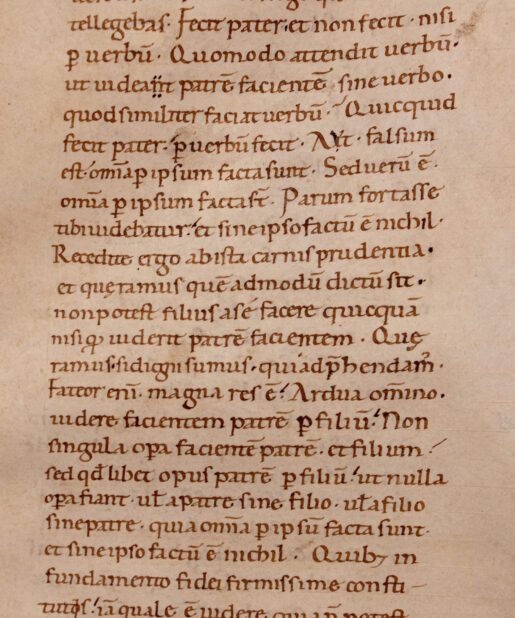
C12th - C13th manuscripts
£1,900.00


C14th -C16th manuscripts
£950.00
C14th -C16th manuscripts
Historiated initial OT prophet, Italy c.1320 (Emilia-Romagna)
£2,500.00


£3,750.00