

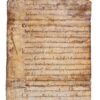
Ottonian Leaf. Two fragments Manuscript on vellum
South Germany or Switzerland, c.1000
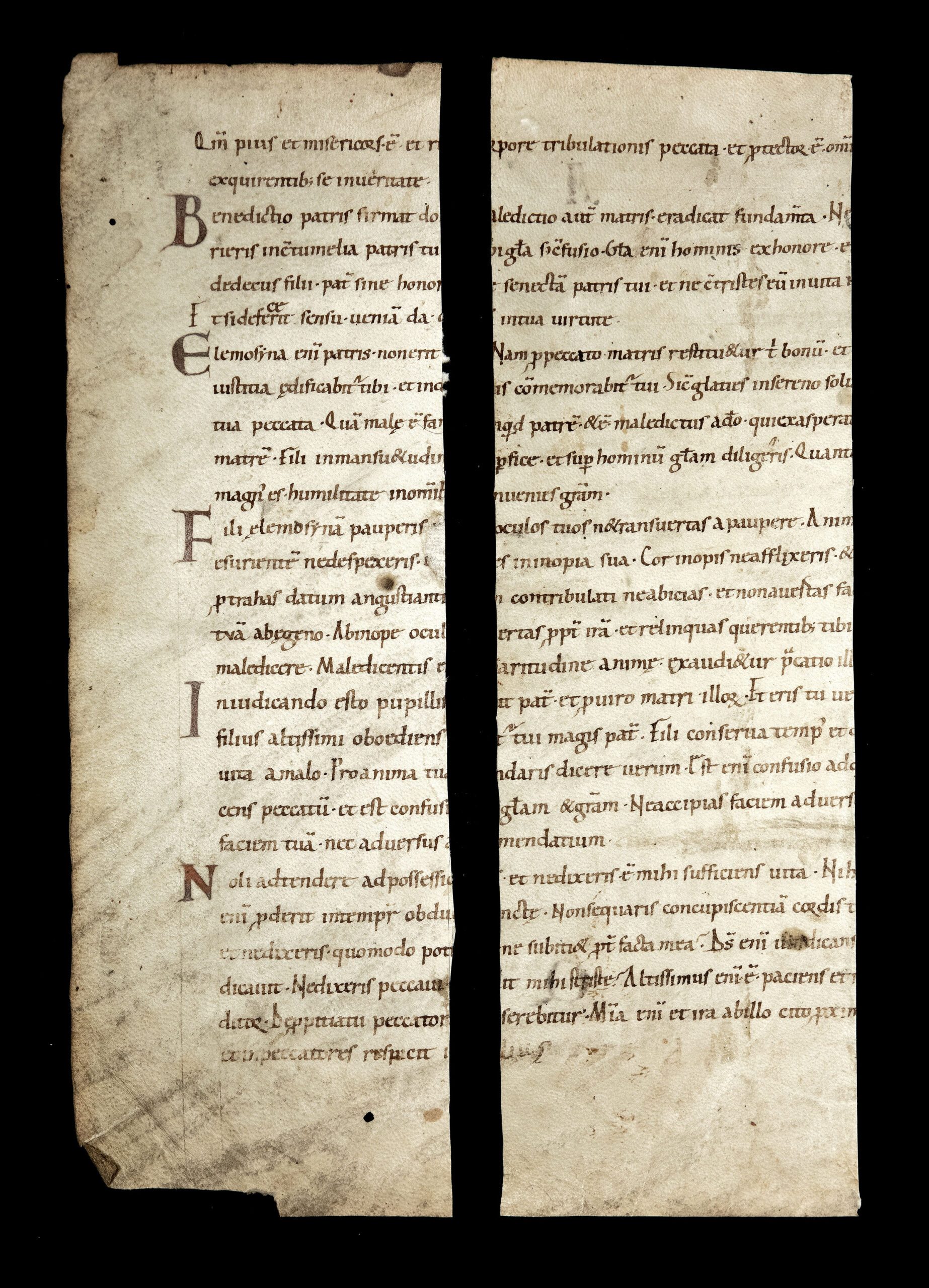
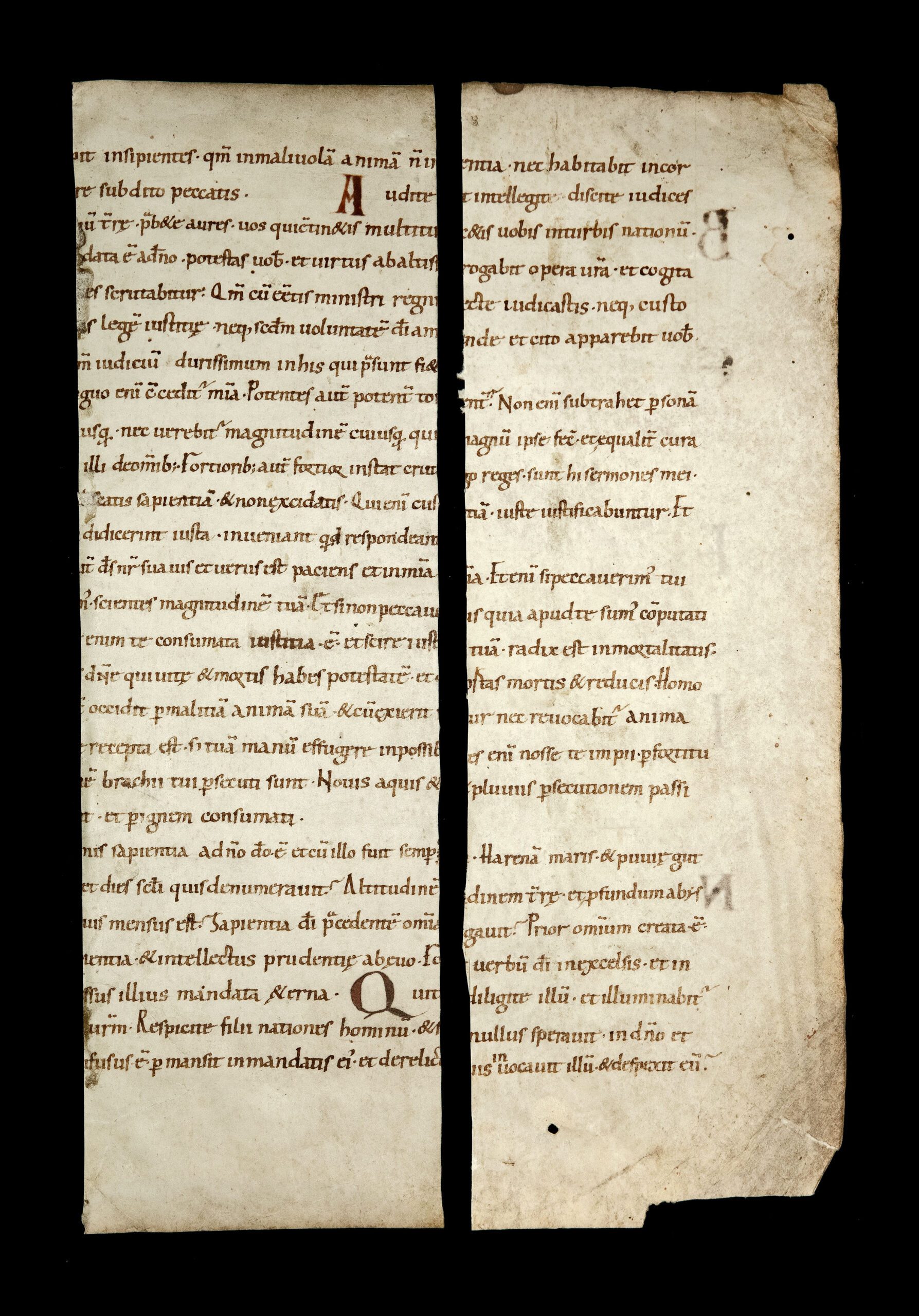
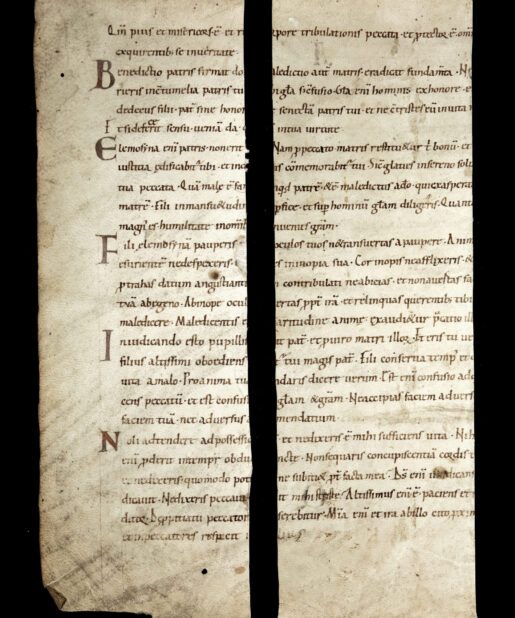
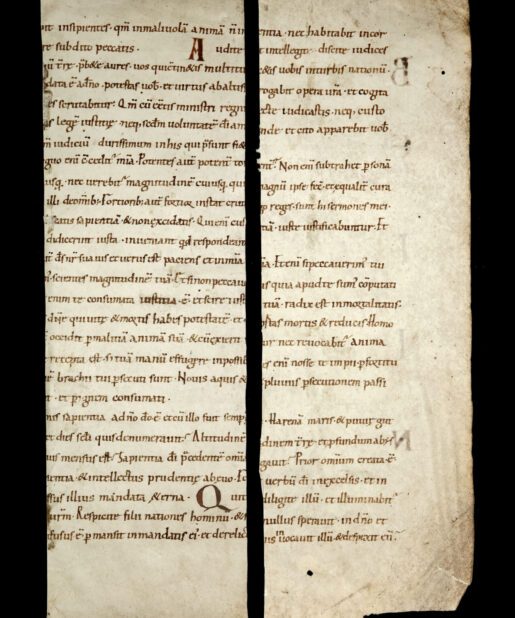
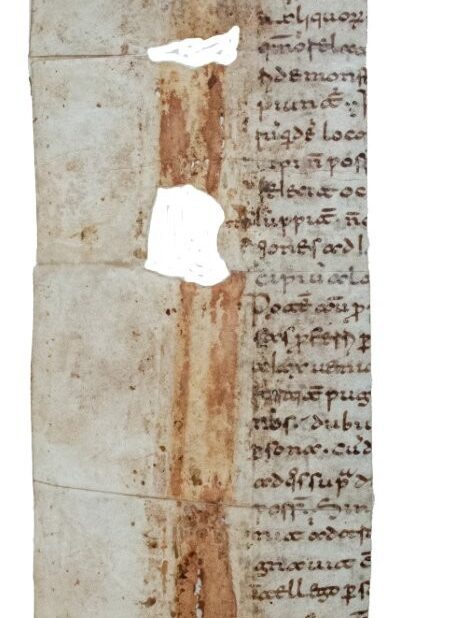
This fine, almost complete leaf (although separated into two halves), eminently legible and well-preserved comes from a folio-format Lectionary written over a millennium ago, during the period of the so-called Ottonian Renaissance which accompanied the reigns of the first three Holy Roman Emperors of the Ottonian (or Saxon) dynasty: Otto I (936–973), Otto II (973–983), and Otto III (983–1002).
305 x 100mm each
Description
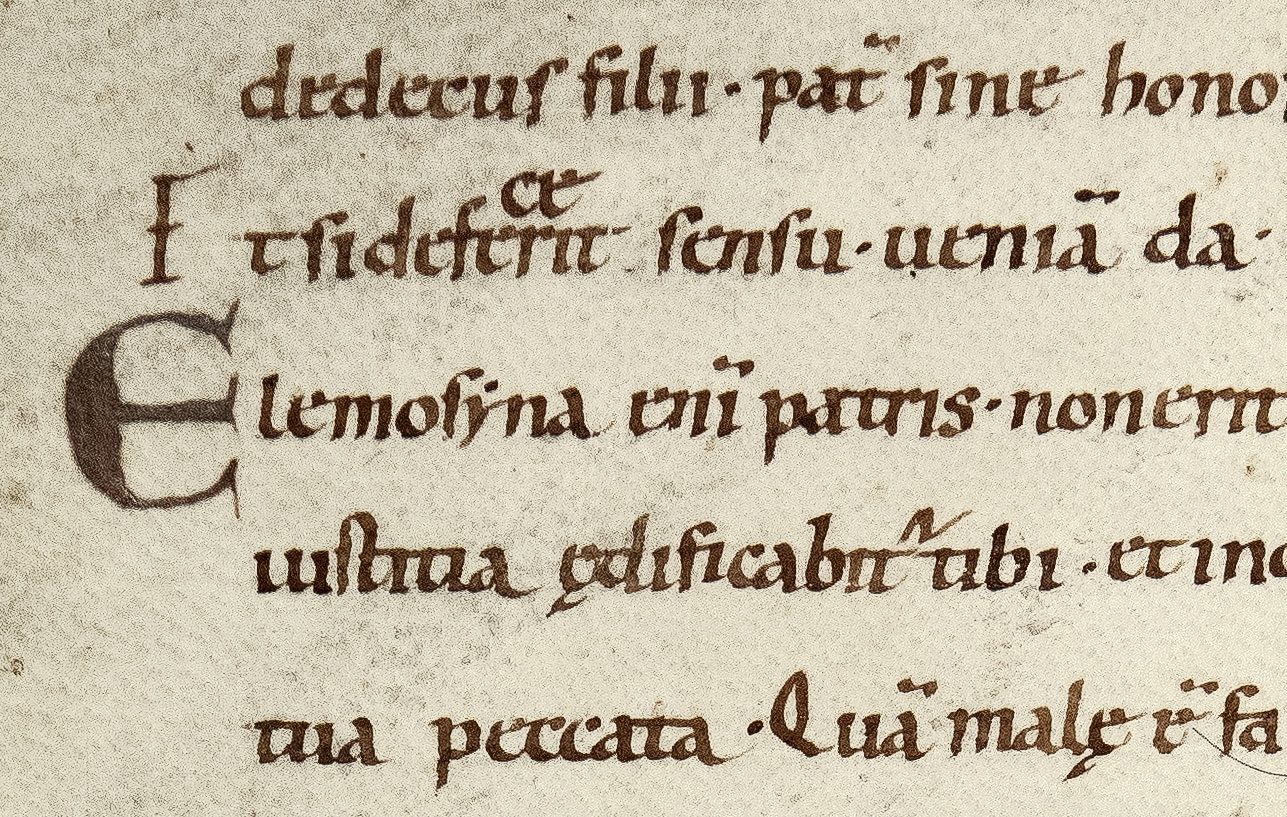
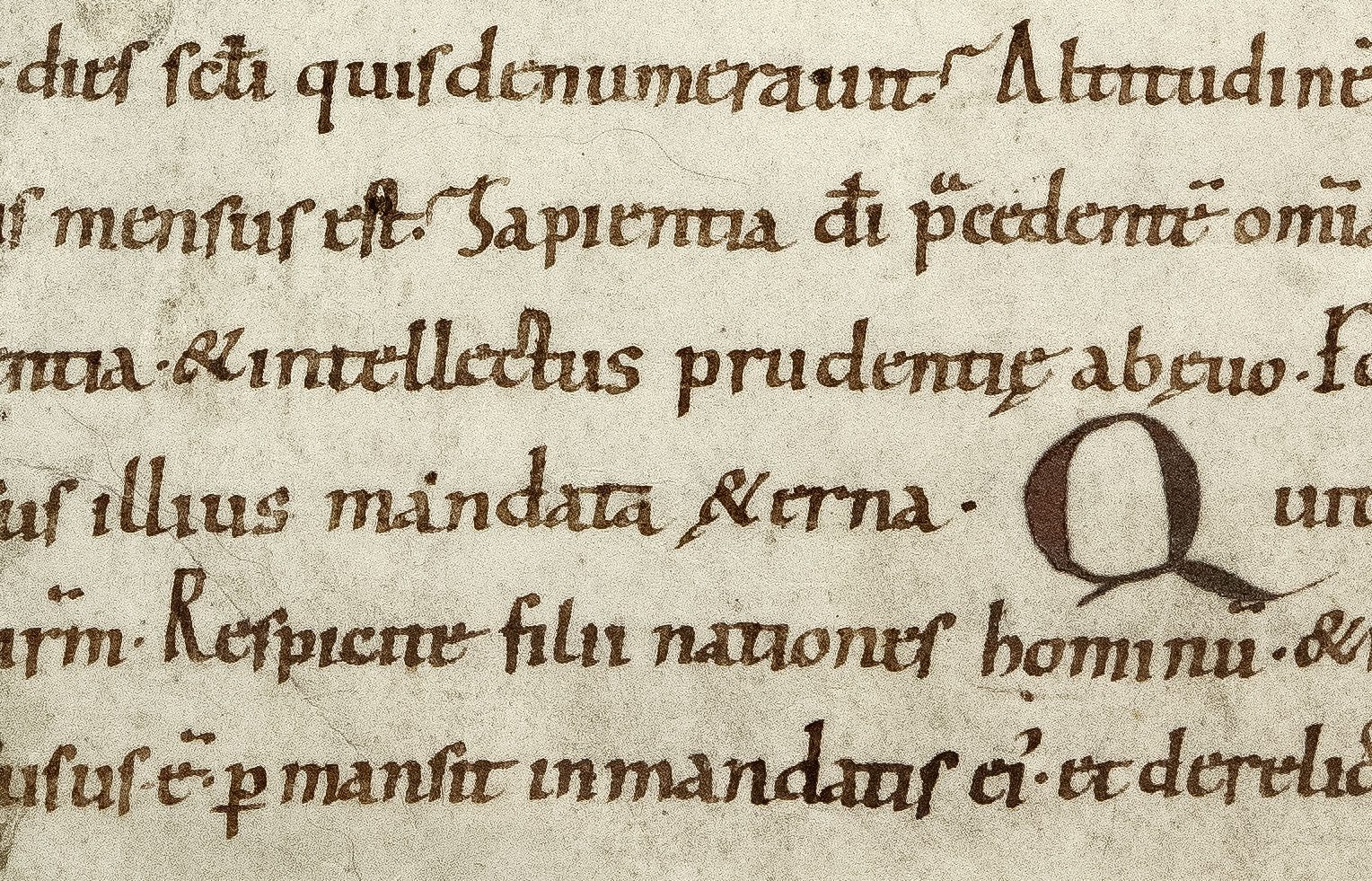
A complementary pair of large fragments – together forming a near-complete leaf – from a late-Ottonian manuscript lectionary, produced between 950- 1050 likely in St Gall, or perhaps Reichenau or Einsiedeln. Written in dark-brown ink, in single column, 27 lines per page, in fine Carolingian minuscule. Seven larger (two-line) formal roman capitals at opening of passages, five of which (on verso) positioned within the left margin.
Condition
Very Good. Two halves of a single leaf with a loss of a narrow strip in-between and along the left edge (resulting in loss of two, perhaps three words per line). Recovered from a ca. 1500 binding. Very attractive overall: vellum quite supple and generally clean; text very clear and legible, with ink very strong, with almost no fading.
Text
This fine leaf includes a thematic selection of texts from the two deuterocanonical books of the Old Testament: Wisdom (Sapientia) and Sirach (Ecclesiasticus), both considered apocrypha in the KJV Bible. The following biblical passages are included (with very minor lacunae):
- Sapientia 1:3-4; 6:2-11; 15:1-3; 16:13-16.
- Ecclesiasticus 1:1-5; 2:10-13; 3:11-20; 4.1-6; 4:10-11; 4:23-26; 5:1-7.
For instance, one of the passages present on verso of the leaf (Ecclesiasticus 3:11-20) emphasises the importance of honouring one’s parents and practising humility.
Script
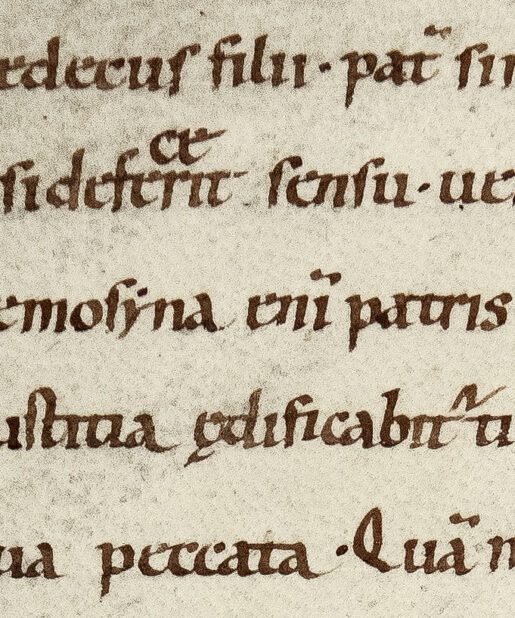
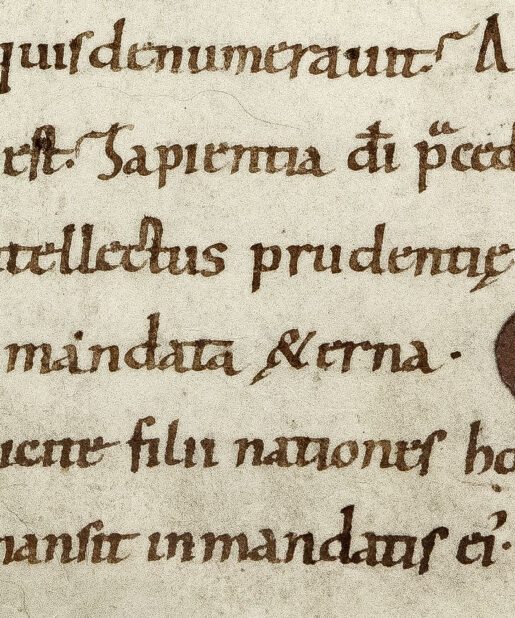
Written in a bold, mature Carolingian minuscule. The ascenders have largely lost the distinctive “club shape” typical of the earlier Carolingian hands, but with slight traces of the ‘clubbing’ still evident in some ascenders. Some of the ascenders (in some of the d’s) show a rudimentary triangular serif, which became dominant in the late Romanesque scripts. The distinctive tall and narrow rt ligature used is uncommon, but a very close analogue can be found in Cod. Sang. 425 (Lectionarium ,homiliarum). The general feel and appearance of our script is quite typical for Ottonian phase in the development of the Carolingian script.
Product Enquiry
Related products
Pre- C12th manuscripts
Coming soon; a selection of C8th, C9th, and C10th manuscripts
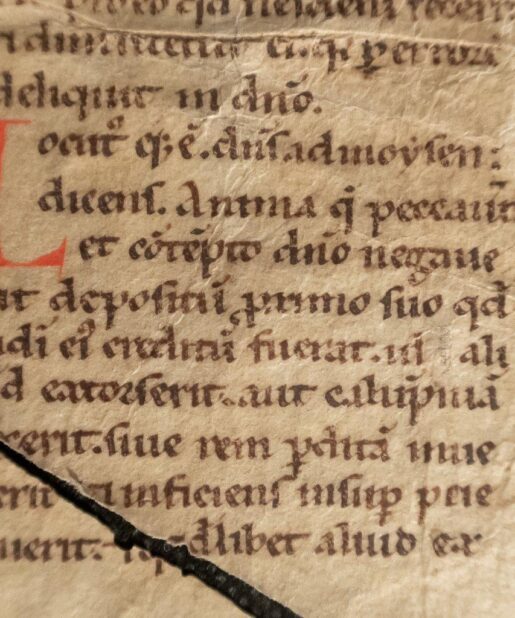
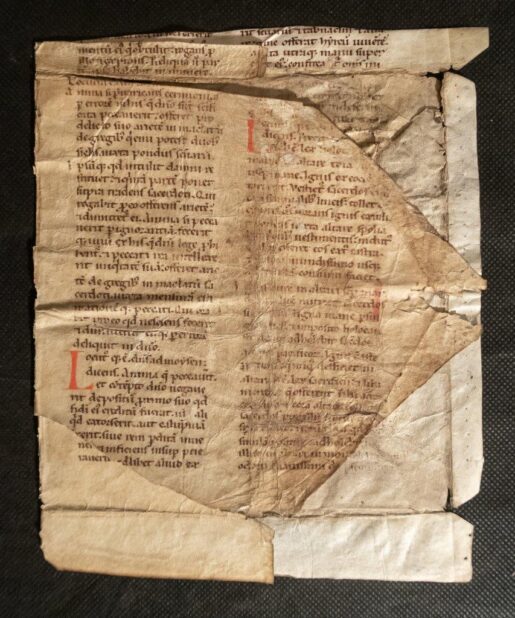
C12th - C13th manuscripts
£1,200.00
£3,800.00
C14th -C16th manuscripts
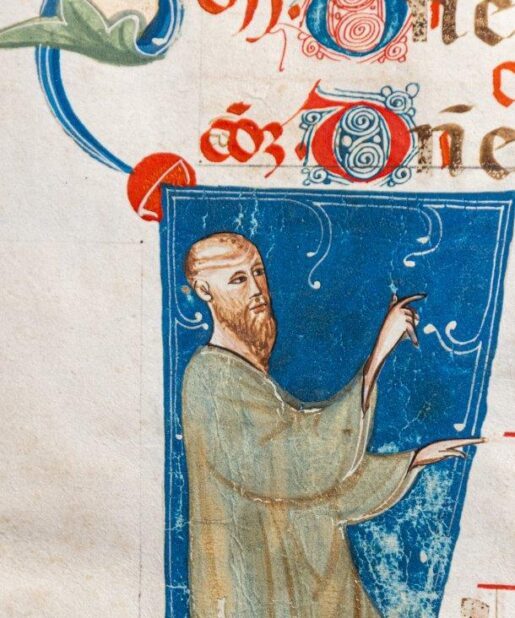
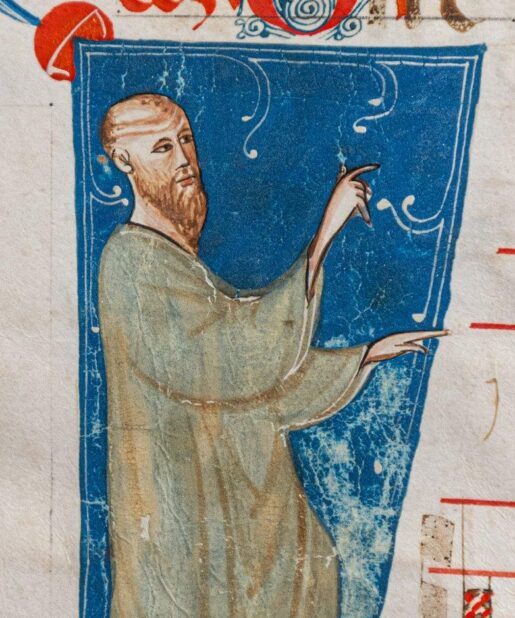
Historiated initial OT prophet, Italy c.1320 (Emilia-Romagna)
£2,500.00

C14th -C16th manuscripts
£950.00



£9,800.00