

This piece has been placed.
Many works of comparable significance pass through our hands each year.
If you’re seeking something similar, please send us an enquiry or browse recent acquisitions.
Rare C16th Lyon edition of Rabelais on an exquisite Ghent binding of Pieter de Keysere

£3,000.00
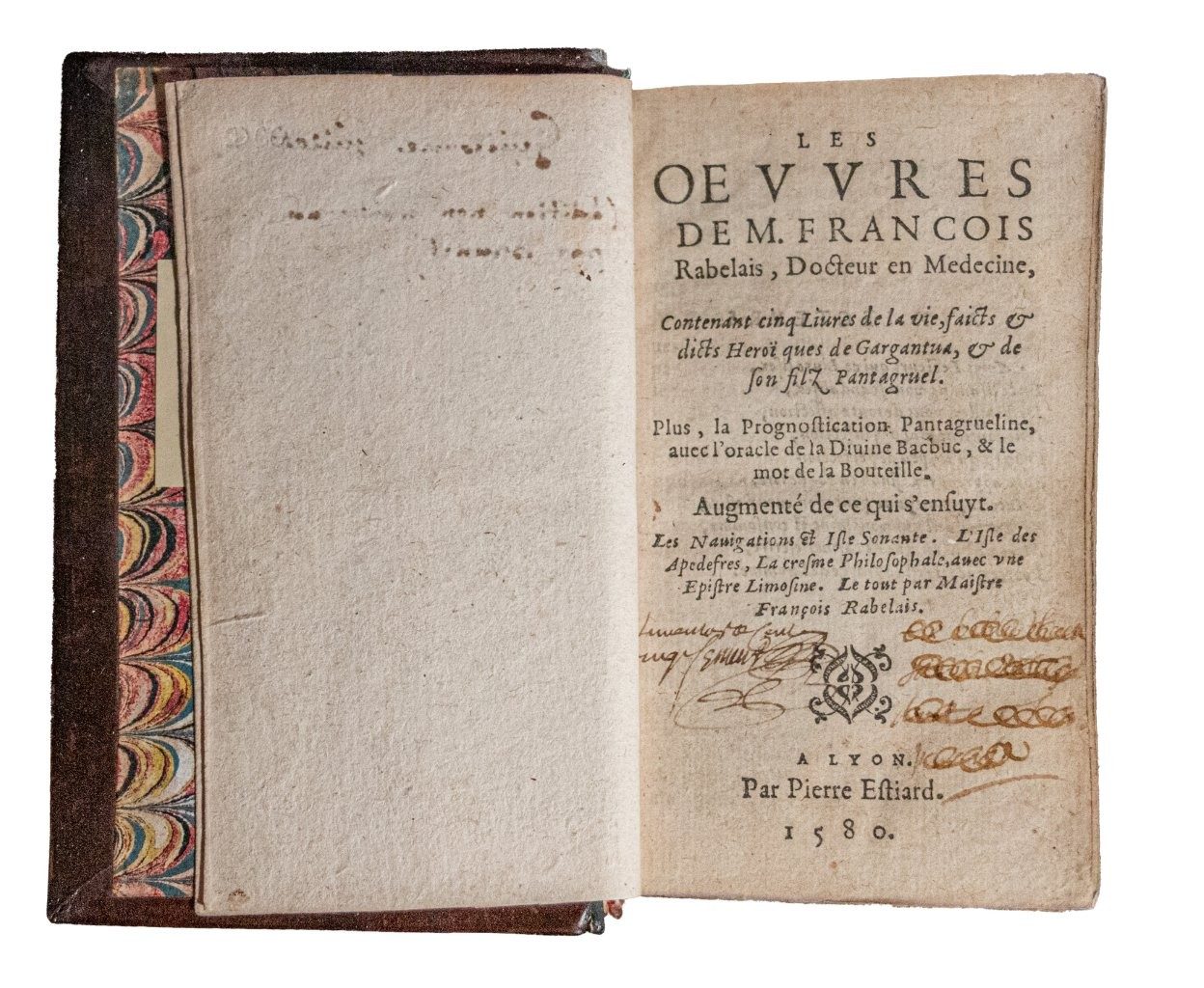
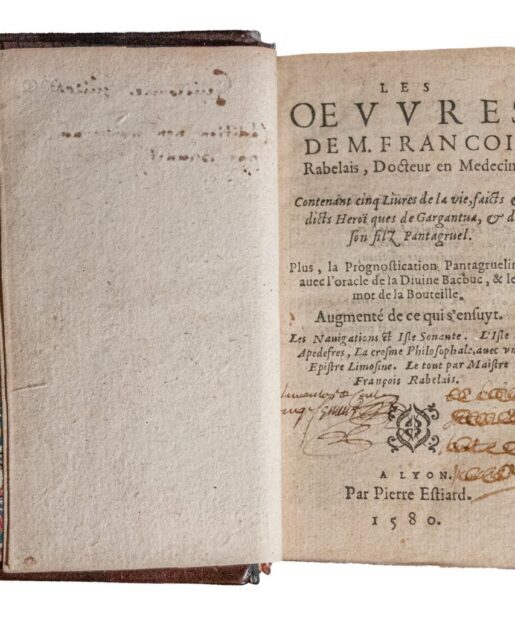
Rabelais, François Les Oeuvres. Contenant cinq livres de la vie, faicts & dicts héroïques de Gargantua, & de son fils Pantagruel. Plus, la Prognostication Pantagrueline
Printed in Lyon by Pierre Estiard, 1580.
Three parts in one volume; 16mo format; leaves measure approximately 121 mm x 71 mm.
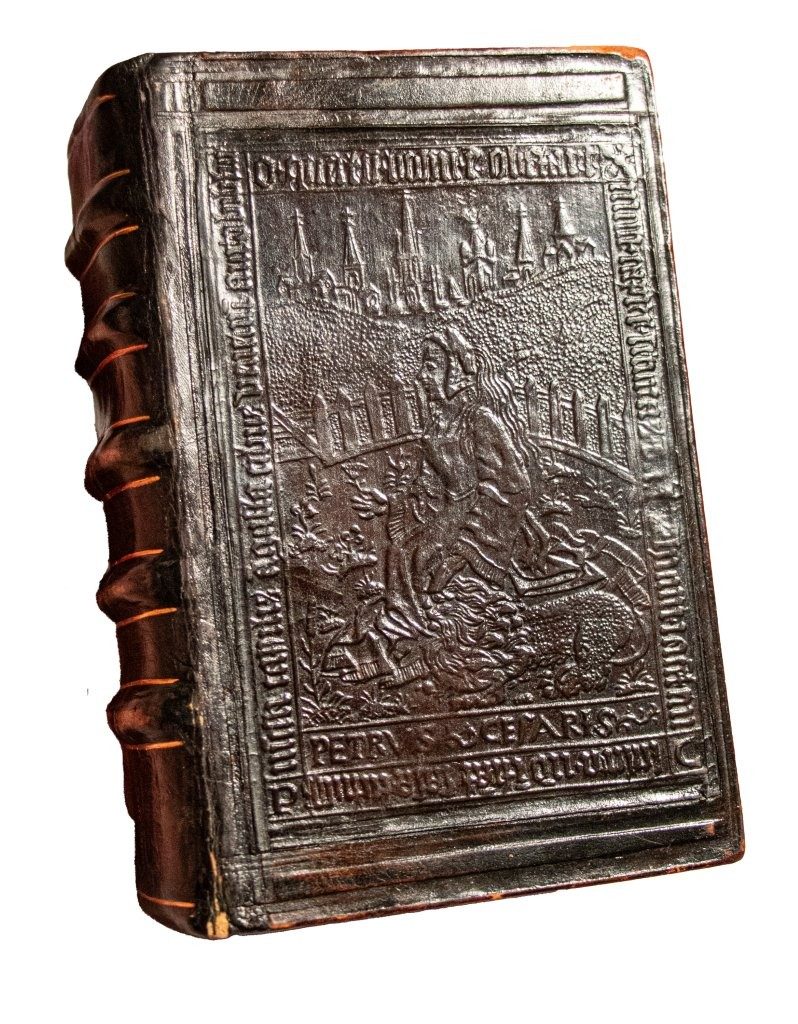
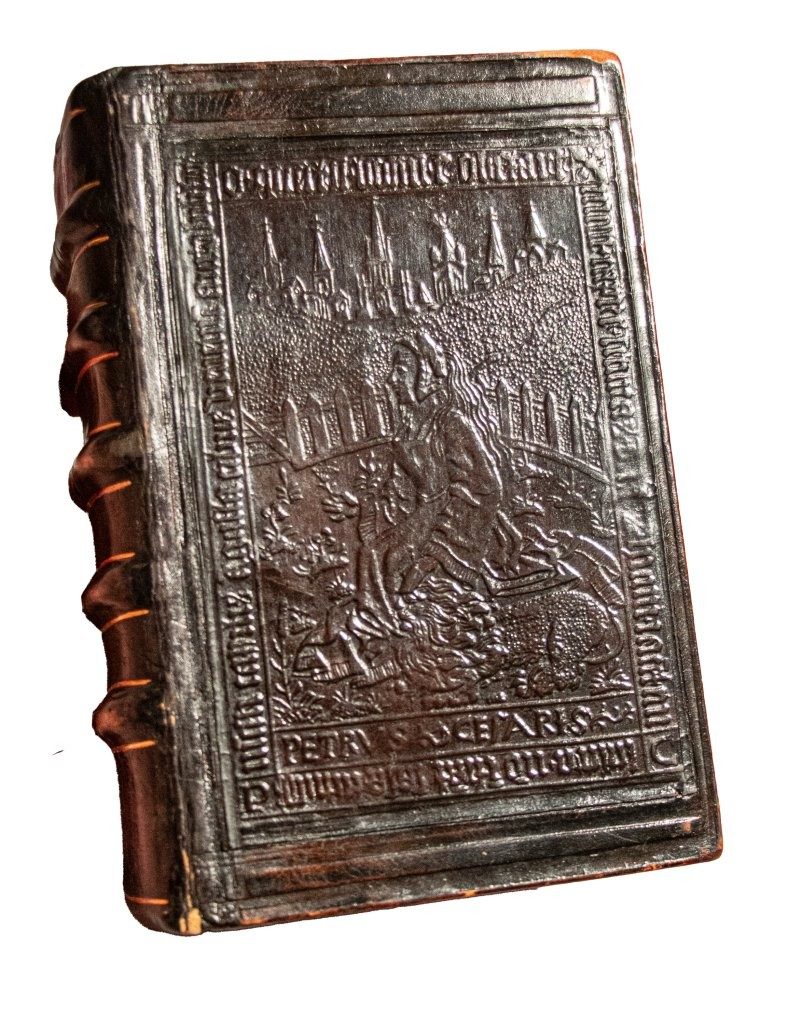
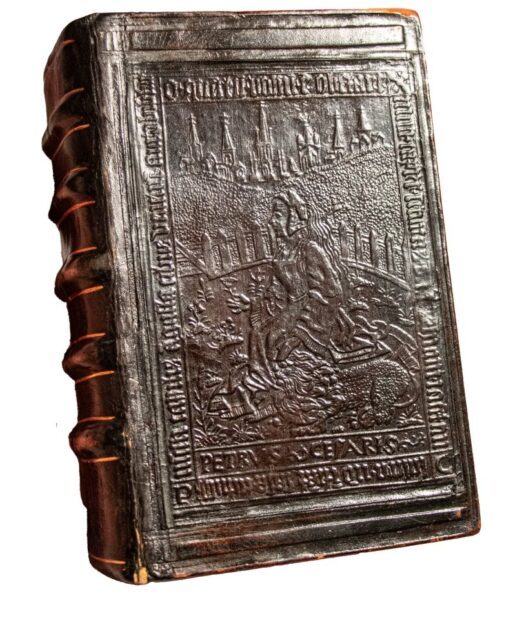
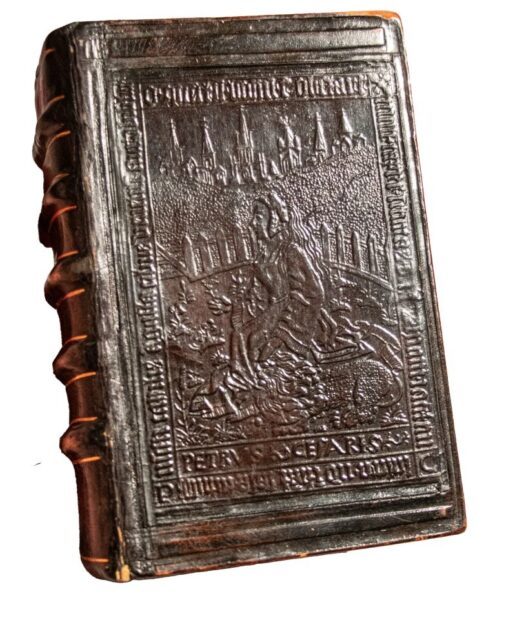
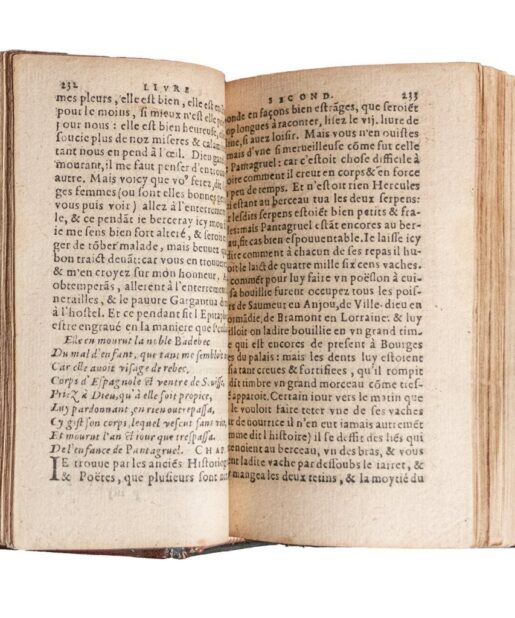
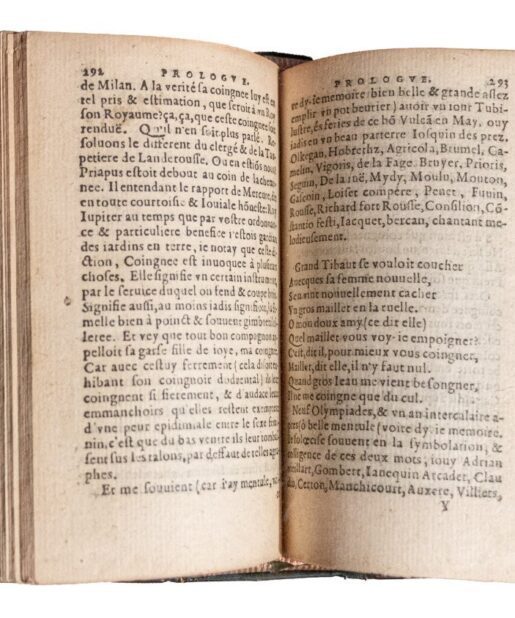
A fine, complete copy of an extremely rare early edition of Rabelais’ Les Oeuvres, a landmark of French Renaissance literature, featuring the five books of Gargantua and Pantagruel, including the first print of the fifth book (c. 1565), the Pantagrueline Prognostication, and the Philosophical Cream with the Limosin Epistle. The volume is housed in a superb and exceedingly rare 16th-century Ghent binding by Pieter de Keysere (signed ‘Petrus Caesaris’), depicting the Maid of Ghent with a lion.
Since Rabelais’ works were subject to censorship and controversy, most early editions were issued clandestinely under false printer’s names. This 1580 edition bears the fictitious printer’s name “Pierre Estiard,” though the actual printer was identified as Jean du Carroy at Paris, as established by Cappellen through comparative analysis of woodcut initials. Rawles & Screech note that the design of the woodcut boutelle on leaf FFF8r is unique to this edition. Only four institutional copies are recorded (BNF Paris; Châlons-sur-Marne; Royal Library Copenhagen; NYPL, incomplete), along with one private example believed to be this copy.
François Rabelais (c. 1490–1553) was a pioneering French prose writer, humanist, Greek scholar, and satirist, renowned for his bold, grotesque, and lively storytelling. His Gargantua and Pantagruel texts, first published in 1532 and 1534, are considered the genesis of the modern novel, blending bawdy humor with Renaissance erudition and philosophical reflection. His work, fiercely satirical of religious and academic authority, challenged medieval scholasticism and celebrated humanist ideals, shaping European literature for centuries. The Fifth Book, published posthumously, contains hermetic and alchemical symbolism, its authorship debated among scholars.
Physical Description:
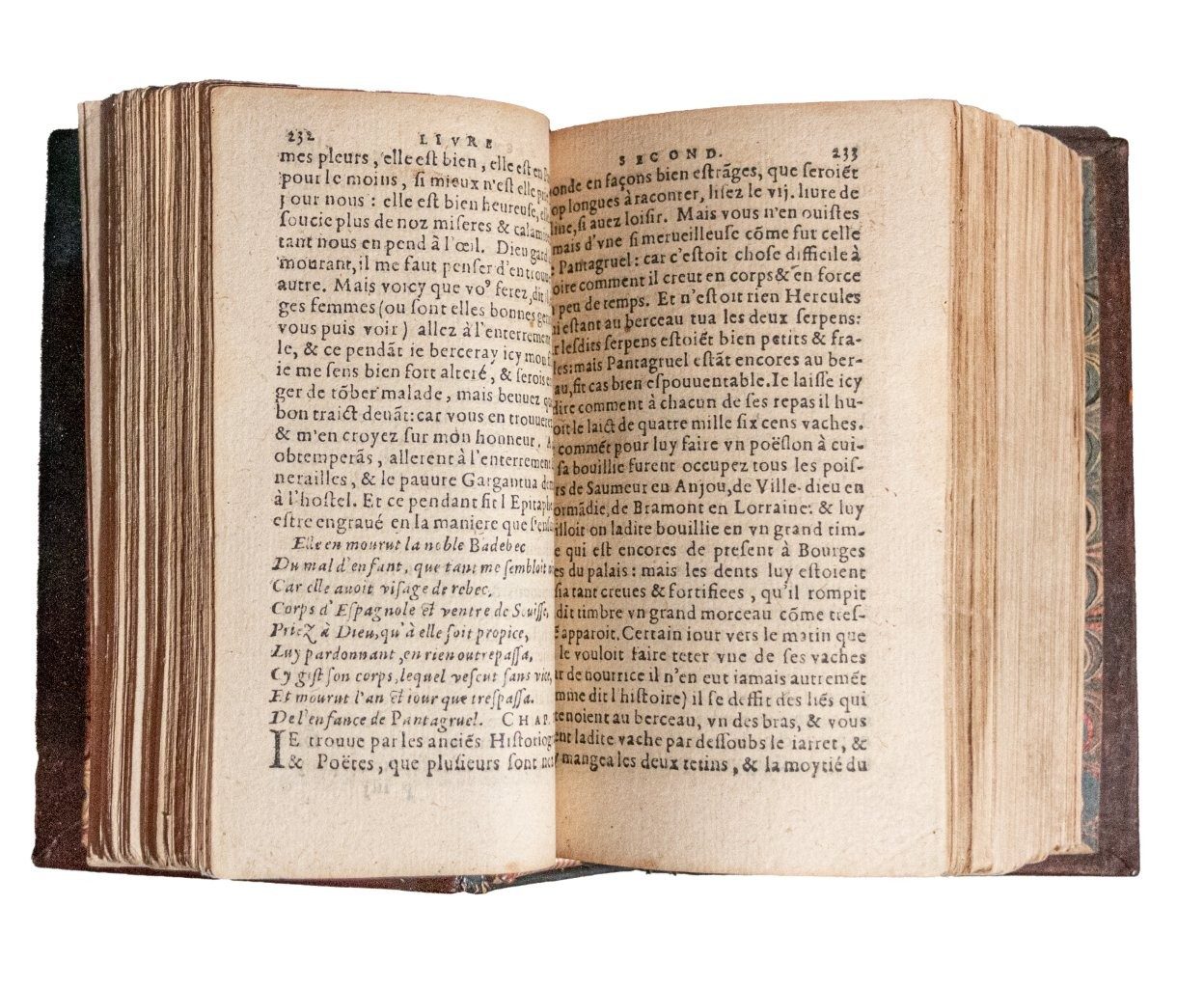
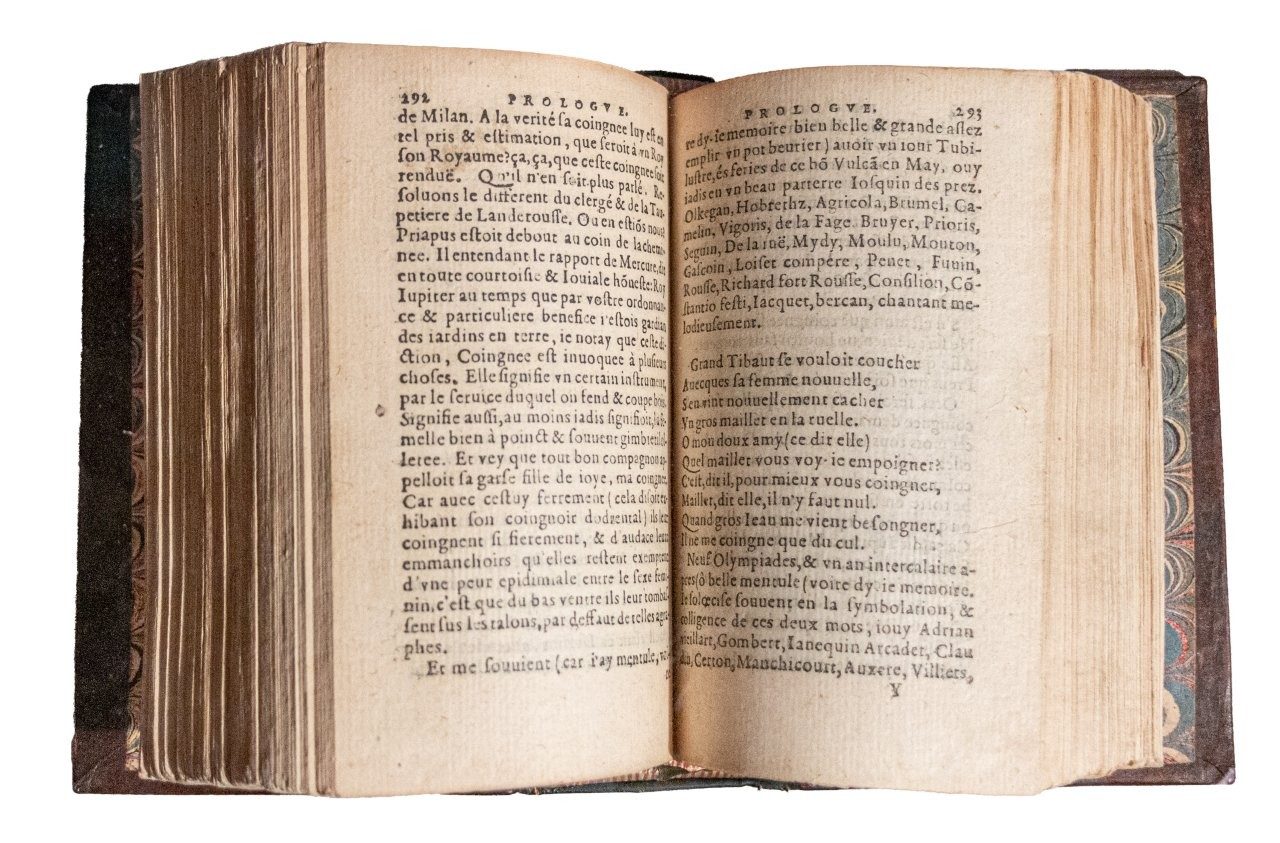
The volume comprises three parts, complete, condensed into 16mo leaves measuring 121 mm x 71 mm; pagination: [402 (misnumbered ‘204’)], [10], 576, [12], 210, [38] pages. Signatures run a-z8, A-Z8, AA-ZZ8, AAA-III8, with the final leaf (III8) blank and included in completeness. The title page bears a small woodcut vignette; the text is set in small roman type, with numerous woodcut initials, headpieces, and tailpieces, including the notable woodcut of La Dive Bouteille on leaf FFF8r. Content includes detailed tables of contents for various sections, with occasional marginal soiling, light water-staining in early quires, and minor marginal flaws.
Binding:
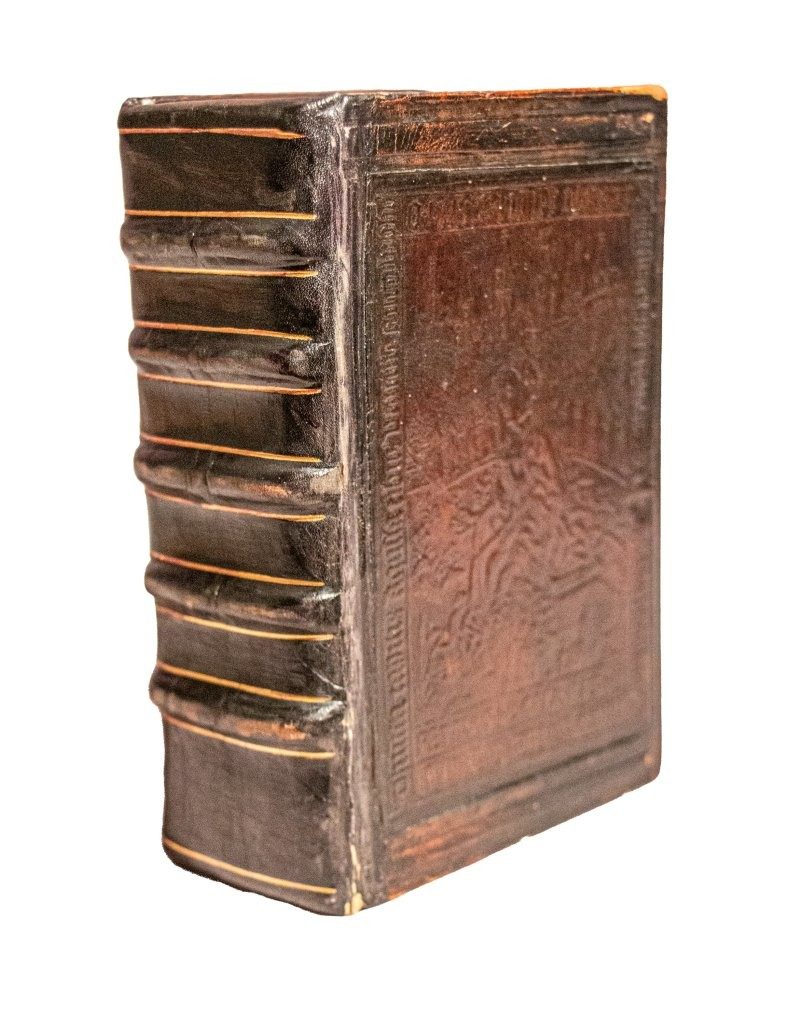
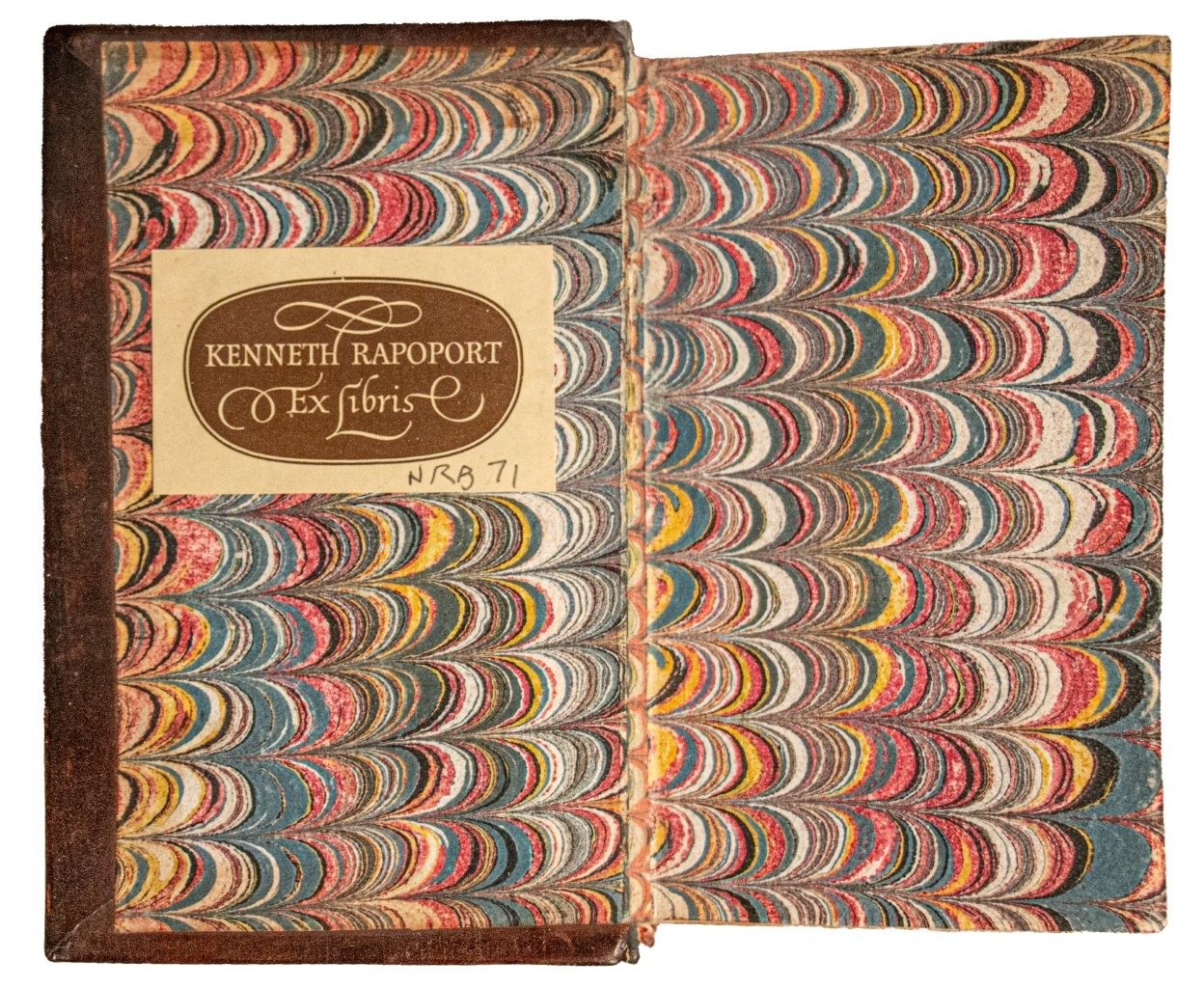
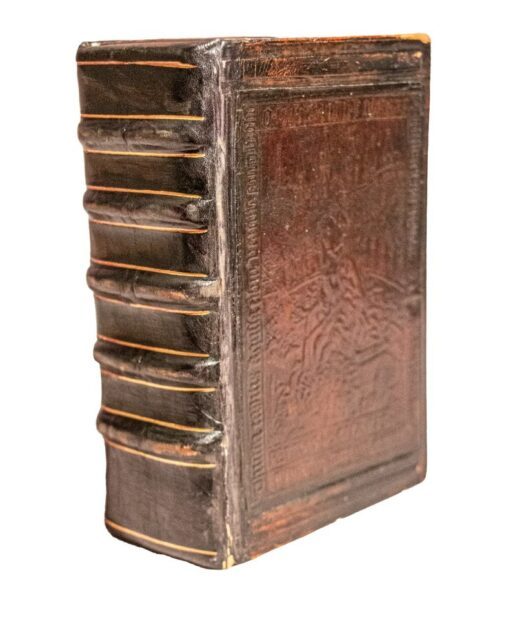
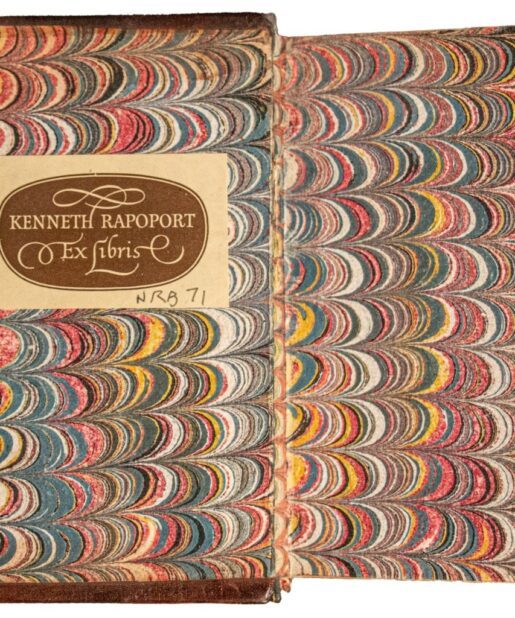
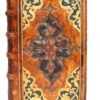
An outstanding 16th-century Flemish dark-brown calf binding by Pieter de Keysere of Ghent, rebacked and recased with great care in matching calf, retaining elaborate blind-tooled panels. The upper and lower covers depict the Maid of Ghent, emblematic of the city, framed by a lengthy inscription from Seneca, with the binder’s Latin signature ‘PETRVS * CAESARIS’ within a quatrefoil. The edges are adorned with gilt dentelles, and the new spine is decorated with gilt ruling and raised bands. The endpapers are marbled, with a green silk bookmark attached. This binding has been described by W. H. Weale and Goldschmidt as a remarkable example of Ghent craftsmanship, dating likely to the 1540s–50s, predating the book’s printing date, possibly as a remboîtage.
Provenance:
Front flyleaf with ownership signatures of Guillaume Guizot (1833–1892), notable French scholar and statesman, with a manuscript note indicating the rarity of this edition. A bookplate of Kenneth Rapoport, a distinguished collector of Renaissance literature, is present. A 16th or 17th-century ownership signature ‘De Langle(?)’ is noted on leaf III6v.
Condition:
Very good antiquarian condition; complete with final blank. The binding exhibits light rubbing and minor surface wear. Contemporary inscriptions and signatures are present, with some marginal soiling and light water-staining, mainly in initial quires. A well-preserved, striking copy
Product Enquiry
Related products


£850.00

