






An Elegant Italian Renaissance Binding in Polychrome Gilt Leather
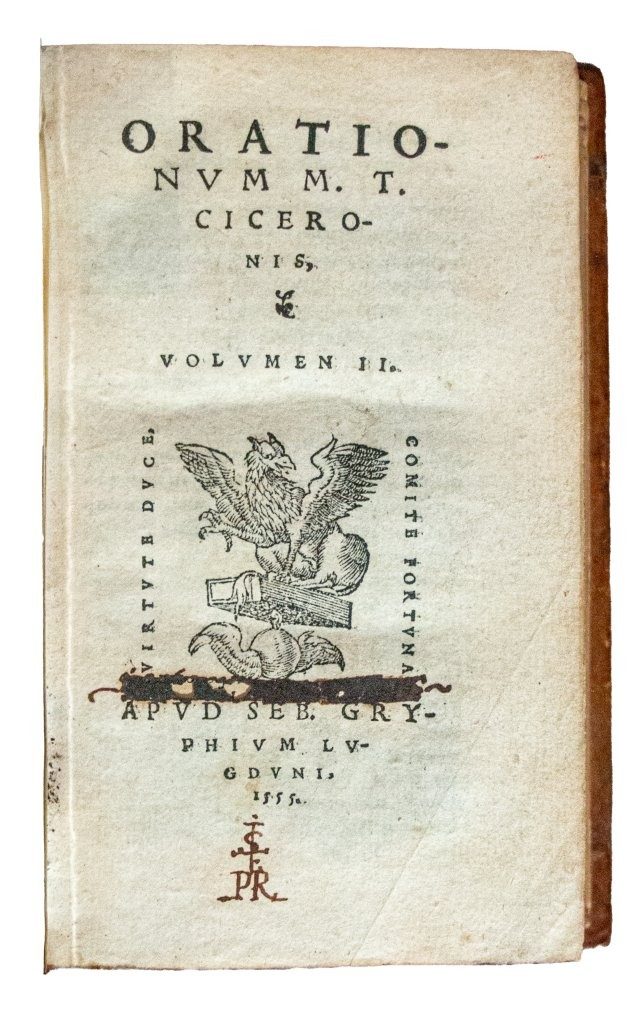
CICERO, M.T. Orationum… Volumen II. Lyon: Sebastian Gryphius, 1555.
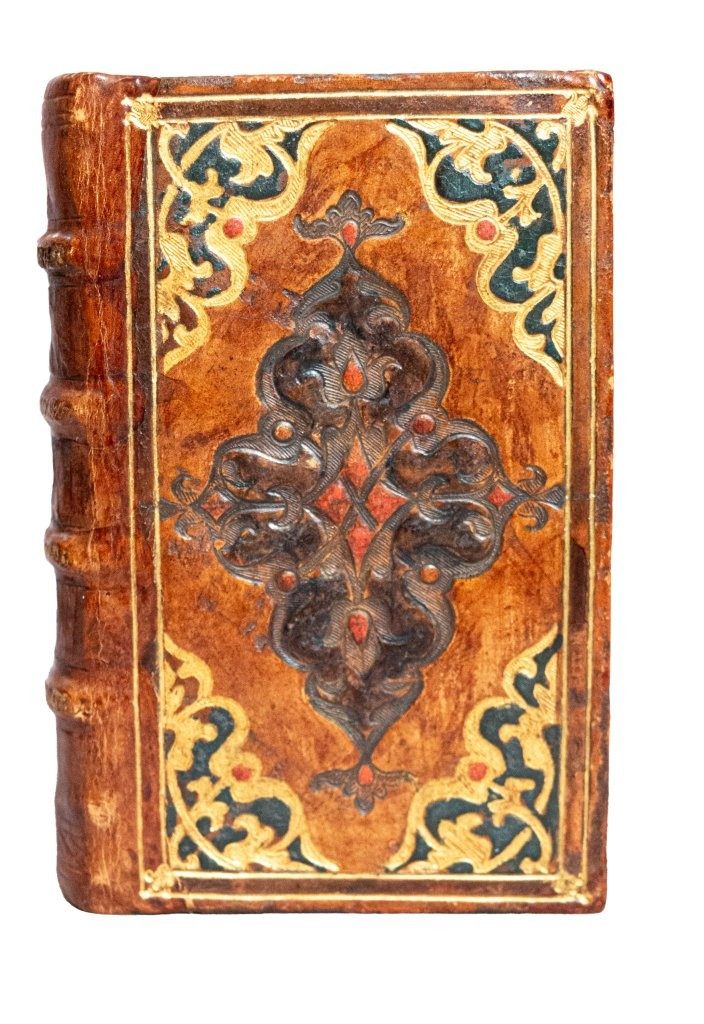
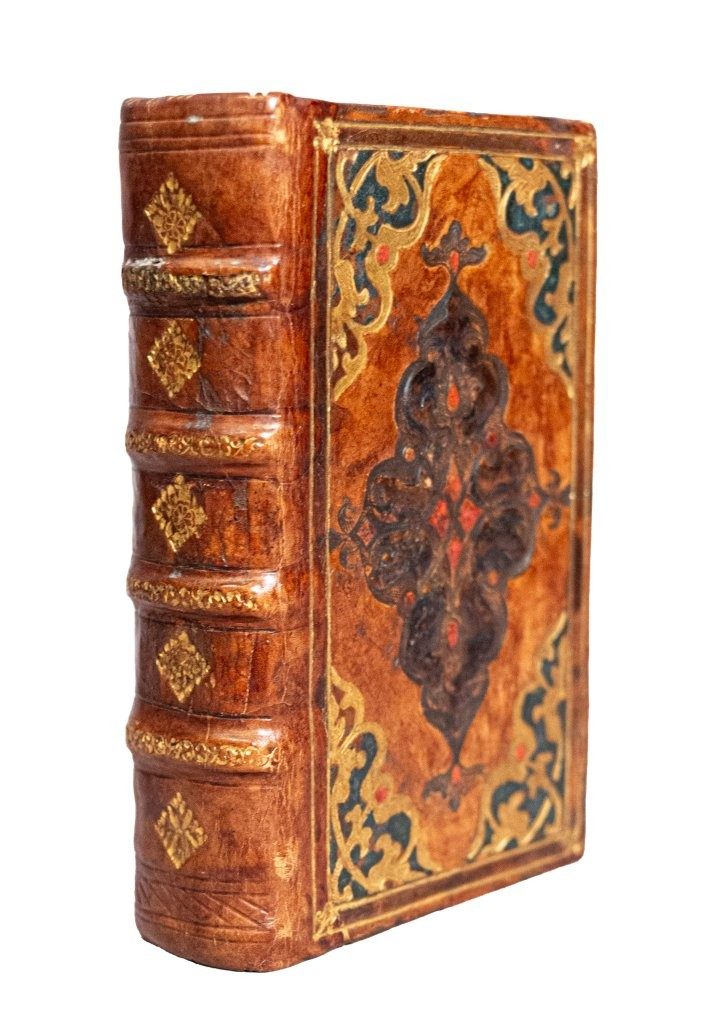
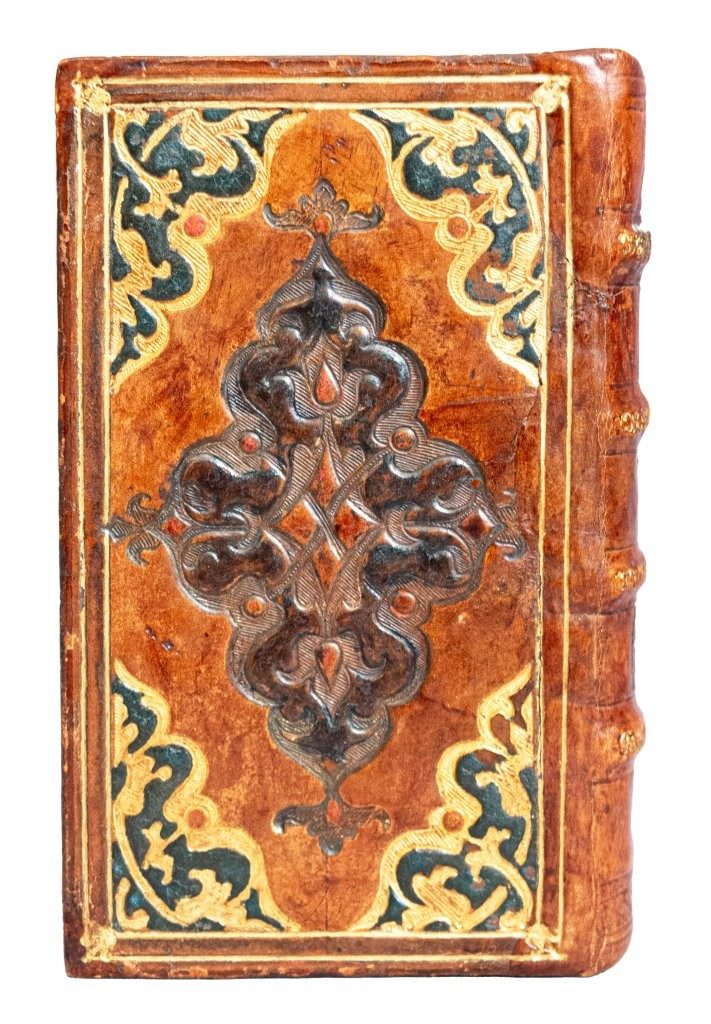
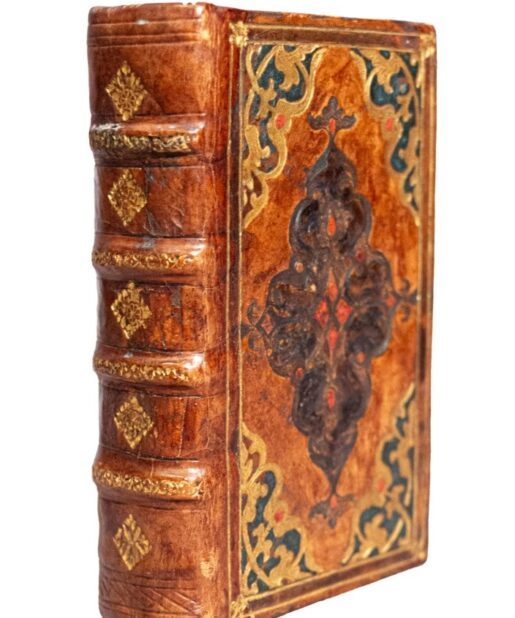
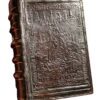
Bound in a superb Italian gilt and painted morocco binding, mid-16th century
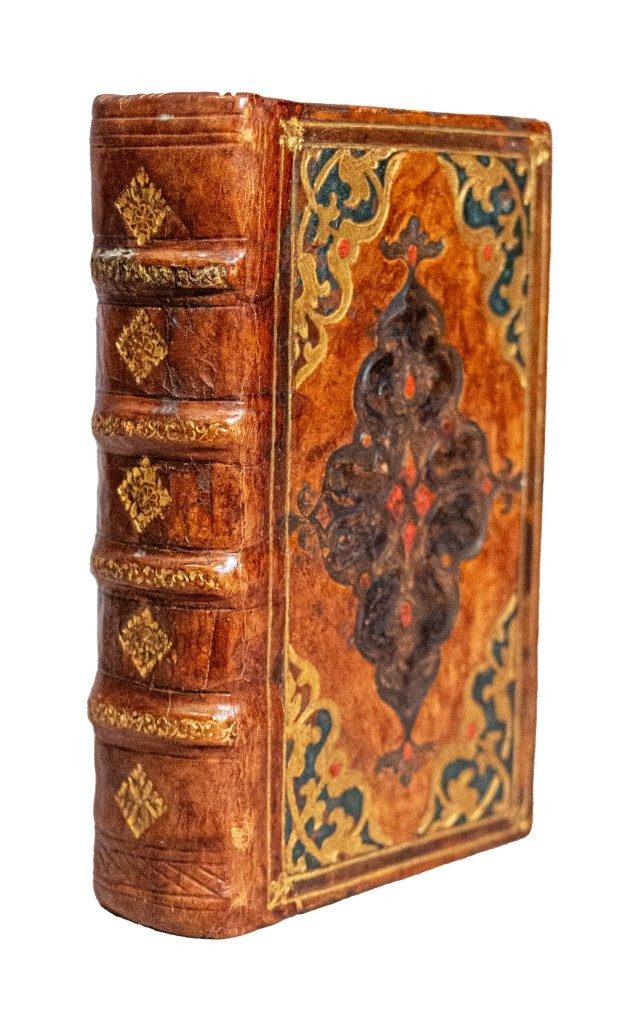
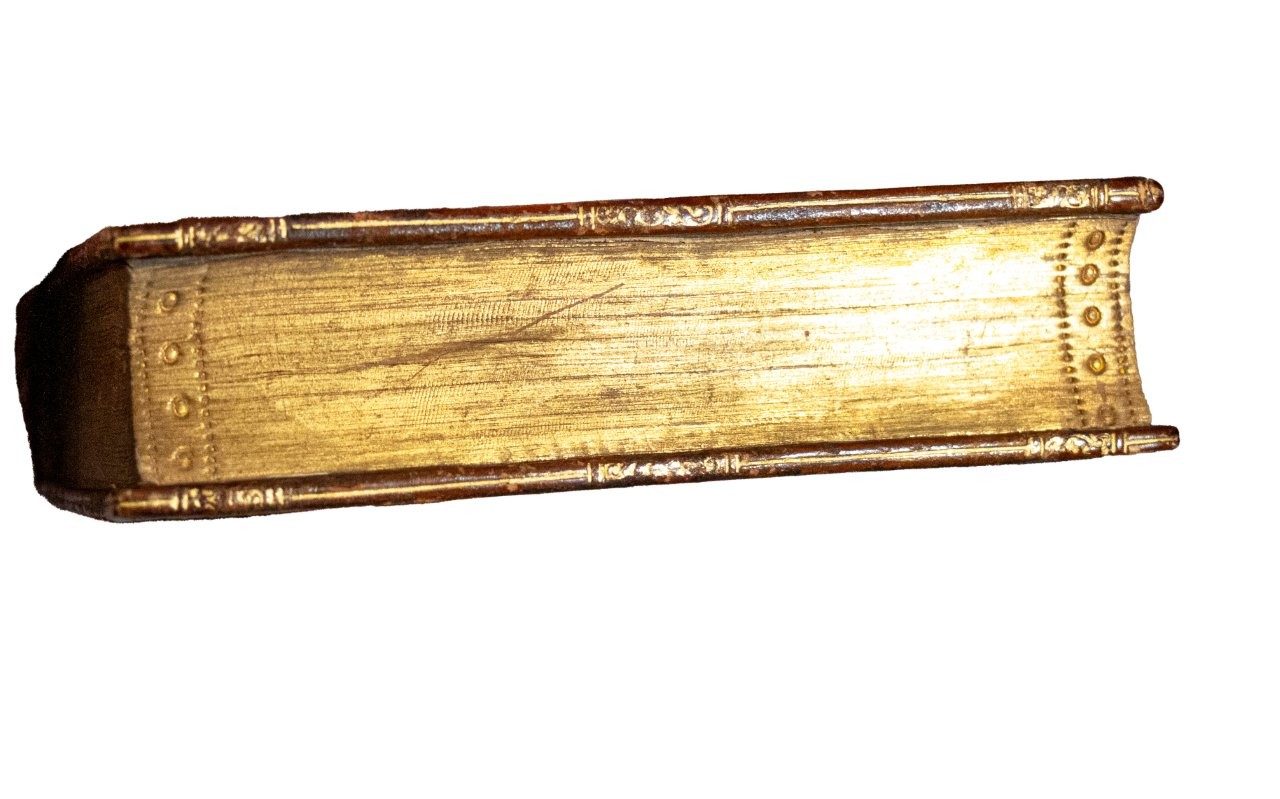
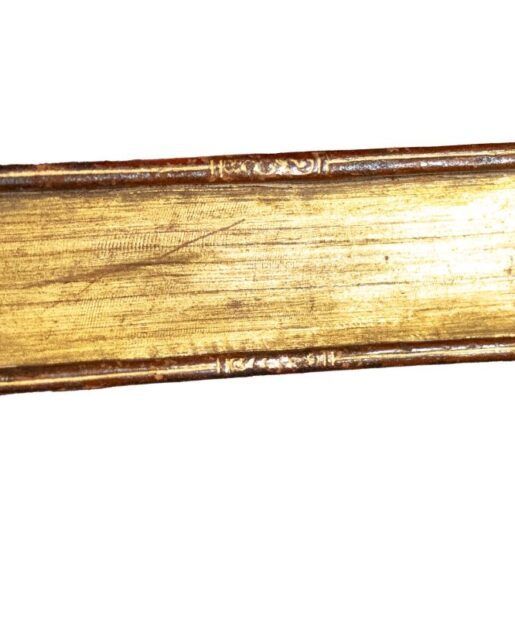
A handsomely preserved and richly decorated Italian Renaissance binding, executed in polished brown morocco and adorned with a large central arabesque panel of darkened, blind-tooled strapwork accented with red onlays. The design is framed by elaborate gilt and green cornerpieces in flowing foliate forms, all enclosed by a gilt fillet border. The spine, divided into raised bands, bears gilt lozenge tools and delicate gilt scrollwork. All edges gilt and lightly gauffered.
The aesthetic is unmistakably Italian, likely from a Northern or Central Italian workshop active circa 1550–1570, combining strong Lombardic strapwork with Veneto-Ferrara style polychrome cornerpieces. The quality of the tooling, the clean, confident gouges, and the characteristic palette support the attribution. Though not yet matched to a named atelier, the binding shows kinship with the decorative idiom of mid-century Venetian and Bolognese binders who adopted Islamic-inflected arabesque ornament during the high Renaissance.
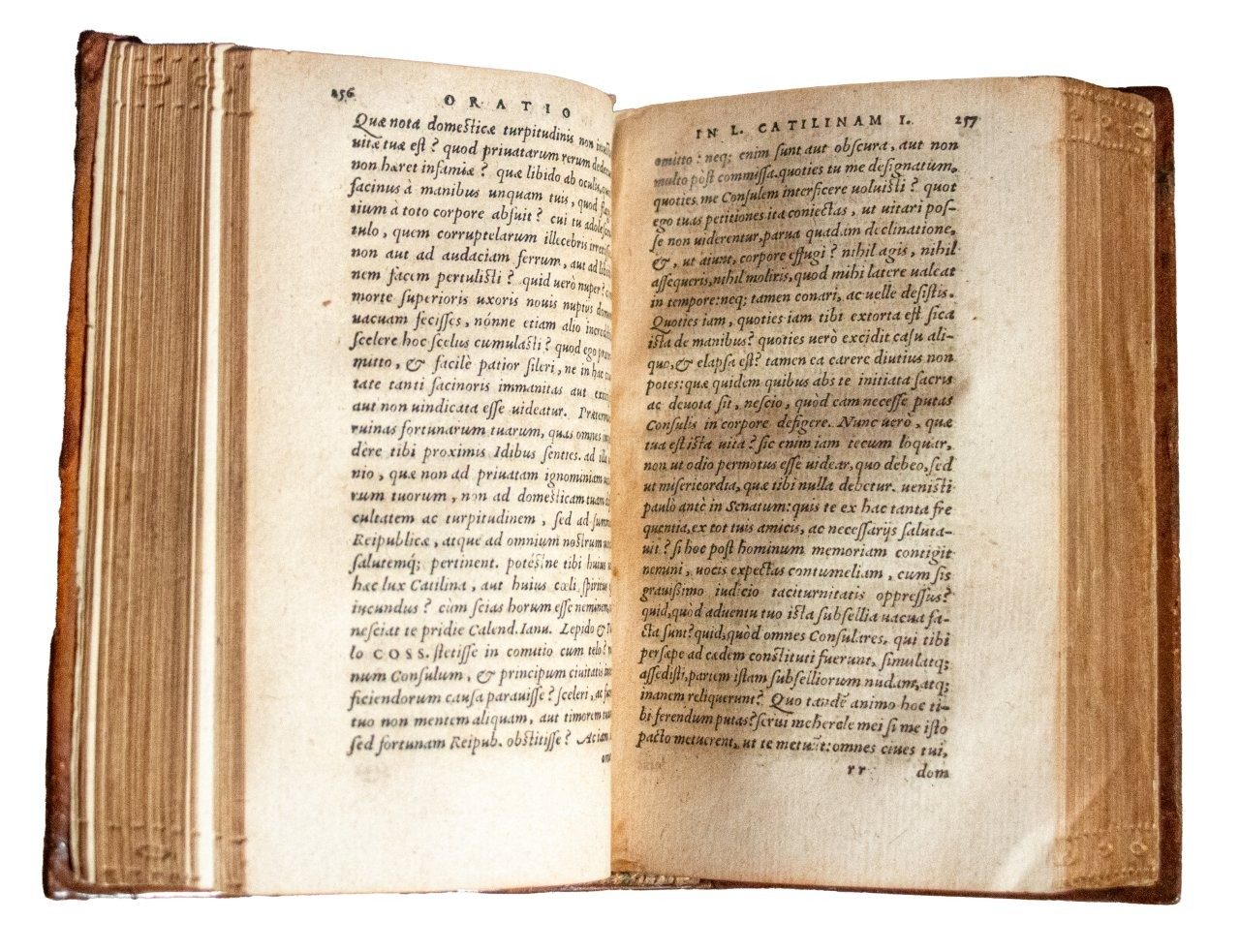
8vo (approx. 125 × 80 mm). 719pp; both blanks present. Title with Gryphius’ phoenix device. Crisp, clean text pages with only mild toning. An old ink inscription to the title page has bee scratched through the paper.
Bookplate of Josy Mazodier.
Binding: Mid-16th-century Italian polished brown morocco; elaborate central arabesque panel in blind and darkened leather; red onlay highlights; gilt and green painted cornerpieces; gilt fillet frame; spine gilt in compartments with lozenge tools; all edges gilt and lightly gauffered. Some light rubbing and small restorations compatible with age; overall excellent condition for a 16th-century decorative binding.
Almost invisible restorations to the joints, spine, and corners, small losses to the wax, handwritten note and inscription erased in ink on title page.
A beautifully executed and visually striking Italian binding of the Renaissance, combining refined technical workmanship with the exuberant ornamental vocabulary that characterises the period. Such bindings, especially with preserved polychrome elements, are increasingly sought after by collectors of Italian decorative bindings and by those interested in cross-cultural design influences in early book arts.
A very attractive surviving example of mid-Cinquecento Italian binding art.
Product Enquiry
Related products

£750.00
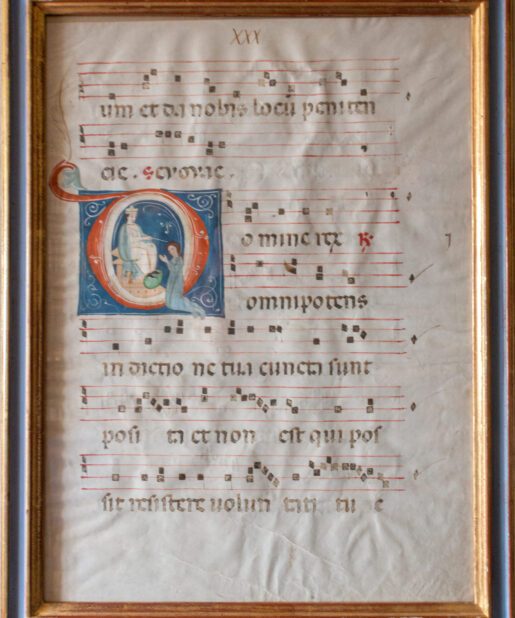
£3,800.00


£550.00
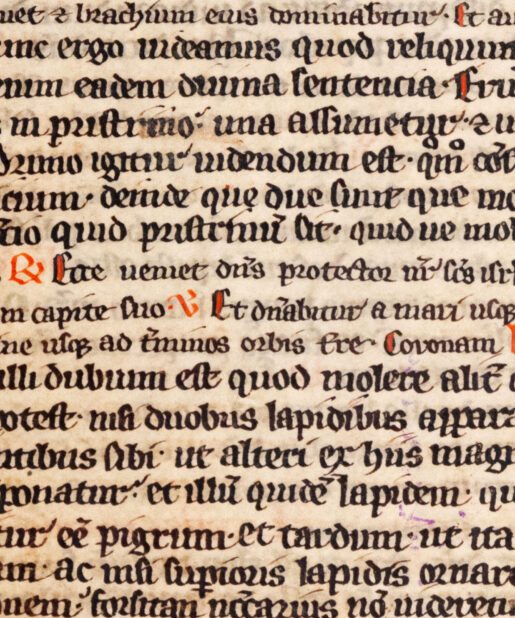
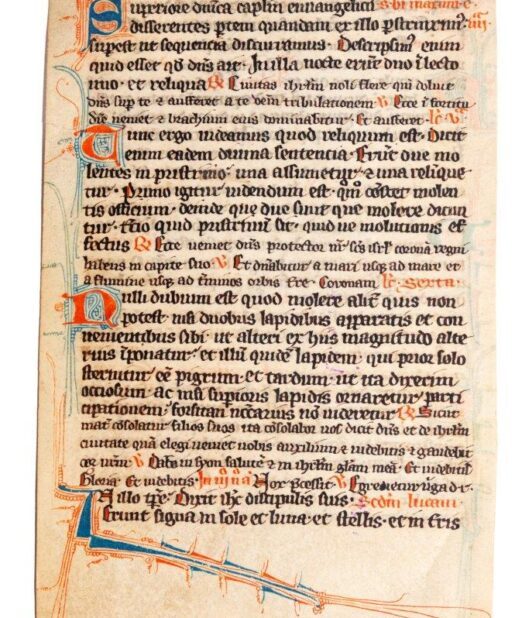
C12th - C13th manuscripts
Miniature Breviary leaf with unusual and handsome script, c.1280
£1,500.00
![Leaf from Baldo degli Ubaldi (1327–1400), Sextum codicis librum commentaria [Italy, late 15th century]](https://stephenbutler.com/wp-content/uploads/2023/07/IMG_0101-515x618.jpg "Leaf from Baldo degli Ubaldi (1327–1400), Sextum codicis librum commentaria [Italy, late 15th century]")
C14th -C16th manuscripts
£800.00


C12th - C13th manuscripts
Elegant English Early Gothic Script from late C12th Passionale – Paulinus of Milan
£1,750.00


C14th -C16th manuscripts
£400.00