

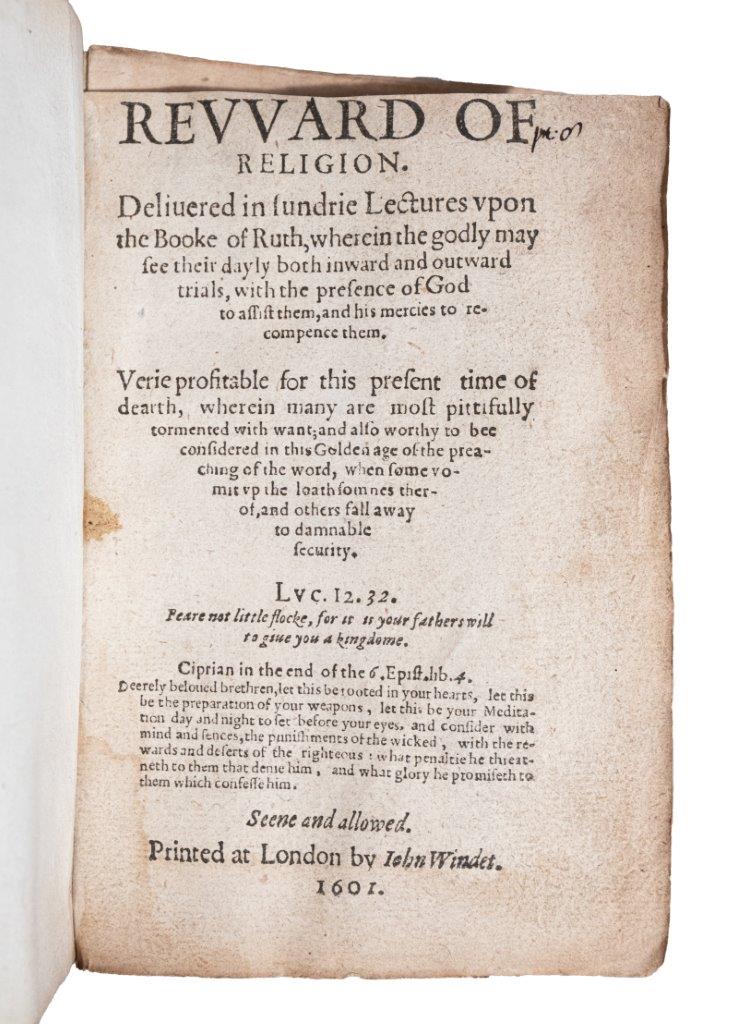
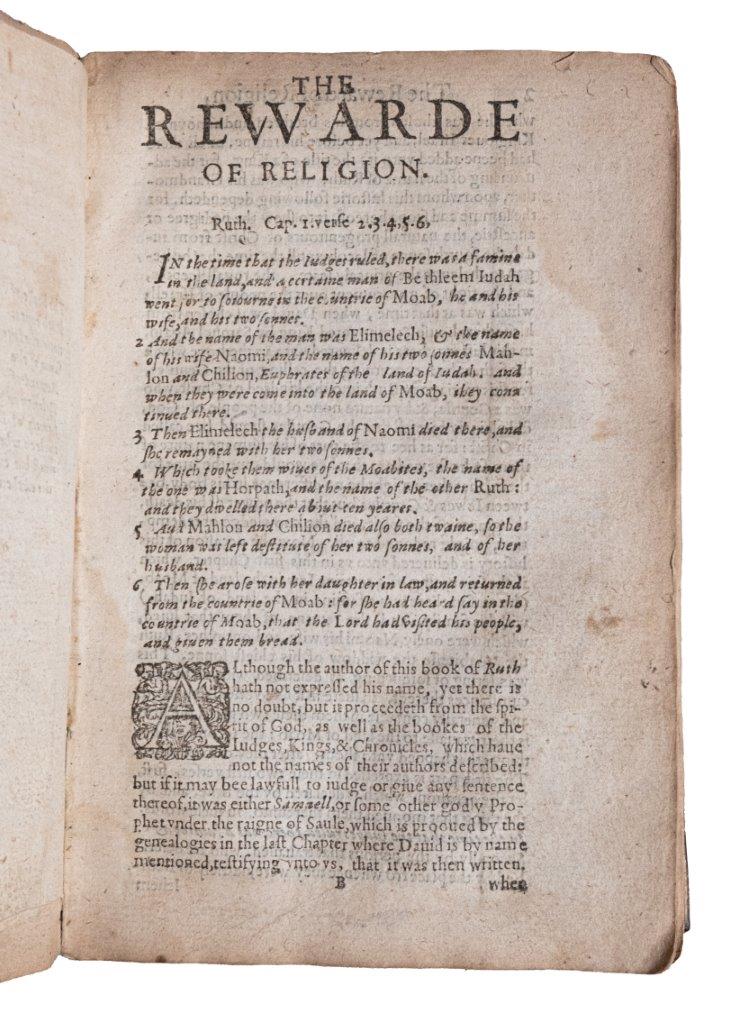


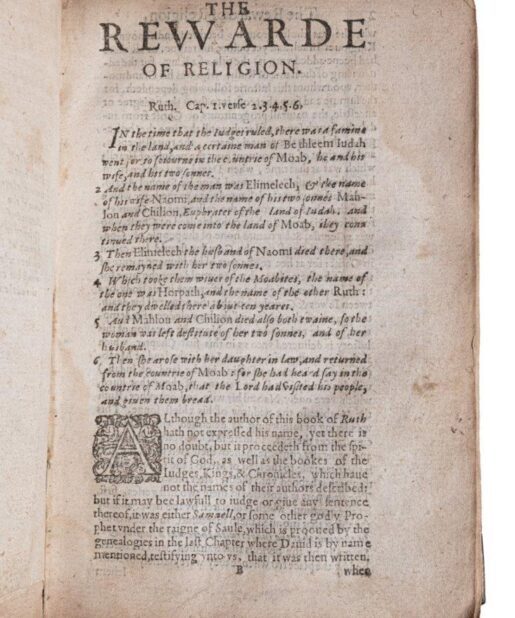
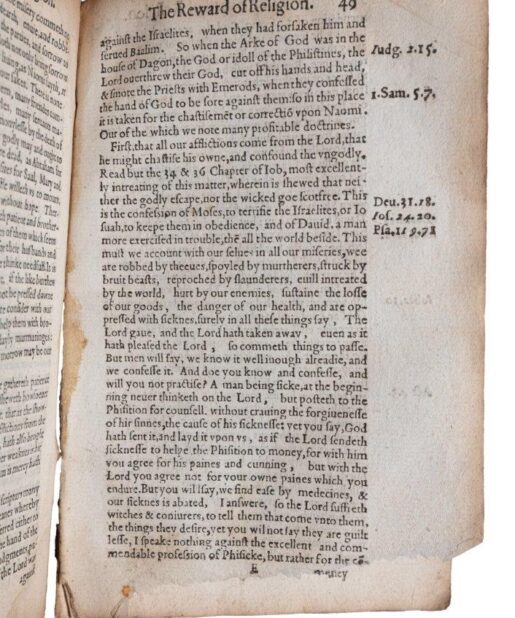

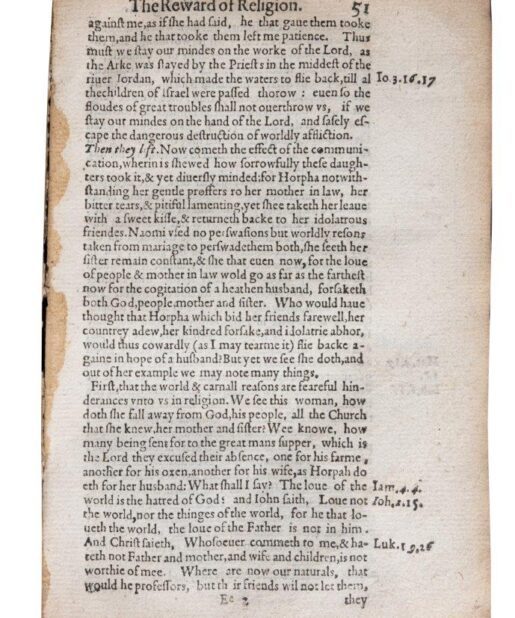
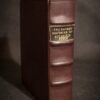
TOPSELL, Edward The revvard of religion. Deliuered in sundrie lectures vpon the booke of Ruth […] London: By Iohn Windet, 1601.
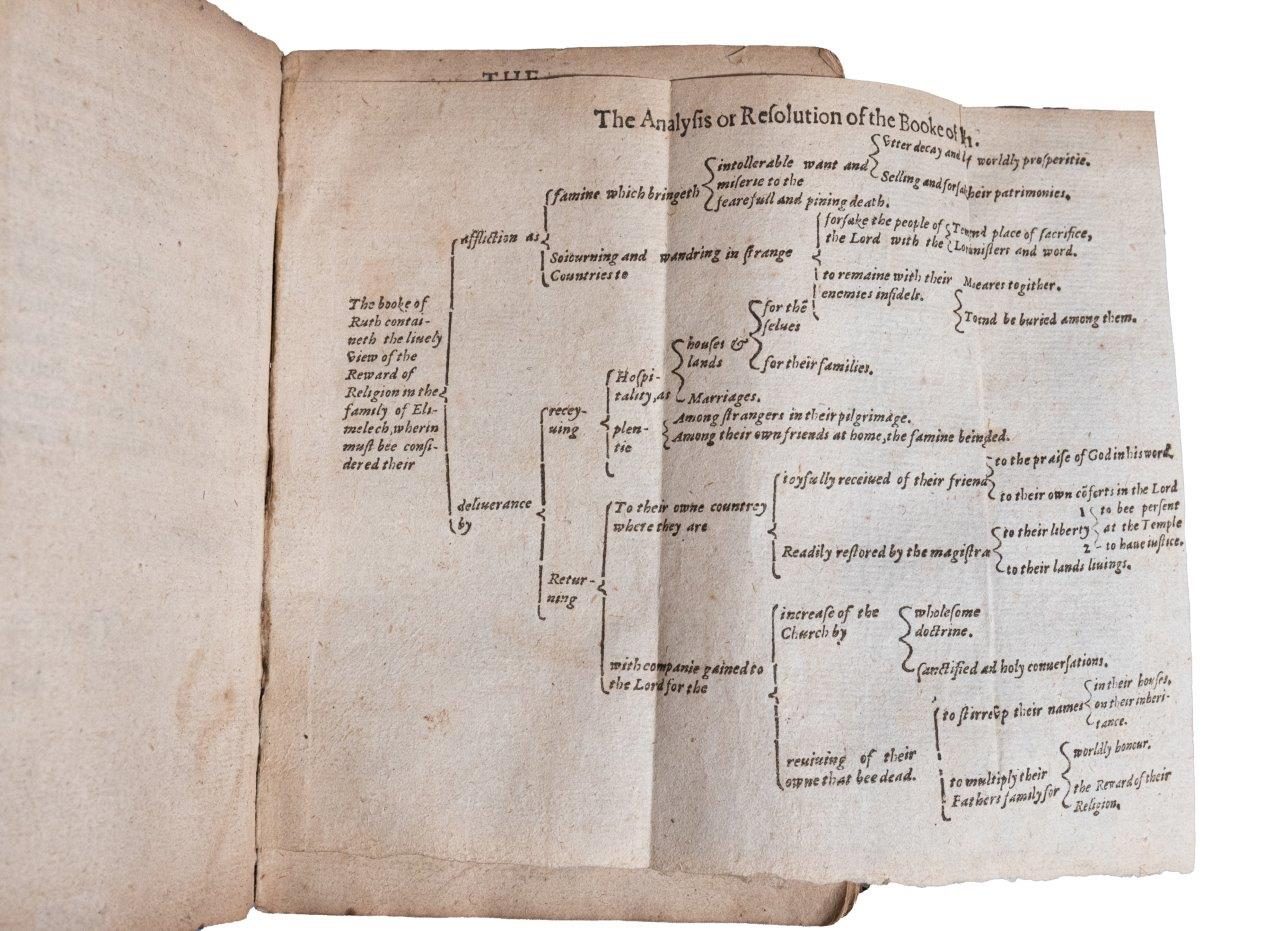
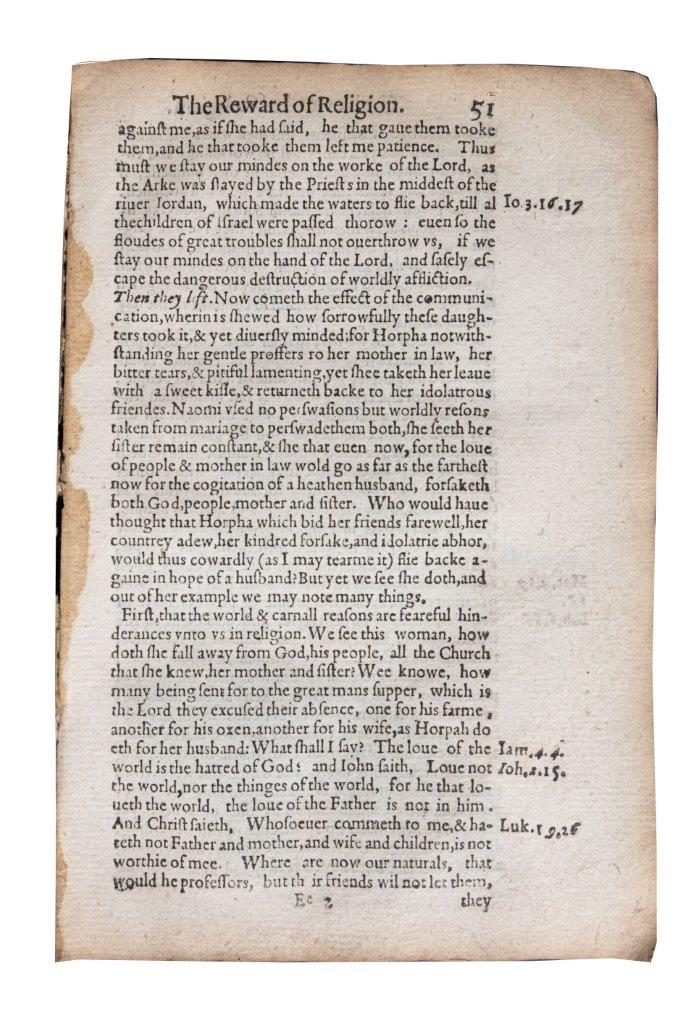
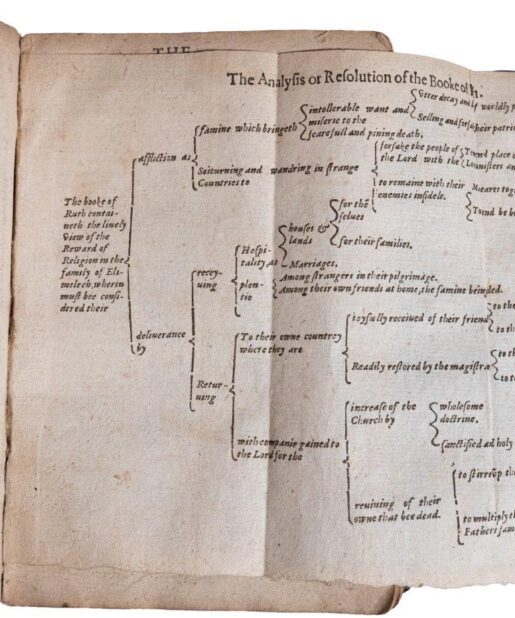
Collation (as per ESTC S118484): A–Z⁸ Aa–Cc⁸ (complete). Pagination: [16], 360 pp. (including inserted fold-out “The analysis or resolution of the Booke of Ruth”).
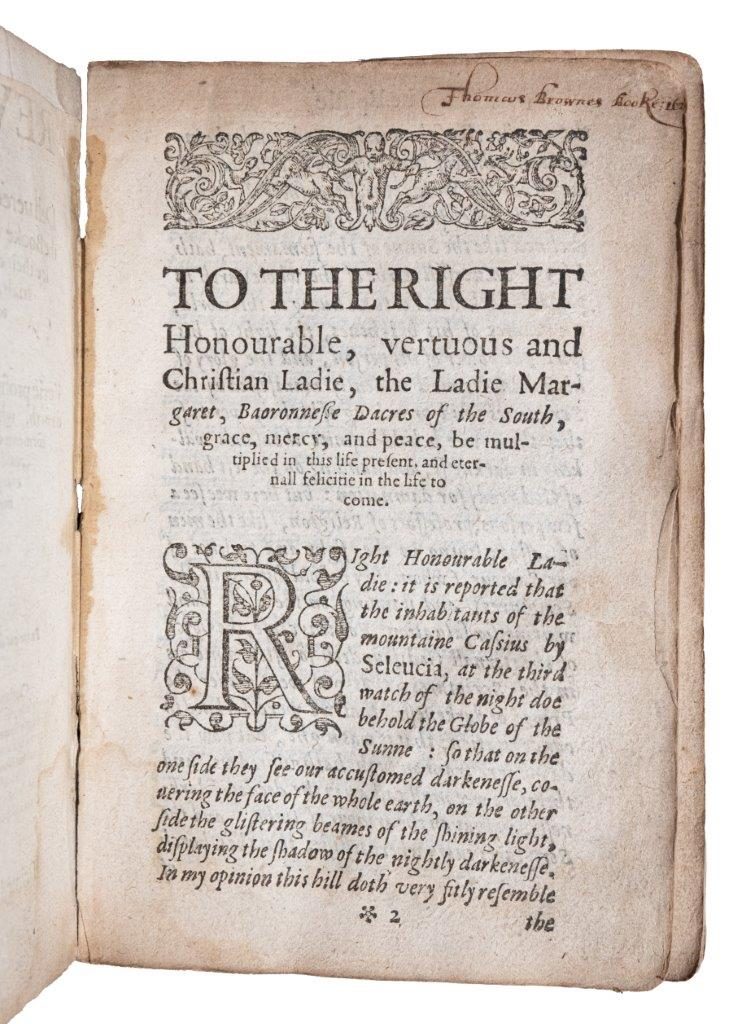
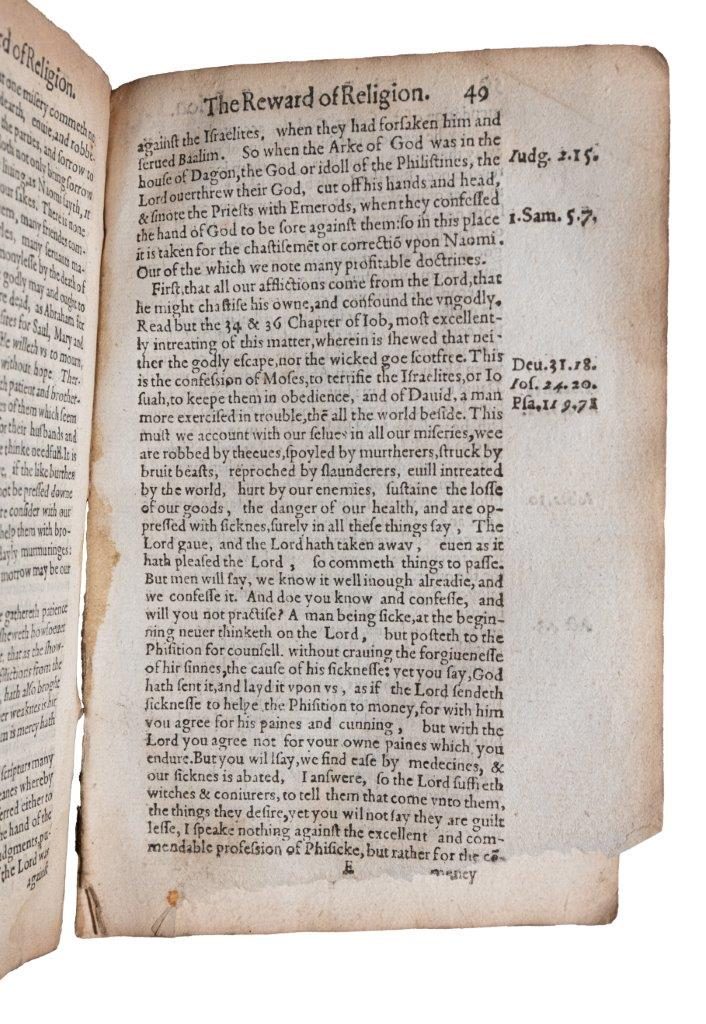
Woodcut ornaments at the end of each chapter; ornamental woodcut initials throughout; with a folding analytical table of the Book of Ruth.
ESTC S118484.
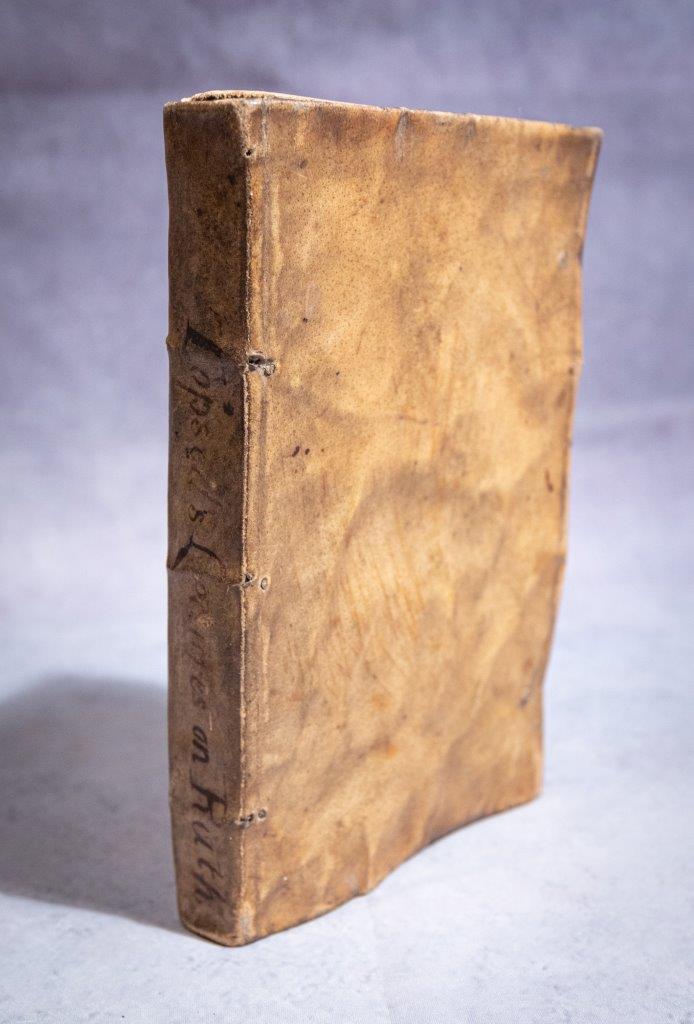
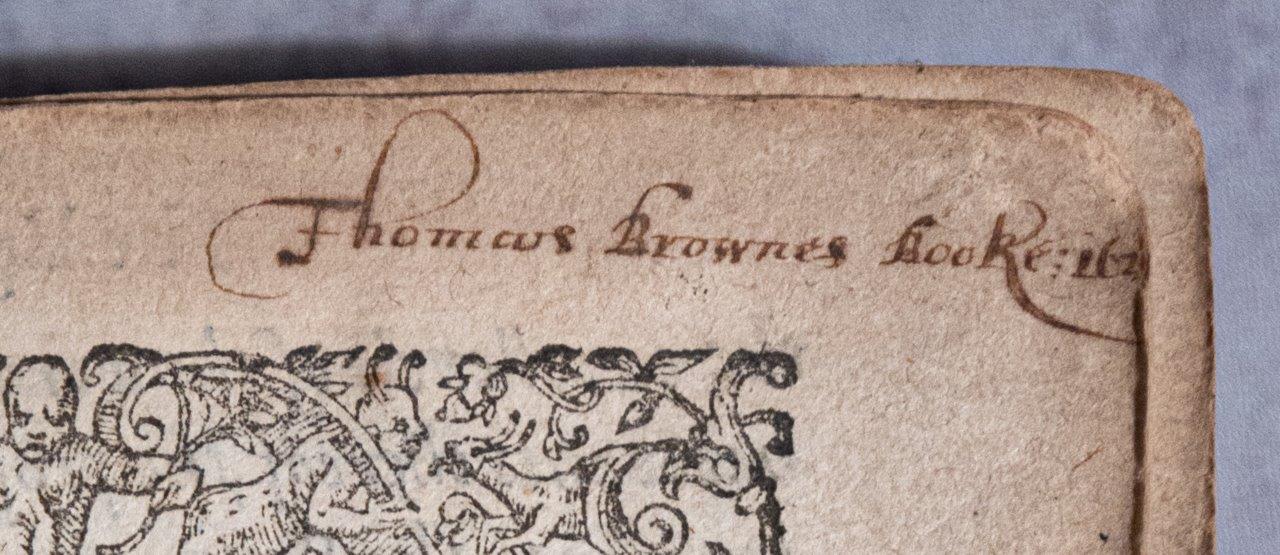
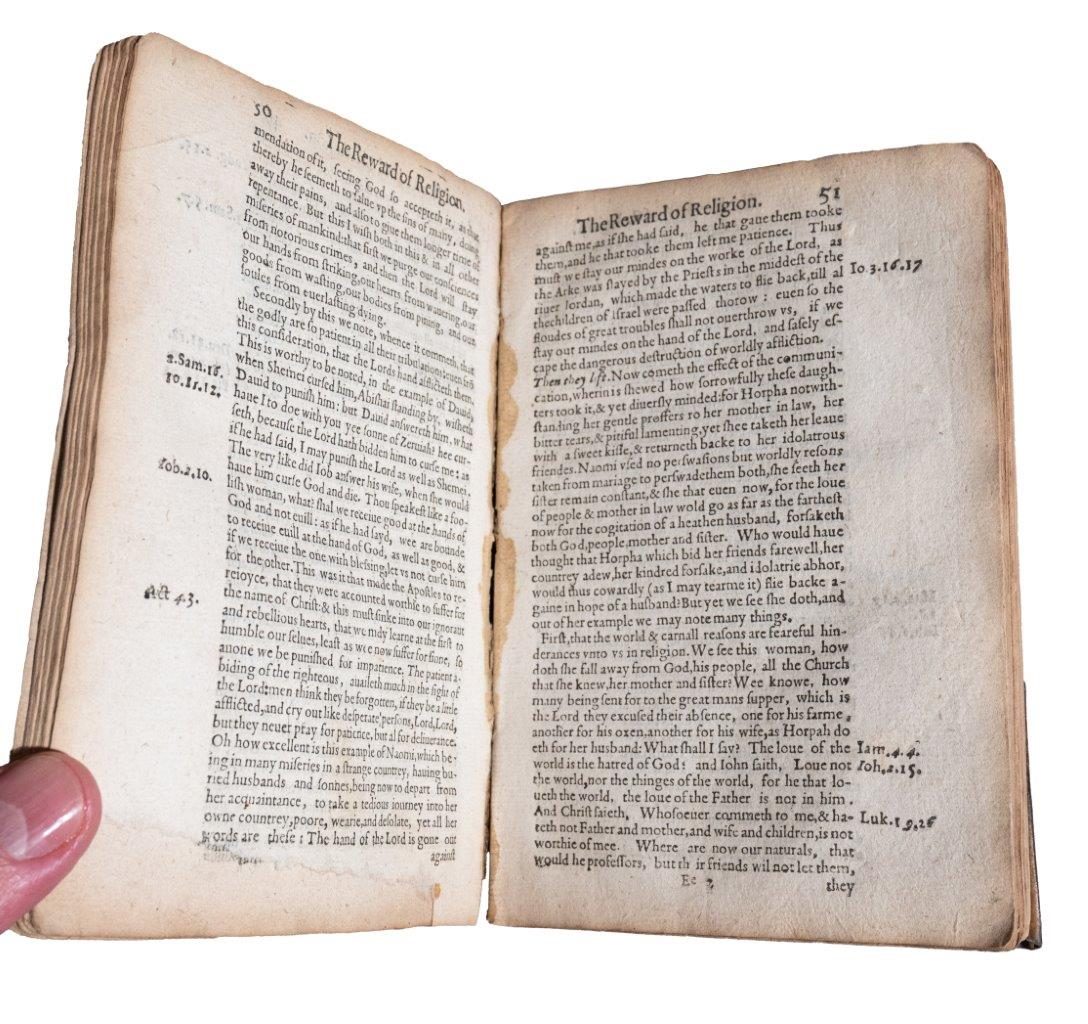
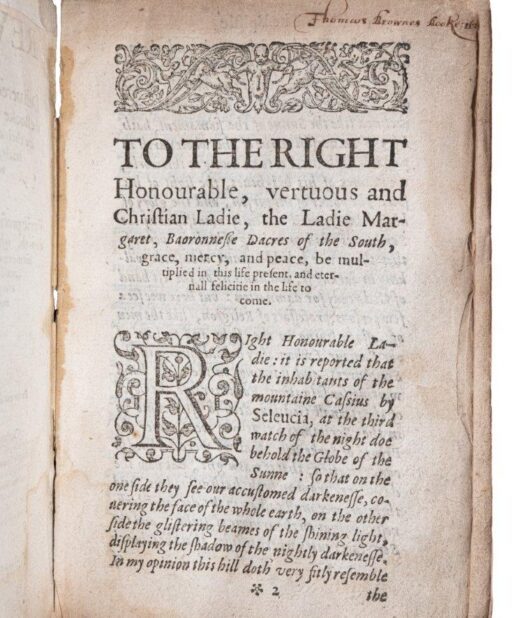
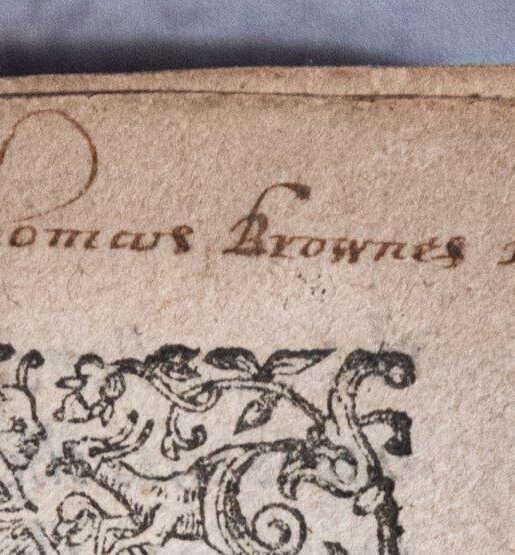
Bound in original limp vellum, manuscript title to spine; early ownership inscription of Thomas Browne to second leaf. Title trimmed at upper margin, slightly affecting the opening word of the title, but text otherwise unaffected. A scarce early Elizabethan sermon volume, surviving in relatively few institutional and private copies.
The revvard of religion is a finely wrought Elizabethan sermon cycle on the Book of Ruth, preached and published by Edward Topsell, one of the most learned and versatile divines of the late sixteenth century. Expounding one of Scripture’s most tender narratives, Topsell transforms the story of Ruth, Naomi, and Boaz into a sustained meditation on providence, obedience, godly marriage, charity, and the rewards of faithful perseverance.
Delivered as a sequence of carefully structured lectures, the work balances doctrinal exposition with pastoral application. Ruth becomes a paradigm of humble piety rewarded by divine favour, while the domestic and social dimensions of the text are pressed into service as instruction for household government and moral reform. Particularly striking is the inserted fold-out analytical chart, mapping the entire book into a logical theological scheme — a vivid example of the pedagogical method of Elizabethan preaching.
Printed in 1601, this volume belongs to the formative generation of English Reformed devotional literature, when biblical lectures formed the backbone of parish instruction. Preserved in its original limp vellum binding and bearing early ownership marks, including the ex-libris of Thomas Brownes, this is an attractive and evocative survival of late Elizabethan pulpit culture and one of the earliest extended English treatments of the Book of Ruth.
Edward Topsell was an English clergyman, preacher, and polymath, remembered both as a popular divine and as the celebrated author of the History of Four-footed Beasts and History of Serpents, two of the great encyclopaedias of Renaissance natural history. Educated at Christ’s College, Cambridge, he became vicar of St Botolph, Aldersgate, in London, where he gained a wide reputation as a learned and eloquent preacher.
Alongside his scientific compilations, Topsell produced a substantial body of theological and devotional literature. His sermons reveal a firmly Reformed theology combined with a gift for vivid illustration and moral application. The revvard of religion belongs to his early pastoral writings and shows him at his most methodical and scriptural, interpreting biblical narrative as a guide for domestic, social, and spiritual life.
Topsell stands as a distinctive figure in Elizabethan intellectual culture: a divine equally at home in theology, natural philosophy, and popular instruction. His works reflect the breadth of learning and pastoral ambition characteristic of the late Elizabethan Church.
Product Enquiry
Related products


£850.00


£1,600.00


£400.00


£9,800.00


£200.00


£1,500.00