







This piece has been placed.
Many works of comparable significance pass through our hands each year.
If you’re seeking something similar, please send us an enquiry or browse recent acquisitions.
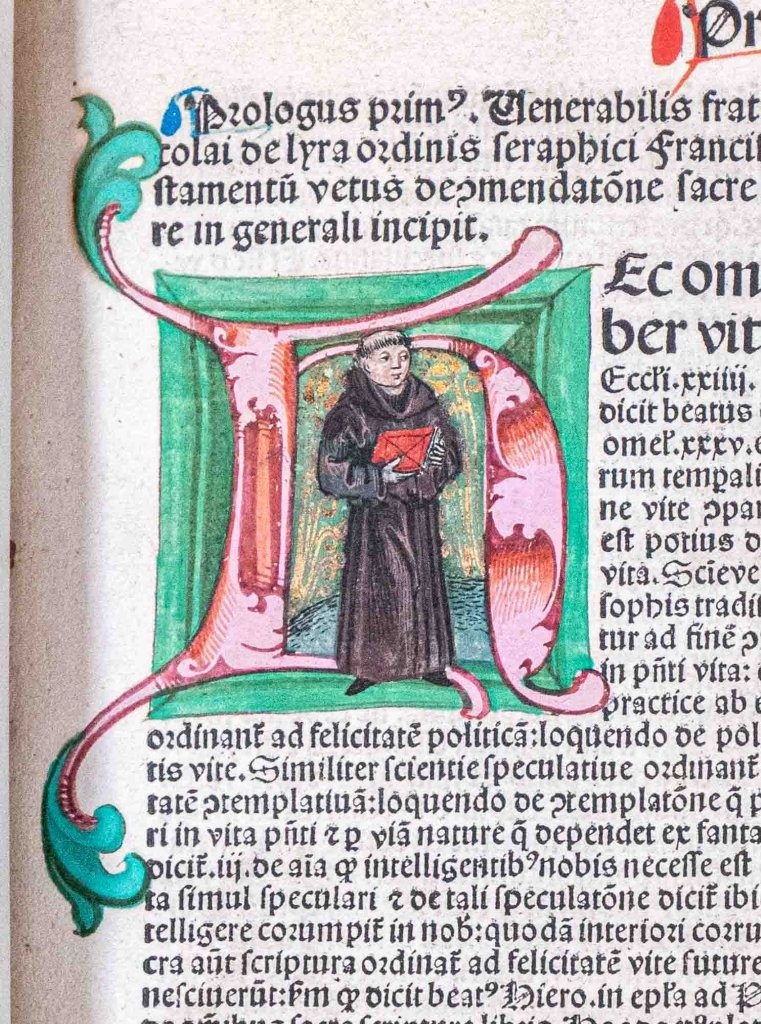
Nicholas of Lyra portrayed in an Illuminated Koberger Bible, 1493
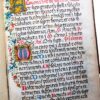
BIBLE, with the Postilla of Nicholas of Lyra. Biblia cum Postilla fratris Nicolai de Lyra … Nuremberg: Anton Koberger, 1493.
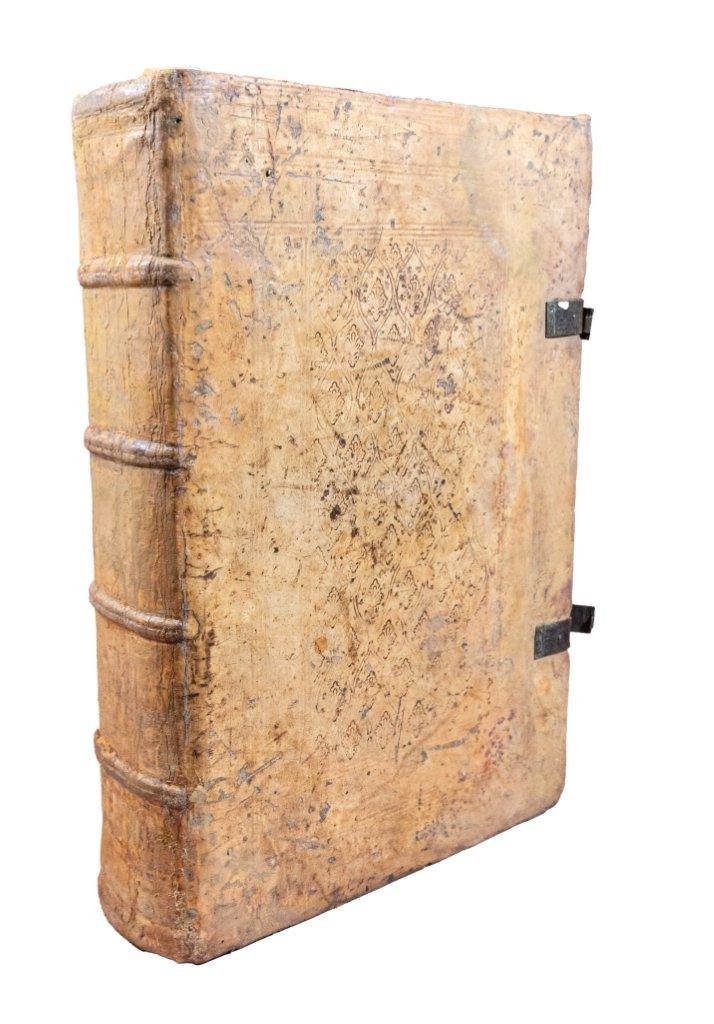
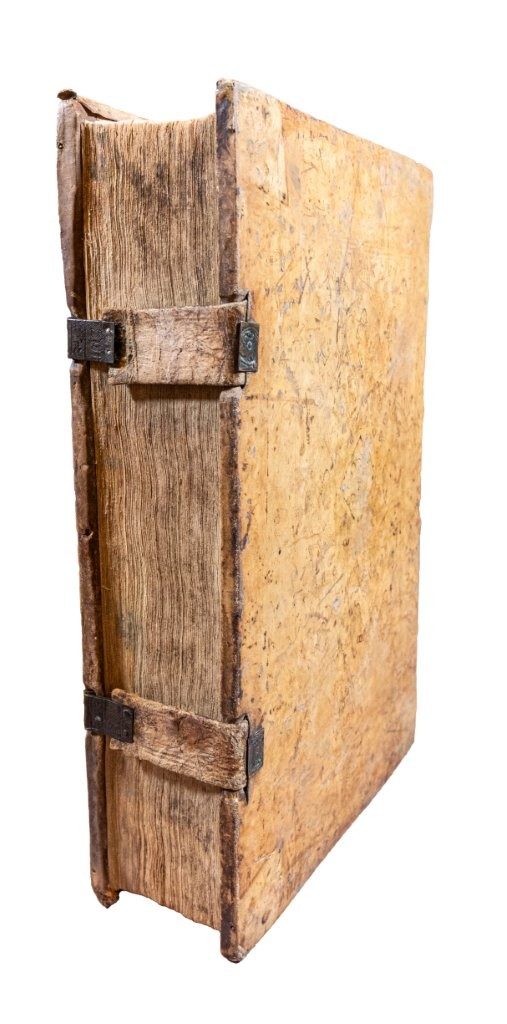
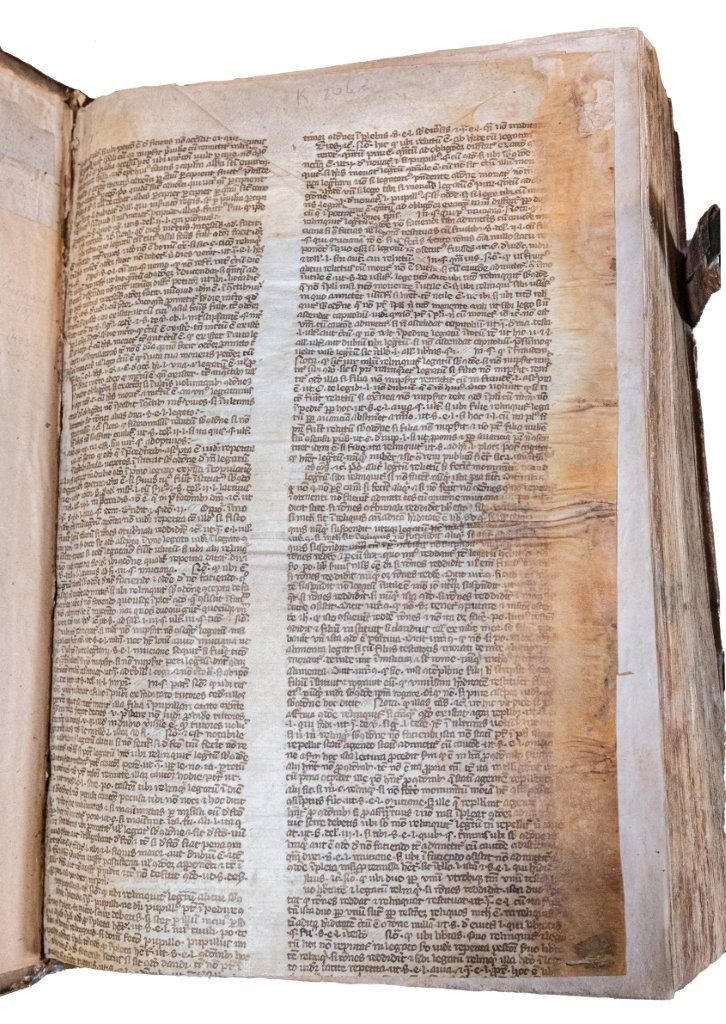
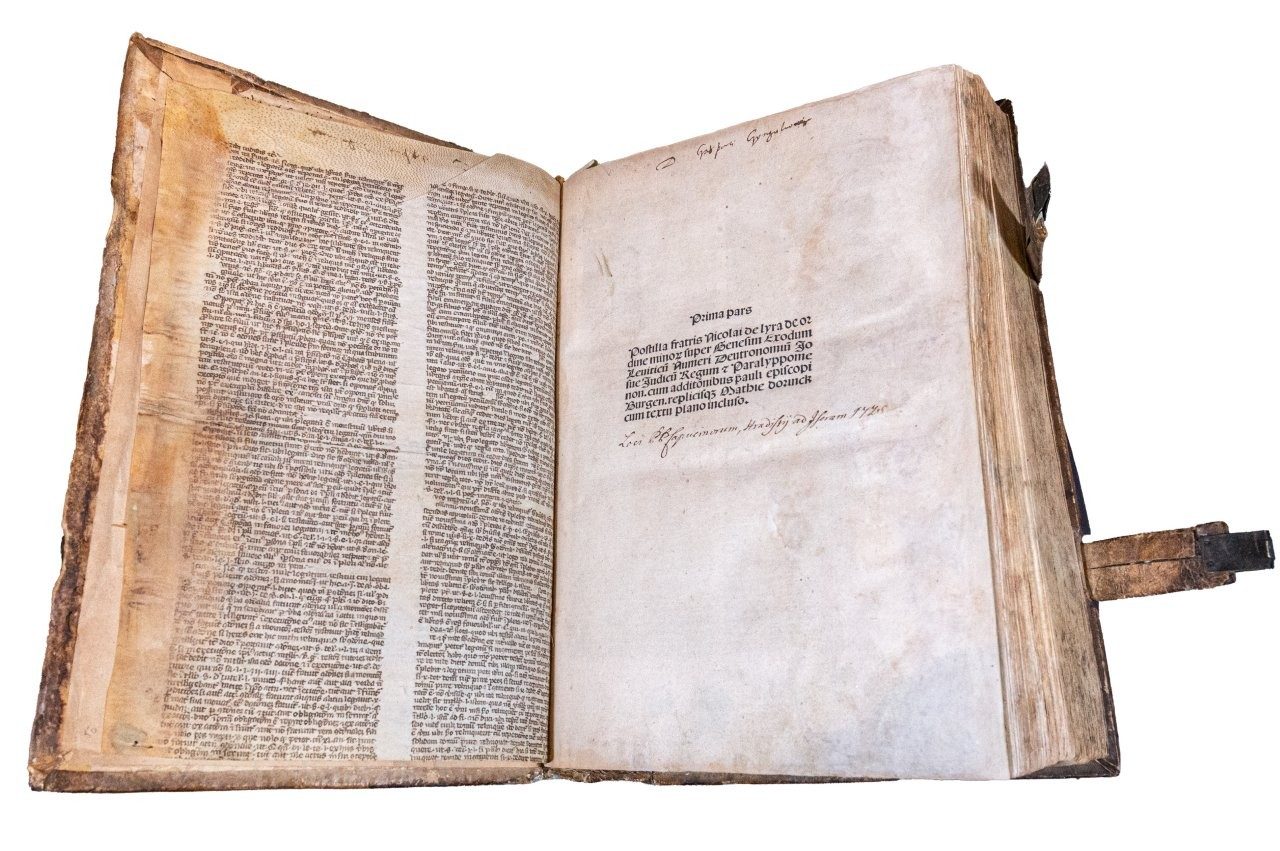
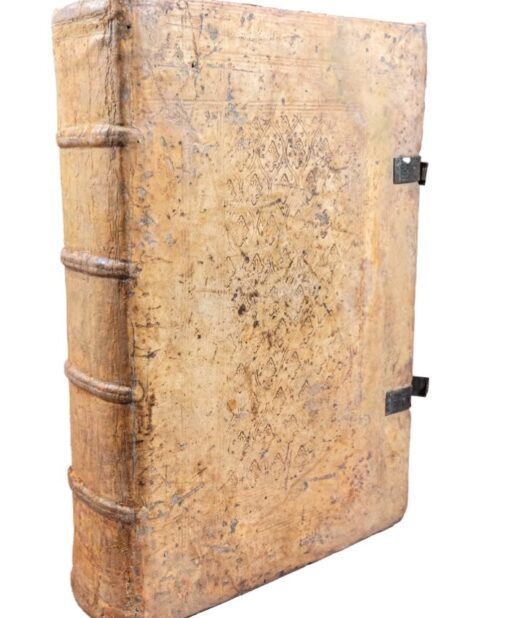
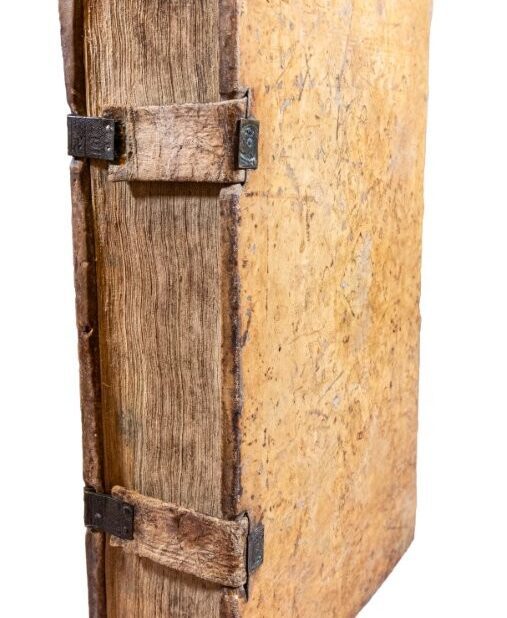
Median folio (349 × 232 mm). The first volume only, comprising the Pentateuch and the historical books through Chronicles; [424] leaves. Latin biblical text with the commentary of Nicholas of Lyra, additions by Paul of Burgos, and replies by Matthias Döring. Printed in Gothic type, with 28 woodcuts, some full-page. Rubricated throughout in red and blue. Contemporary blind-stamped pigskin over wooden boards, retaining both brass clasps; medieval manuscript vellum used as a front flyleaf. Bosses and cornerpieces wanting. The outer margins of the first leaves discreetly reinforced; occasional light waterstaining and signs of use.
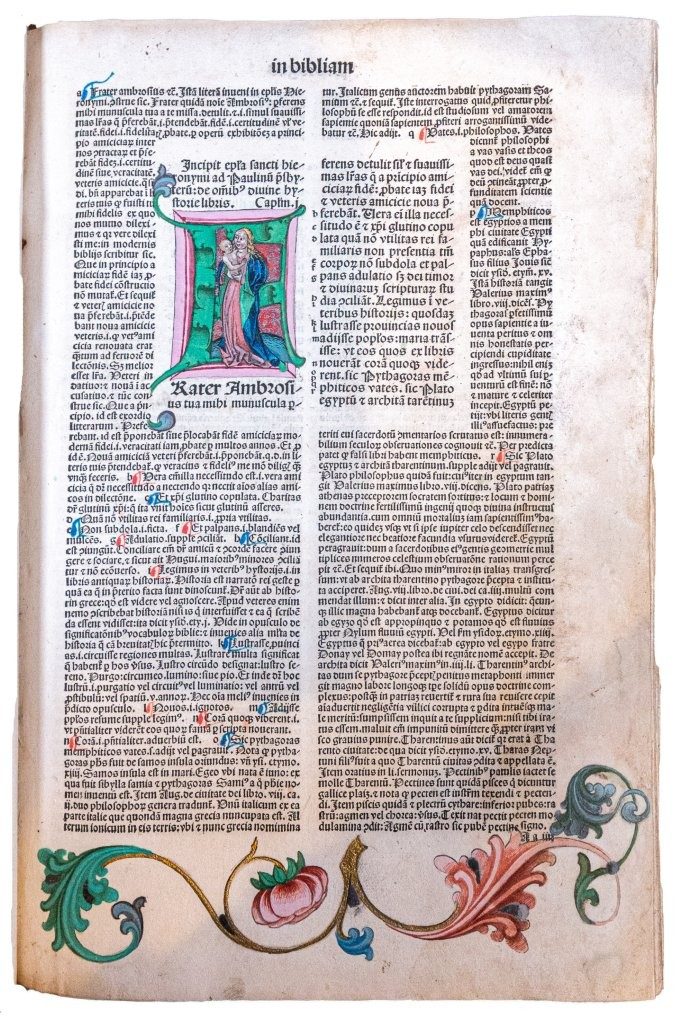
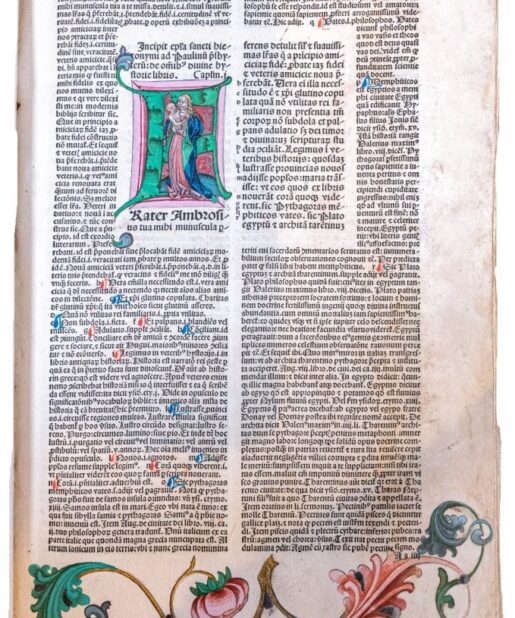
An exceptional illuminated copy of Koberger’s 1493 Lyra Bible, with a painted portrait of the commentator himself. At the opening of Nicholas of Lyra’s prologue, a large historiated initial encloses a Franciscan friar holding a red book. Set directly beneath the heading naming Lyra, the figure is a compelling contemporary representation of the scholar whose commentary accompanies the biblical text. A second historiated initial, introducing Jerome’s letter to Paulinus, depicts the Virgin and Child. Both are enriched with delicate metallic ornament and accompanied by painted foliate borders in vivid pink, green, blue and gold.
The illumination gives this copy a character quite apart from that of an ordinary printed Bible. Koberger supplied a complex page in which Scripture and successive layers of interpretation could be read together; an artist then transformed its opening leaves into a richly coloured devotional object. The portrait is especially arresting. Nicholas of Lyra appears within the very text through which generations of readers encountered his work, his Franciscan habit and book making the author of the commentary visibly present on the page.
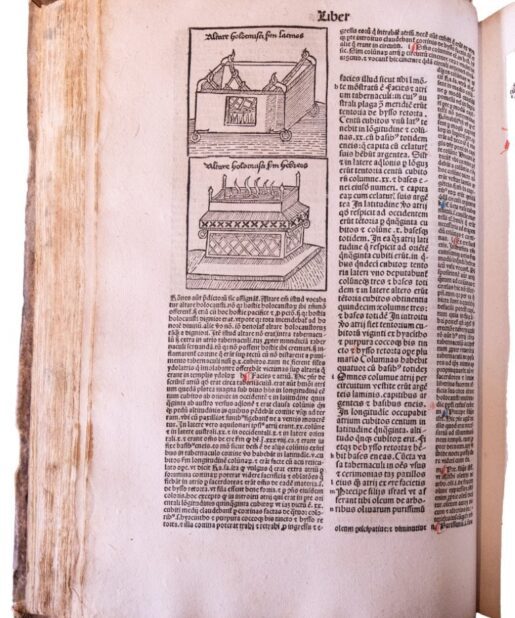
The printed illustrations serve a different, equally fascinating purpose. Among them are two contrasting reconstructions of the seven-branched candlestick, one attributed to Rabbi Moses, or Maimonides, and another to other authorities. They make visible the comparative scholarship underlying Lyra’s influential interpretation of the Old Testament.
The volume remains in its substantial original binding, with its clasps intact. Its recorded provenance includes a dated Capuchin ownership inscription of 1725, a Sotheby’s sale in 1958 (lot 109), and the bookplate of Clifford Baylis. A striking survival at the meeting point of manuscript illumination and early printing.
References: ISTC ib00618000; GW 4293; Goff B618; BMC II 436; BSB-Ink B-469.
Related products


£550.00


£125.00

£750.00


£1,500.00
![Gu Hutou Hua Lienu Zhuan (Xin Kan Gu Lienu Zhuan) [An Ancient Edition of Biographies of Virtuous Women ] Liu Xiang; images attrib. to Gu Kaizhi](https://stephenbutler.com/wp-content/uploads/2024/08/IMG_0472-515x618.jpg "Gu Hutou Hua Lienu Zhuan (Xin Kan Gu Lienu Zhuan) [An Ancient Edition of Biographies of Virtuous Women ] Liu Xiang; images attrib. to Gu Kaizhi")
![Gu Hutou Hua Lienu Zhuan (Xin Kan Gu Lienu Zhuan) [An Ancient Edition of Biographies of Virtuous Women ] Liu Xiang; images attrib. to Gu Kaizhi](https://stephenbutler.com/wp-content/uploads/2024/08/IMG_0467-515x618.jpg "Gu Hutou Hua Lienu Zhuan (Xin Kan Gu Lienu Zhuan) [An Ancient Edition of Biographies of Virtuous Women ] Liu Xiang; images attrib. to Gu Kaizhi")


