



Kirishitan Kosatsu. May 1711.
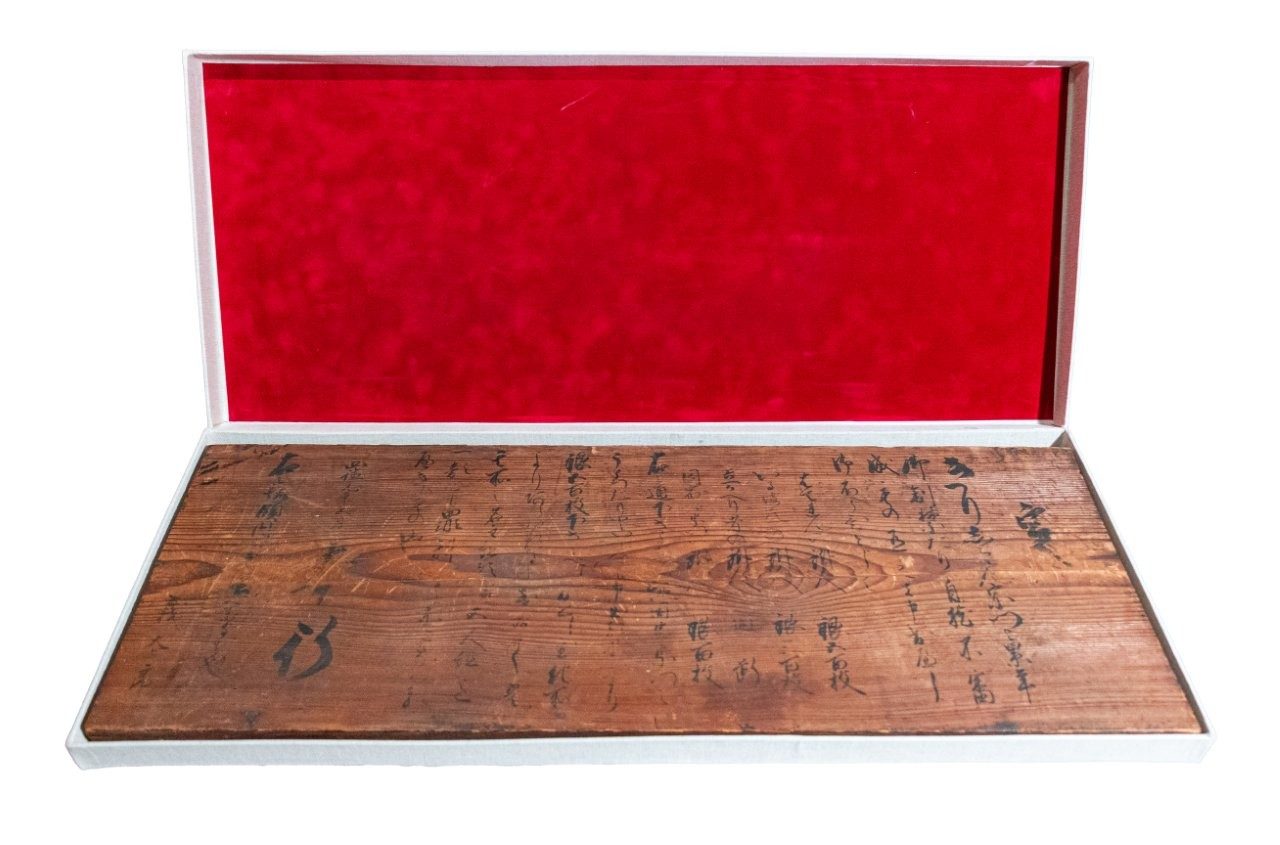
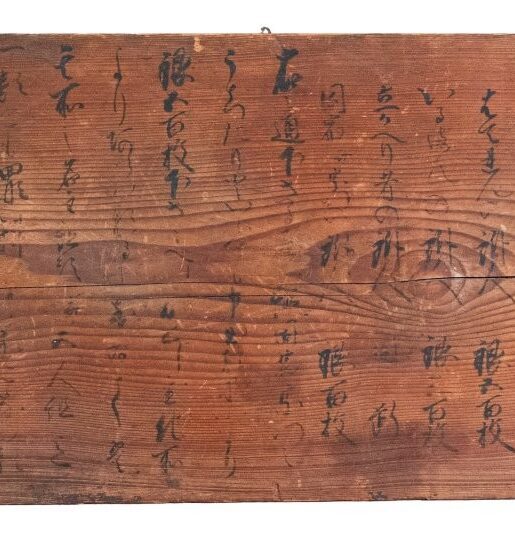
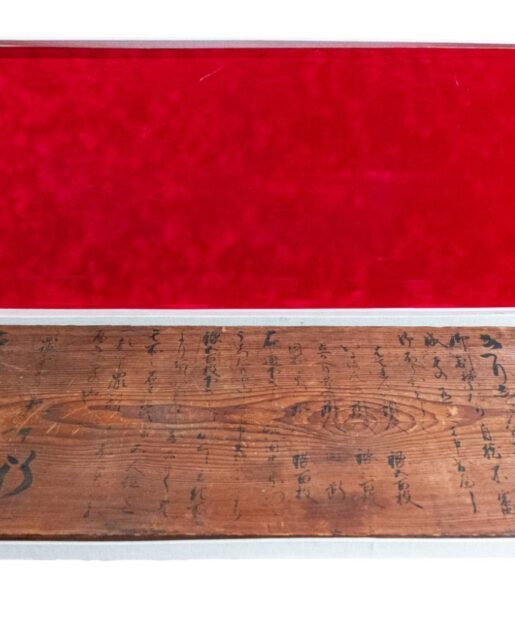
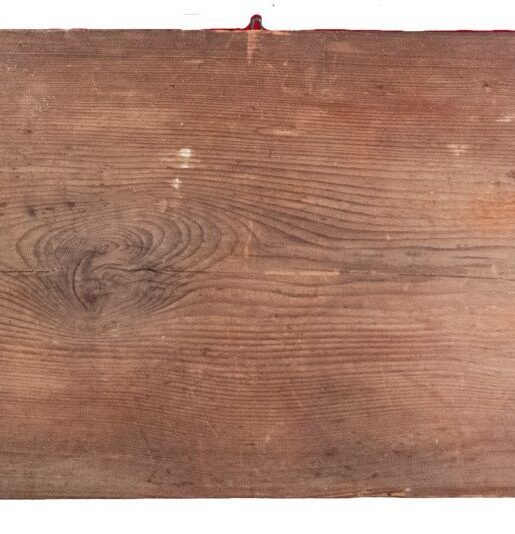
One large & thick wooden board (800 x 370 x 25 mm.), issued by a Bugyo (magistrate), with characters written in black ink (some characters faded but still legible).
Stating in an approximate & abbreviated translation: “Regulation. If anyone knows of Christian disciples, already banned, please report to the Government. Rewards are as below: Padre1 (bateren): 500 pieces of
silver coin. Priests2 (iruman): 300 pieces of silver coin. Christian disciples: 300 pieces of silver coin. Anyone knowingly living with a Christian: 100 pieces of silver coin. If a family member identifies a Christian within his family, the reward is 500 pieces of silver coin. Anyone identified as having hidden a Christian will bear responsibility along with his landlord and his five-person unit (goningumi). May 1711.” With the name at end
in brush and ink: “Bugyo [commissioner] Yoshitaro.”
This edict board is an example of a public statement outlining the prohibition on Christianity, the punishments for defying the ban, and the rewards offered to those who reported transgressors.
The text of the board is clear and concise, stating the law without entering in to much detail about what the Christian religion was.
This kosatsu (official bulletin board) provides an important historical reminder of the extraordinary risks to communities suspected of faith in Christ during the long era of the Kakure Kirishitan (Hidden Christians) in
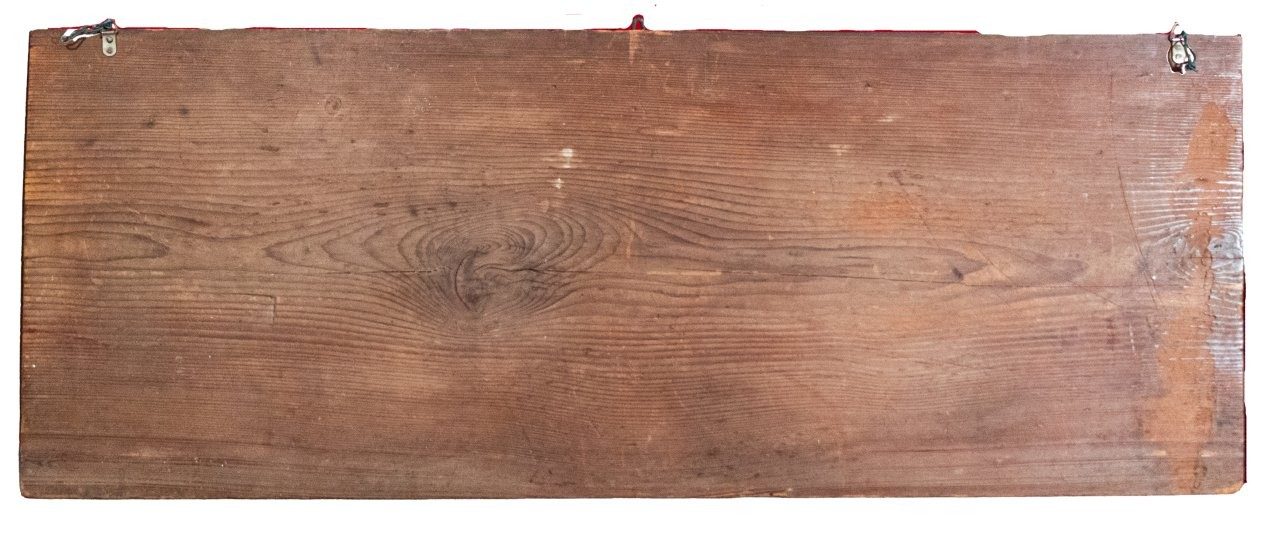
Japan. The communal – not just individual – risk was enormous. Authorities in every city displayed kosatsu in public spaces – mounted on a pole, hung at village government sites (of which this one shows evidence), or secured to a bigger structure located in strategic areas (crossroads, vicinity of bridges, harbors, etc.). They were generally inscribed with regulations, edicts, and notices. While the ink is occasionally faded, the characters are absolutely legible. In fine condition. One crack in the wooden board. One can see three holes along the top edge where hooks for hanging were once inserted.
History
The first organized Christian mission to the Japanese came in 1549 with the arrival of the Jesuit, Francis Xavier. Early attempts at converting the Japanese were quite successful, and several daimyo, or feudal lords, converted along with their families. After Toyotomi Hideyoshi 豊臣秀吉 unified the warring domains of Japan, however, he issued a ban on Catholicism in 1587, one of many subsequent prohibitions against Christianity. The motivations behind the ban were related to the military and political power of the missionaries, and the potential threat they represented to the new centralized government. By the early seventeenth century, all Christian missionaries had been expelled and people were obligated to register with a local Buddhist temple to ensure their religious orthodoxy. During the Edo period of Japanese history (1603 – 1868) Japanese Christians continued to practice in secret, passing down oral traditions through the generations and retaining sacred images either disguised as Buddhist deities or hidden from public view. Public pressure against Christianity was strong. People were sometimes forced to trample on an image of the crucifixion or the Virgin Mary in order to prove their faith. Those who were discovered to be Christians were punished, and if they still did not turn apostate, they were executed.
Product Enquiry
Related products
![Leaf from Baldo degli Ubaldi (1327–1400), Sextum codicis librum commentaria [Italy, late 15th century]](https://stephenbutler.com/wp-content/uploads/2023/07/IMG_0101-515x618.jpg "Leaf from Baldo degli Ubaldi (1327–1400), Sextum codicis librum commentaria [Italy, late 15th century]")
C14th -C16th manuscripts
£800.00


![The Trinity, by Nikolaus Bertschi the Elder or his workshop, on a leaf from a large Antiphonary in Latin [Germany (Augsburg), 16th century (c.1520–30)]](https://stephenbutler.com/wp-content/uploads/2021/12/IMG_9428-515x618.jpg "The Trinity, by Nikolaus Bertschi the Elder or his workshop, on a leaf from a large Antiphonary in Latin [Germany (Augsburg), 16th century (c.1520–30)]")
![The Trinity, by Nikolaus Bertschi the Elder or his workshop, on a leaf from a large Antiphonary in Latin [Germany (Augsburg), 16th century (c.1520–30)]](https://stephenbutler.com/wp-content/uploads/2021/12/A59I9609-515x618.jpg "The Trinity, by Nikolaus Bertschi the Elder or his workshop, on a leaf from a large Antiphonary in Latin [Germany (Augsburg), 16th century (c.1520–30)]")
£900.00


£1,800.00

![Saints Peter and Paul, in an illuminated historiated initial ‘N’, cut from a Gradual in Latin on parchment [Italy (Florence); 15th century (c.1470s)]](https://stephenbutler.com/wp-content/uploads/2022/02/IMG_6782-515x618.jpg "Saints Peter and Paul, in an illuminated historiated initial ‘N’, cut from a Gradual in Latin on parchment [Italy (Florence); 15th century (c.1470s)]")
![Saints Peter and Paul, in an illuminated historiated initial ‘N’, cut from a Gradual in Latin on parchment [Italy (Florence); 15th century (c.1470s)]](https://stephenbutler.com/wp-content/uploads/2022/02/IMG_6781-515x618.jpg "Saints Peter and Paul, in an illuminated historiated initial ‘N’, cut from a Gradual in Latin on parchment [Italy (Florence); 15th century (c.1470s)]")