





[Author Unknown], Pañcaratnaṃ (The Five Gems). Kashmir, late 18th century.
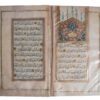
A finely preserved illuminated Sanskrit manuscript from late 18th-century Kashmir, comprising 307 oblong paper leaves (c. 90 × 150 mm; written area c. 55 × 110 mm), arranged six lines per page in bold Kashmiri-style Devanāgarī script. Executed in black ink with verse divisions marked by paired red strokes, the text demonstrates the characteristic thick, robust letterforms of Kashmir’s manuscript tradition, ensuring clarity for recitation and study.
The Pañcaratnaṃ (“Five Gems”) is a literary and devotional anthology derived from the Mahābhārata, preserving some of the epic’s most profound passages in a condensed poetic form. Its emphasis on dharma, devotion, and philosophical reflection situates the work as both a spiritual guide and a vehicle for poetic expression. This manuscript reflects the Kashmiri scholarly milieu of the late Mughal era, in which the transmission of epic and philosophical texts was combined with a distinctive visual culture.
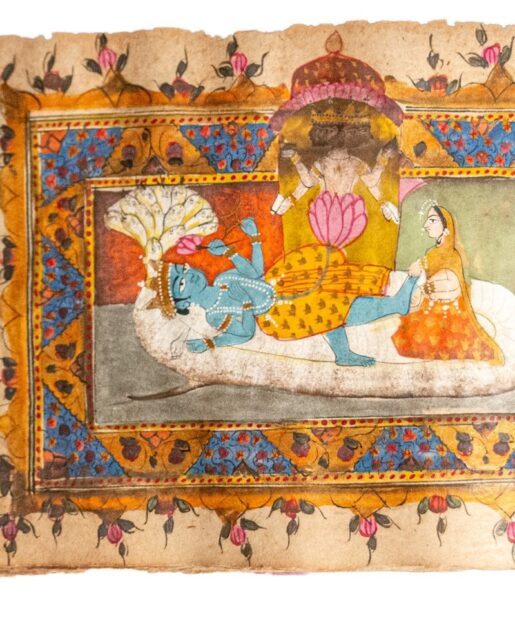
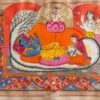
Nine miniatures, dispersed throughout the volume, elevate the manuscript’s importance. Executed in opaque watercolor heightened with gold, they depict central episodes from the Mahābhārata, including divine appearances, sage figures, and heroic or philosophical encounters. Each miniature is framed within a simple border, complementing the text while providing moments of vivid narrative and devotional focus. Their delicate yet vibrant palette, combined with finely worked detailing, reflects the refinement of Kashmiri manuscript painting in the late 18th century.
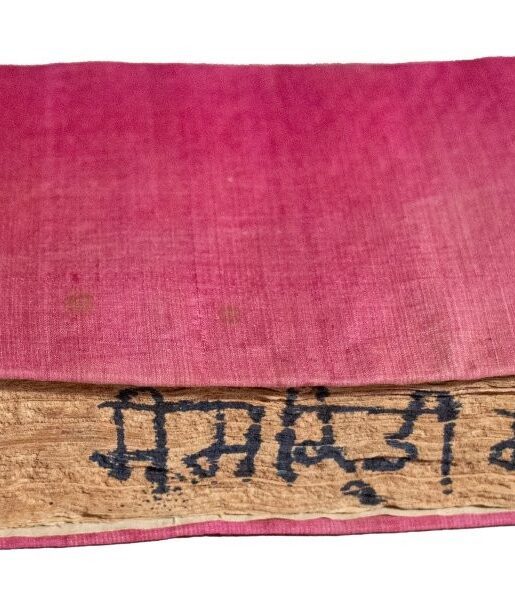
The manuscript is bound in plain card covers reinforced with cloth—a modest but functional binding typical of Kashmiri practice, designed to protect the leaves without excessive ornament. Despite minor wear, including faint creases and light abrasions, both the text and the paintings remain in good condition. The survival of all 307 leaves together with the full sequence of illustrations is especially notable, as many comparable manuscripts have been dispersed or survive only in fragmentary state.
As a complete, illustrated manuscript, this Pañcaratnaṃ offers a valuable window into Kashmir’s intellectual and artistic culture. It encapsulates the region’s synthesis of textual devotion, calligraphic style, and miniature painting, providing insight into the ways the Mahābhārata was studied, revered, and localized within Himalayan traditions. Such works embody the interplay between scripture, aesthetics, and spiritual practice in South Asia, and their survival enhances our understanding of manuscript production in the late Mughal and early colonial period.
This manuscript thus stands as a rare and important example of Kashmiri religious art: a work of literary, devotional, and artistic significance, testifying both to the enduring power of the Mahābhārata and to the refinement of Kashmir’s manuscript culture.
Product Enquiry
Related products


£1,800.00
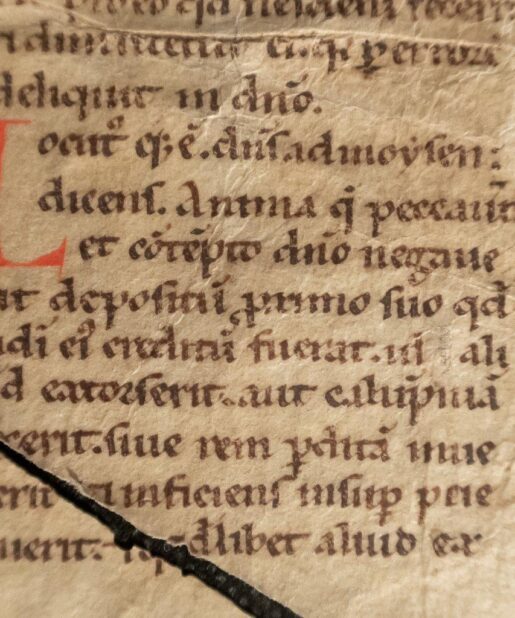
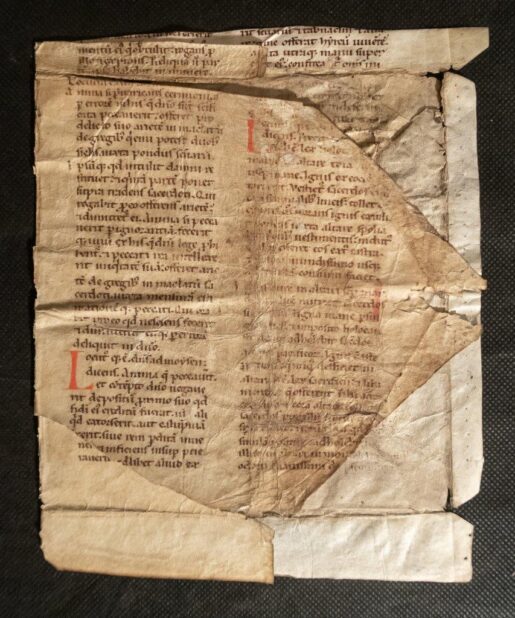
C12th - C13th manuscripts
£1,200.00
![Saints Peter and Paul, in an illuminated historiated initial ‘N’, cut from a Gradual in Latin on parchment [Italy (Florence); 15th century (c.1470s)]](https://stephenbutler.com/wp-content/uploads/2022/02/IMG_6782-515x618.jpg "Saints Peter and Paul, in an illuminated historiated initial ‘N’, cut from a Gradual in Latin on parchment [Italy (Florence); 15th century (c.1470s)]")
![Saints Peter and Paul, in an illuminated historiated initial ‘N’, cut from a Gradual in Latin on parchment [Italy (Florence); 15th century (c.1470s)]](https://stephenbutler.com/wp-content/uploads/2022/02/IMG_6781-515x618.jpg "Saints Peter and Paul, in an illuminated historiated initial ‘N’, cut from a Gradual in Latin on parchment [Italy (Florence); 15th century (c.1470s)]")
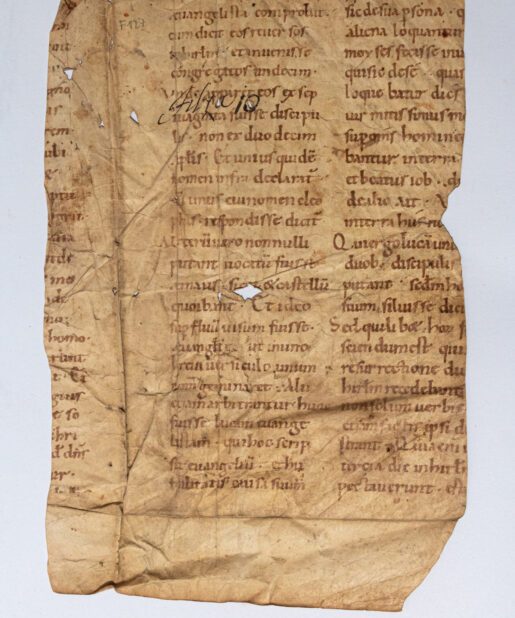
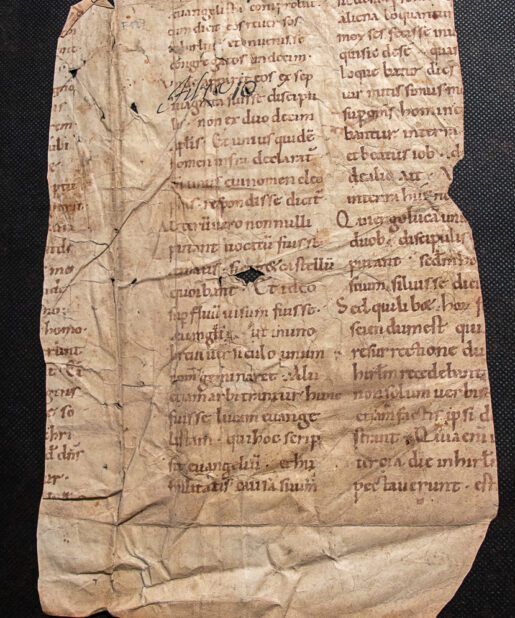

C14th -C16th manuscripts
£400.00
C12th - C13th manuscripts
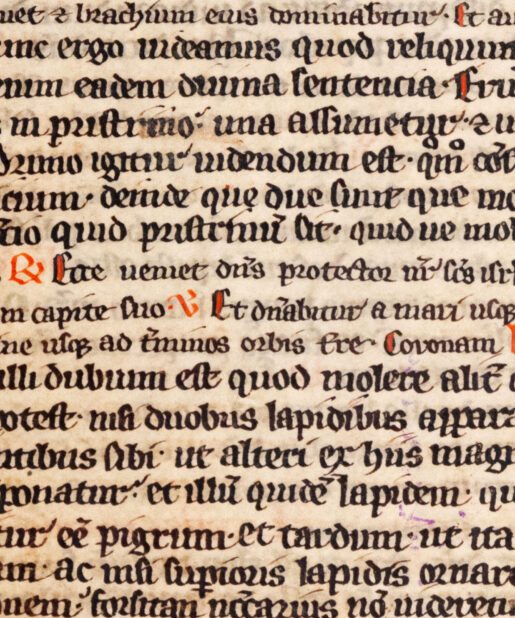
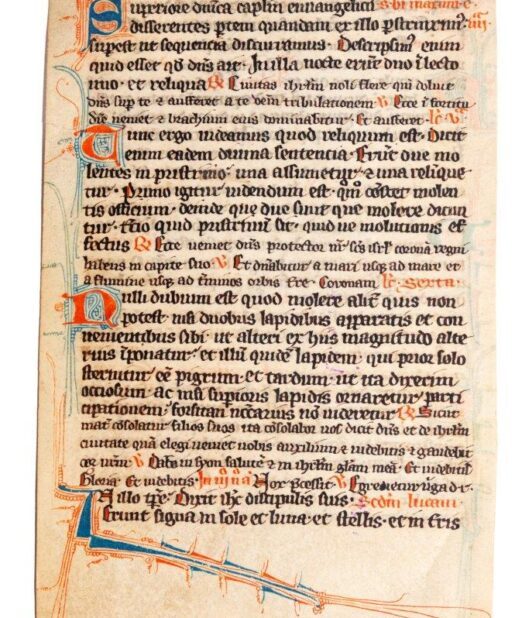
Miniature Breviary leaf with unusual and handsome script, c.1280
£1,500.00


![Commentary on Aristotle, Categoriae, and the same authors translation of Perihermenias BOETHIUS [MS] C.13th](https://stephenbutler.com/wp-content/uploads/2013/08/IMG_8383-515x618.jpg "Commentary on Aristotle, Categoriae, and the same authors translation of Perihermenias BOETHIUS [MS] C.13th")
![Commentary on Aristotle, Categoriae, and the same authors translation of Perihermenias BOETHIUS [MS] C.13th](https://stephenbutler.com/wp-content/uploads/2013/08/IMG_8379-515x618.jpg "Commentary on Aristotle, Categoriae, and the same authors translation of Perihermenias BOETHIUS [MS] C.13th")
C12th - C13th manuscripts
£3,800.00