







This piece has been placed.
Many works of comparable significance pass through our hands each year.
If you’re seeking something similar, please send us an enquiry or browse recent acquisitions.
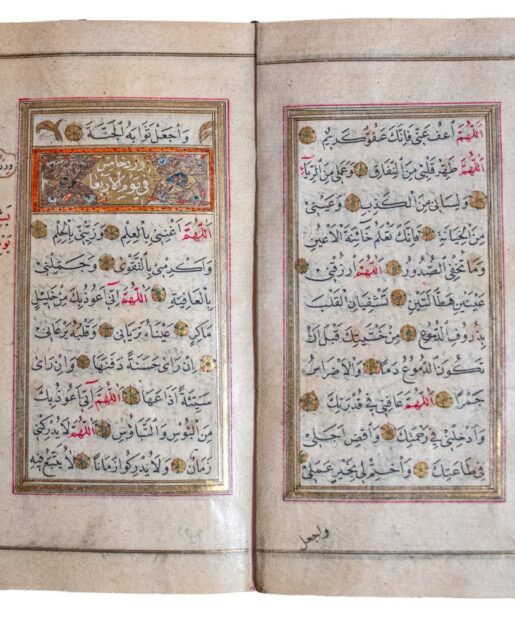
A Magnificent 18th-Century Ottoman Manuscript of Dalaʾil al-Khayrat and Ḥizb al-Aʿẓam

£9,500.00
A Magnificent 18th-Century Ottoman Manuscript of Dalāʾil al-Khayrāt and Ḥizb al-Aʿẓam
Written by Shaykh Muḥammad ibn Sulaymān al-Jazūlī, Calligraphy by ʿAbd al-Qādir Zihnī, AH 1186 (1772–73 CE)
170 x 110 mm (6.7 x 4.3 inches)
85 folios (81 + 4 flyleaves)
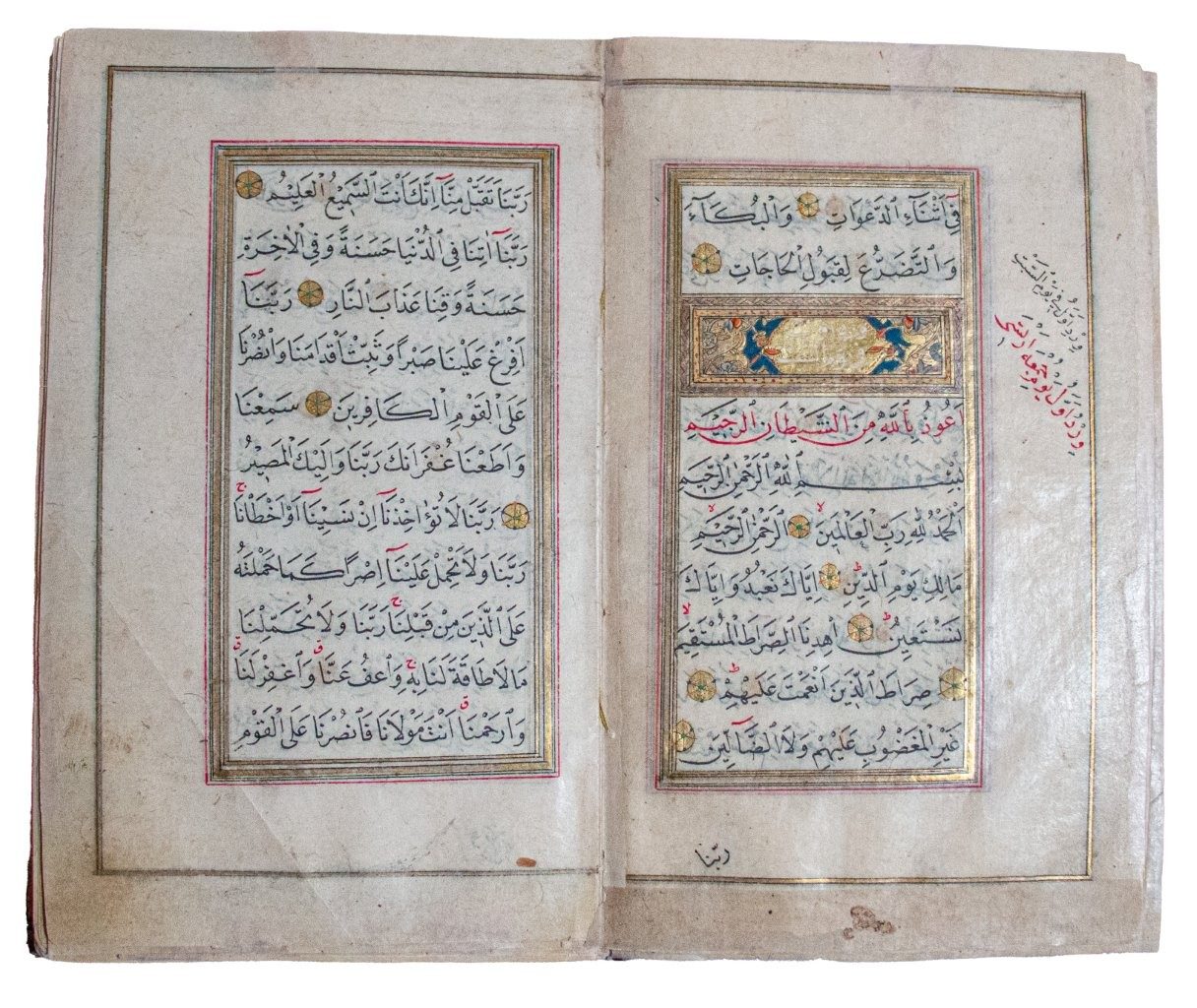
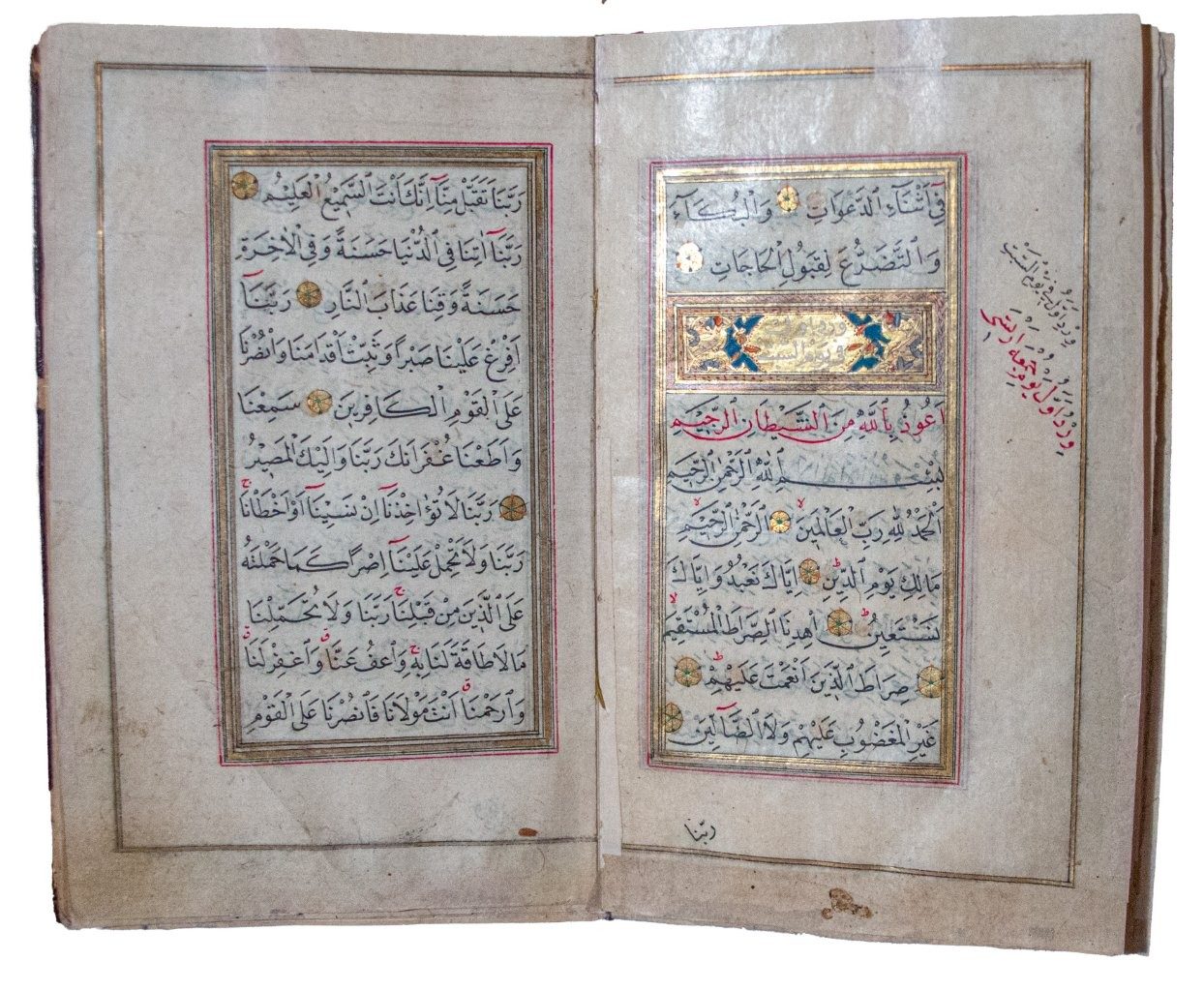
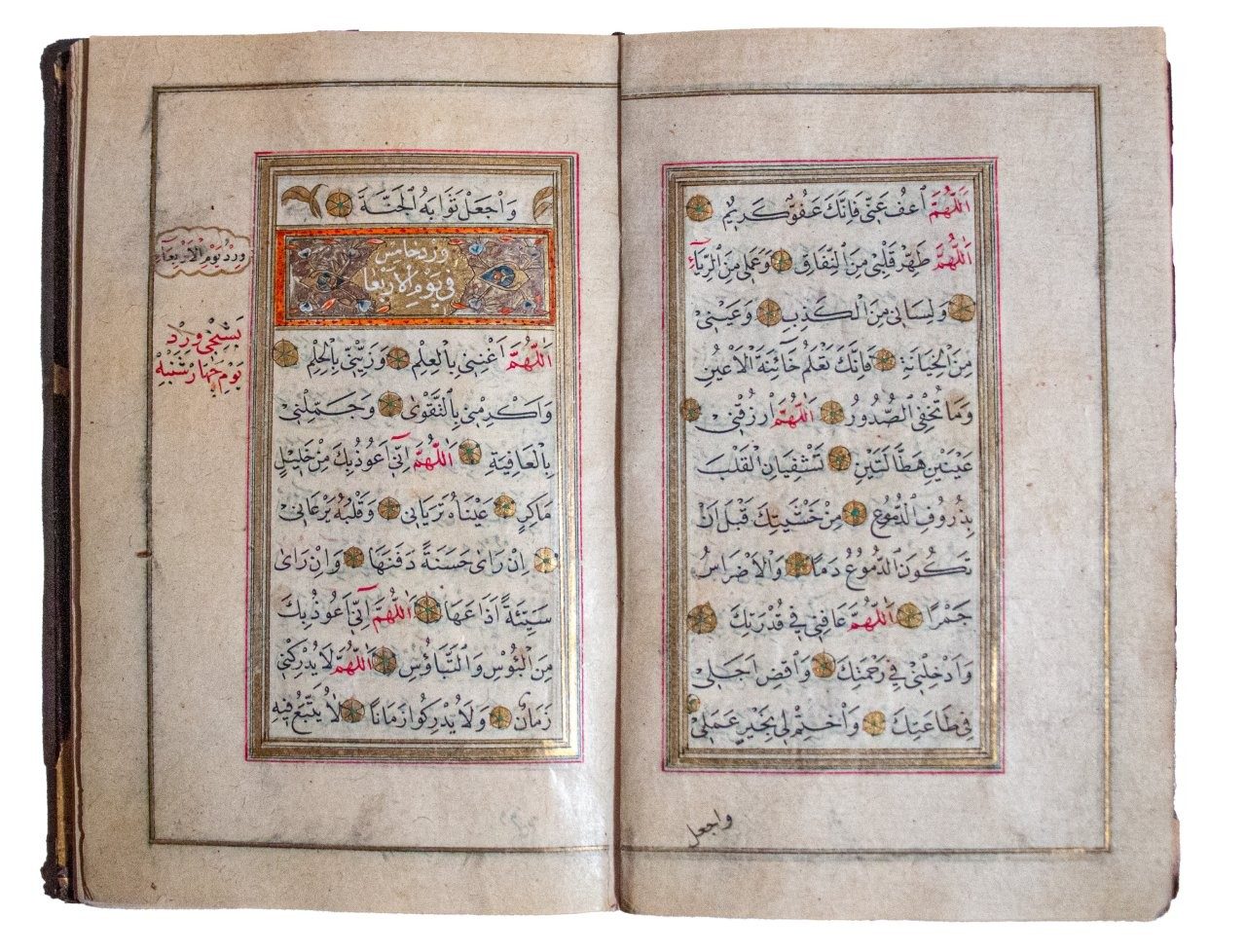
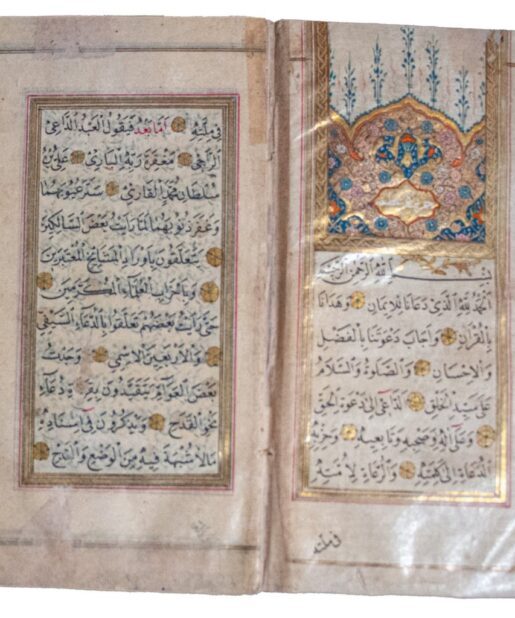
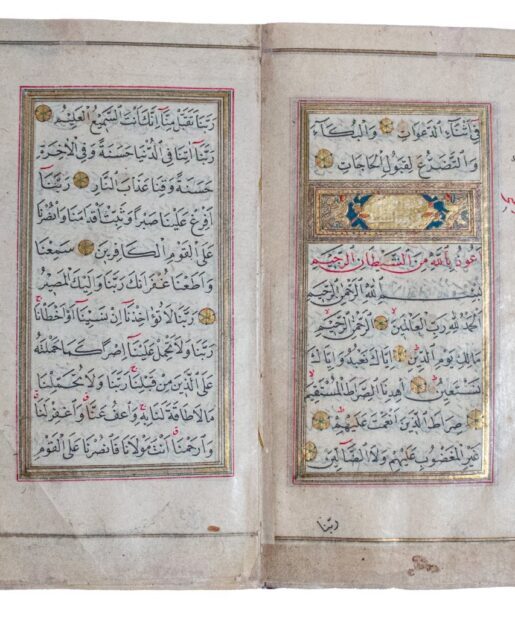
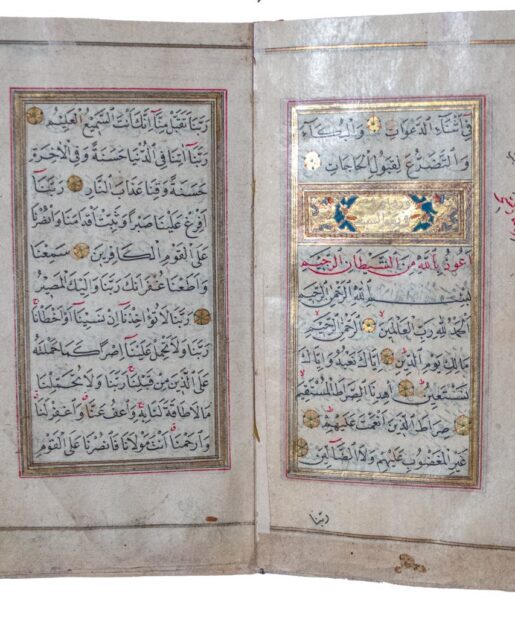
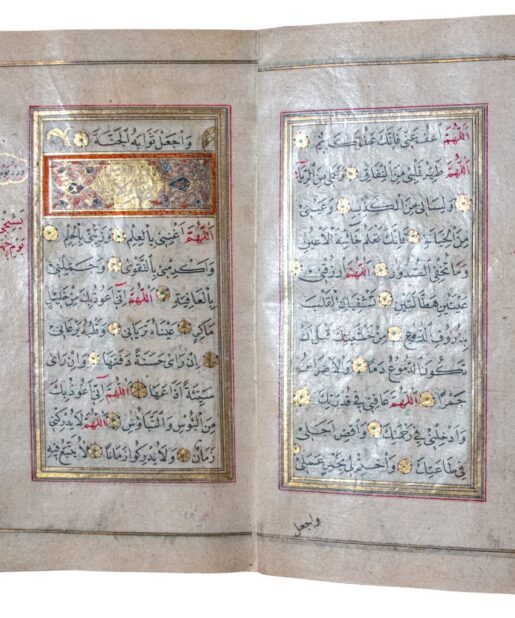
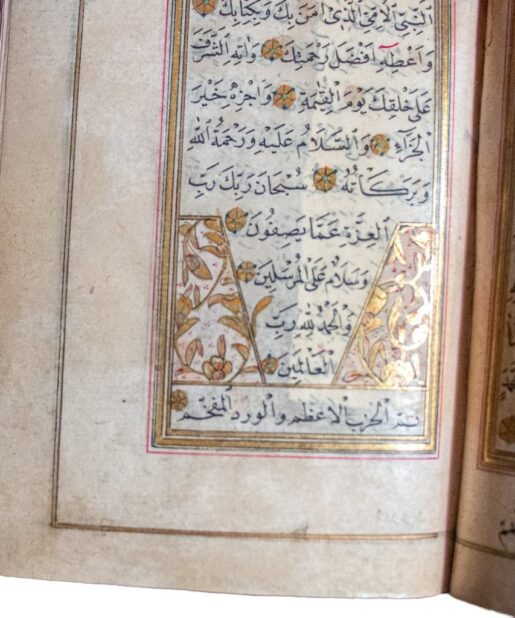
11 lines per page of exquisite thuluth in artistic ink, fully illuminated margins with gold and red rules, decorated section breaks, and elaborate title and opening pages.
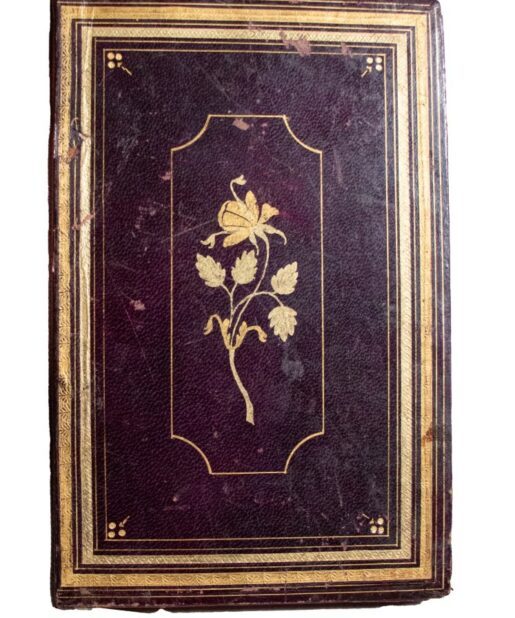
Binding: Original full-leather binding decorated with hand-drawn tulip and rosette motifs in gold on a deep burgundy ground.
This exceptional manuscript of Dalāʾil al-Khayrāt and Ḥizb al-Aʿẓam exemplifies the height of late Ottoman devotional art and calligraphy. Penned in 1186 AH (1772–73 CE) by the accomplished scribe ʿAbd al-Qādir Zihnī, a student of the renowned calligrapher Ḥocazāde Sayyid Aḥmed, it combines spiritual gravitas with sumptuous illumination.
The layout reveals meticulous craftsmanship; each page is bordered by broad gold outer margins, with the text encased within double-lined rules in gold and red ink. Chapter headings and surahs are rendered in shimmering lapis blue and gold, embellished with delicate vegetal scrollwork. The opening page is a tour de force of geometric and floral ornamentation, where gold and lapis lazuli intertwine with white script proclaiming Ḥizb al-Aʿẓam, executed with extraordinary finesse.
The text itself, deeply rooted in Sufi practice, is a compilation of blessings (ṣalawāt) upon Prophet Muḥammad, widely revered in the Ottoman lands and beyond. Its recitation is linked with daily rituals, initiation ceremonies, and spiritual upliftment within Sufi orders such as the Jazūliyya and Shādhiliyya. Throughout the manuscript, verse breaks (durak) are richly ornamented with floral motifs painted in gold, adding rhythmic beauty to the flow of invocations.
Each chapter begins with a decorated heading, and the final leaf bears a finely rendered botanical illustration in gold, symbolizing the harmony of spiritual and natural worlds. Despite some expected signs of age, including light wear and minor marginal repairs, the manuscript remains in excellent condition, preserving its vibrant illumination and spiritual aura.
Bound in its original leather case decorated with hand-drawn tulip and rose motifs, this volume remains a testament to Ottoman devotion, artistry, and calligraphic excellence. Its superb preservation and aesthetic richness make it a prized object for collectors, scholars, and institutions dedicated to Islamic arts and Ottoman cultural heritage.
About the Text:
Dalāʾil al-Khayrāt was composed by the revered Moroccan Sufi master Muḥammad al-Jazūlī in the 15th century. This work, called Delâʾil-i Şerîf in Turkish, serves as a foundational prayer book, rich in blessings and invocations centered on the Prophet Muhammad. Widely circulated across the Islamic world, it functions as a daily liturgical guide, emphasizing spiritual purification through precise recitations, intentions (niyya), and invocations (istighfār). Manuscripts often include annotations and abbreviations from successive generations of Sufi practitioners, attesting to the text’s enduring spiritual influence.
This particular manuscript’s exquisite calligraphy, elaborate illuminations, and historical provenance situate it as an exceptional example of Ottoman devotional art from the late 18th century—an object that embodies both religious fervor and artistic mastery.
Top of Form
Product Enquiry
Related products
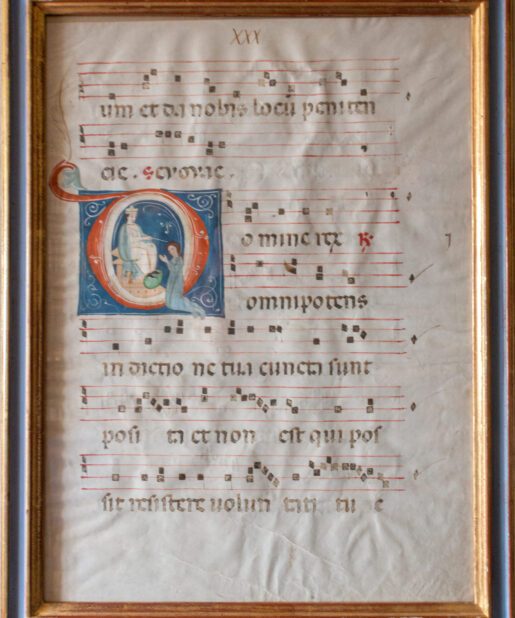
£3,800.00


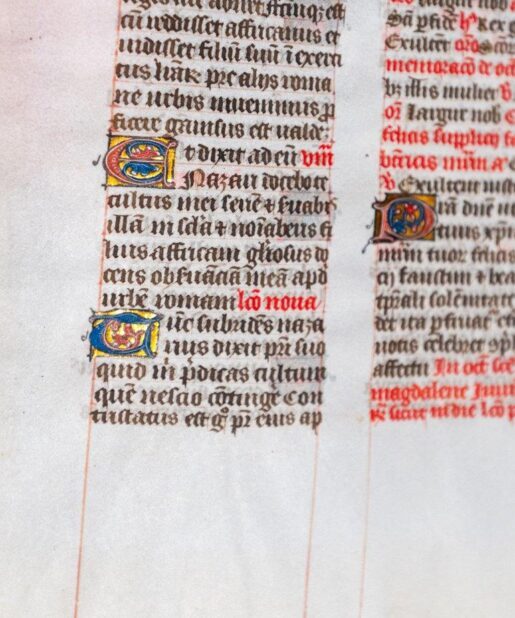
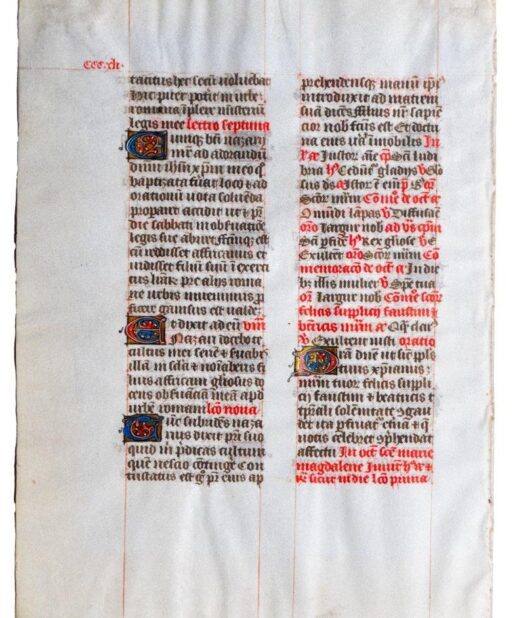
C14th -C16th manuscripts
Single leaf from the so-called ‘Carondelet Breviary’ 1458 from the scribe Jean d’Aussert
£600.00
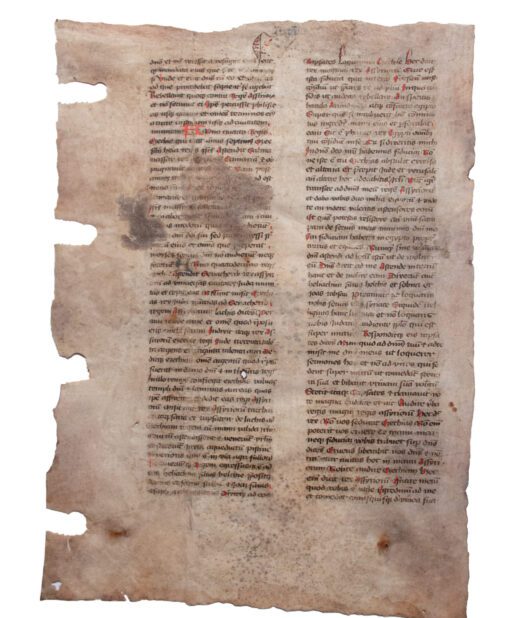
C14th -C16th manuscripts
Leaf from a Bible, II Kings 17, C15th manuscript in Latin on parchment
£750.00
![Leaf of Passionale in Latin [Italy, 12th century, first half] Lives of St Felicity and St Clement](https://stephenbutler.com/wp-content/uploads/2021/01/IMG_0696-515x618.jpg "Leaf of Passionale in Latin [Italy, 12th century, first half] Lives of St Felicity and St Clement")
C12th - C13th manuscripts
Leaf of Passionale in Latin [Italy, 12th century, first half] Lives of St Felicity and St Clement
£1,200.00


£550.00
![Commentary on Aristotle, Categoriae, and the same authors translation of Perihermenias BOETHIUS [MS] C.13th](https://stephenbutler.com/wp-content/uploads/2013/08/IMG_8383-515x618.jpg "Commentary on Aristotle, Categoriae, and the same authors translation of Perihermenias BOETHIUS [MS] C.13th")
![Commentary on Aristotle, Categoriae, and the same authors translation of Perihermenias BOETHIUS [MS] C.13th](https://stephenbutler.com/wp-content/uploads/2013/08/IMG_8379-515x618.jpg "Commentary on Aristotle, Categoriae, and the same authors translation of Perihermenias BOETHIUS [MS] C.13th")
C12th - C13th manuscripts
£3,800.00