

This piece has been placed.
Many works of comparable significance pass through our hands each year.
If you’re seeking something similar, please send us an enquiry or browse recent acquisitions.
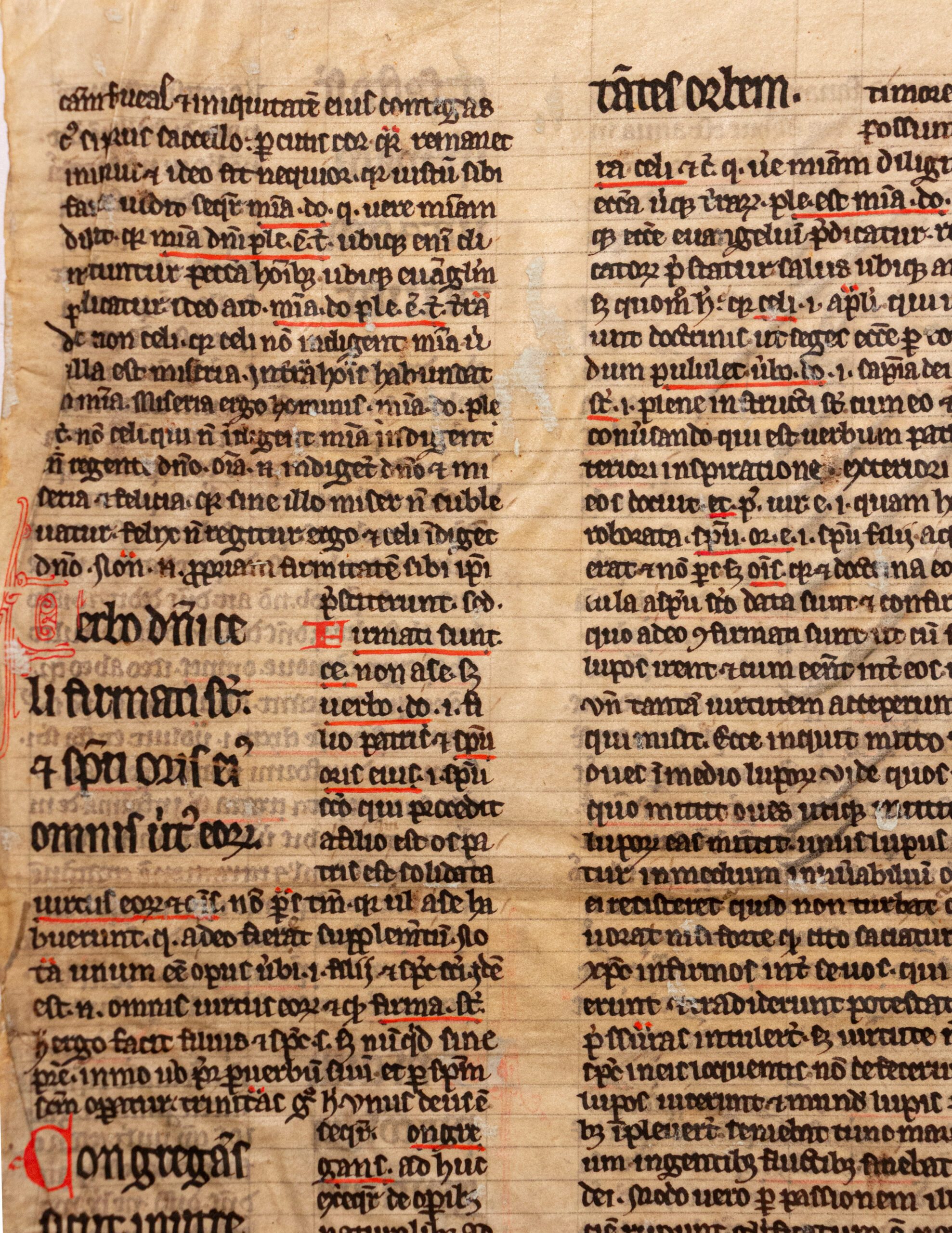
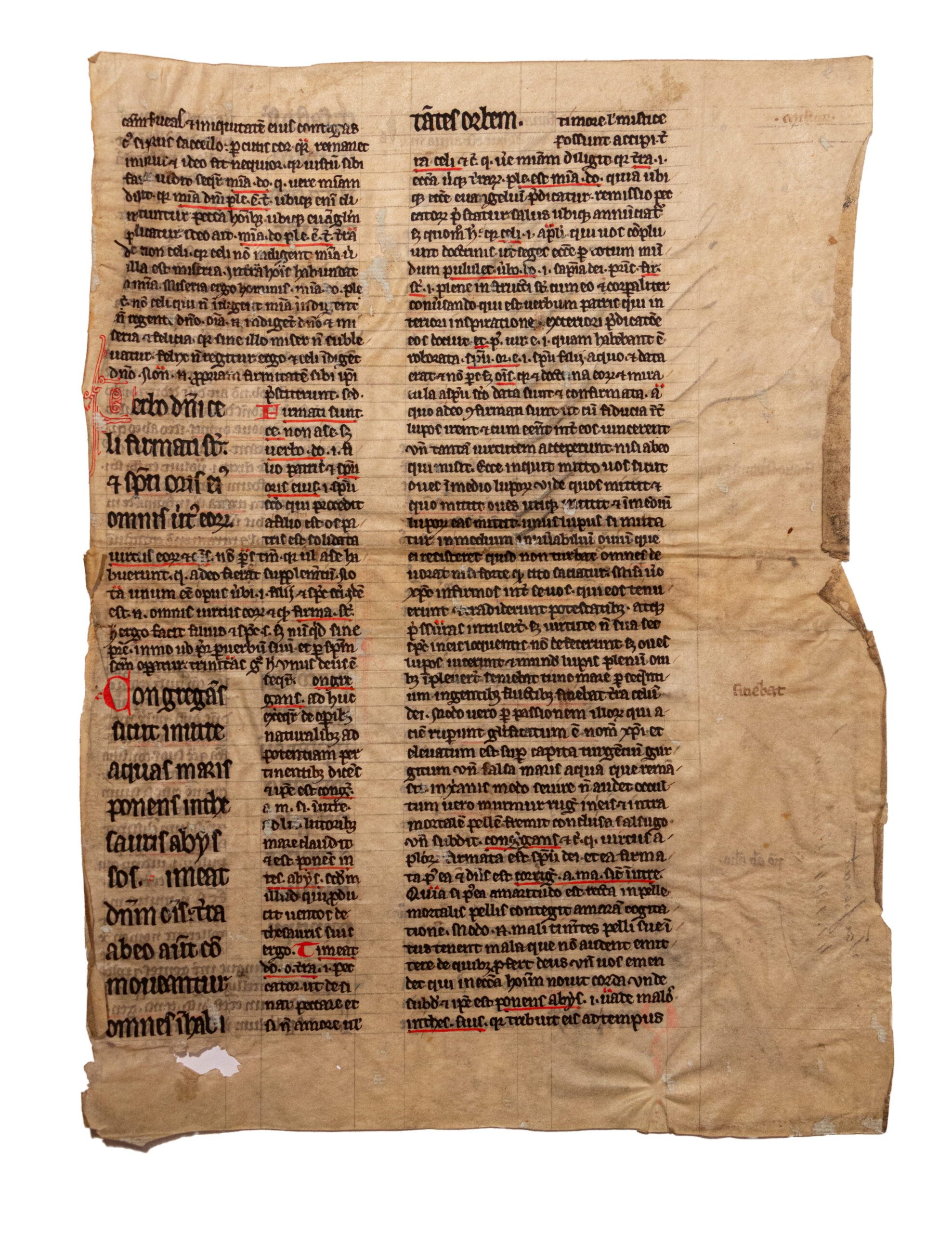
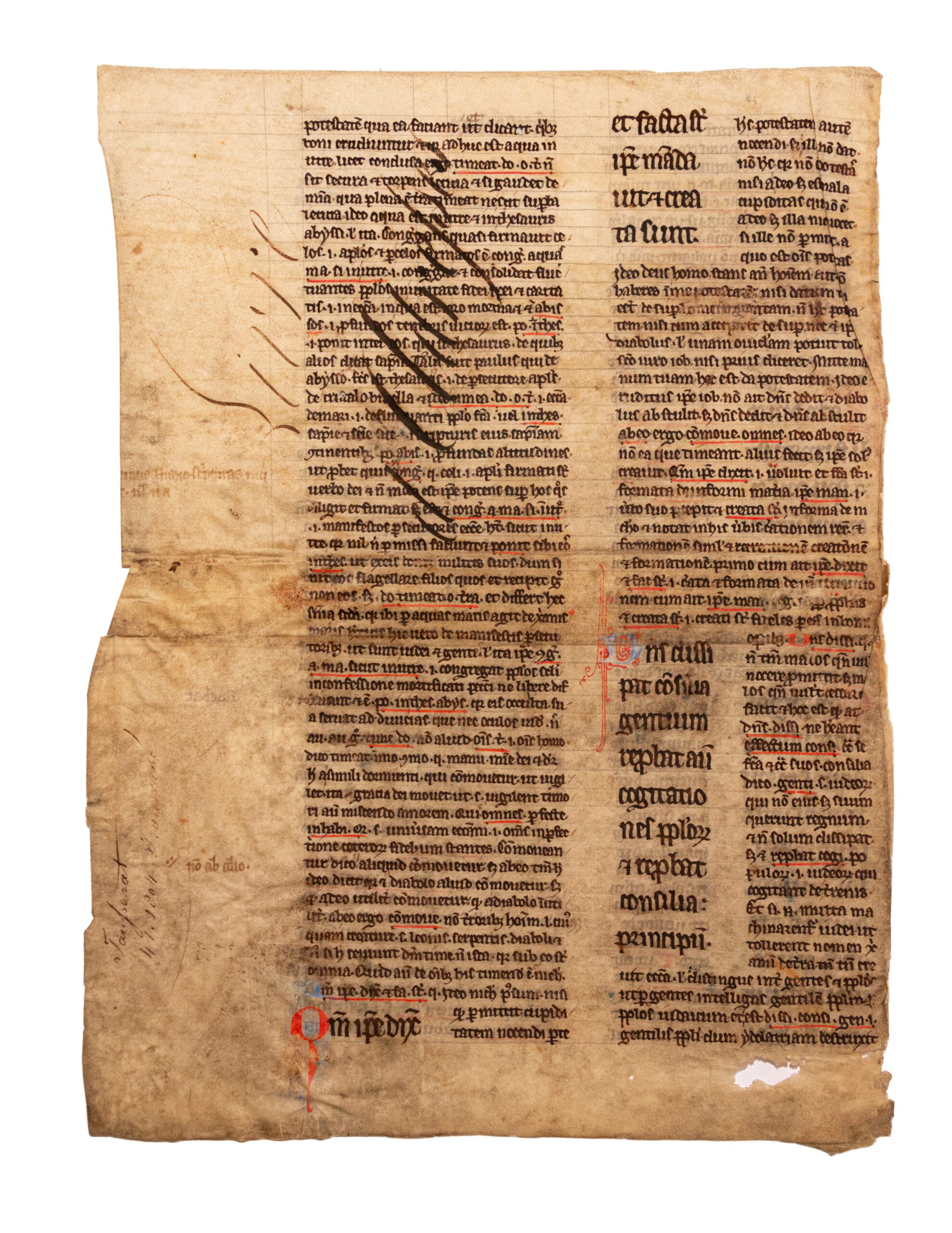
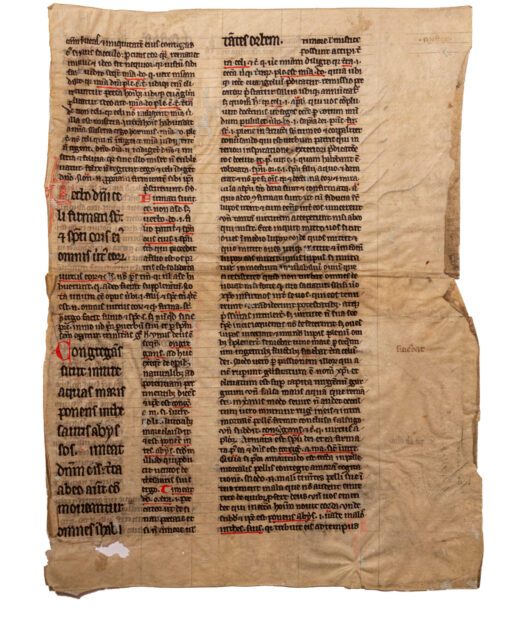
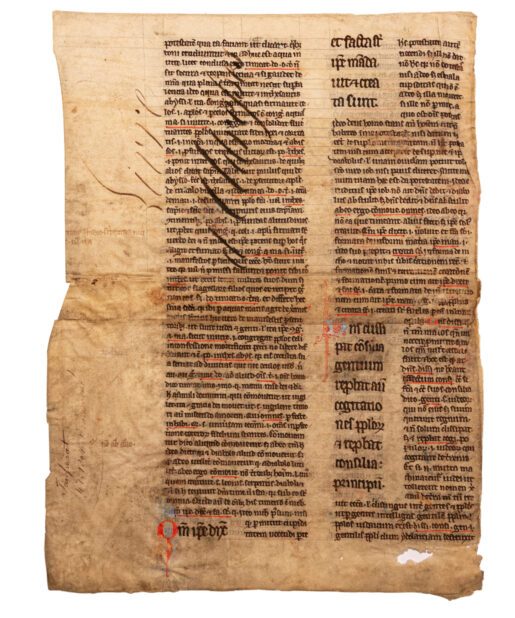
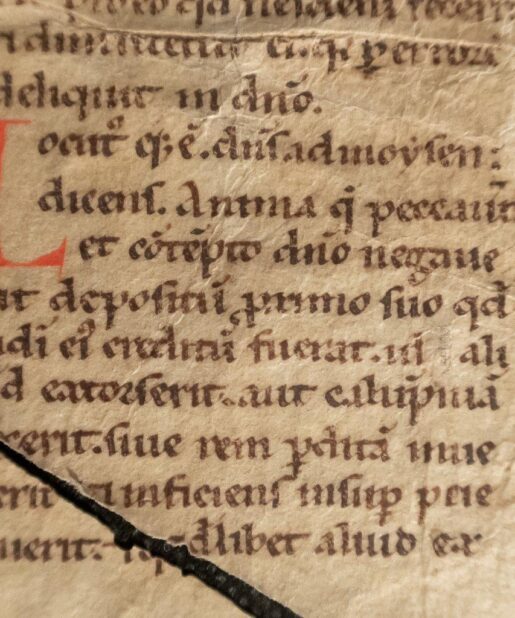
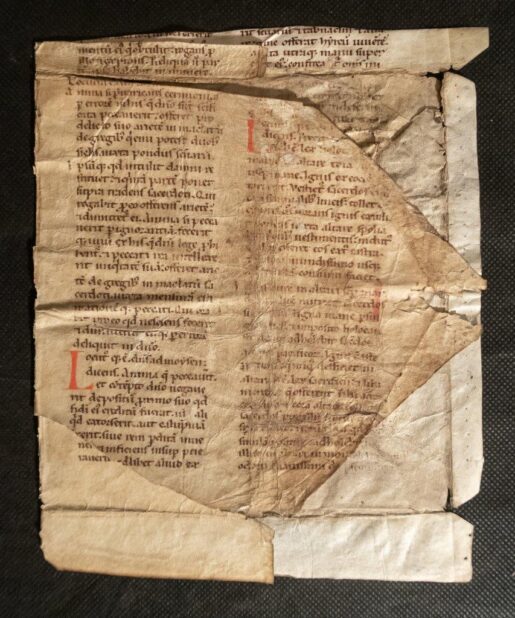
Glossed Bible leaf reused as a binding in French archive. France (doubtless Paris), 13th century.
£1,500.00
Glossed Bible leaf reused as a binding in French archive. France (doubtless Paris), 13th century.
Single leaf, parchment. Double columns with the glosses within the column. Some later ink on reverse. Rubrics in red and vestiges of marginal decorated ink caps. 290mm x 210mm approx. The glossed Bible leaves of the 13th century were pages from handwritten Bibles that contained both the Latin text of the Bible and extensive commentaries and annotations in the margins. These annotations were known as glosses, and they were added by scholars and theologians as a way to explain difficult or obscure passages of scripture. Glossed Bible leaves were popular study aids during the medieval period, and were used by scholars to gain a deeper understanding of the meaning and interpretation of the Bible. They also provide valuable insights into the theological and intellectual concerns of the time, and offer a glimpse into the history of biblical interpretation
Product Enquiry
Related products


C12th - C13th manuscripts
£5,000.00
C12th - C13th manuscripts
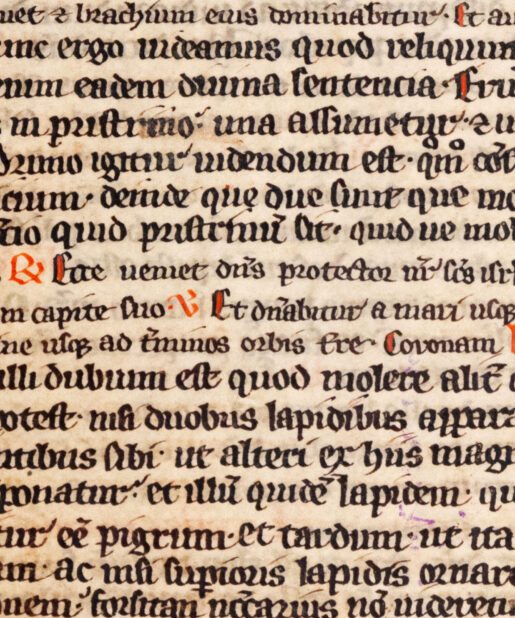
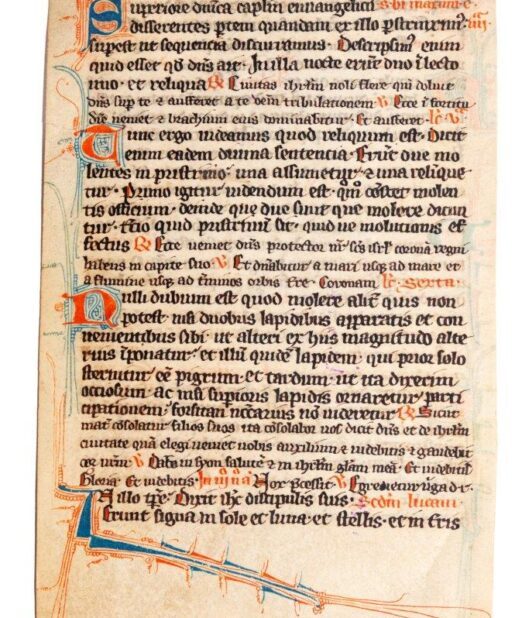
Miniature Breviary leaf with unusual and handsome script, c.1280
£1,500.00


C14th -C16th manuscripts
Illuminated inital 1500 huge leaf on vellum, from Siena or Florence.
£750.00
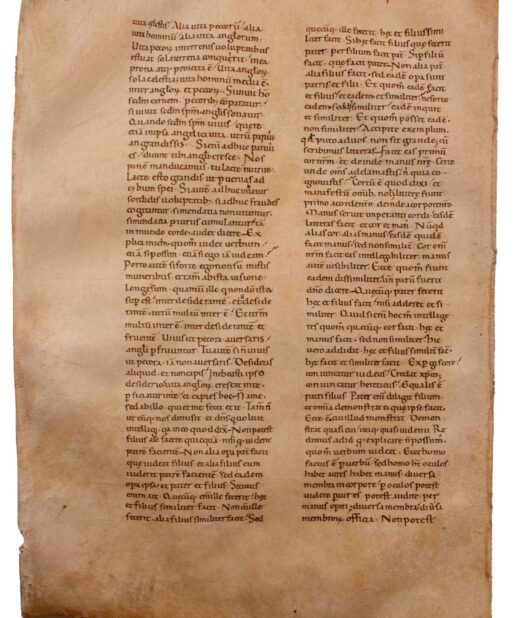
![A single leaf; Augustine’s Enarrationes in Psalmos, for Psalm 41:6-8 [manuscript]](https://stephenbutler.com/wp-content/uploads/2021/06/IMG_2115-scaled-515x618.jpg "A single leaf; Augustine’s Enarrationes in Psalmos, for Psalm 41:6-8 [manuscript]")
![A single leaf; Augustine’s Enarrationes in Psalmos, for Psalm 41:6-8 [manuscript]](https://stephenbutler.com/wp-content/uploads/2021/06/IMG_2112-scaled-515x618.jpg "A single leaf; Augustine’s Enarrationes in Psalmos, for Psalm 41:6-8 [manuscript]")
£3,750.00

C12th - C13th manuscripts
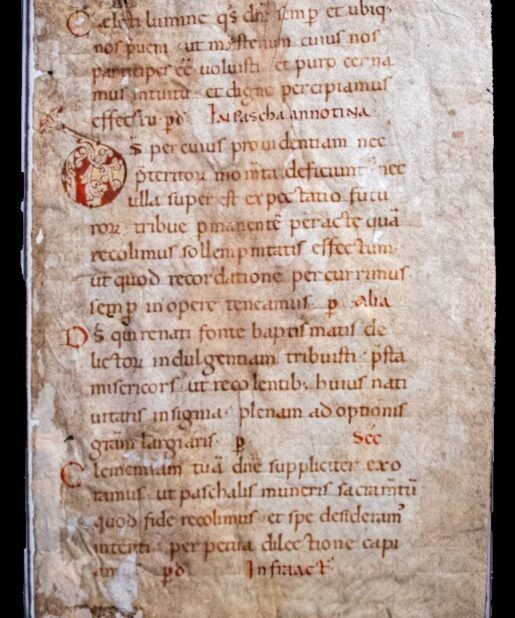
C12th leaf with decorated initial, Germany with Paschal readings
£2,000.00
C12th - C13th manuscripts
£1,900.00
![Saints Peter and Paul, in an illuminated historiated initial ‘N’, cut from a Gradual in Latin on parchment [Italy (Florence); 15th century (c.1470s)]](https://stephenbutler.com/wp-content/uploads/2022/02/IMG_6782-515x618.jpg "Saints Peter and Paul, in an illuminated historiated initial ‘N’, cut from a Gradual in Latin on parchment [Italy (Florence); 15th century (c.1470s)]")
![Saints Peter and Paul, in an illuminated historiated initial ‘N’, cut from a Gradual in Latin on parchment [Italy (Florence); 15th century (c.1470s)]](https://stephenbutler.com/wp-content/uploads/2022/02/IMG_6781-515x618.jpg "Saints Peter and Paul, in an illuminated historiated initial ‘N’, cut from a Gradual in Latin on parchment [Italy (Florence); 15th century (c.1470s)]")
C12th - C13th manuscripts
£1,200.00