



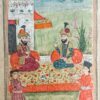
Hafez Diwan, Northern India, possibly Kashmir, late C18th or early C19th
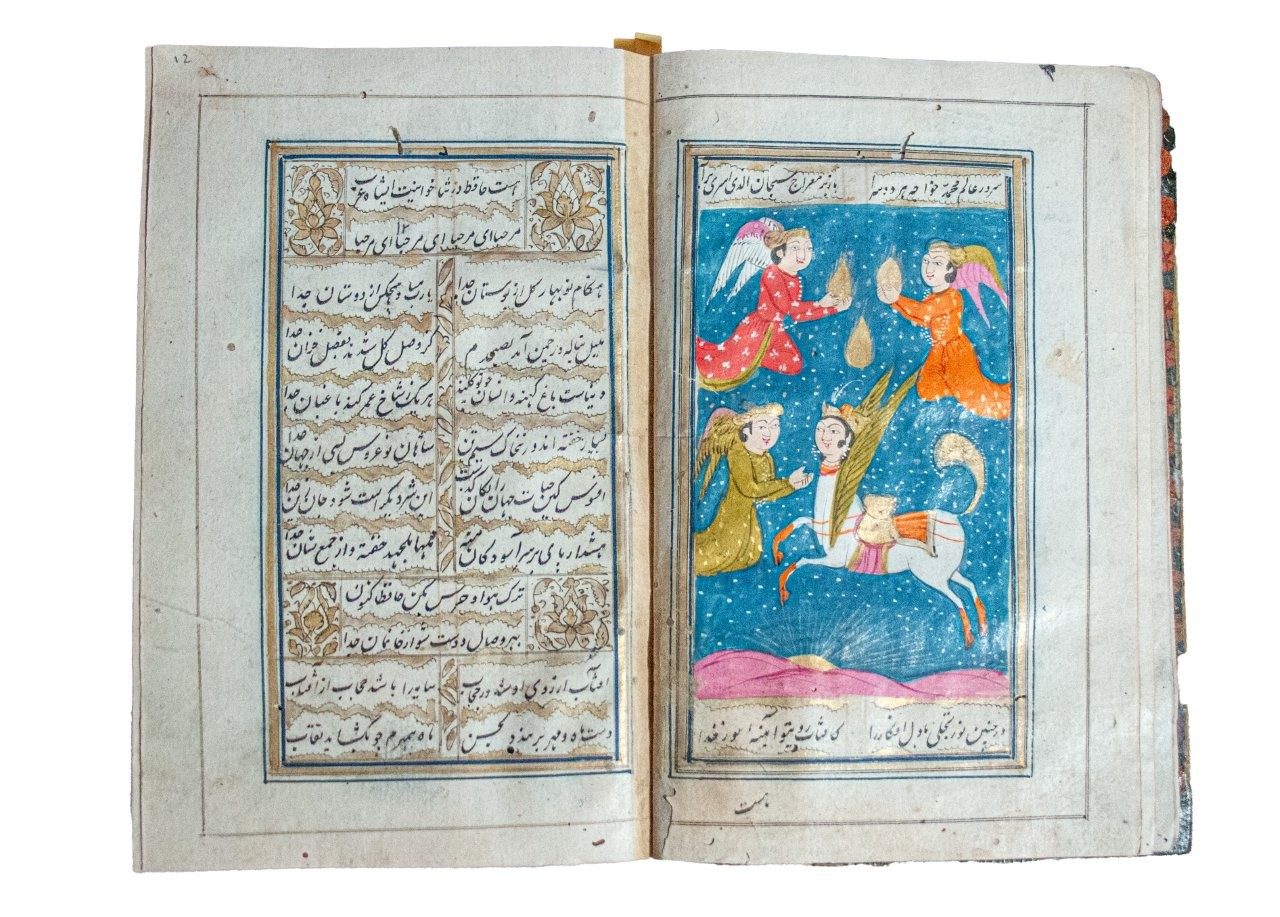
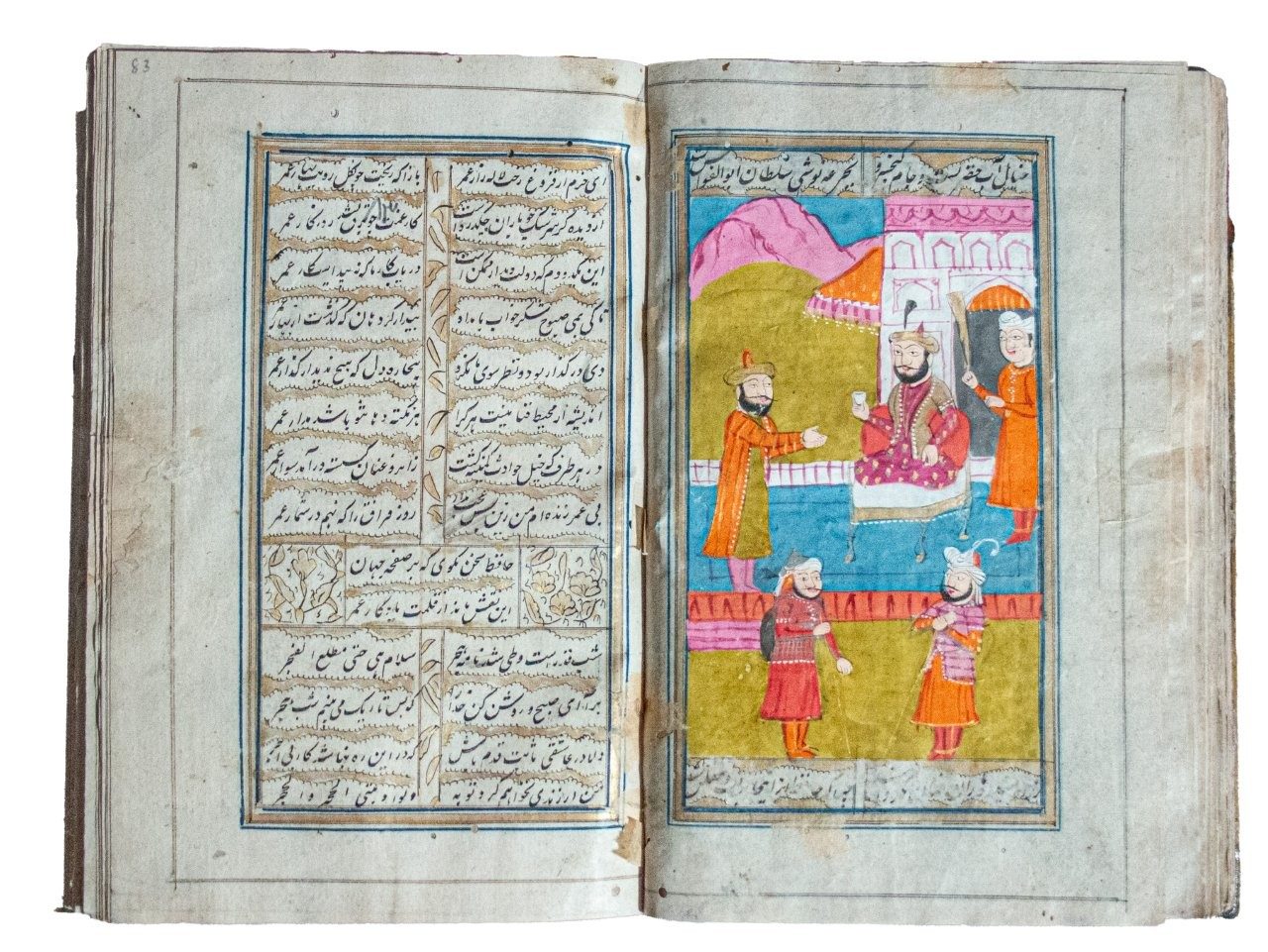
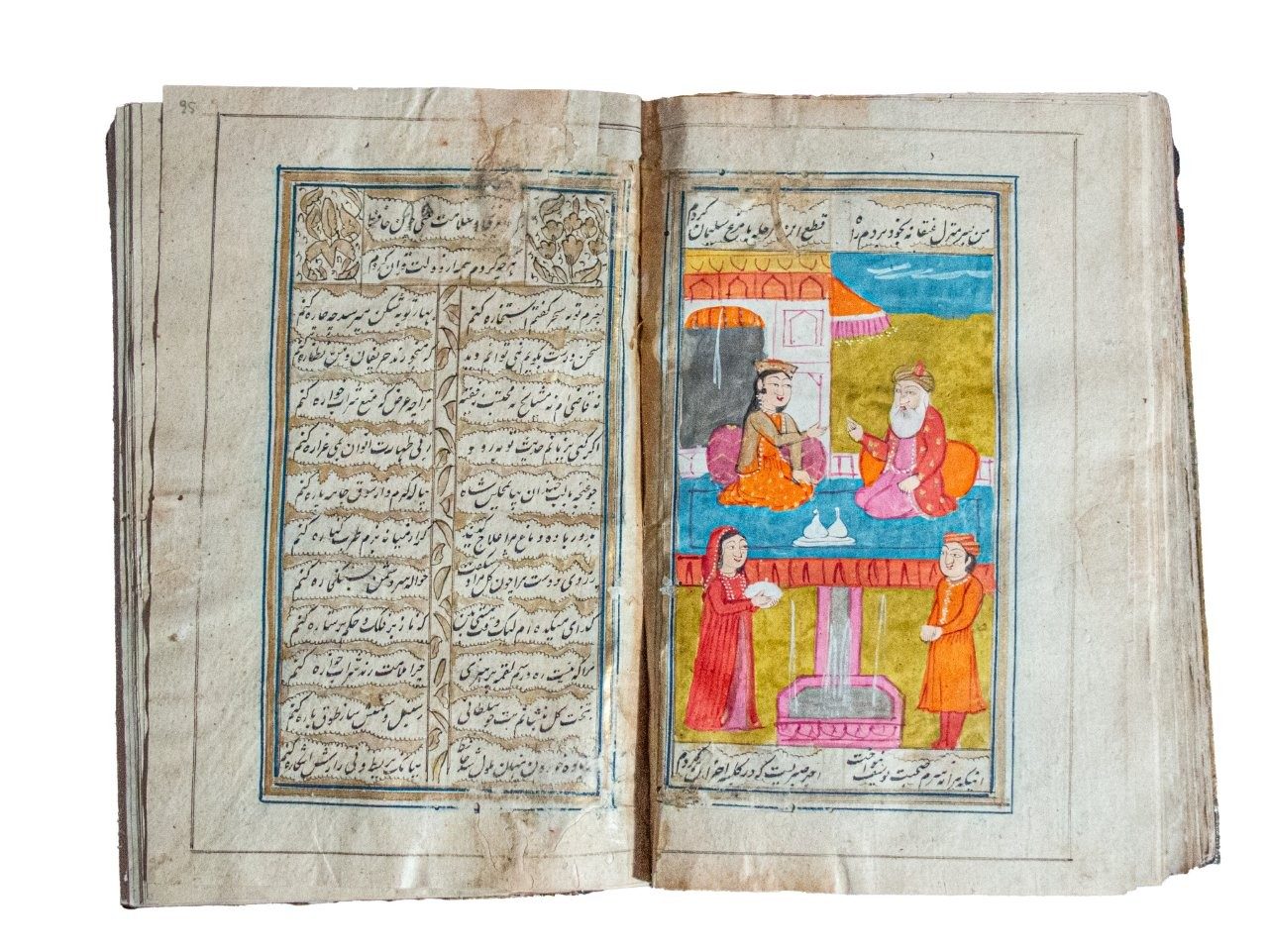
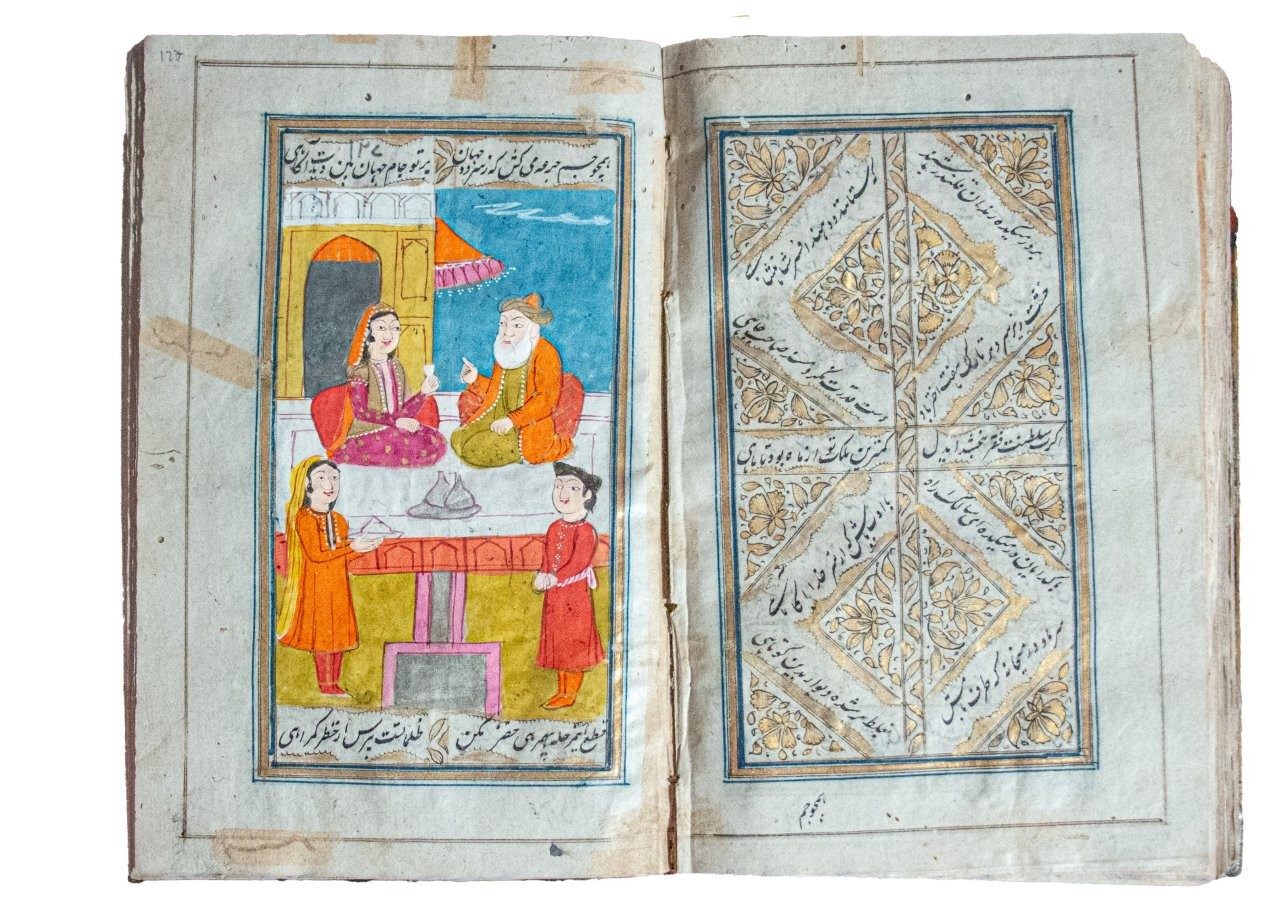
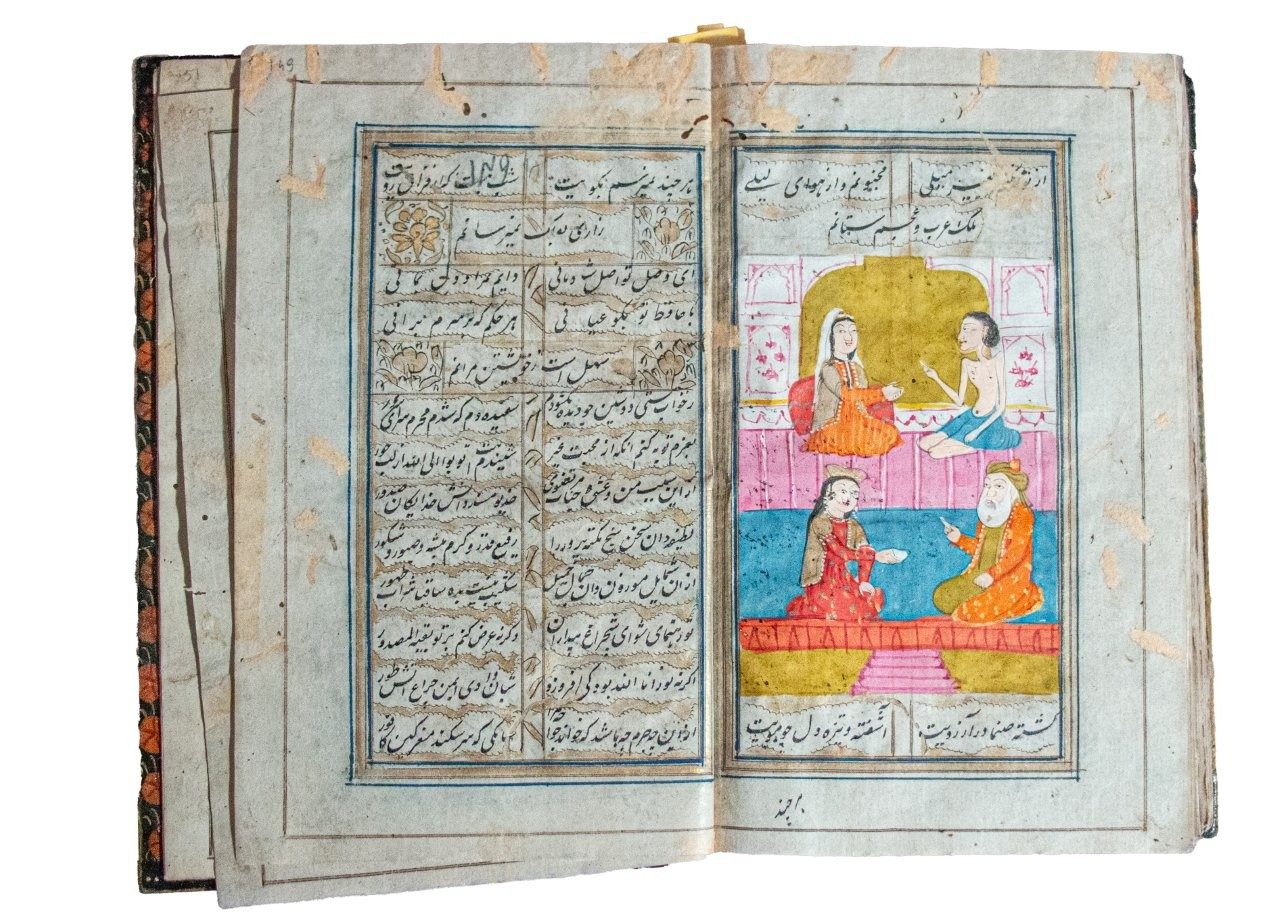
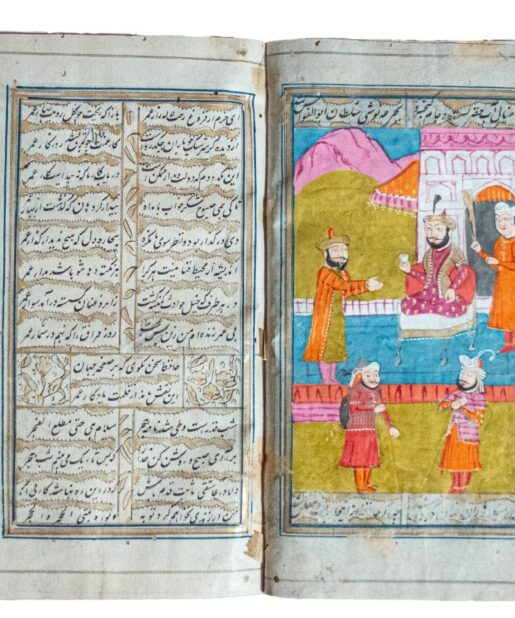
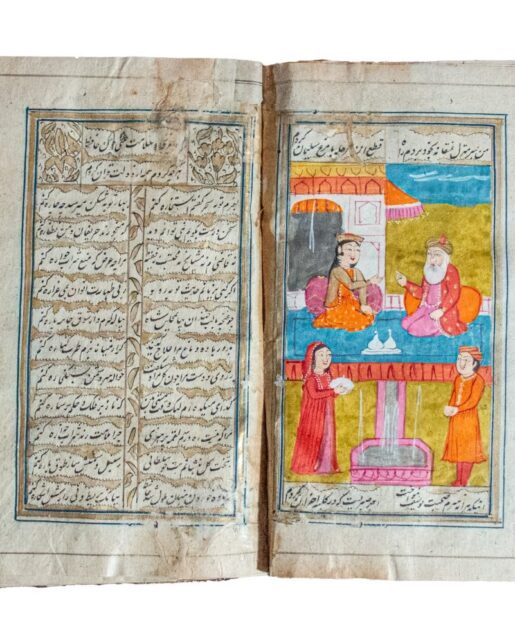
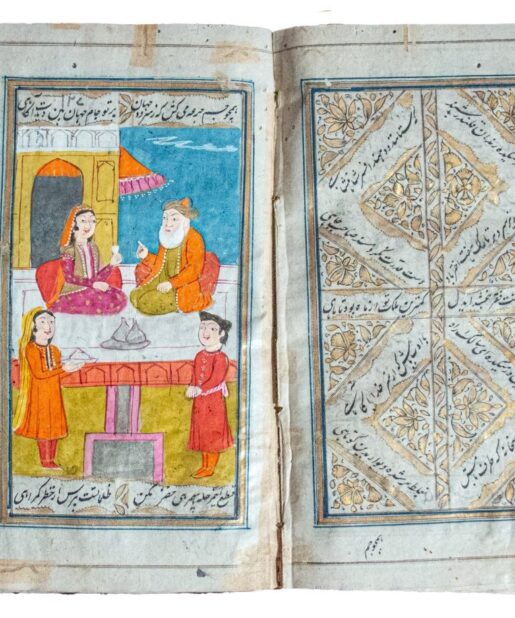
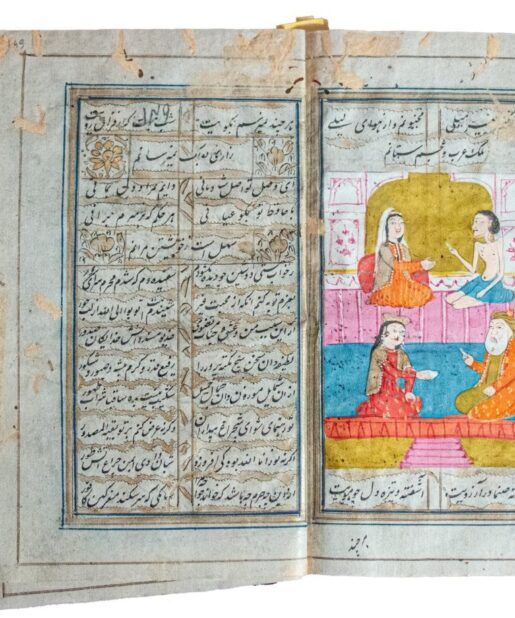
This illuminated Persian manuscript of Hafez’s Diwan comprises 158 leaves, created in the late 18th or early 19th century (circa 1780–1820) in a region of Northern India, possibly Kashmir. Its sophisticated design reflects the high cultural status of Persian poetry in the area. The manuscript features five miniatures at specific folio locations, depicting scenes that relate to the poems or their themes.
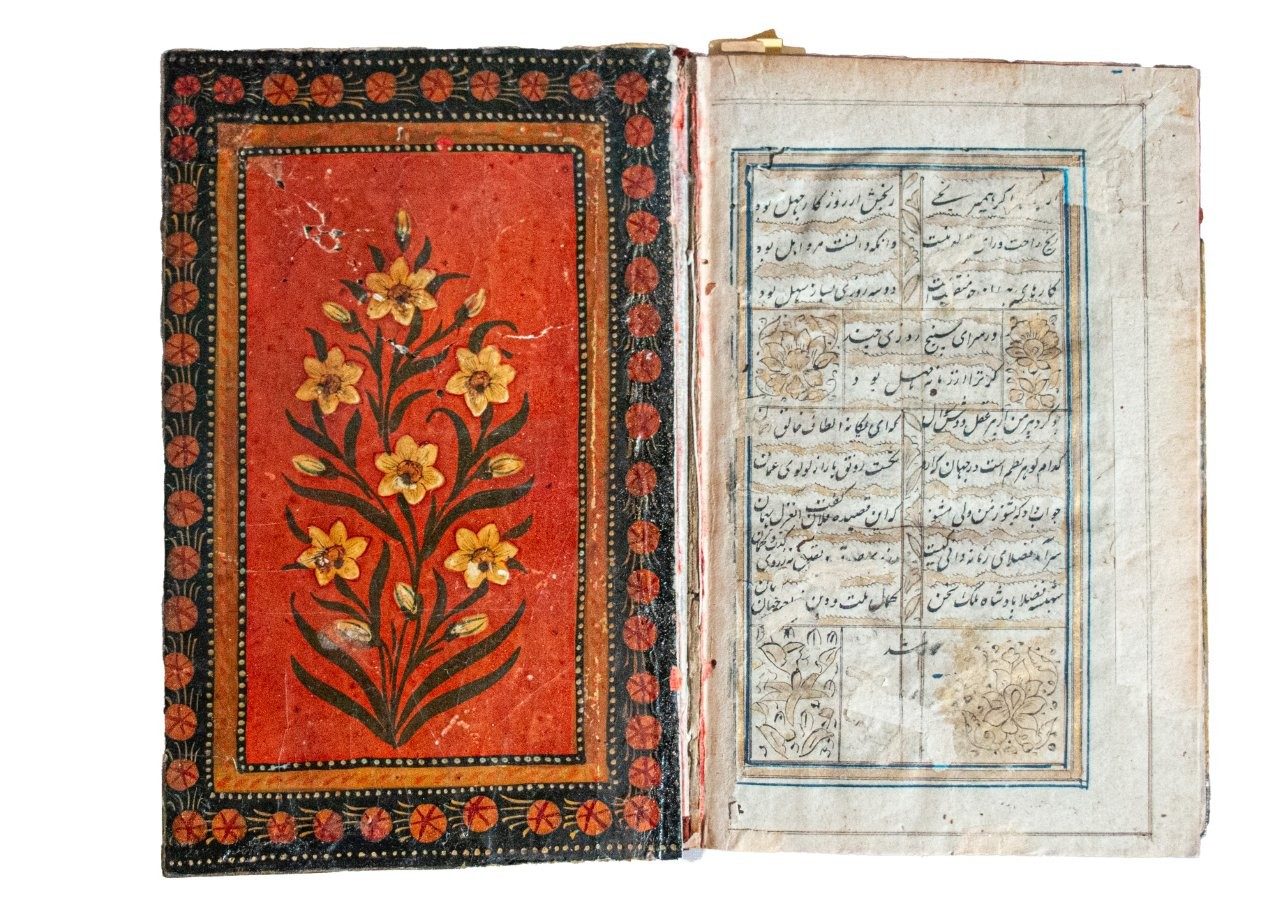
The manuscript’s layout includes double-columned Persian text arranged in an elegant Nastaʿlīq script. The text is framed with intricate triple bands and decorated with stylized golden ornaments. The overall aesthetic draws inspiration from Persian rugs and textiles, incorporating polylobate, dome-shaped, and mandorla patterns in blue and gold, emphasizing luxury and refinement.
The miniatures added to the manuscript depict diverse scenes:
- An ascent to the heavens (Miᶜrāǧ), showing Muhammad as a flame with Burāq and angels.
- A diplomatic homage scene, illustrating a foreign envoy greeted in a Persian-style garden.
- A wise elder conversing with a noblewoman by a fountain, reflecting the themes of love and wisdom.
- An image of the elder instructing the young woman, while court servants observe.
- A scene of Leylī and Maǧnūn meeting and speaking before the “king of Arabia and the king of Persia,” though this scene’s authenticity and consistency with the original texts remain debated.
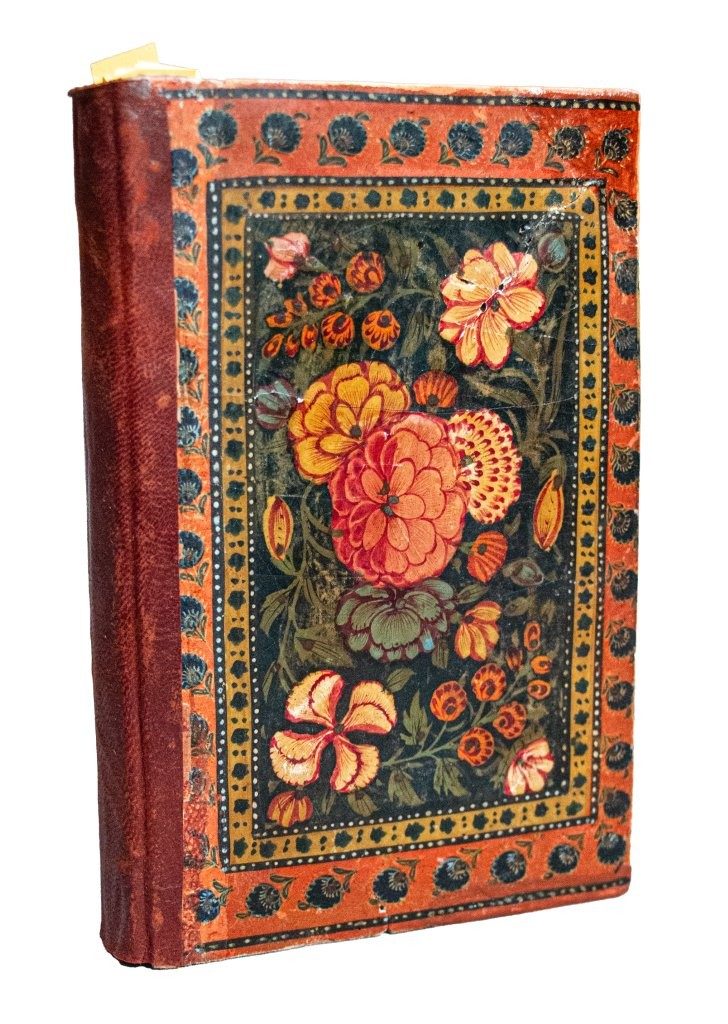
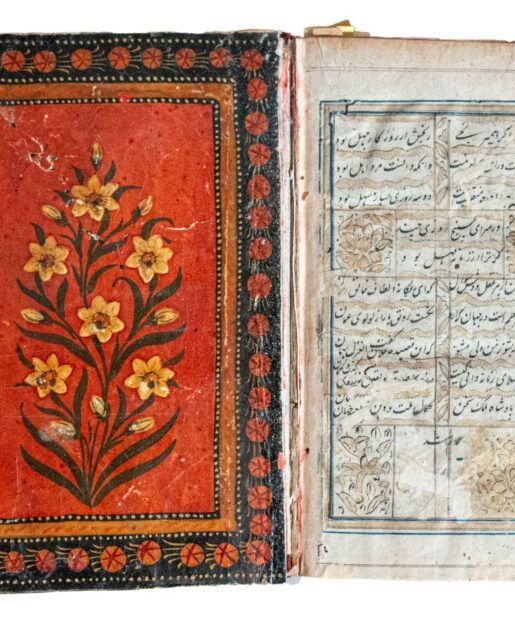
The manuscript’s cover is lacquered cardboard adorned with floral motifs in red, orange, and dark green. Inside, the manuscript holds 276 poems, mostly ġazals, along with approximately 12 quatrains (robāᶜīyyāt). These poems often differ from the standardized editions of Hafez’s Diwan, containing many apocryphal compositions circulated in early modern Muslim India, many excluded from critical editions due to philological research. The presence of such poems underscores their popularity and circulation outside the canonical collection.
Scholarship, including J. T. P. de Bruijn, notes the complexities surrounding Hafez’s texts. Despite numerous critical editions and research advances, a definitive, unaltered version of the Diwan remains elusive due to discrepancies across manuscripts: variations in poem inclusion, order, and wording make establishing a single, authoritative text difficult. This underscores the evolving nature of Hafez’s poetry in manuscript tradition.
This particular manuscript exemplifies the cultural context of Ḥāfeẓ’s poetry in high-status, Persian-speaking Sunni Muslim society in North India. It likely catered to affluent patrons from the urban mercantile class—wealthy enough to afford luxurious literary works but not necessarily of the highest nobility. The gilded floral decoration and elaborate presentation reflect their aspiration to cultural refinement within the Persianate world’s broader artistic traditions.
About Ḥāfeẓ and His Poetry
Ḫāǧeh Šamso’d-Dīn Ḥāfeẓ Šīrāzī (1315–1390) remains one of Persia’s most celebrated poets. As Baha’-al-Din Khorramshahi states, Hafez’s deep attachment to Shiraz, his hometown, is a recurring theme in his poetry. His works evoke beloved sites and landscapes such as Golgašt-e Moṣalla and Āb-e Rokn-ābād, often referencing them in his ghazals.
Little is known about his early life beyond references in his Diwan and Golandām’s preface. He studied traditional Islamic sciences, including the Quran and Arabic, during a time of turbulence in Persia following the Mongol invasions. The sack of Baghdad (1258) symbolized the beginning of a period characterized by instability, yet also cultural and literary flourishing. Across his lifetime, Hafez lived through the rise and fall of local dynasties like the Inju, Muzaffarids, and Jalayerids, all reflected in his poetry.
Thematic Complexity in Hafez’s Ghazals
De Bruijn points out that the ghazal genre predates Hafez but became increasingly complex over centuries. Hafez’s poetry intertwines several themes: the trials of love, expressed through the romantic and sensual, alongside spiritual reflections on divine beauty. He often criticizes institutional piety and Sufi hypocrisy, denouncing clerical figures, ascetics, and materialism.
The ghazal’s thematic range includes nature’s beauty, the fleeting nature of life, self-praise, and social commentary. These different themes are often woven together within individual poems, creating a layered and sometimes disjointed poetic landscape. Hafez’s work invites multiple interpretations, as each poem might encompass love, spirituality, critique, and personal reflection simultaneously
Product Enquiry
Related products


£1,800.00


£9,800.00
![[Thomas Forbes Kelsall] Catalogue of Valuable Books and Illuminated and other Manuscripts…The Library of Thos. Forbes Kelsall Esq. 1906](https://stephenbutler.com/wp-content/uploads/2024/09/IMG_1212-515x618.jpg "[Thomas Forbes Kelsall] Catalogue of Valuable Books and Illuminated and other Manuscripts…The Library of Thos. Forbes Kelsall Esq. 1906")
![[Thomas Forbes Kelsall] Catalogue of Valuable Books and Illuminated and other Manuscripts…The Library of Thos. Forbes Kelsall Esq. 1906](https://stephenbutler.com/wp-content/uploads/2024/09/IMG_1209-454x618.jpg "[Thomas Forbes Kelsall] Catalogue of Valuable Books and Illuminated and other Manuscripts…The Library of Thos. Forbes Kelsall Esq. 1906")


£1,750.00

