

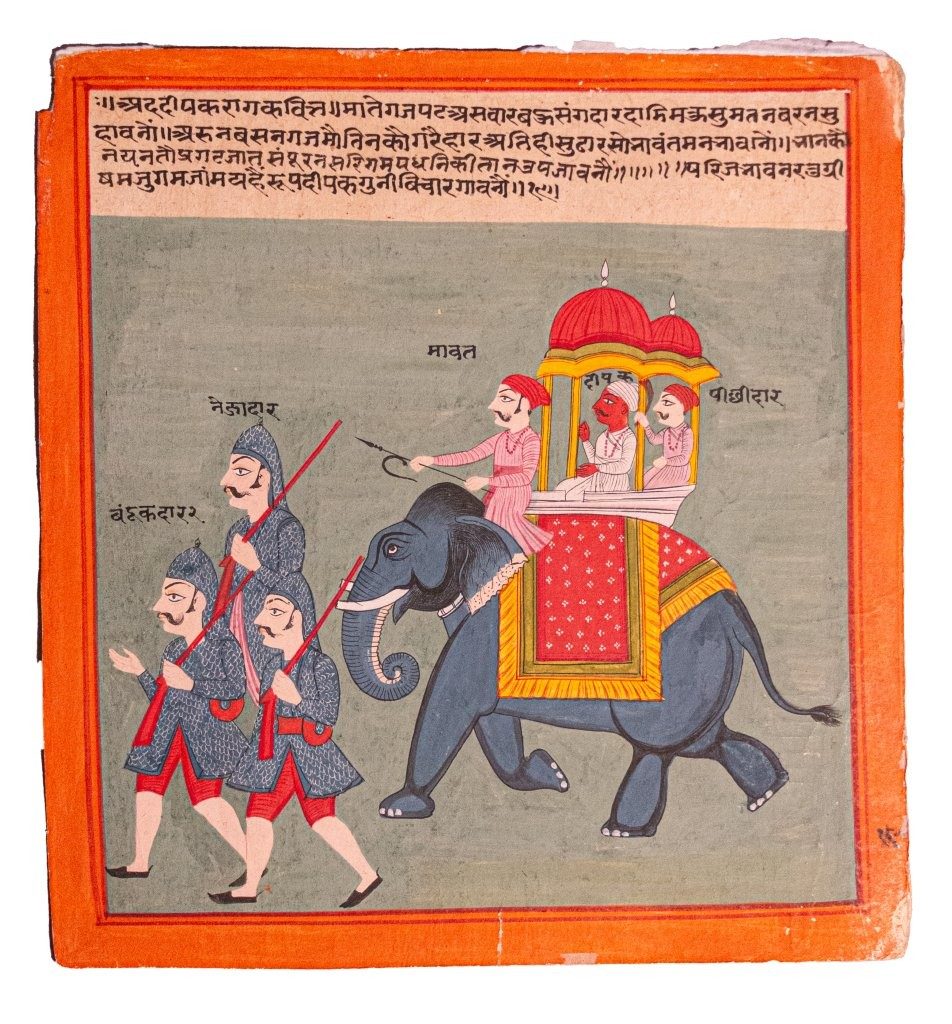


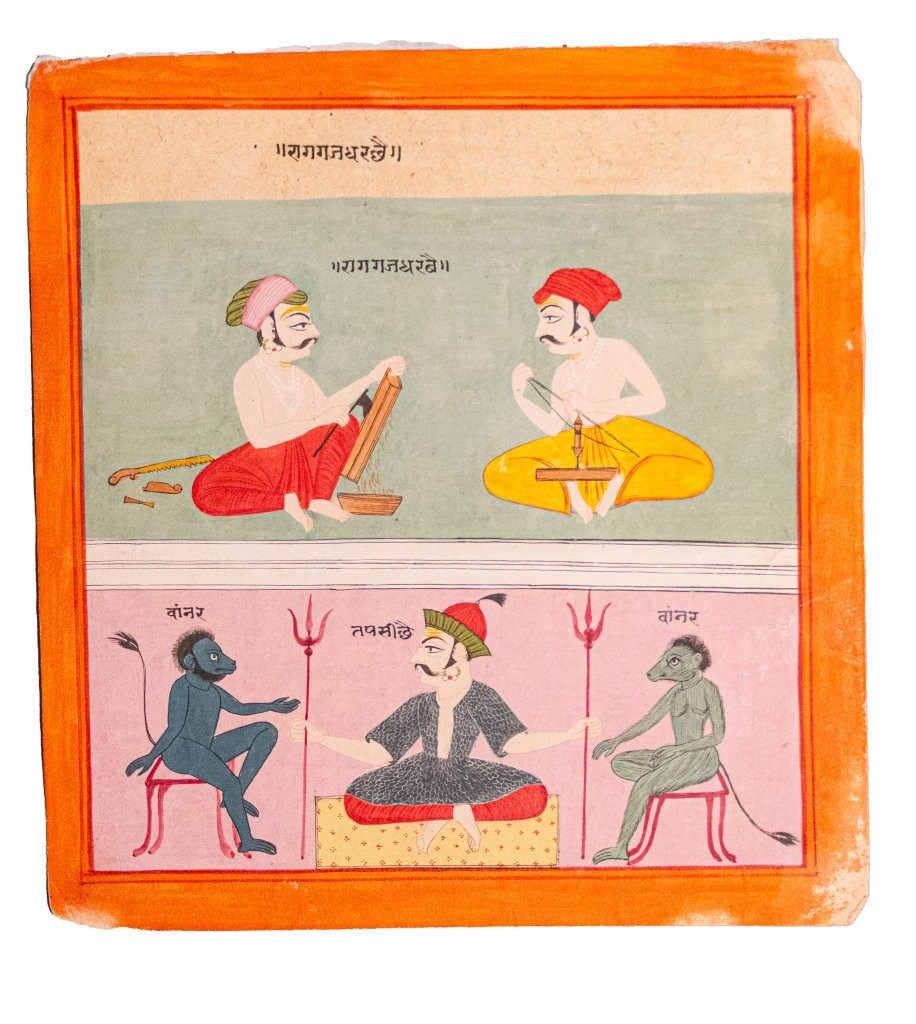
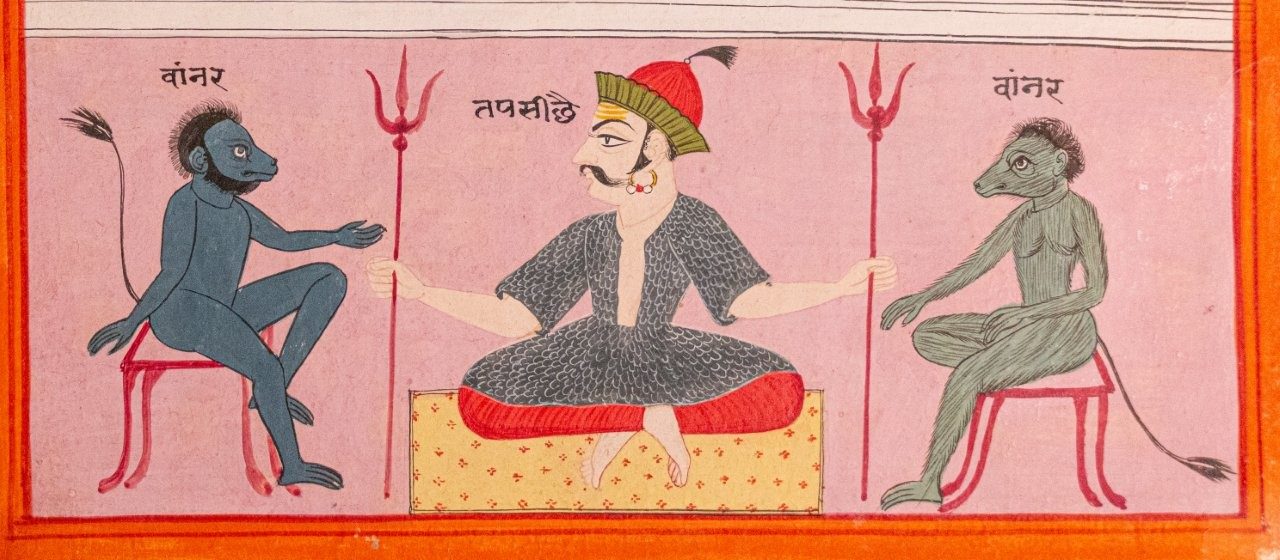


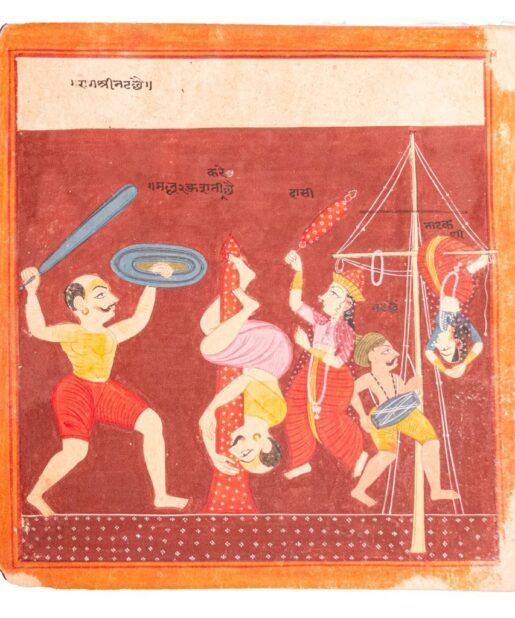
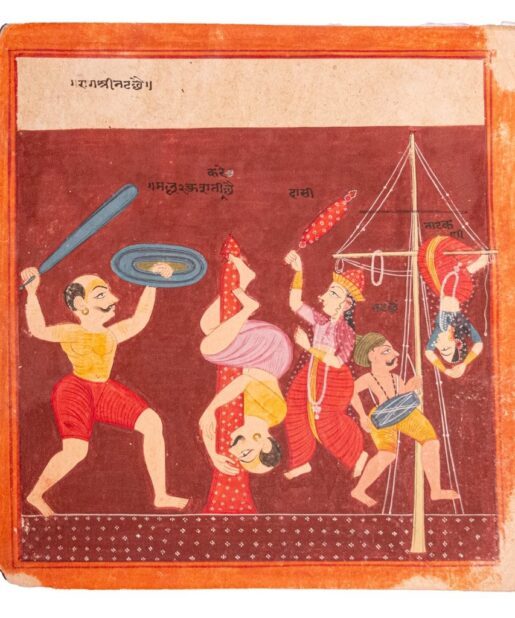

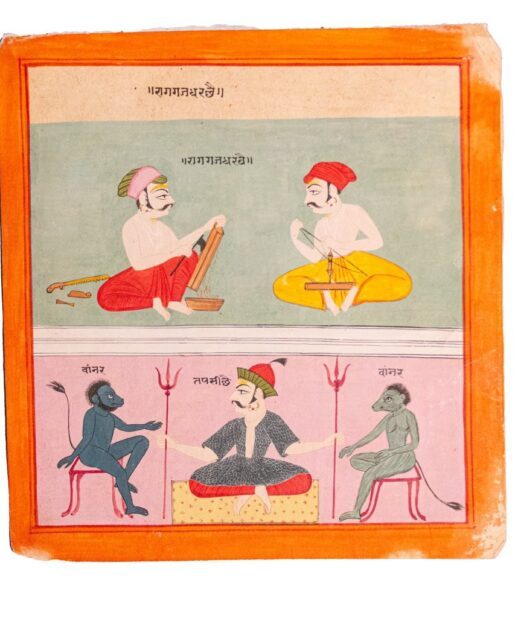


Set of Five Ragamala Miniatures
Gujarat or Western India, circa 1800
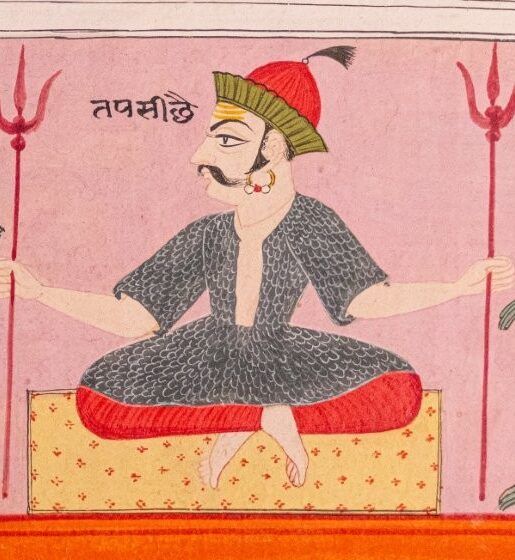
Opaque pigments and gold on wasli, each 280 × 265 mm, with Devanagari inscriptions above identifying the ragas and raginis; orange-red borders.
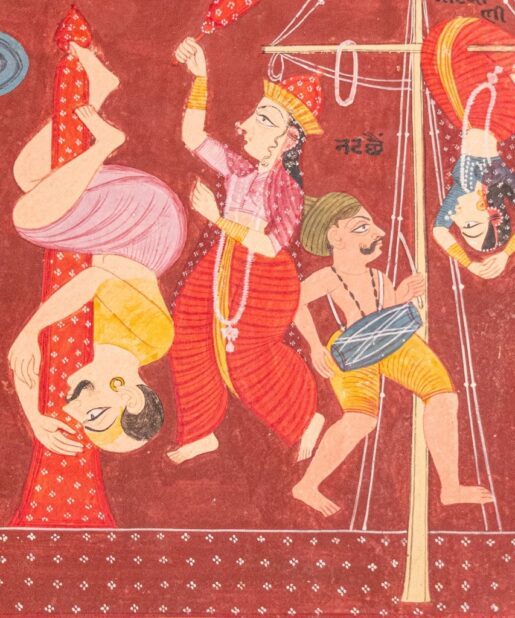
These five folios derive from a Ragamala (“Garland of Ragas”) series, a synesthetic Indian tradition combining classical music, poetry, and painting. Each raga or raginī (female mode) is personified through colour, emotion, and narrative. The series illustrated here includes scenes of courtly musicianship, devotion, and battle — a nobleman playing a flute before birds and deer, a royal couple on elephant-back accompanied by guards, and acrobats performing before an audience. The strong, flat areas of colour, animated line, and schematic architecture are typical of late 18th–early 19th century Gujarati and Deccan schools, distinct from the more fluid compositions of contemporary Rajput ateliers.
The inscriptions correspond to musical modes and seasons, linking each mood (rasa) to its visual and musical expression. These works may have formed part of an album illustrating the complete Ragamala cycle of 36 or 42 scenes.
Condition: some rubbing, minor corner losses; colours otherwise vibrant and well-preserved.
Dimensions: each approximately 28 × 26.5 cm.
Product Enquiry
Related products

C12th - C13th manuscripts
£1,200.00

£900.00


C12th - C13th manuscripts
Beautiful painted white vine initial, Augustine’s Commentary on John’s Gospel, Italy C12th
£3,800.00


C12th - C13th manuscripts
£4,850.00


£1,800.00


£3,500.00