

This piece has been placed.
Many works of comparable significance pass through our hands each year.
If you’re seeking something similar, please send us an enquiry or browse recent acquisitions.
Greek NT, 1546 bound in the style of Atelier of Nicolas Eve and printed by Robert Stefani

£7,500.00
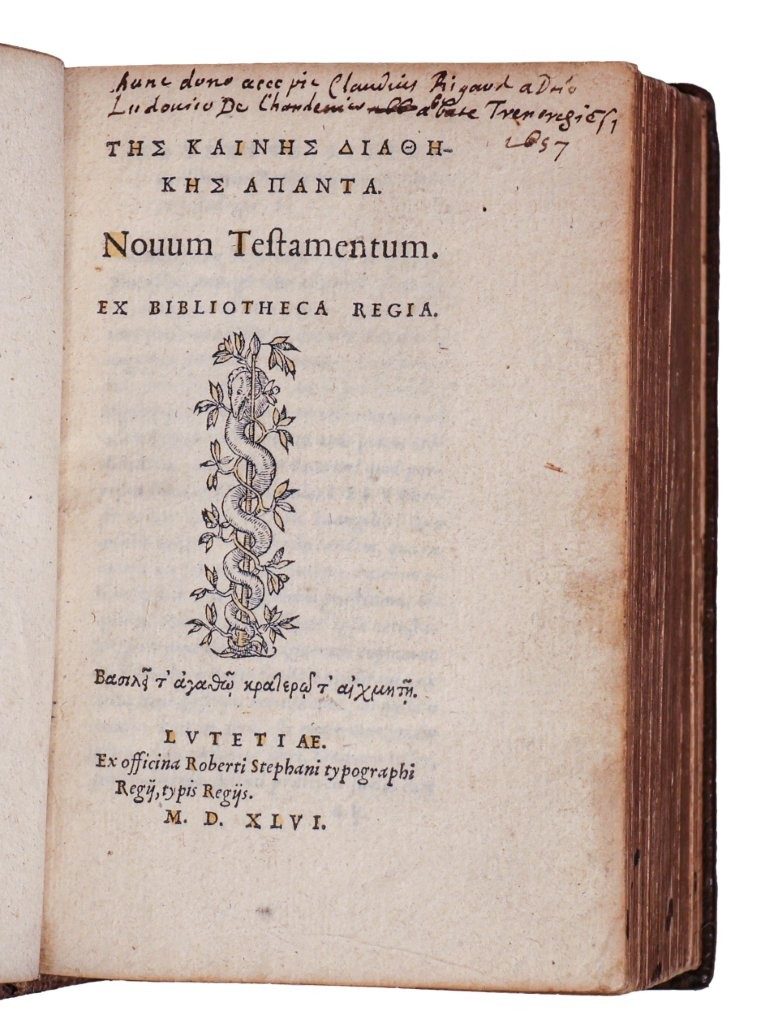
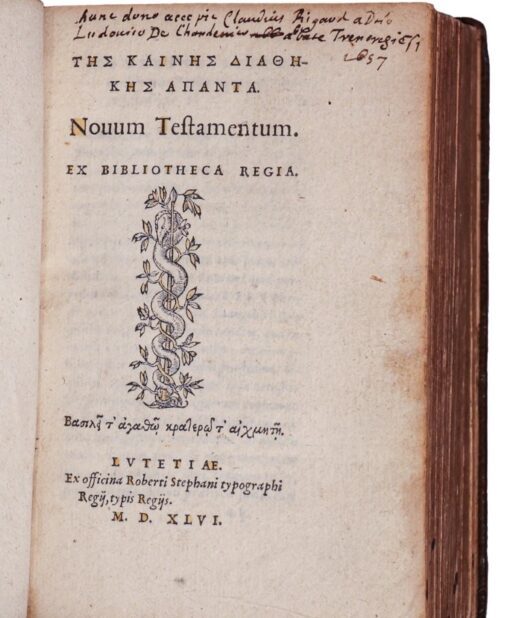
[GREEK NEW TESTAMENT]. Tēs Kainēs Diathēkēs Apanta. Novum Testamentum…
Paris (Lutetiae): Ex officina Roberti Stephani, typographi regii, 1546
Dimensions
16mo in 8s (140 x 100 mm)
Description
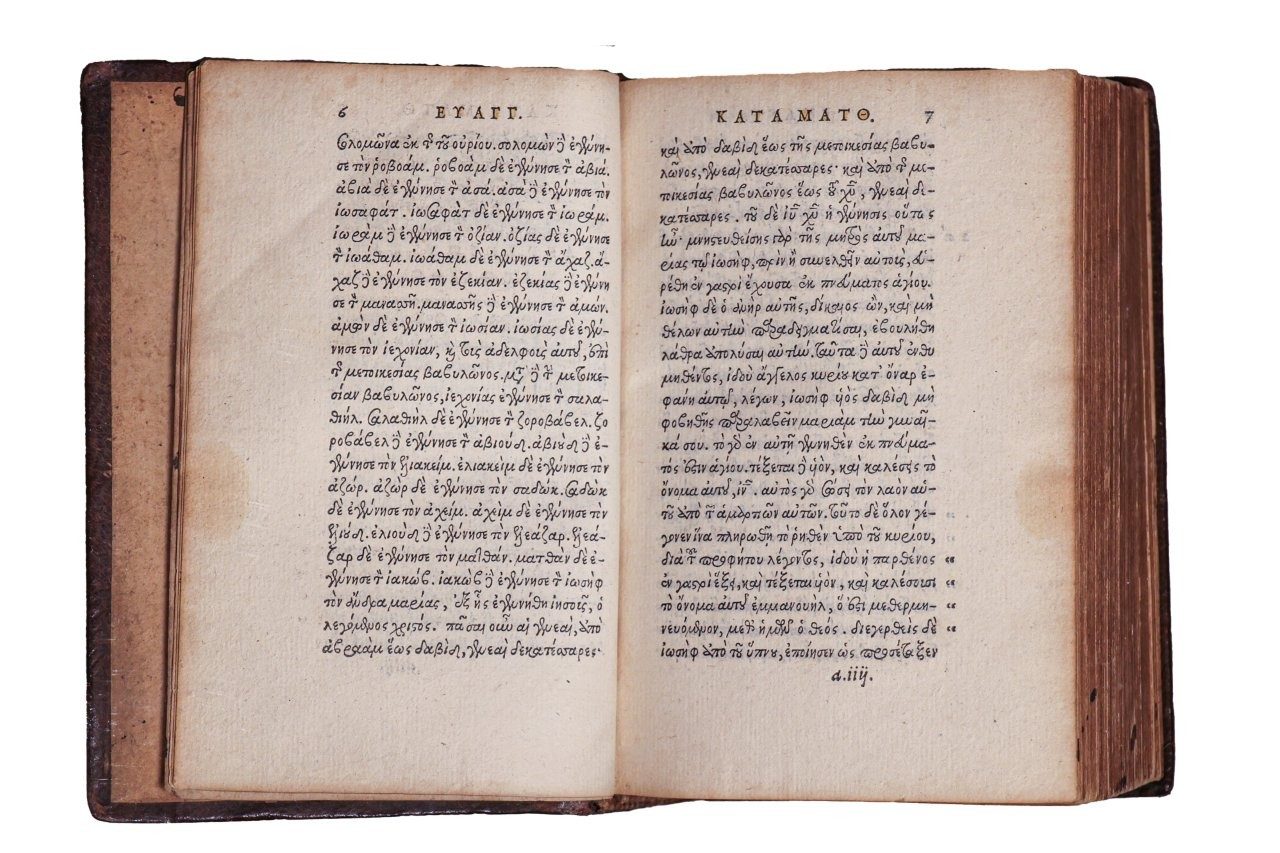
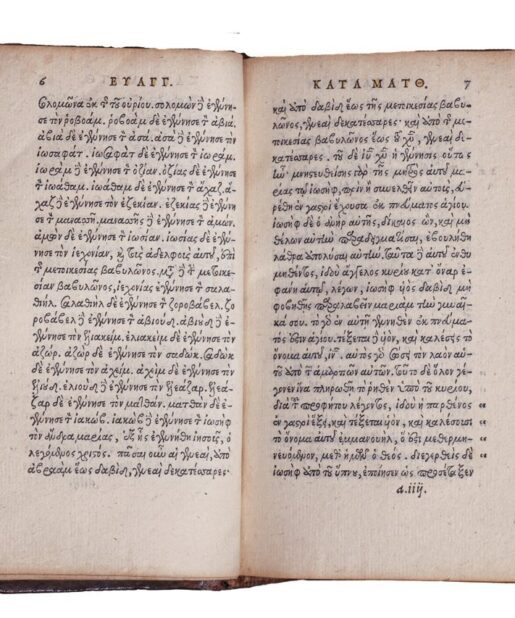
Two volumes in one: 528pp.; 361 [7] pp,. Greek text. Title with woodcut device.
Binding
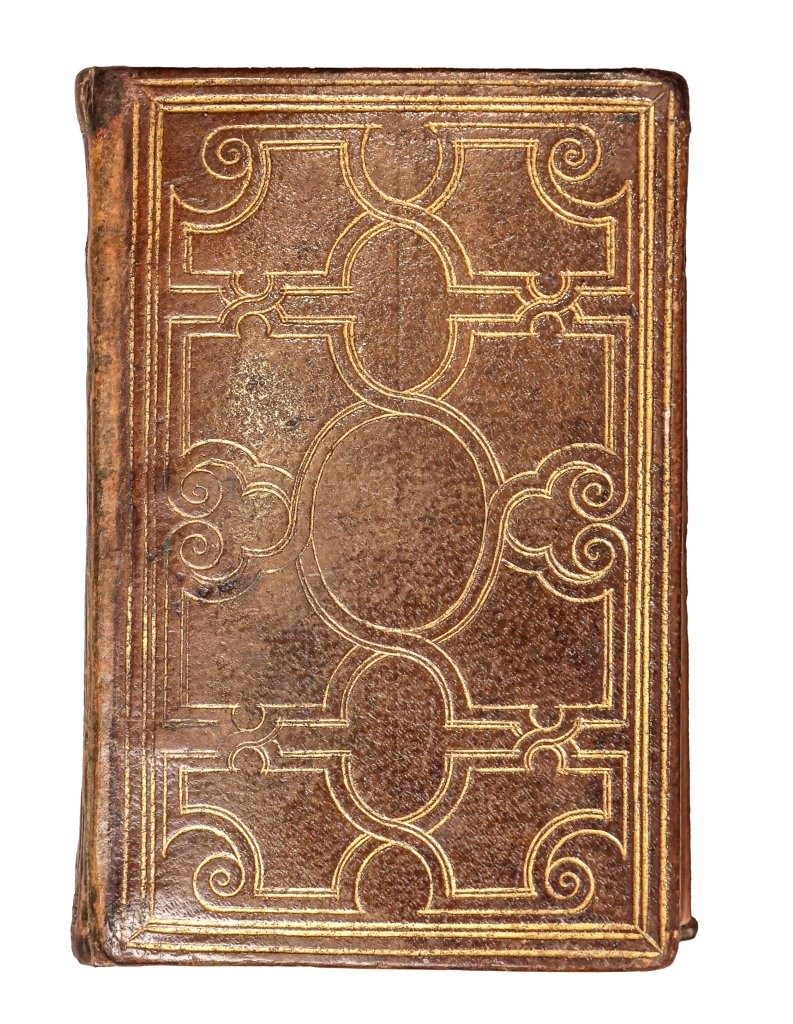
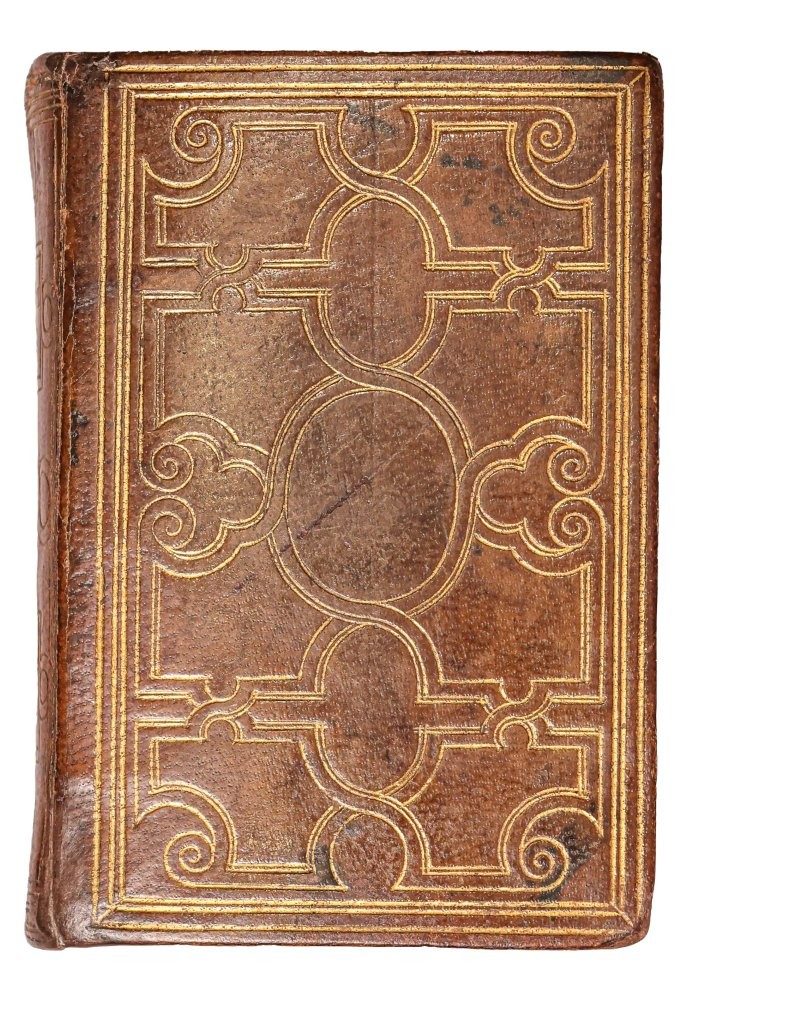
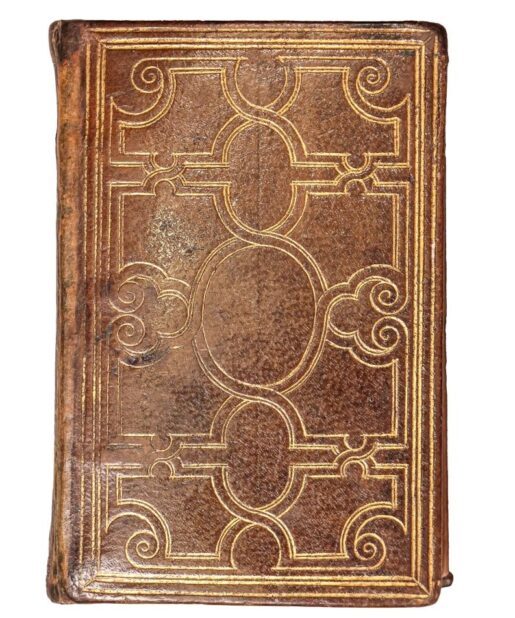
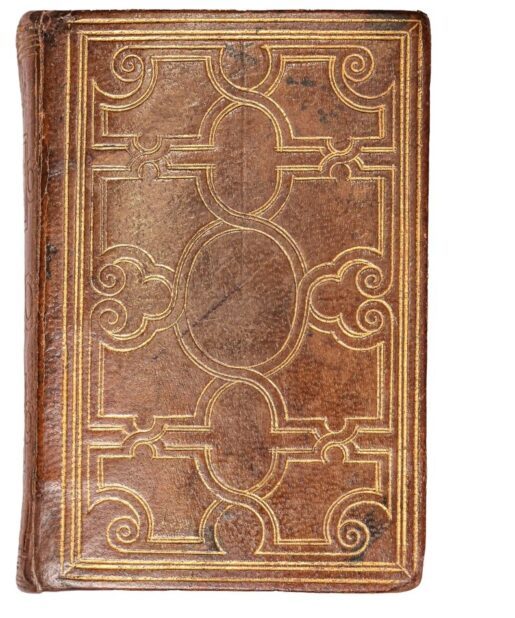
Contemporary Parisian gilt tooled light calf binding of exceptional architectural elegance, very likely an early example executed by the atelier of Nicolas Eve, the binder most closely associated with the great
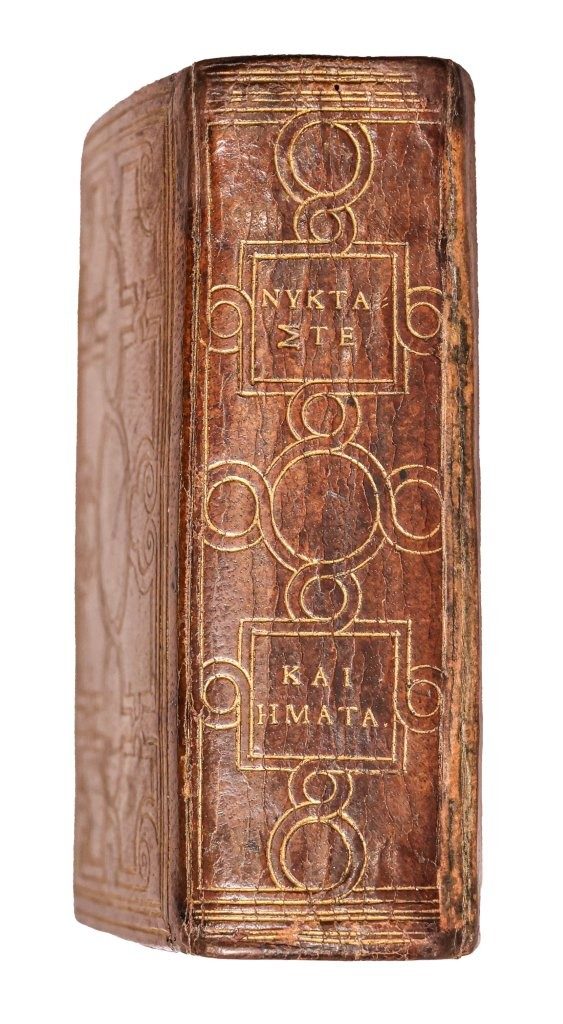
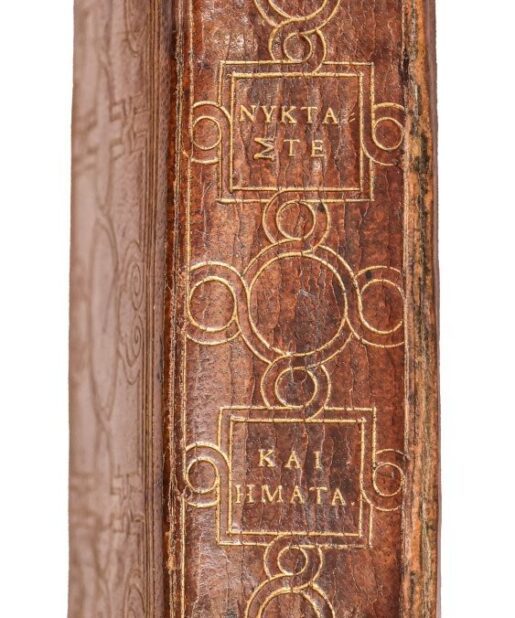
geometrical interlace bindings made for Henry III. Covers with elegant and simple strapwork design forming interlocking compartments from linked ovals, circular gouges, rectilinear frames, and restrained spiral corner volutes, all enclosed within multiple gilt fillet borders. Flat spine gilt with interlocking circular motifs, lettered in Greek: “ΚΑΙΝΗ ΔΙΑΘΗΚΗ” (New Testament).
Condition
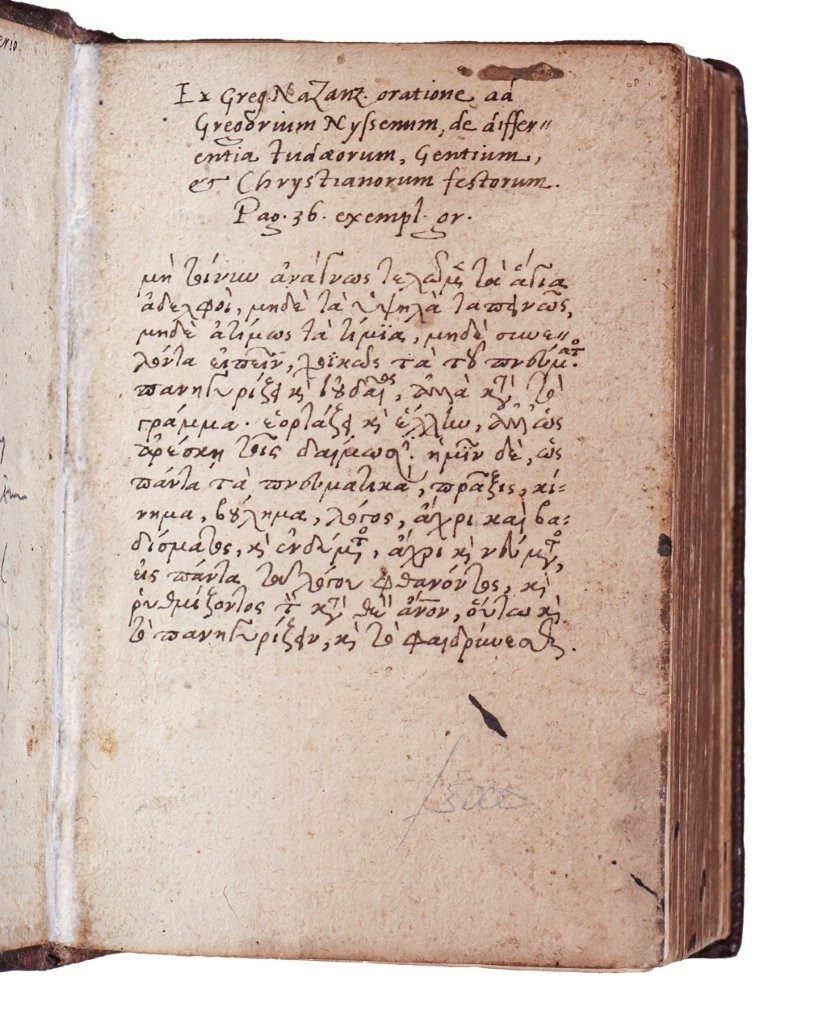
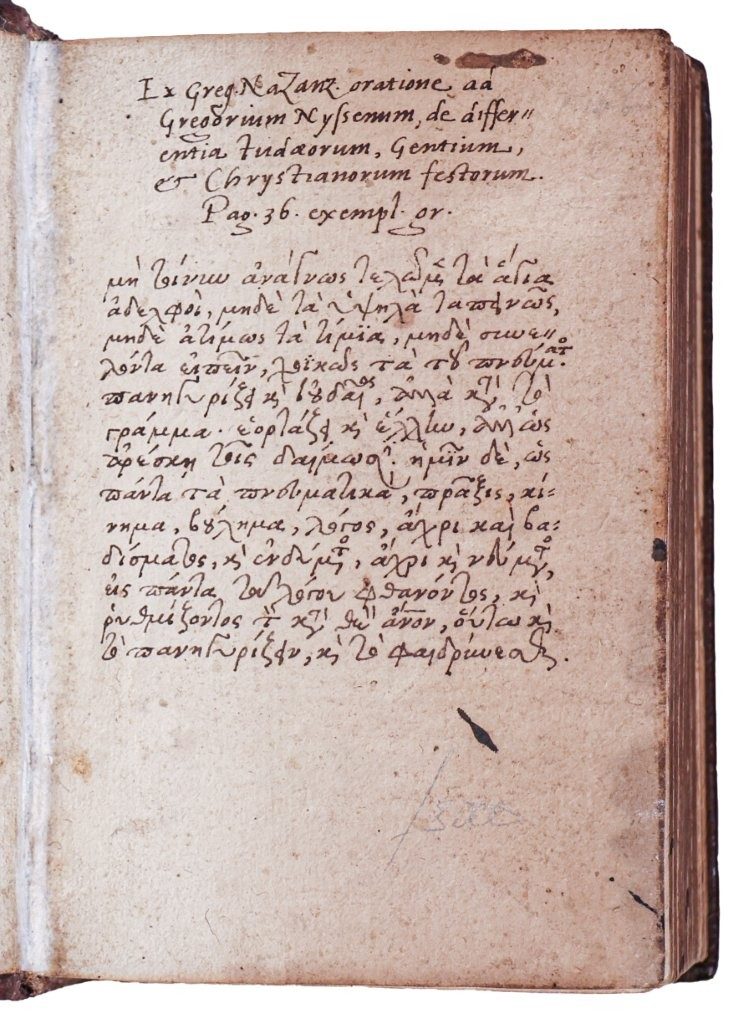
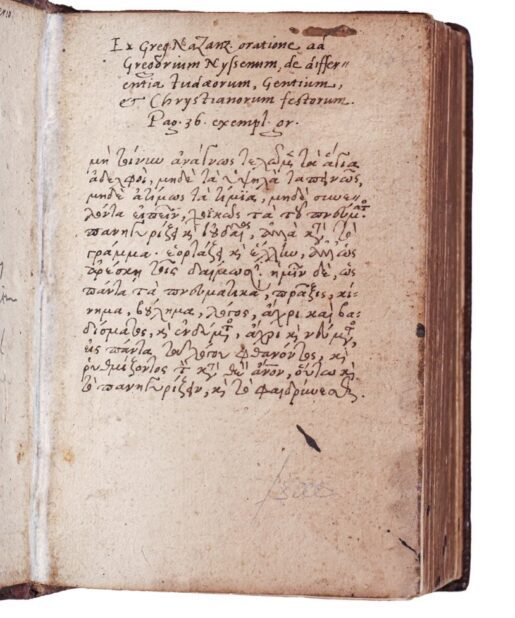
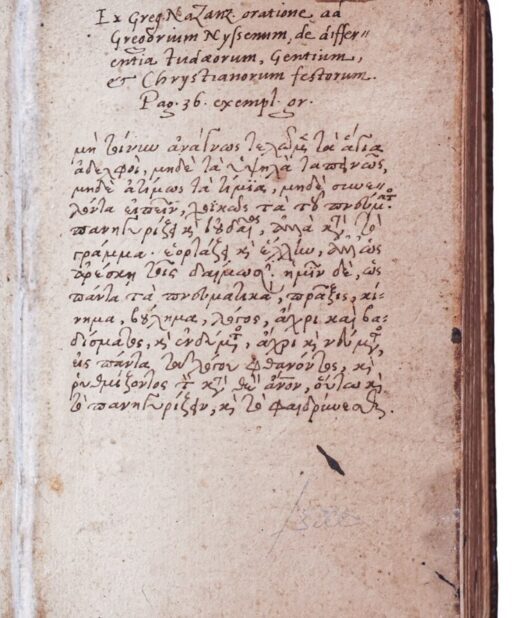
A clean and well-preserved copy, with early manuscript annotations in Greek and Latin to the preliminaries.
First Estienne Greek New Testament, second issue with November included in colophon.
Binding
This binding belongs to the circle of Parisian work produced in the decades following the introduction of Italianate ornament into France under royal patronage. It is associated with the early development of the fanfare style: that highly refined phase of French Renaissance binding in which ornament is organised not as surface enrichment alone, but as a disciplined interplay of line, curve, symmetry, and framed space. In both conception and execution, the binding is closely comparable to work produced in the same immediate milieu of the atelier of Nicolas Eve, and should be understood within that important lineage of late 16th-century Parisian design. The ornaments are not “filled” in the later fanfare manner, nor enriched with the denser pointillé and semé tooling associated with the Maioli / Mahieu phase of Parisian decorative binding; instead, the effect is one of simple restraint, similar to those executed for Grolier and other great collectors. This earliest type is the purest and the most effective because of the sobriety of the gilding and
decoration, its restrained geometric structure follows the tastes of mid-16th century humanist collectors. This humanist volume is very rare and desirable, and an especially appealing example of the union of text and binding in the culture of the later French Renaissance.
Provenance
1. Early ownership inscription dated 1557.
2. Manuscript notes referencing Gregory Nazianzen.
References
Adams B1657; USTC 149681; Darlow & Moule 4616;
Renouard p.65; French Vernacular Books 57889.
Product Enquiry
Related products

£750.00


£200.00


£125.00