
This piece has been placed.
Many works of comparable significance pass through our hands each year.
If you’re seeking something similar, please send us an enquiry or browse recent acquisitions.
Ottoman Astrological tables, Turkey C18th – “mathematical astrology”
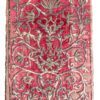
£4,250.00
OTTOMAN MANUSCRIPT OF ASTROLOGICAL TABLES
Turkey, late 18th century
Description
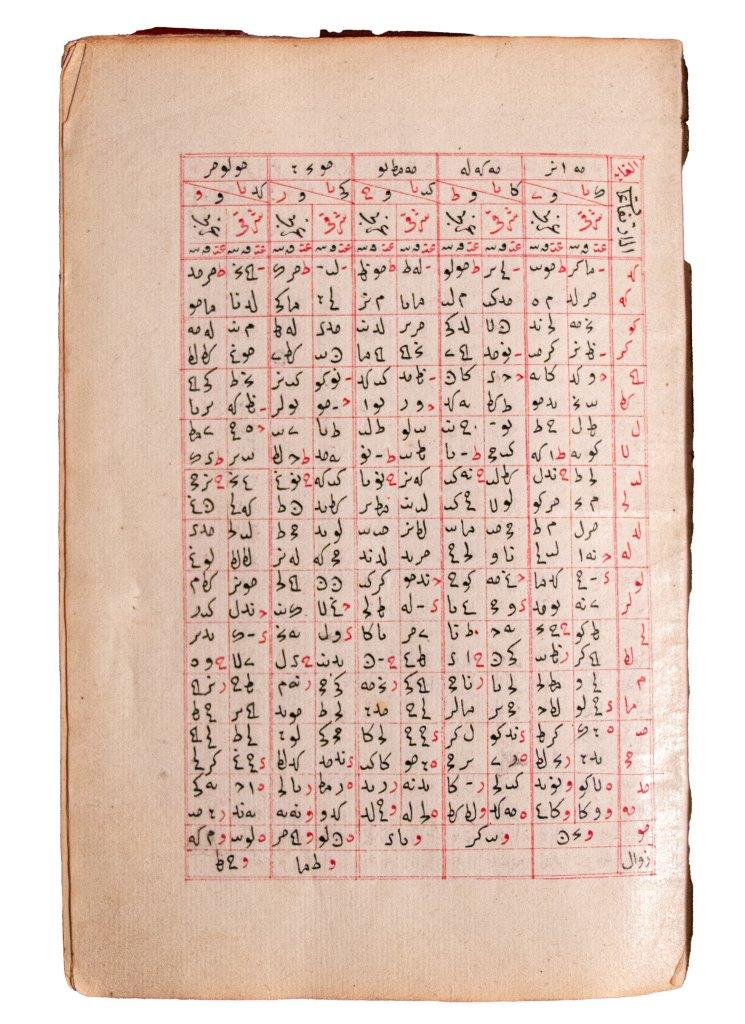
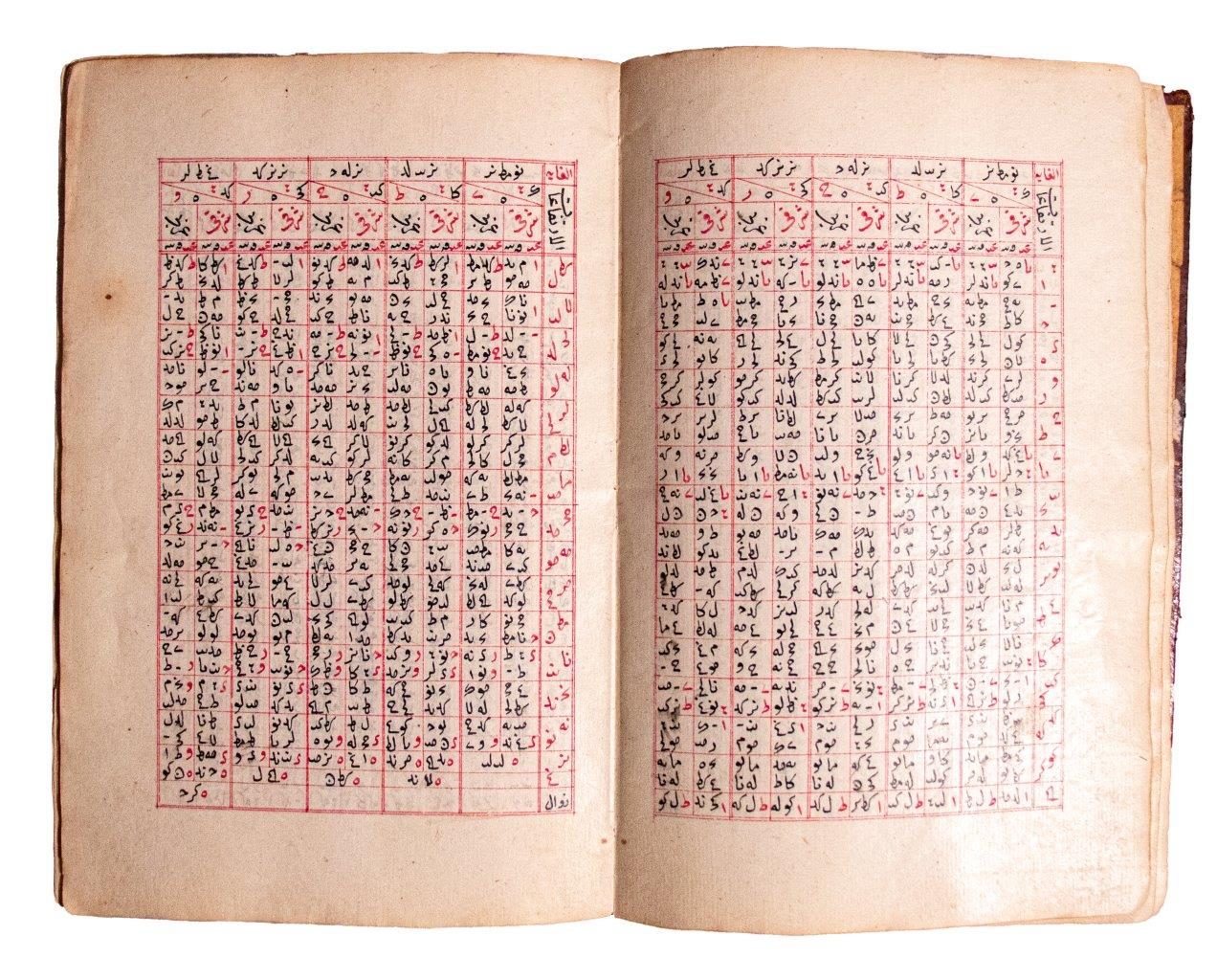
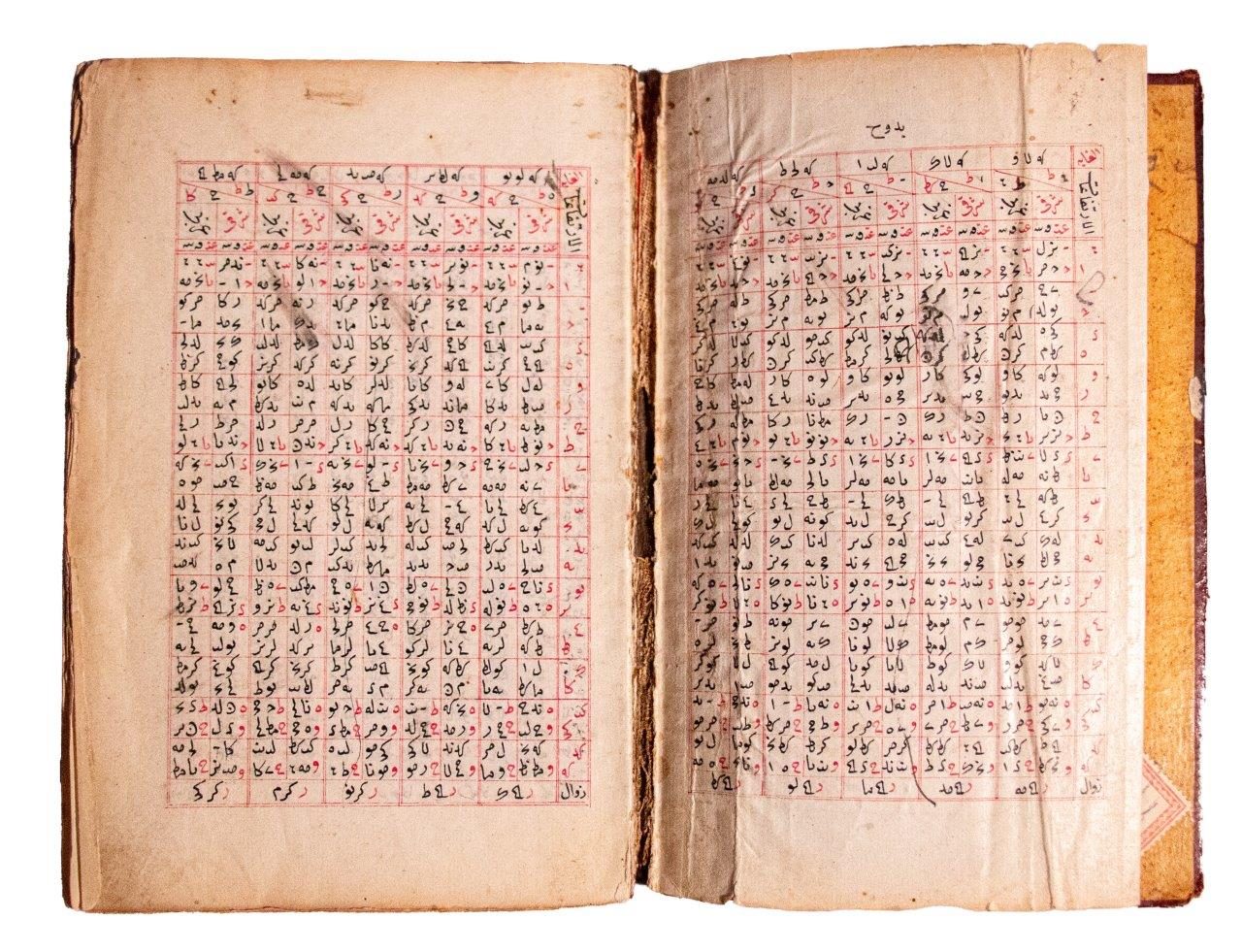
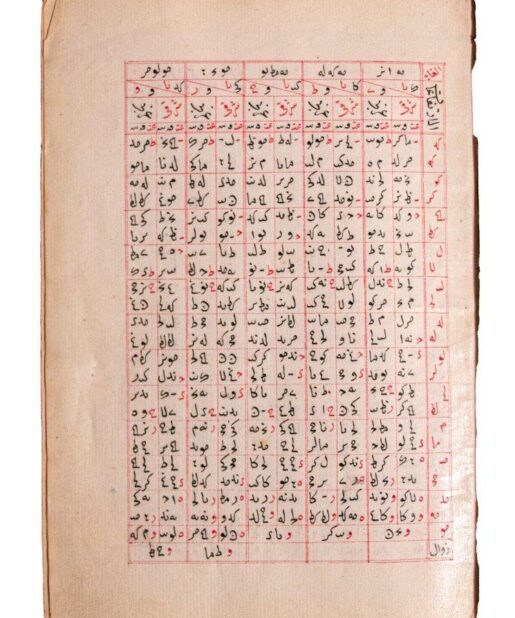
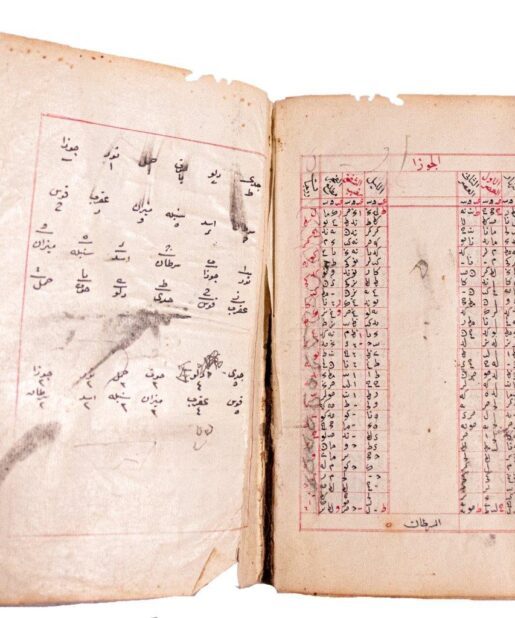
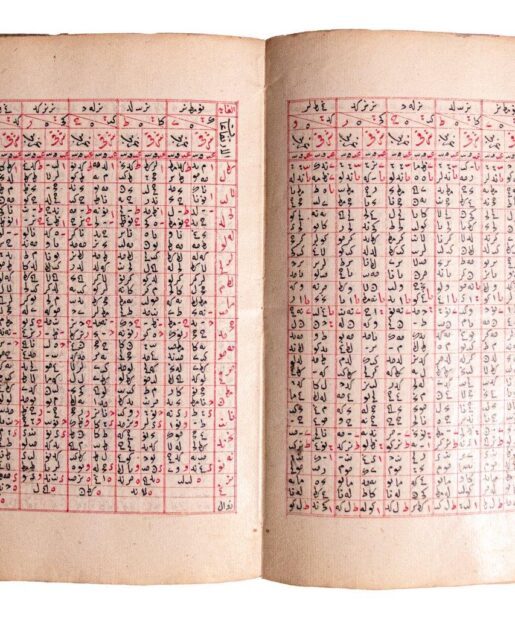
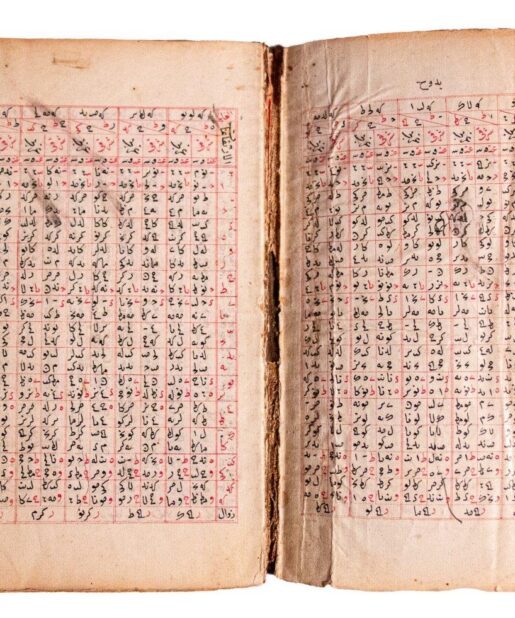
Ottoman manuscript in Arabic on white laid and polished paper, comprising a series of astrological tables and diagrams relating to the positions of the Sun and Moon, the Zodiac mansions, and degrees measured over three daily periods. Although lacking a colophon, the work is unmistakably of Turkish provenance and datable to the late eighteenth century.
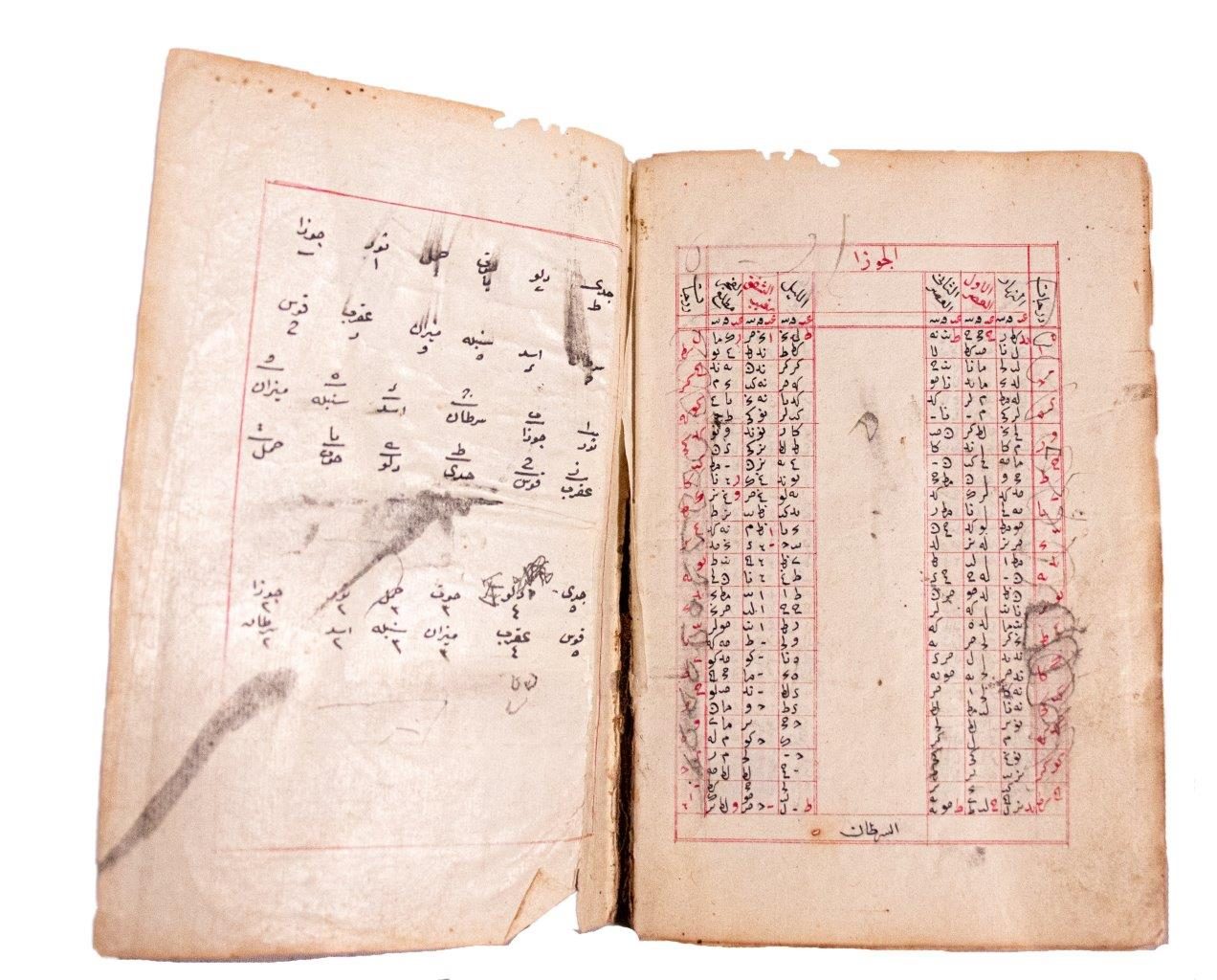
35 leaves in total. Tables occupy fols. 1v–34v; fol. 35 serves as an endpaper, bearing a list of abǧad symbols corresponding to the Zodiac signs (r.) and a brief two-line note (v.) classifying the signs as “northern” (Aries–Virgo) or “southern” (Libra–Pisces).
Leaf size c. 170 × 110 mm; written area c. 125 × 80 mm. Text in Arabic (mostly numerals and abbreviated letter clusters) written in a fine Turkish nesih (naskh) hand, with the final note in early ruqʿa script. Significant words and headings rubricated throughout—e.g. al-ġāya (“the utmost limit”), šarqī (“eastern”), and the Zodiac names in the latter section.
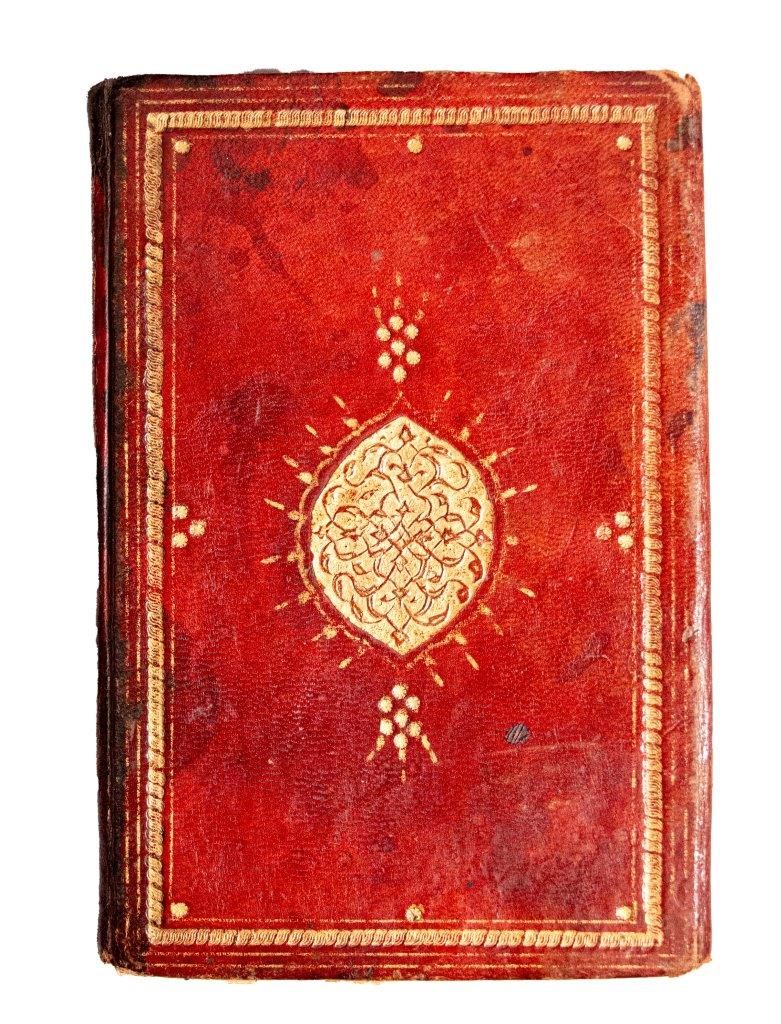
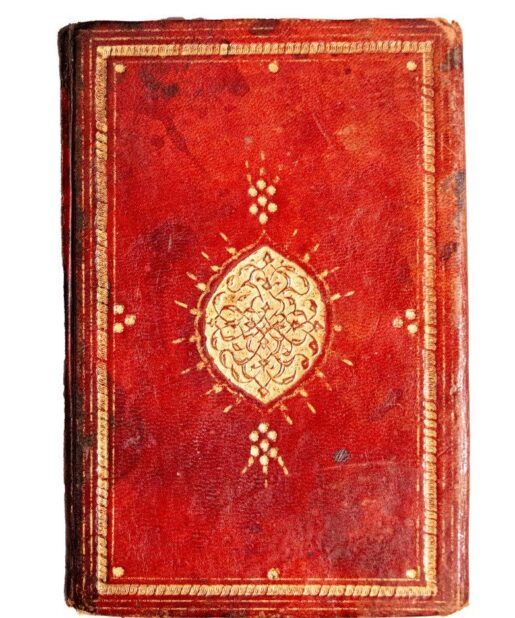
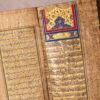
Contemporary morocco-covered boards with envelope flap; blind-tooled and gilt mandorlas with vegetal arabesques to outer covers and flap, surrounded by bead motifs arranged symmetrically along the axes, and framed by a gilt wave-pattern border.
Very well preserved overall, with only occasional ink smudges, minor stains, and light signs of handling.
Contents and Structure
The text opens directly with the astrological tables, preceded only by the mystical word bedūḥ, traditionally interpreted as the numerical formula “2468,” sometimes used as a talismanic invocation for good fortune or safe travel.
Two principal diagram types appear:
- Astronomical calendar (taqvīm)—60 tables charting the Sun’s passage through the Zodiac, each page divided into five daily units (fols. 1v–31v), with two preliminary leaves likely lost.
- Astrological summaries—six tables depicting the Sun’s transit through the twelve Zodiac mansions (fols. 32r–34v), followed by a final leaf giving cipher keys to the astronomical values.
The few words written out in full reflect Ptolemaic geocentric terminology: al-ġāya (“extreme limit” of a celestial body), al-irtifāʿāt (“altitudes”), az-zawāl (“decline,” “noon,” or “setting”), as well as šarqī and ġarbī (“eastern” and “western”). The Zodiac signs are named conventionally: al-ḥamal (Aries), aṯ-ṯawr (Taurus), al-ǧawzāʾ (Gemini), as-saraṭān (Cancer), al-asad (Leo), as-sunbul (Virgo), al-mīzān (Libra), al-ʿaqrab (Scorpio), al-qaws (Sagittarius), al-ǧadī (Capricorn), ad-dalw (Aquarius), and al-ḥūt (Pisces).
Significance
This compact yet elegant codex exemplifies the precision and aesthetic refinement of late Ottoman “mathematical astrology.” It also attests to the enduring prestige of astronomical learning among the educated and elite circles of the Sublime Porte in the eighteenth century.
Product Enquiry
Related products


C14th -C16th manuscripts
Leaf from a Bible, II Kings 17, C15th manuscript in Latin on parchment
£750.00
£3,800.00
![The Death of Ptolemy, a miniature on a cutting from Laurent de Premierfait, [France, probably Troyes, c.1470]](https://stephenbutler.com/wp-content/uploads/2021/01/IMG_0782-515x618.jpg "The Death of Ptolemy, a miniature on a cutting from Laurent de Premierfait, [France, probably Troyes, c.1470]")


C12th - C13th manuscripts
£4,850.00