

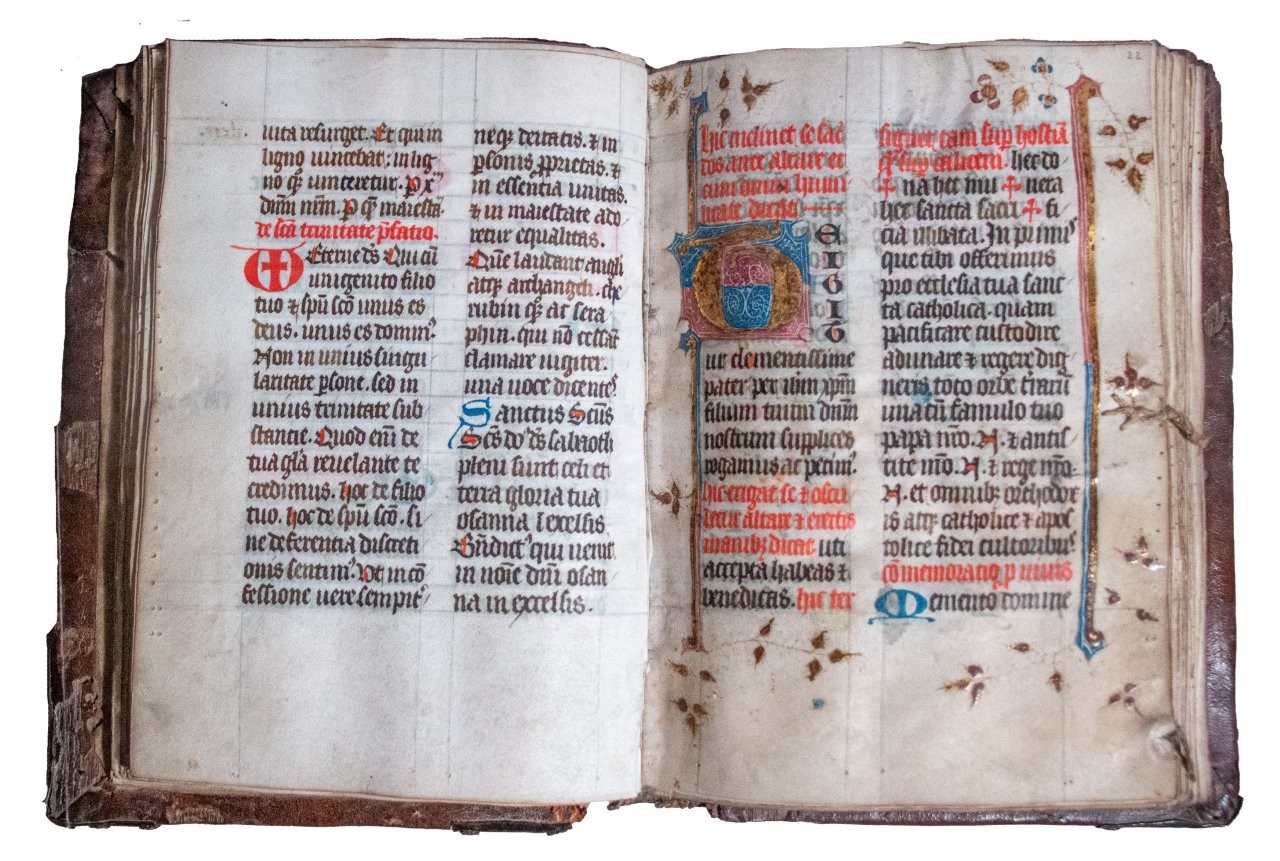

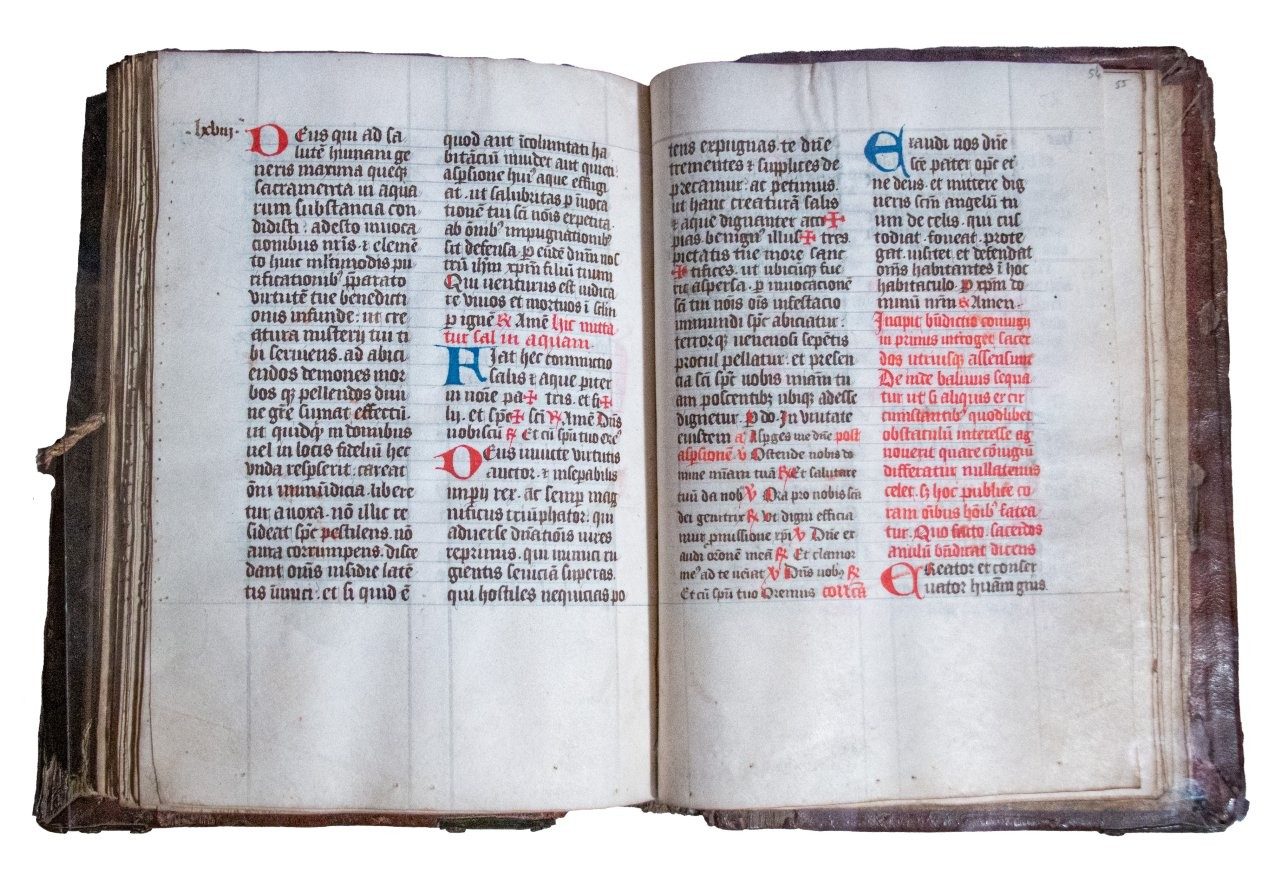


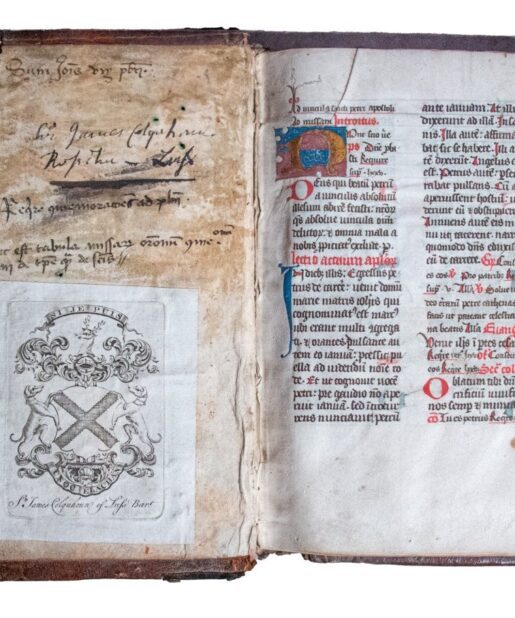
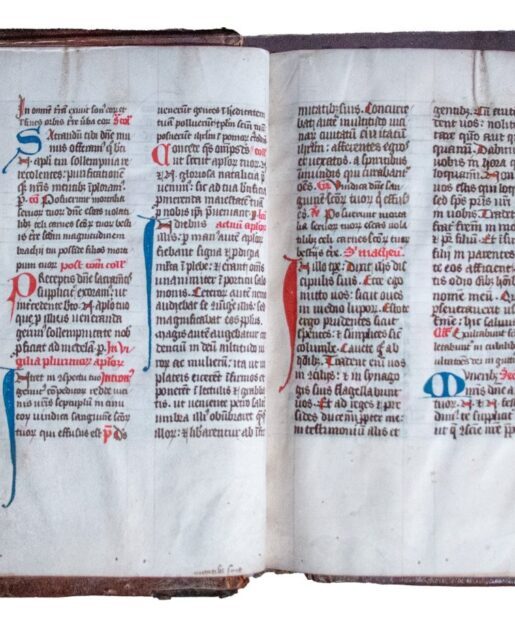
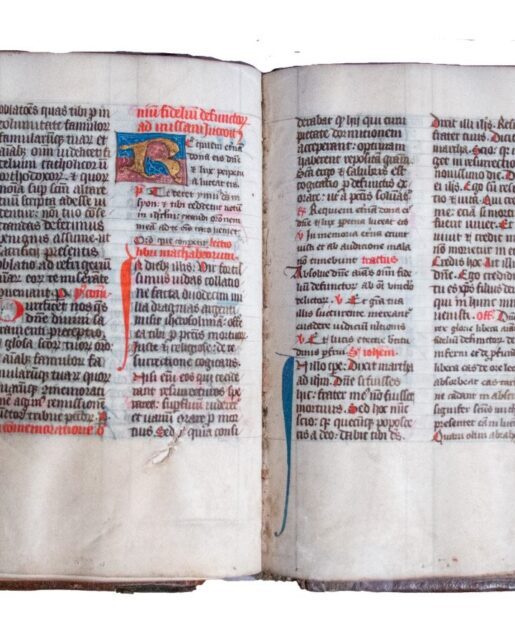
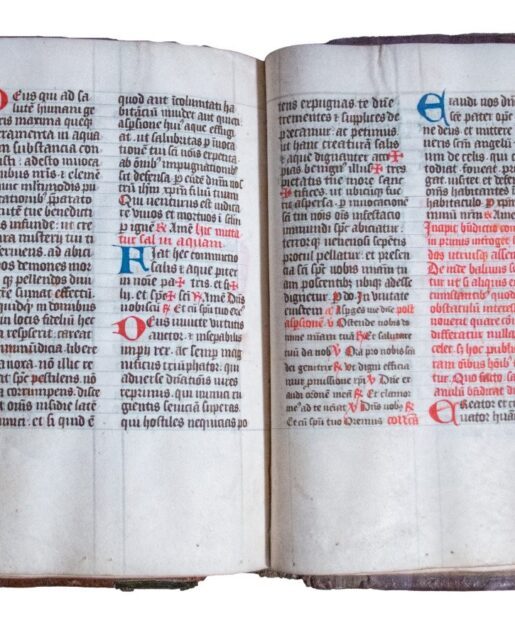
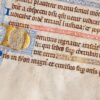
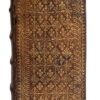
Tabula Missarum, illuminated mid-Flemish manuscript with 13 vibrant gold initials and surviving Liturgical content. [Tabula Missarum, Flanders, mid-15th century.]
Description:
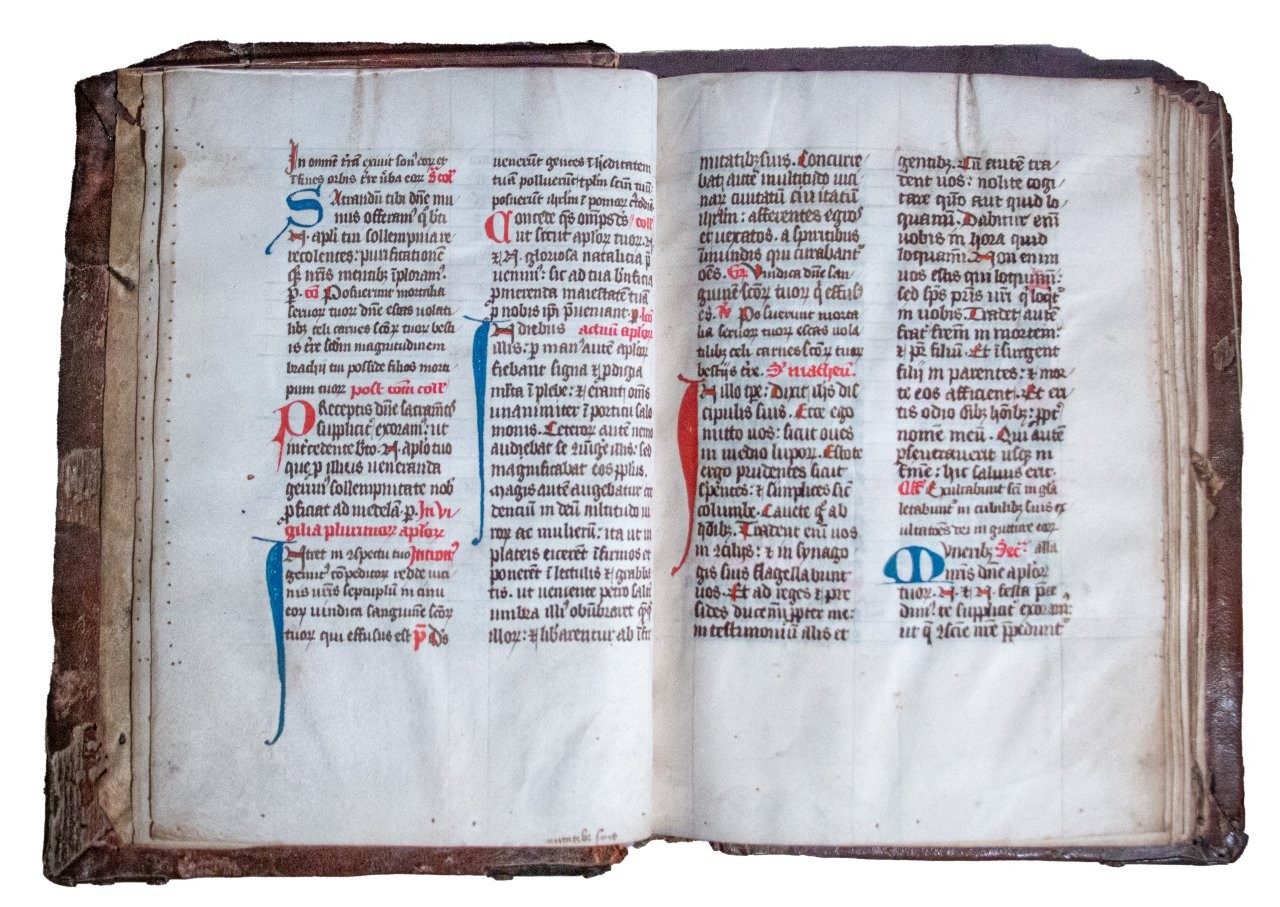
This is a stunning illuminated manuscript of the Tabula Missarum, created in mid-15th-century Flanders. Composed on parchment, it measures approximately 188 x 135 mm, with a writing area of approximately 122 x 90 mm. The text is arranged in a double column of 25 lines, over lead-ruled parchment using Gothic script, and comprises 70 leaves in total.
The manuscript is incomplete, missing 15 leaves numbered as 85 in the original sequence, including one blank page, with the collation showing its original structure: i1 (six leaves, with five lost), ii7 (one leaf of eight missing), iii8, iv3 (one blank leaf missing), v (eight leaves missing), vi7 (one of eight), vii4, and viii–xii8. Such missing leaves indicate that the manuscript was originally more extensive, possibly a part of a larger liturgical codex.
The decoration is superb, featuring 13 initials in burnished gold of varying sizes. The most elaborate is the initial of the Te Igitur, which is bordered with phytomorphic motifs on two sides, and complemented by numerous smaller initials in red or blue, creating a lively and ornate appearance typical of high-quality liturgical manuscript illumination.
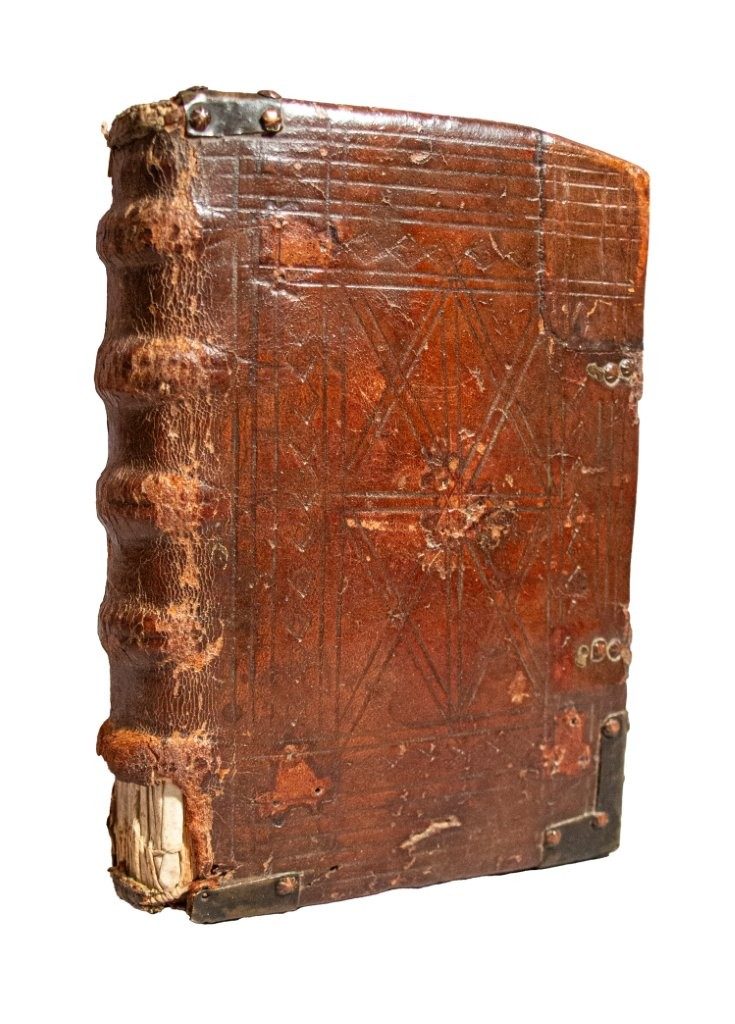
The contemporary leather binding, with blind stamped decorations and metal corners, has been restored and now preserves the manuscript’s exterior in very good condition, with some wear and signs of preservation efforts but no significant damage.
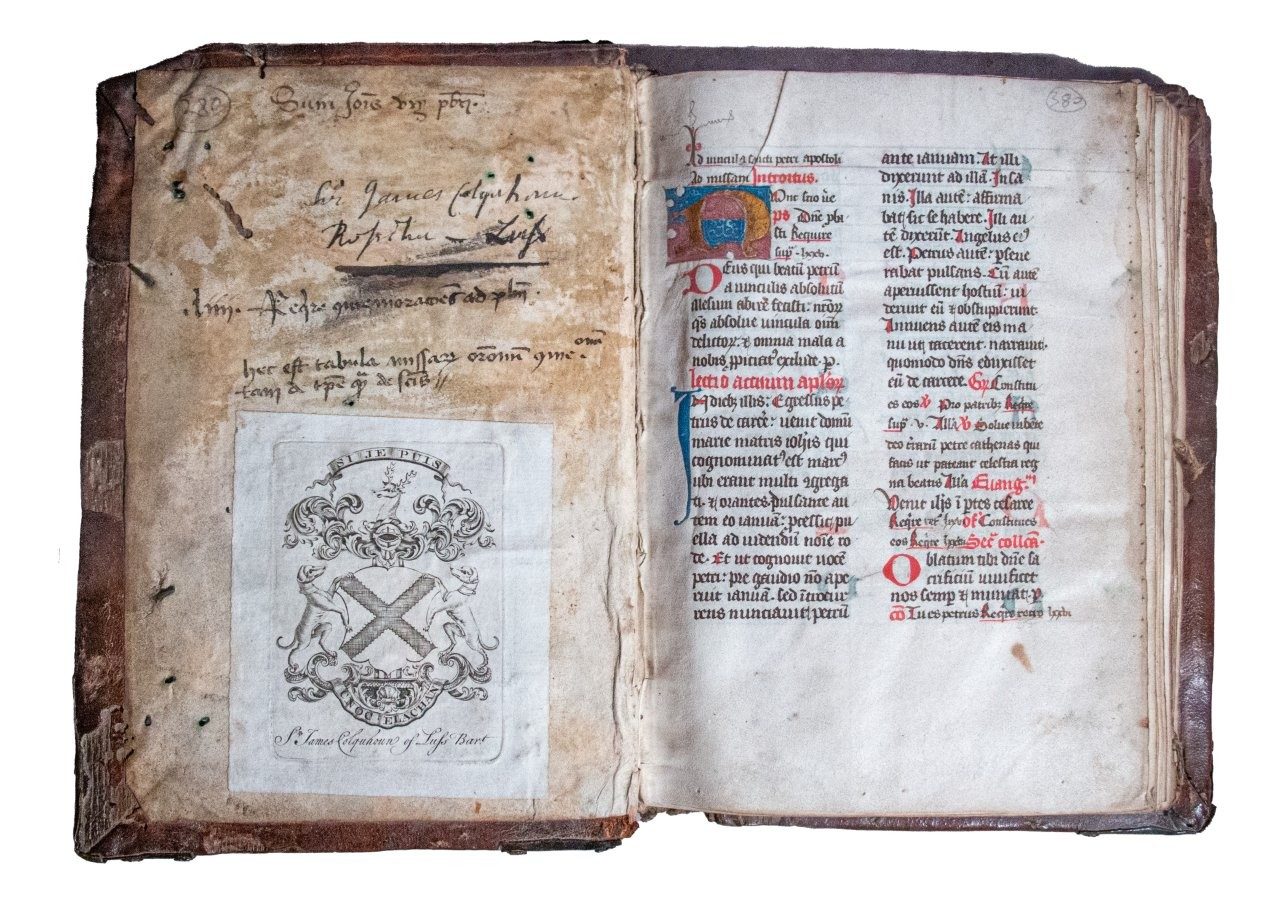
Provenance is attested by 18th-century English ex-libris inscriptions on the front flyleaf, indicating prior ownership in England.
This manuscript is an extraordinary survivor of late Gothic liturgical art, blending exquisite illumination with the functional liturgy of the medieval church, offering invaluable insights into the devotional and artistic life of 15th-century Flanders.
Physical Details:
Mid-15th century; parchment; 70 leaves, size approximately 188 x 135 mm; decorated initials in burnished gold with phytomorphic border; Gothic script; excellent preservation; binding with modern restoration.
A Tabula Missarum (Latin for “Table of Masses”) is a reference tool used in the medieval and early modern Church to help clergy quickly identify which Mass texts—prayers, readings, chants, etc.—to use on a given day of the liturgical year.
Product Enquiry
Related products
C14th -C16th manuscripts
Leaf from a Bible, II Kings 17, C15th manuscript in Latin on parchment
£750.00

C14th -C16th manuscripts
£400.00


C12th - C13th manuscripts
Beautiful painted white vine initial, Augustine’s Commentary on John’s Gospel, Italy C12th
£3,800.00
![The Trinity, by Nikolaus Bertschi the Elder or his workshop, on a leaf from a large Antiphonary in Latin [Germany (Augsburg), 16th century (c.1520–30)]](https://stephenbutler.com/wp-content/uploads/2021/12/IMG_9428-515x618.jpg "The Trinity, by Nikolaus Bertschi the Elder or his workshop, on a leaf from a large Antiphonary in Latin [Germany (Augsburg), 16th century (c.1520–30)]")
![The Trinity, by Nikolaus Bertschi the Elder or his workshop, on a leaf from a large Antiphonary in Latin [Germany (Augsburg), 16th century (c.1520–30)]](https://stephenbutler.com/wp-content/uploads/2021/12/A59I9609-515x618.jpg "The Trinity, by Nikolaus Bertschi the Elder or his workshop, on a leaf from a large Antiphonary in Latin [Germany (Augsburg), 16th century (c.1520–30)]")


£3,500.00


C12th - C13th manuscripts
£4,850.00
C12th - C13th manuscripts
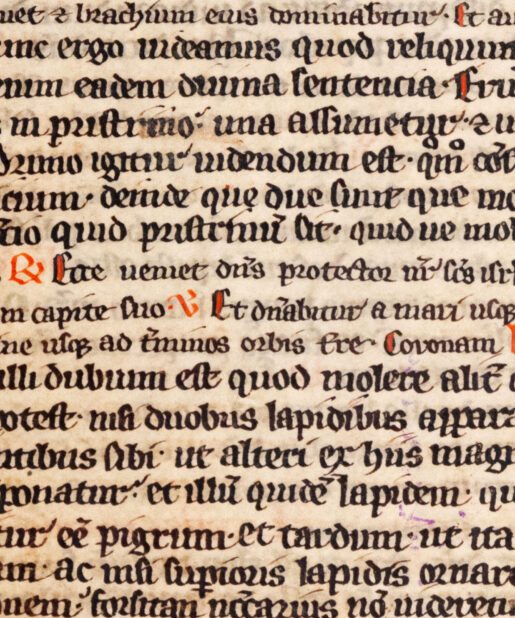
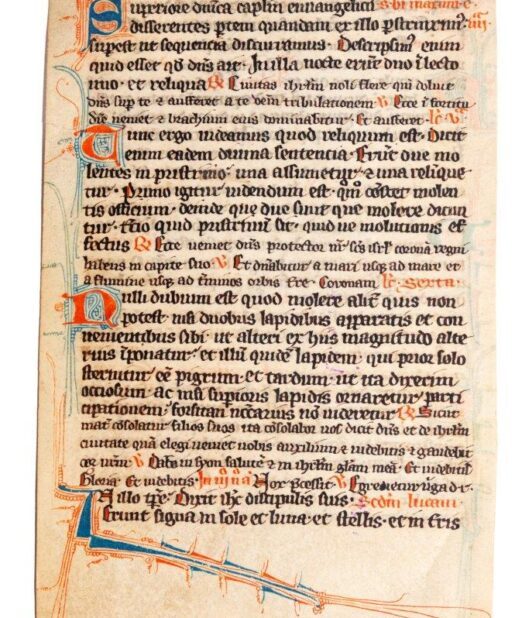
Miniature Breviary leaf with unusual and handsome script, c.1280
£1,500.00