

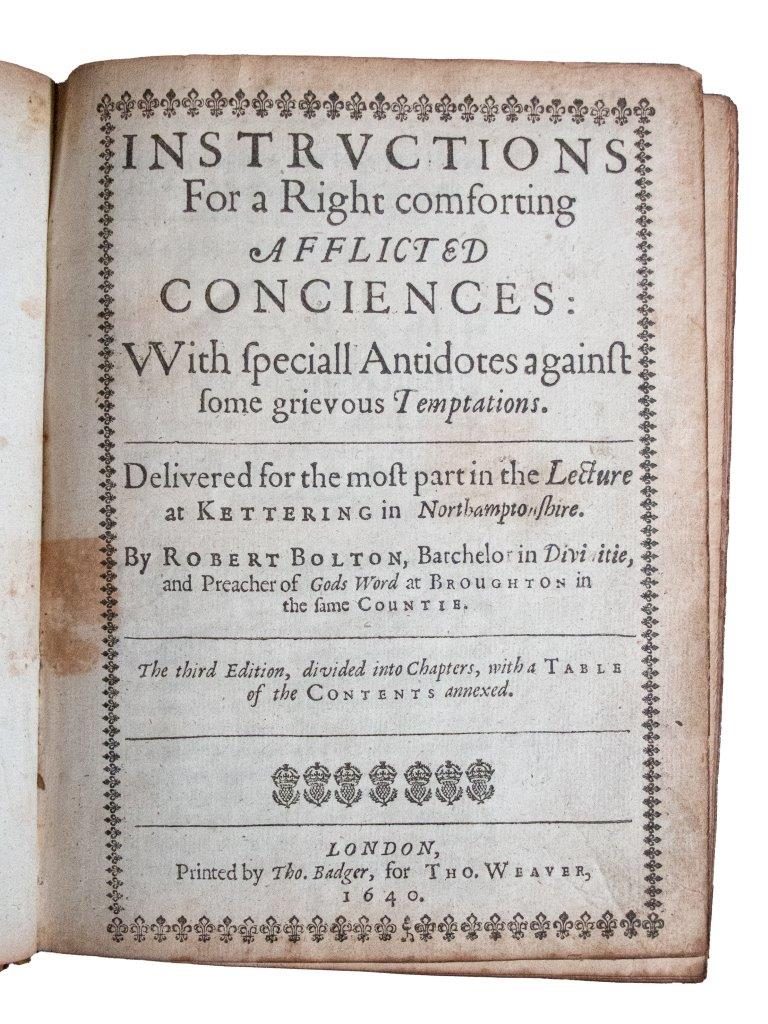
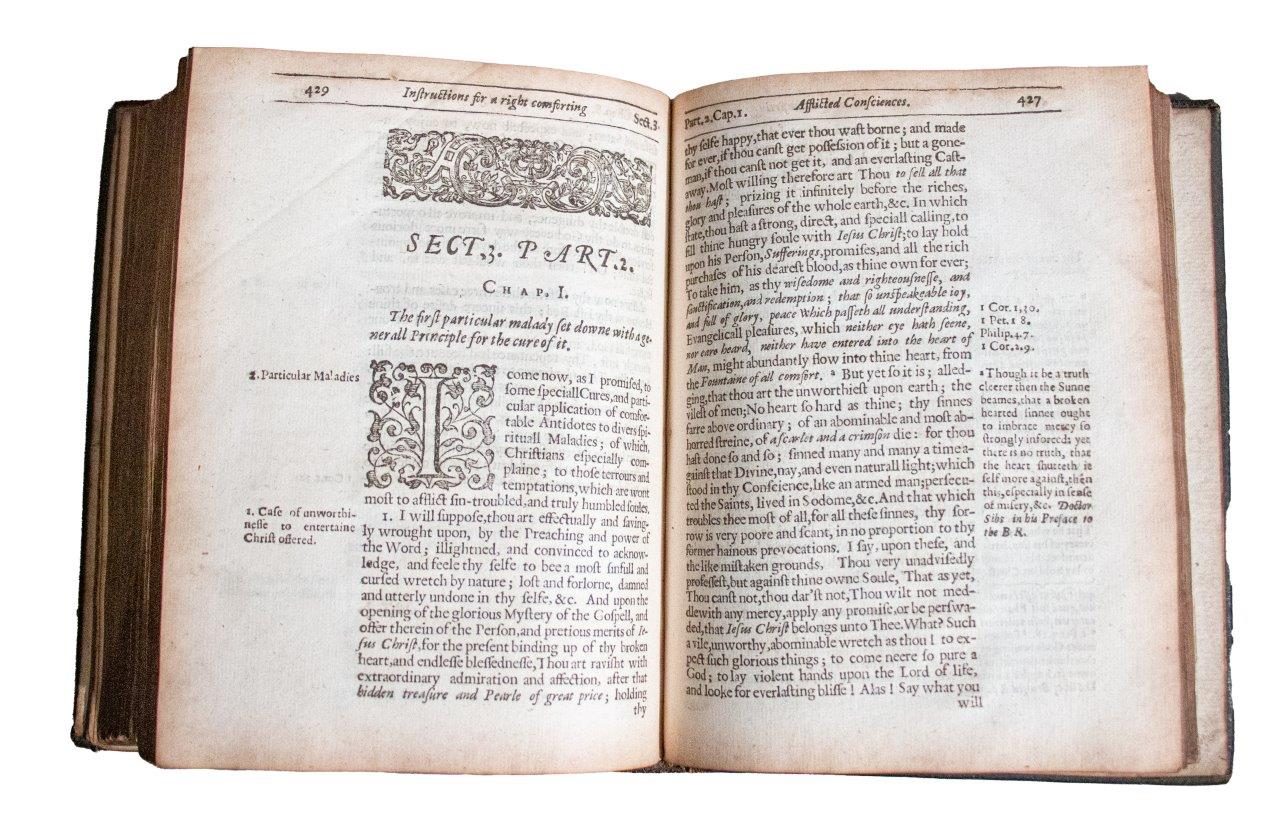


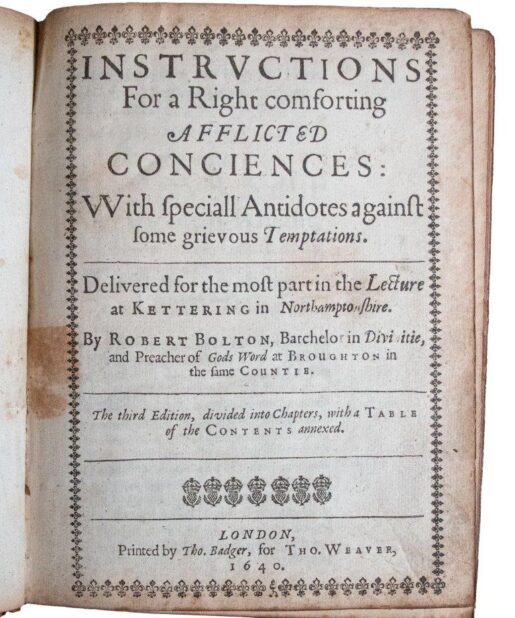
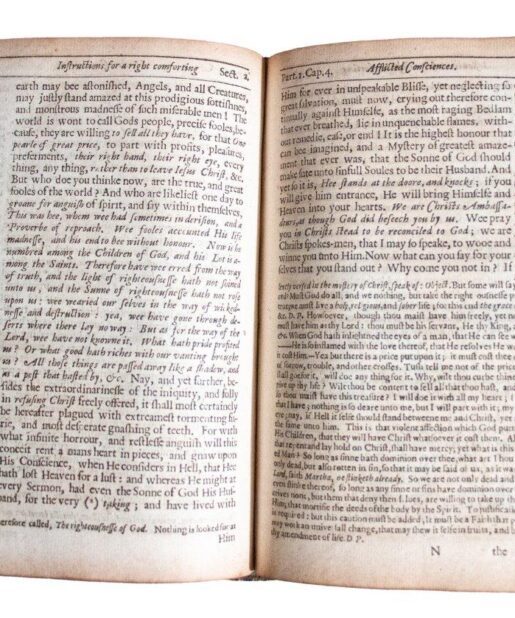
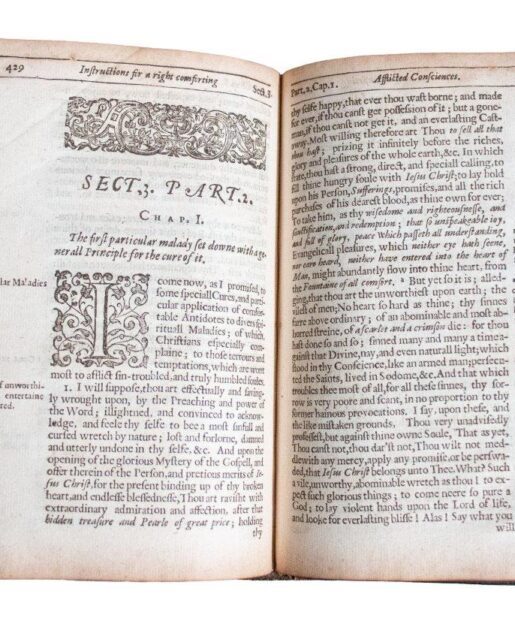

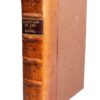
BOLTON, Robert. Instructions for a Right Comforting Afflicted Consciences: With Special Antidotes against Some Grievous Temptations. Delivered for the Most Part in the Lecture at Kettering in Northamptonshire. London: Printed by Tho. Badger for Tho. Weaver, 1640. 4to.
A major devotional and pastoral work by one of the most revered Puritan divines of the early seventeenth century, designed to address spiritual despair, scrupulosity, and religious melancholy in troubled souls. Instructions for a Right Comforting Afflicted Consciences stands among the finest English contributions to the Reformed tradition of “cases of conscience” literature, offering practical, scripturally grounded remedies for doubt, fear, and temptation.
The work was delivered largely as a series of sermons or lectures at Kettering, Northamptonshire, and reflects the intense pastoral culture of late Elizabethan and early Stuart Puritanism, with its emphasis on introspection, assurance of salvation, and the experiential realities of faith. It also belongs to the broader spiritual climate of the 1630s, a decade marked by political anxiety, Laudian repression, and growing eschatological tension on the eve of the Civil War.
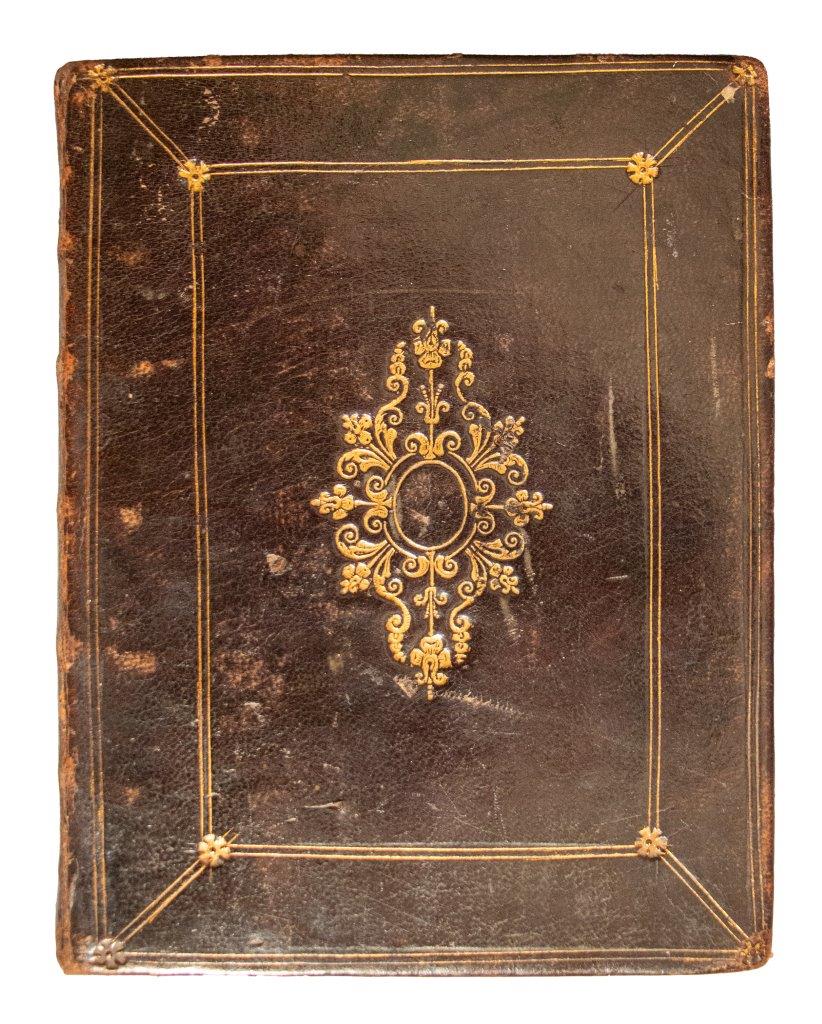
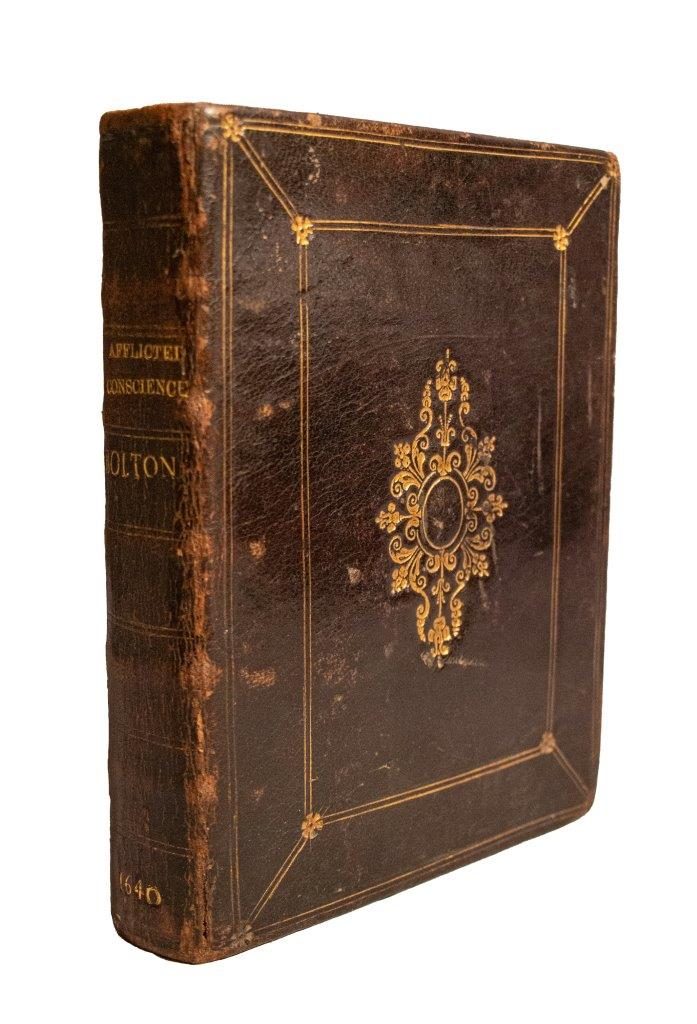
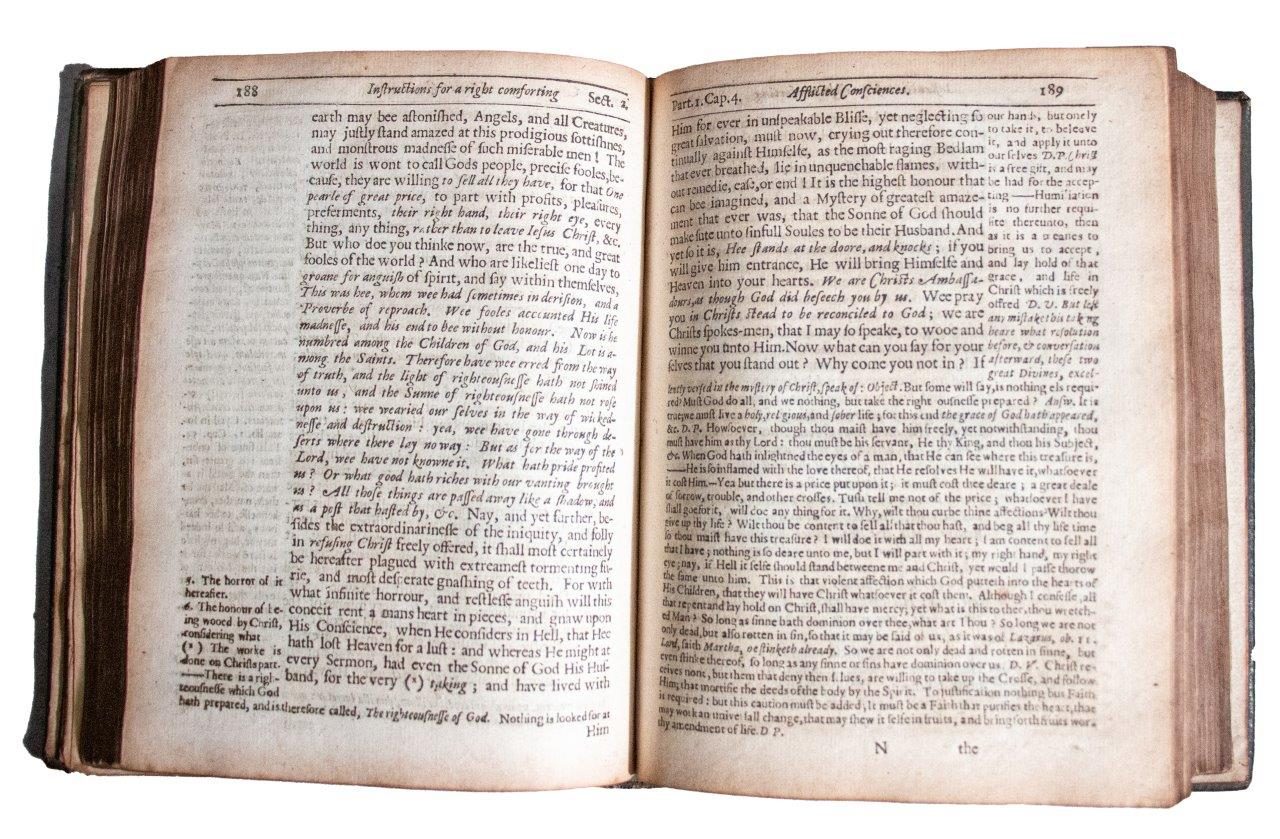
Quarto. [28], 68, 65–595, [5] pp., lacking front and rear blanks. A very good copy, clean and crisp, with only light marks. Bound in a particularly attractive contemporary English binding in full black calf, with double gilt fillet borders to the boards and an ornate central gilt floral lozenge to both covers; amateur lettering to spine. An unusually handsome and well-preserved example of a key Puritan devotional classic.
Robert Bolton (1572-1631) was one of the most influential English Puritan divines of the late Elizabethan and early Stuart periods. Educated at Brasenose College, Oxford, he became rector of Broughton, Northamptonshire, where he exercised a powerful preaching and pastoral ministry until his death in 1631.
Bolton was renowned for his intense personal piety, rigorous moral seriousness, and penetrating practical theology. His sermons and devotional writings focused on repentance, holiness, assurance of salvation, and preparation for death, and he became one of the central figures in shaping the experiential and ethical tone of English Puritanism.
Among his most famous works are The Four Last Things (on death, judgment, heaven, and hell), Directions for Walking with God, and the present Instructions for a Right Comforting Afflicted Consciences. His writings were repeatedly reprinted throughout the seventeenth century and deeply influenced later Puritan and evangelical spirituality in both Britain and New England.


![Gu Hutou Hua Lienu Zhuan (Xin Kan Gu Lienu Zhuan) [An Ancient Edition of Biographies of Virtuous Women ] Liu Xiang; images attrib. to Gu Kaizhi](https://stephenbutler.com/wp-content/uploads/2024/08/IMG_0472-515x618.jpg "Gu Hutou Hua Lienu Zhuan (Xin Kan Gu Lienu Zhuan) [An Ancient Edition of Biographies of Virtuous Women ] Liu Xiang; images attrib. to Gu Kaizhi")
![Gu Hutou Hua Lienu Zhuan (Xin Kan Gu Lienu Zhuan) [An Ancient Edition of Biographies of Virtuous Women ] Liu Xiang; images attrib. to Gu Kaizhi](https://stephenbutler.com/wp-content/uploads/2024/08/IMG_0467-515x618.jpg "Gu Hutou Hua Lienu Zhuan (Xin Kan Gu Lienu Zhuan) [An Ancient Edition of Biographies of Virtuous Women ] Liu Xiang; images attrib. to Gu Kaizhi")


